
UJAM Instant Beats
Beatmaker DOPE
Percussion is how the audience knows how fast a scene is moving.
Rhythm in a cue does a different job from rhythm in a song. It has to carry tension under dialogue, mark a cut without stepping on it, and stay legible once the effects stem arrives. That rules out anything that only sounds good soloed and loud.
We test these libraries on the material they actually get used for: trailer percussion beds, hybrid grooves under picture, and source music that has to pass as a real kit in a real room.
We look for three things:
Our curated lists below cover the essentials.
New to Drums? These are the roundups worth reading first.
Current discounts on products we have reviewed. Prices are the store's own, last checked 27 October 2026.
Beatmaker DOPE


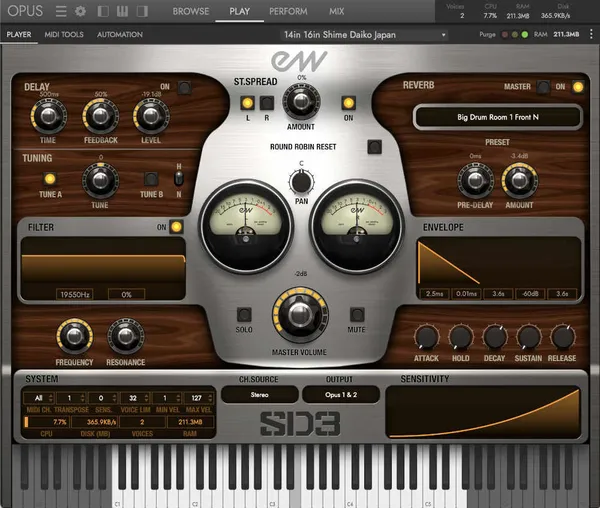
Hans Zimmer Percussion sells one thing, a room full of players in a huge hall. Four libraries that get you there for a fraction of the money and the disk.
Trailer percussion, ensemble drums and modern hybrid kits compared on room, round robins and how fast each one gets a rhythm out of you and into the cue.
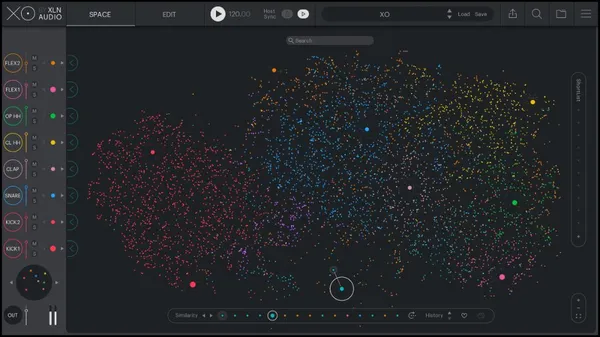
The boom and the clap. We review the best drum machine plugins (XO, Drumazon 2) for authentic 808s and modern sequencing.
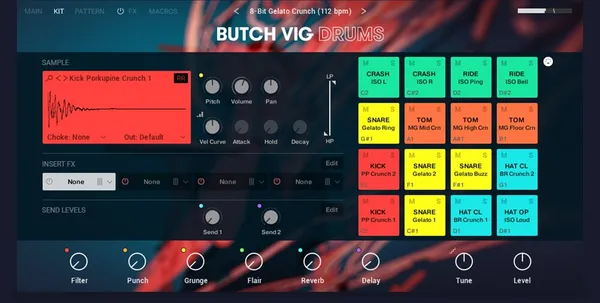
Pro drums on a budget. We review the best cheap drum libraries (Butch Vig, BigKick) that punch way above their price tag.
Human percussion. We review the best beatbox samples and instruments for adding organic rhythm to hip hop and pop tracks.
A drum bus is a group channel every percussion track routes into, so compression and saturation can be applied to the kit as a whole. Processing them together is what makes layered percussion read as one instrument rather than as separate hits stacked on top of each other.
Sampled kits carry the room and the player, which is what makes them convincing for source and diegetic music. Synthesised drums give you weight below 60 Hz that no acoustic kit was recorded with, which is why most hybrid cues end up layering both.
Shape the transient before you reach for level. A transient shaper restores the attack that a busy orchestral bed masks, and parallel compression adds body underneath without flattening the dynamics you wrote.
Round robin triggers a slightly different sample each time a note repeats. Without it, repeated hits play the identical waveform and produce the machine-gun effect, which is the single most obvious tell that percussion was programmed rather than played.
Mix-ready samples get a cue sketched faster; raw samples survive being re-balanced in the dub. If the percussion has to sit under dialogue, the flexibility of raw multitracks is usually worth the extra work.
Move the hits off the grid rather than adding a swing preset. A few milliseconds of variation in timing and a genuine spread of velocities does more for the feel than any groove template, because it is the uniformity the ear objects to.