Programming & Mockups
Why Your Choir Sounds Like a Synth Pad
A held Ah vowel with no consonants and no breath is a pad, not a choir. Vowel movement, breath placement, and why the syllable matters more than the library.
By Felix Ward
Read →
Tutorials & Workflow
Deep dives into orchestration, mixing and building a template that survives a deadline. Practical workflows from real sessions, not restated manuals.
Written from working sessions rather than from manuals: the routing, the parameter values, and the mistakes that cost somebody here a day. Where a guide covers a tool nobody on the team has run, it says so.
New to this? Read these three in order.
A held Ah vowel with no consonants and no breath is a pad, not a choir. Vowel movement, breath placement, and why the syllable matters more than the library.
The horn is the most misjudged instrument in the orchestra. Real range against sampled range, why four horns in unison is the default, and the register that ruins takes.
A sampler plays any six notes you send it. A hand cannot. Fret spans, open strings, capo logic and the voicings that mark a part as written by somebody who does not play.
Sixteen violins playing one line is a section. Sixteen violins split four ways is four thin sections. When divisi helps, when it costs you, and how to fake it in samples.
A real strum is six notes arriving at different times with different velocities, in a direction. Stroke spread, up-down logic, chord-change noise and the muting nobody programs.
Stacking two libraries on one line gives you comb filtering and two halls fighting. The four conditions that make layering work, and the alignment step everyone skips.
A laptop speaker rolls off below 400Hz, so everything holding your cue together vanishes. What survives, what to check before you send, and the one reference that catches it.
Every real decision about a score gets made before a note exists. What a spotting session is, what to bring, and the three questions that save weeks of rewrites.
Music for picture is not mastered to a streaming target. What -23 and -24 LUFS actually mean for a composer, why your cue sits under dialogue, and what to deliver when nobody specifies.
Repeated notes expose the one thing sampling cannot hide: the same recording played twice. Round robins, velocity spread, note length and the reset trap, with the numbers.
Woodwinds vanish under strings because they occupy the same octave with a fraction of the energy. How to fix it with register, doubling and a 2kHz carve, in that order.
Sampled strings give themselves away on note starts, not on tone. How to measure a legato patch's attack delay, set negative track delay per articulation, and stagger section entries.
The mod wheel sends MIDI CC1, but what that does depends entirely on what is receiving it. Vibrato on a synth, dynamics on a sample library, and how to fix one that does nothing.
How to place a sampled orchestra in one believable room using pre-delay, early reflections, and a send architecture instead of insert reverbs.
A technical guide to implementing master bus compression, setting attack and release times for glue, and avoiding the over-compression trap.
A technical breakdown of granular synthesis, grain size, pitch manipulation, and practical sound design applications for modern electronic production.
A technical breakdown of harmonic generation, comparing tube, tape, and solid-state topologies with actionable routing strategies for modern production.
Practical DAW organization strategies, macro setups, and routing techniques to dramatically increase composition and mixing speeds.
How to correctly ride MIDI data, voice-lead chords, and mix multiple brass virtual instruments to achieve true cinematic power.
An advanced guide to removing resonant mud, harsh brass buildup, and masking frequencies from dense orchestral mockups.
Techniques for layering Taikos, sub-booms, and ticking clocks to create modern trailer and film percussion tracks without destructive clipping.
Advanced techniques for programming hyper-realistic orchestral mockups using MIDI continuous controllers, precise layering, and strict velocity mapping.
An exhaustive, encyclopedia-level masterclass detailing the entire workflow of modern vocal editing, pitch correction, dynamic control, and spatial mixing.
A highly technical guide to balancing memory usage, storage speeds, and processing power when running massive Kontakt orchestral templates.
A massive, comprehensive masterclass on arranging, routing, EQing, and mixing cinematic string samples for modern film and media production.
Advanced techniques for placing orchestral instruments into a 3D soundstage using precise panning, multi-tier reverb, and subtractive EQ.
How tape emulation works and how to use it: tape speed, bias, wow and flutter, harmonic saturation, and where tape belongs on tracks, buses and the mix.
A practical, technical guide to selecting orchestral and hybrid virtual instruments without wasting money or destroying system resources.
A comprehensive guide to utilizing digital, analog, and tape delays as active sound design and rhythmic manipulation tools in modern production.
CC1 crossfades a library's dynamic layers and changes its tone. CC11 only changes volume. How to ride both, plus CC21 vibrato and CC64 sustain.
A technical walkthrough of routing, stemming, and balancing orchestral sample libraries with modern analogue synthesizers.
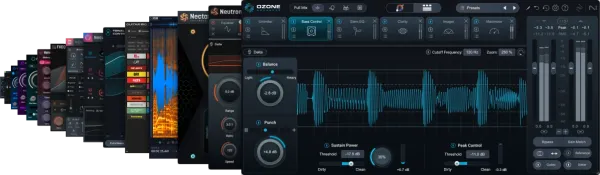
Loyalty pays. We explain how to use crossgrades (like iZotope or IK Multimedia) to get massive discounts on software.
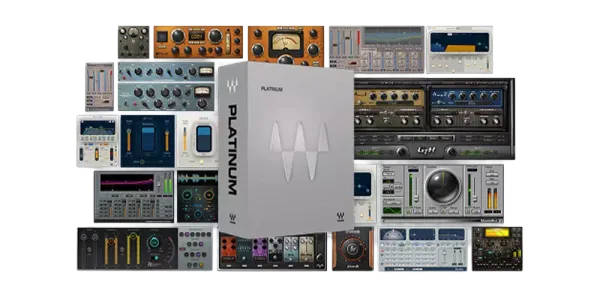
Bulk savings, ranked by budget. Five bundles from 199 to 1249 dollars, covering the first mixing chain up to a complete scoring studio.
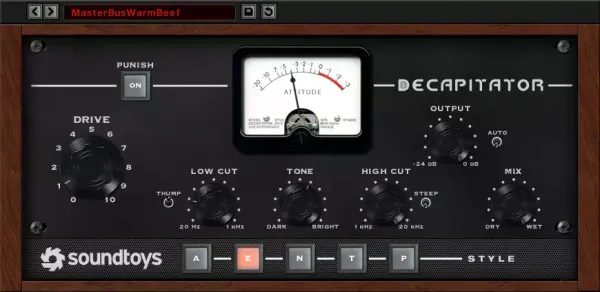
What AAX is, how it differs from VST3 and AU, and seven AAX Native and DSP plugins for large Pro Tools sessions, from Pro-Q 4 to the 6050 channel strip.
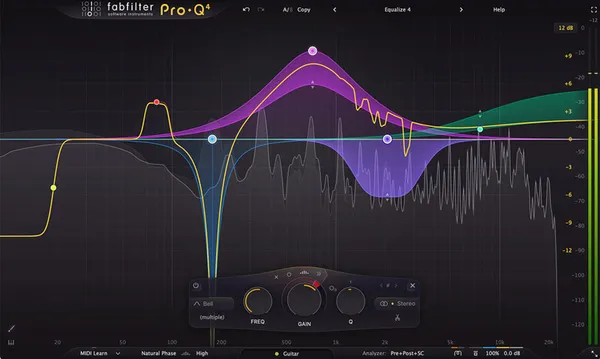
Speed up your Mac. We review the best plugins that run natively on Apple Silicon for lightning-fast performance and lower CPU usage.
With MIDI continuous controllers rather than with plugins. Velocity alone cannot shape a sustained note, so a string or brass line triggered at a fixed velocity plays a static recording no matter what you do to it afterwards. Learn to ride CC1 and CC11 first, because no amount of EQ or reverb rescues a mockup that was never performed.
You need enough mixing to deliver something a re-recording mixer can work with, which mostly means routing, stems and restraint. Balance the sections, high-pass what does not need low end, and keep the master chain light instead of chasing the loudness of a reference file. Clean isolated stems are worth more than a cue that has been mastered into a corner.
64GB is the practical floor for an entry-level template and 128GB is the current professional baseline. The figure follows the number of active instruments rather than the size of your libraries, because the sampler preloads the attack of each one and streams the rest from disk. Drive speed matters just as much, so an NVMe reading over 3000 MB/s is not optional once you lower the preload buffer.
Because they were recorded in different rooms, and each library carries its room in the samples. Find the driest library in the template, treat it as the reference, and use the closest mic positions on the wetter ones to pull everything toward it. Only then send the whole thing to a shared reverb, which is the part that actually makes them one ensemble.
Learn the ones you have, in almost every case. Most composers use a fraction of the articulations they already own, and a library that takes sixty seconds to load is a liability on a deadline however good it sounds. Buy to fill a gap you have actually hit rather than to fill a category.
Our guides are written by working composers, mixing engineers and sound designers who use these techniques daily. We share workflows from real sessions rather than aggregating technical manuals. Where a guide covers a tool we have not run ourselves, it says so.