What a Transient Shaper Does
Every sound has a front and a body. The transient is the first few milliseconds, the stick meeting the head or the pick leaving the string, and the sustain is everything after it until the note dies away.
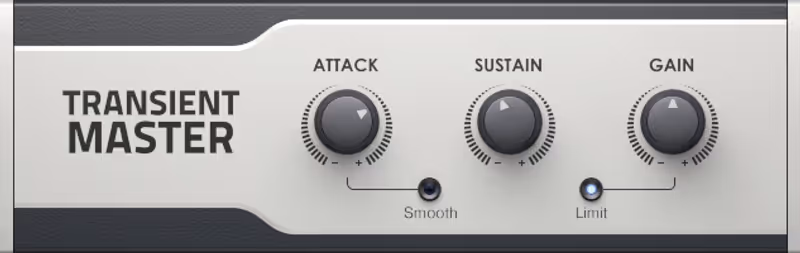
A transient shaper turns those two parts up or down independently. More attack makes a hit sharper and closer, less attack pushes it back and softens it, and the sustain control lengthens or shortens whatever rings on afterwards.
It does this by following the shape of the envelope rather than its level. A common design runs two envelope followers side by side, one fast and one slow, and treats the moment the fast one races ahead of the slow one as the start of a transient. Gain is then applied to that stretch, and to the tail after it, by the amounts you set.
Why It Is Not a Compressor
A compressor reacts to level. It does nothing until the signal crosses a threshold, then reduces gain by a ratio, so a loud hit and a soft hit are treated differently.
You can shape attack with a compressor by setting a slow attack time, so the front of each hit slips through before the gain comes down. It works, but only on the hits loud enough to cross the threshold, and the quieter notes in the same part are left untouched.
A transient shaper has no threshold in that sense. Because it detects a change in the envelope rather than an absolute level, a ghost note and an accent get the same proportional treatment, and the part keeps its dynamics. That level independence is the main reason to own one.
Attack and Sustain in Practice
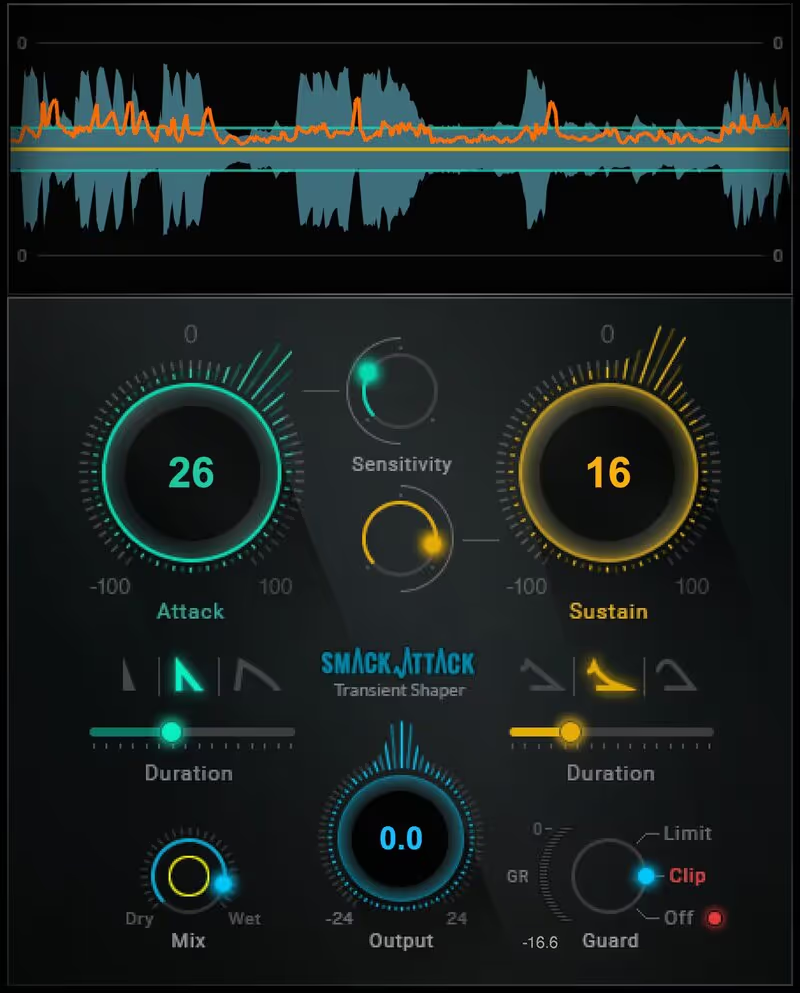
Attack up adds definition and apparent closeness. It also adds peak level, so the output needs checking and often a clipper or a peak limiter after it, which is why several shapers build one in.
Attack down softens a hit that sounds too close or too clicky, which is common on samples recorded with the microphone near the source.
Sustain down shortens the ring and the room. It is the gentler alternative to a gate, because the tail fades rather than cutting off.
Sustain up brings out a room or a resonance, and with it everything else in the tail, including noise, bleed and the release of the sample.
Uses Beyond the Drum Kit
Drums are the obvious case. A snare that needs more crack, a kick that has to speak above the low end, a kit whose room mics are washing over everything.
Plucked instruments respond the same way. Harp, pizzicato strings, guitar and mallets all have a sharp front and a decaying tail, and a little added attack lifts them out of a dense arrangement without boosting the presence range with an EQ.
Orchestral percussion is where level independence earns its keep. A timpani roll and a single fortissimo stroke sit at very different levels, and a shaper adds definition to both without the roll pumping. Ensemble drums in cinematic percussion libraries are often recorded in large rooms with the hall baked in, and lowering the sustain dries them up without buying a drier library.
Room and reverb tails are the subtler use. Pulling the sustain down on a sampled section reduces the recorded hall, so the reverb you add can define the space instead. Raising it does the opposite for a dry, close-miked patch that needs some air of its own.
What Separates a Good One
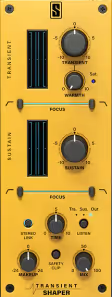
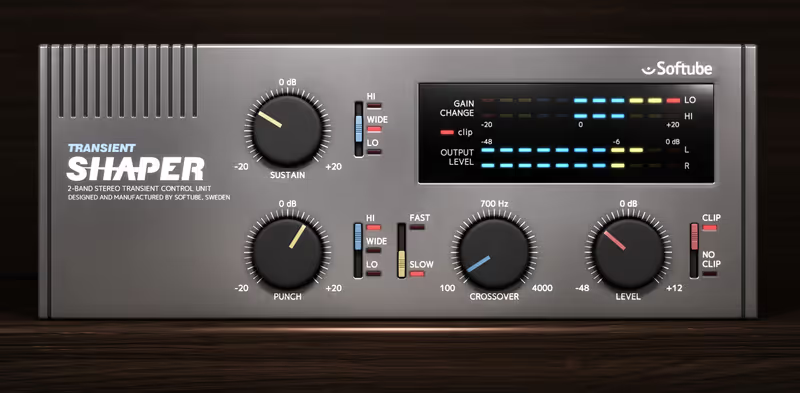
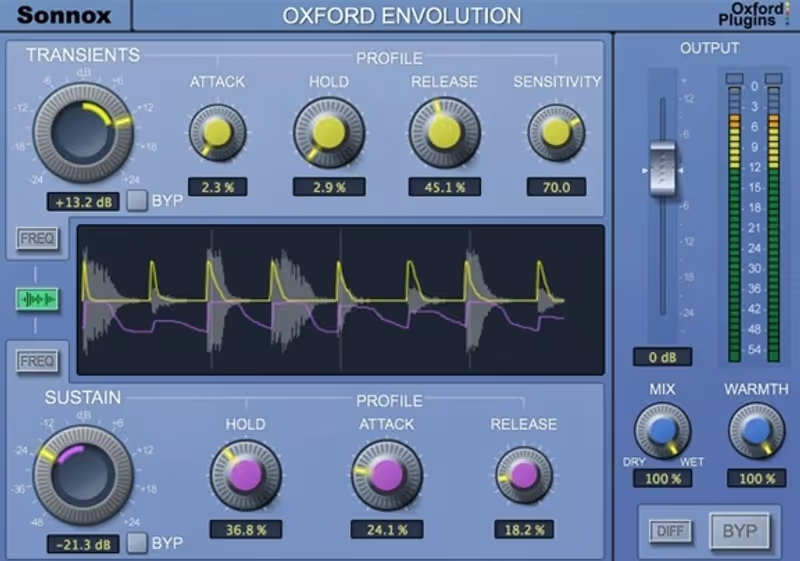
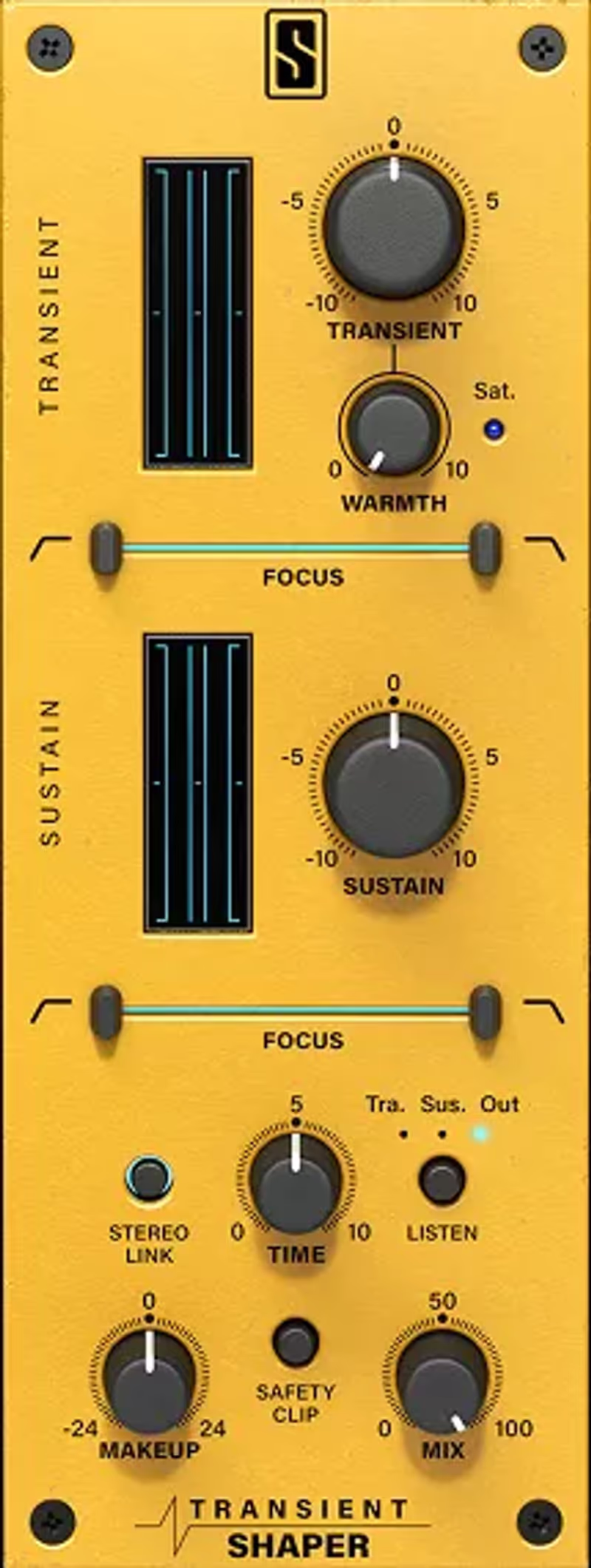
Frequency targeting. A single-band shaper treats the whole spectrum the same way, so adding attack to a kick also sharpens the hi-hats above it. A crossover, as on Softube’s Transient Shaper, or fully frequency-dependent processing, as in Sonnox’s Oxford Envolution, lets you aim at the part of the sound that needs it.
Searches for an Oxford transient shaper can mean either of two Sonnox plugins. Envolution shapes transient and sustain by frequency, while Oxford TransMod is a separate tool focused on the attack, so check which one a recommendation means.
Behaviour on low frequencies. Fast gain changes on a bass note distort it, because the gain moves within a single cycle of the waveform. Try any shaper on a kick or a low tom before trusting it on a full drum bus.
Output control. A clipper, a limiter or at least an output trim, since boosted attack will find whatever headroom you did not leave.
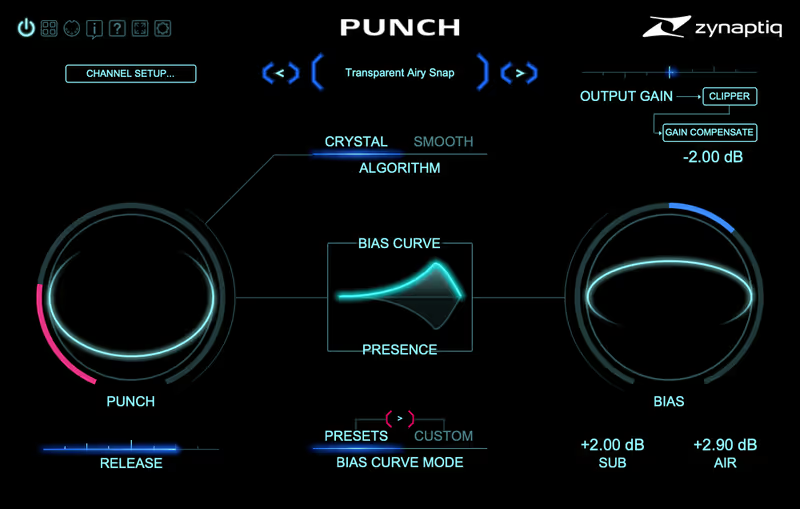
What it can detect. On a stem that has already been limited there may be no transient left for a conventional shaper to find. Zynaptiq pitches PUNCH at exactly that case, and it is the reason to own a second, unconventional tool rather than a better version of the first.
Where It Goes in the Chain
Before EQ and compression in most chains, so the later processors work on the envelope you chose. Before reverb, if the aim is to control the dry signal’s tail rather than the reverb’s. On a group rather than on every track, when the same change is wanted across a whole section.