





A layer of dirt rather than a drone, which makes it the cheapest fix here and the wrong answer to the question this page asks.
How it scored
- Evolution 6.0
Movement, not development. It does not go anywhere over five minutes.
- Sound Quality 7.5
Convincing hiss, hum and grit. Narrow, and good at it.
- Playability 5.5
Wants an input signal. Holding a key is not really the use case.
- CPU Footprint 9.5
50 MB and almost free to run. Best here.
Why we picked it
Best for adding subtle organic layers (dirt, hiss, hum) to cleaner sounds.
Who should skip it
Skip this if you want a melodic instrument. This is a noise generator.
The good
- Unique concept
- Adds instant vibe
- Low CPU
The bad
- Not a synth
- Requires input signal usually
- Niche use case
- Engine
- VST/AU/AAX
- Type
- Granular FX
- Size
- 50 MB
- Price
- $9
Why it scored that way
Turn silence into noise.
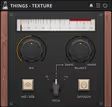
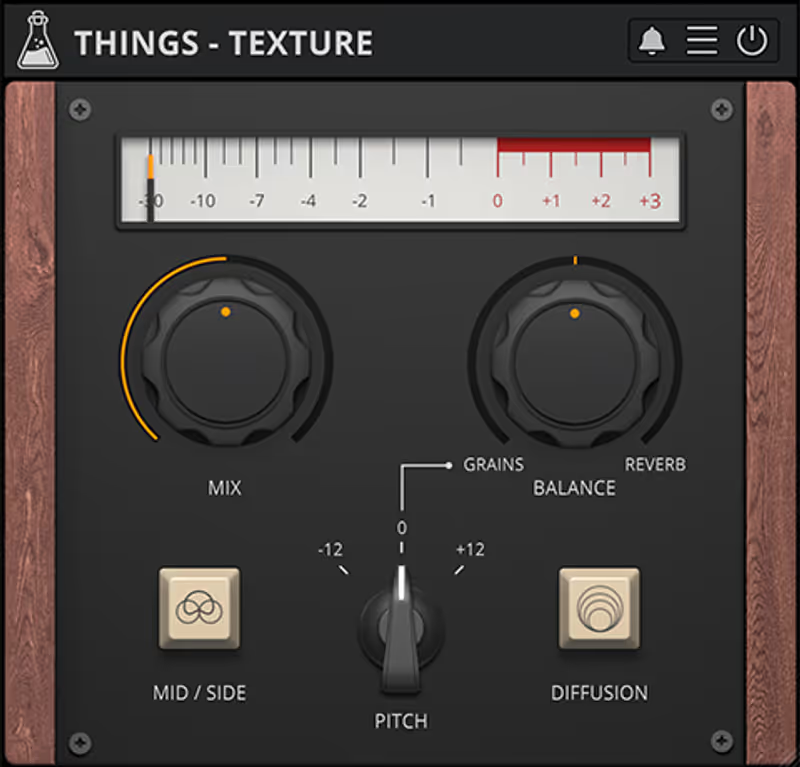
My Experience: Texture is different: it is technically an effect plugin, not a synth. You put it on a track (like a piano), and it triggers a layer of noise (vinyl crackle, rain, hum) that follows the envelope of the audio. But if you put it on a silence track and simply crank the "Noise" volume, it becomes a phenomenal drone generator. I use it to create specific "colored silence": adding the sound of a tape hiss or a room tone to a digital production to make it feel alive and physical.
Deeper Look: It has a massive library of weird textures: underwater bubbles, electrical hums, granular clouds, and broken machines. By automating the "Grain" and "Pitch" knobs, you can turn a static hum into a rising, screaming effect that serves as a perfect transition. It is a subtle tool that adds the "glue" often missing from VST-only productions, placing your disparate digital instruments into a shared acoustic environment.
Playing connects you to YouTube, which may set cookies.
Lowest price we've recorded since 23 August 2026 Price history
Check price $9 (was $19)