
Best 8-String & Extended Range Basses for Metal

Metal lives or dies by the bass. If you can't hear the clank, you don't have a mix. Finding a VST that cuts through a wall of distorted guitars is harder than it looks.

Felix Ward
By Felix Ward Songwriter & Multi-Instrumentalist

What changed: The page now answers the questions readers ask about the category, in a FAQ section at the foot of it.

ModWheel is reader-supported. When you buy through links on this page we may earn an affiliate commission, at no extra cost to you. This never influences which products we recommend, read our testing methodology.

Prices come from the store's own feed and were last checked 8 September 2026. We don't issue discount codes — the price you see is the store's own.

Pick one in 10 seconds

Short version
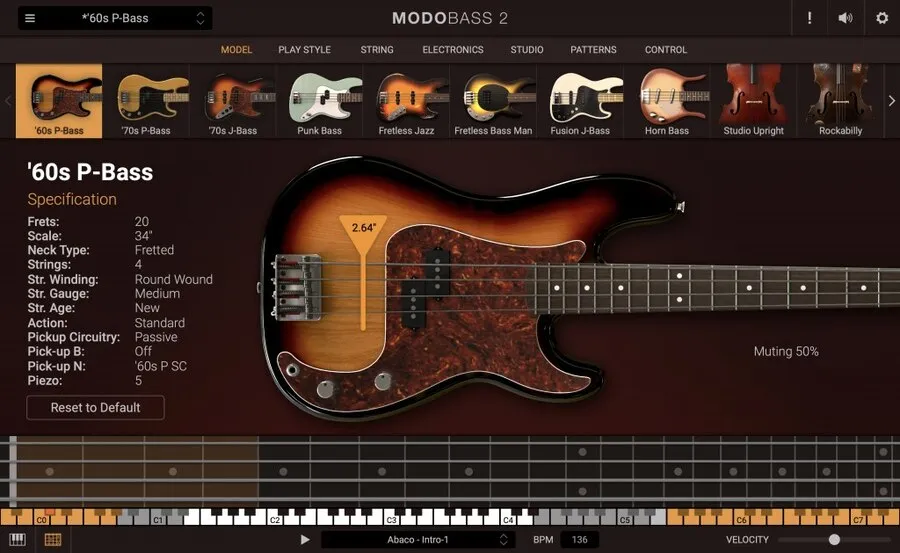
  • You want to sculpt every physical property of the bass in real time No samples at all. Move the pickup, age the strings, change the wood. MODO BASS 2
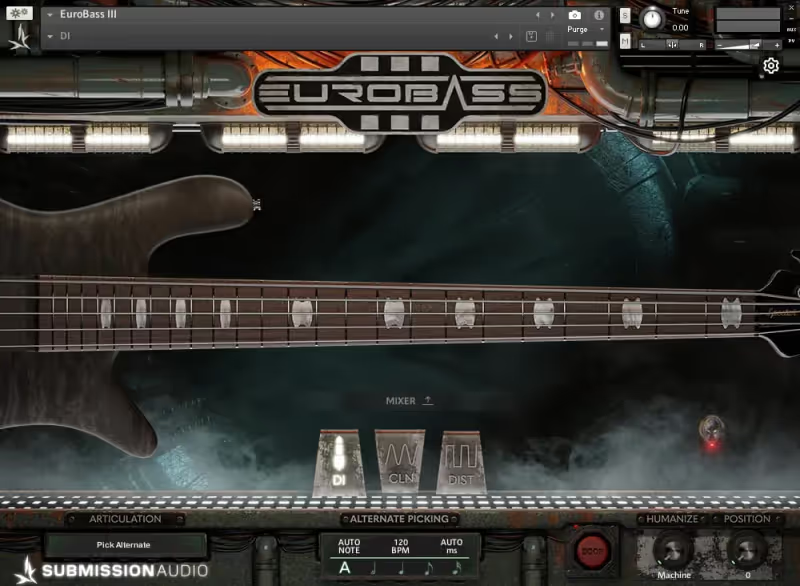
  • You need a mix-ready aggressive tone in under five minutes The definitive 'Nolly' clank. Almost no tweaking required. Eurobass 3
  • You want AI-assisted riff programming with a modern Dingwall tone The Grid Editor and audio-to-MIDI conversion save hours. EZbass Metal EBX
  • You need a clean DI signal to re-amp through your own Neural DSP chain Pristine DI tracks down to low G. Shreddage 3 Abyss
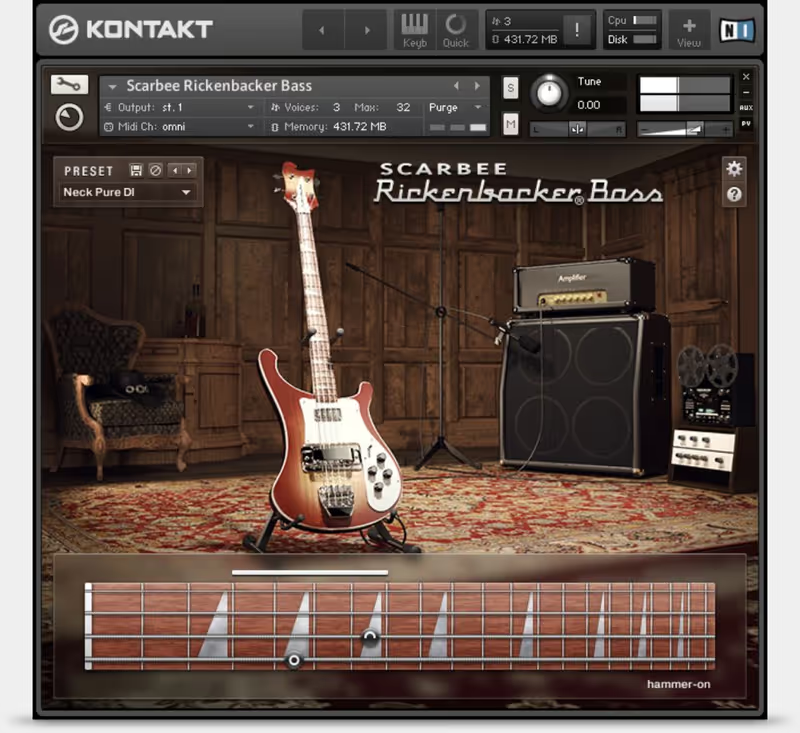
  • You want a classic mid-range growl for thrash or prog The Rickenbacker character that modern basses cannot replicate. Scarbee Rickenbacker Bass

Compare all 7

MODO BASS 2
1. MODO BASS 2 IK Multimedia Featured at Plugin Boutique
8.5
Engine
Physical Modeling
Type
Bass Synthesizer
Size
200 MB
IRON 2 7.0
Engine
VST/AU/AAX
Type
Virtual Bassist
Size
5 GB
$9 $129 View price
Ample Metal Ray5 7.4
Engine
Ample Engine
Type
Metal Bass
Size
6 GB
8.6
Engine
EZbass
Type
Bass Expansion
Size
1.5 GB
5. Shreddage 3 Abyss Impact Soundworks
7.1
Engine
Kontakt Player
Type
6-String Bass
Size
10 GB
6. Eurobass 3 Submission Audio
7.6
Engine
Kontakt Player
Type
Metal Bass
Size
2 GB
Scarbee Rickenbacker Bass 6.6
Engine
Kontakt Player
Type
Classic Bass
Size
12 GB

Recording real metal bass is a nightmare. You need a $3000 Dingwall, a fresh set of strings every take, and a player who can pick consistently at 200BPM. For most of us, that isn't happening.

The new wave of Metal Bass VSTs are terrifyingly realistic. They capture the 'clank', the fret buzz, and the sub-harmonic lows of extended range instruments. Whether you are producing Djent, Thall, or just a massive trailer cue, these plugins bring the heavy.

A metal bass library is a general electric bass with the amp, the pick attack and the gain staging already decided for you. Best Electric Bass VSTs (2026): Funk & Rock covers the neutral options, which ask more work of you and cover more genres.

Top Picks

01 IK Multimedia

MODO BASS 2

Best for Speed Metal

Tested in our studio

Featured at Plugin Boutique

The only bass here built from physics rather than recordings, giving you infinite tonal variety at 200 MB, though the synthetic edge shows on exposed parts.

Tested score
8.5
out of 10

How it scored

  • Realism 6.5

    Convincing in a dense mix, but lacks the 'air' of a real recording.

  • Playability 8.5

    Loads instantly and the pickup/string controls respond in real time.

  • Articulation Range 9.0

    Infinite, since the model generates rather than plays back samples.

  • Footprint 10.0

    200 MB. Nothing else here is even close.

Why we picked it

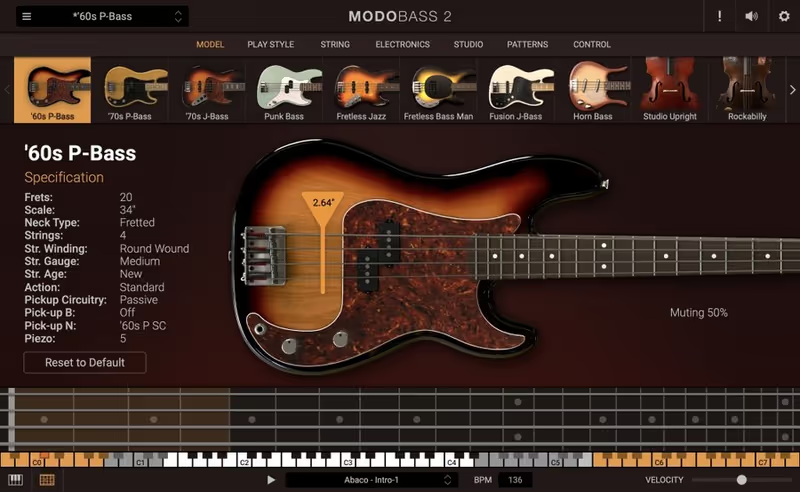
Producers who want to sculpt every aspect of the physics. You can move the pickup an inch to the left, which is impossible with samples.

Who should skip it

You hate synthetic textures. While flexible, it lacks the 'air' and grit of a real audio recording.

The good

  • Infinite variety
  • Zero hard drive space
  • Fast loading

The bad

  • Can sound synthetic
  • High end excitement missing
  • CPU spikes
Engine
Physical Modeling
Type
Bass Synthesizer
Size
200 MB
Price
$199
Why it scored that way

The smallest file size, the biggest flexibility.

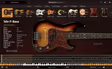
MODO BASS is unique because it doesn't use recordings. It models the physical properties of the string, the pickup, and the wood mathematically. This means you can do things that are impossible with samples, like moving the pickup position in real-time or changing the age of the strings from "New" to "Broken In." I use this for prototyping basslines because the file size is tiny and it loads instantly, unlike the massive sample libraries that take minutes to purge.

For metal, the "Metal" model (based on a Dingwall Combustion) is surprisingly convincing in a dense mix, because the synthesized engine never produces that "machine gun" effect on fast repeat notes that plagues even the best sample libraries. I used it on a speed metal track at 200 BPM, and the alternate picking engine handled the velocity changes without sounding robotic, though the high-end excitement of a real recording is noticeably absent on solo'd tracks.

Playing connects you to YouTube, which may set cookies.
Heard on
Home Demos Progressive Metal Online Collaborations
Check price $199
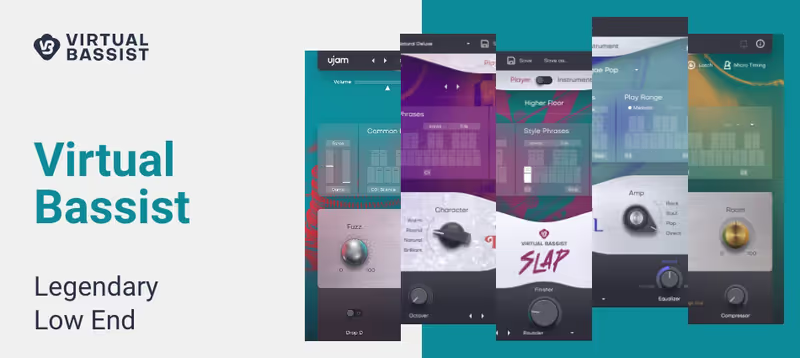
02 UJAM

IRON 2

Best for Hard Rock

Tested in our studio

A preset-driven workhorse that delivers polished, radio-ready rock bass in five minutes, but locks you out the moment you want articulation control.

Tested score
7.0
out of 10

How it scored

  • Realism 7.0

    The pre-baked tone is convincing for rock. Less so for exposed metal parts.

  • Playability 9.5

    Single-key riff triggering. The easiest bass plugin here by far.

  • Articulation Range 3.5

    Pre-recorded phrases only. No solo lines, no custom articulations.

  • Footprint 8.0

    5 GB is reasonable for what you get.

Why we picked it

Guitarists who can't play bass. The 'Player' mode allows you to trigger complex, professional basslines with one finger.

Who should skip it

You need total control over articulation. It relies on pre-recorded phrases and patterns.

The good

  • Instance good tone
  • Riff library included
  • Zero learning curve

The bad

  • Limited articulations
  • Pre-baked sound
  • Limited key options
Engine
VST/AU/AAX
Type
Virtual Bassist
Size
5 GB
Price
$9
Why it scored that way

The fastest way to get a professional bass tone, provided you don't want to tweak.

UJAM creates tools for deadlines, not for tweakers. IRON 2 is not for the bass purist who wants to adjust the virtual microphone angle on the cabinet. It is for the producer who needs a polished, heavy bass track done in five minutes. I used the "Drop D" mode on a recent commercial rock pitch, and the client commented on how "tight" the rhythm section felt, not realizing it was programmed in one take.

The "Player" mode allows you to trigger complex, drummer-synced riffs with a single key, which is a lifesaver for non-bassists like me who struggle with fast picking consistency. It isn't the most flexible tool, since you can't perform intricate solo lines, but it is the most reliable workhorse for laying down a solid foundation quickly.

Playing connects you to YouTube, which may set cookies.

Heard on
Library Music Game Soundtracks Rock Instrumentals
Check price $9 (was $129)
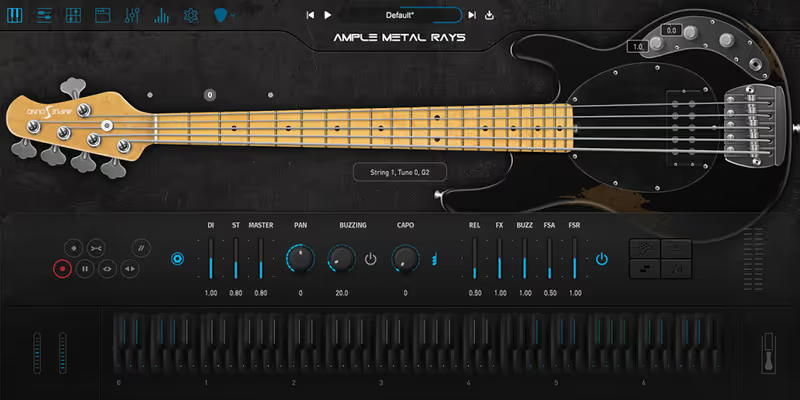
03 Ample Sound

Ample Metal Ray5

Best for Thrash Metal

Tested in our studio

A throaty Stingray mid-range growl that fills the frequency hole left by scooped guitars, though it shines brightest in standard or drop-D rather than ultra-low tunings.

Tested score
7.4
out of 10

How it scored

  • Realism 8.0

    The mid-range growl is convincing and distinct from the modern scooped crowd.

  • Playability 6.5

    The interface is cluttered and the sequencer has a learning curve.

  • Articulation Range 7.5

    Good range plus a Riffer feature that generates idiomatic bass grooves.

  • Footprint 7.5

    6 GB is moderate for a deep-sampled bass.

Why we picked it

Classic thrash and heavy metal. The Stingray growl cuts through mid-range heavy guitar mixes where scooped basses disappear.

Who should skip it

You are making modern Djent. It lacks the super-scooped, clanky tone required for ultra-low tuning.

The good

  • Classic growl
  • Great riff generator
  • Solid articulations

The bad

  • Interface is cluttered
  • Learning curve
  • Complex sequencing
Engine
Ample Engine
Type
Metal Bass
Size
6 GB
Price
$119
Why it scored that way

The classic Stingray growl, digitized.

Ample Sound usually focuses on acoustic guitars, but their bass engine is criminally underrated for heavy music. The Metal Ray5 captures that specific mid-range growl of a MusicMan Stingray that occupies a unique sonic space the ultra-scooped Dingwall libraries completely miss. I used it on a thrash metal project where the guitars were very scooped, and the Ray5 filled that frequency hole aggressively without clashing or muddying the low end.

The "Riffer" feature generates ideas by randomizing grooves based on your harmonic input while keeping them idiomatic to the bass guitar, which is useful for breaking out of repetitive writing patterns. The library handles drop tunings well, though it shines brightest in standard or drop-D where the string tension feels tight and punchy rather than flappy. It feels distinct from the modern "tech-metal" crowd and provides that classic, aggressive finger-style growl that heavy metal was originally built on.

Playing connects you to YouTube, which may set cookies.

Heard on
Rock Productions Power Metal Punk
Check price $119
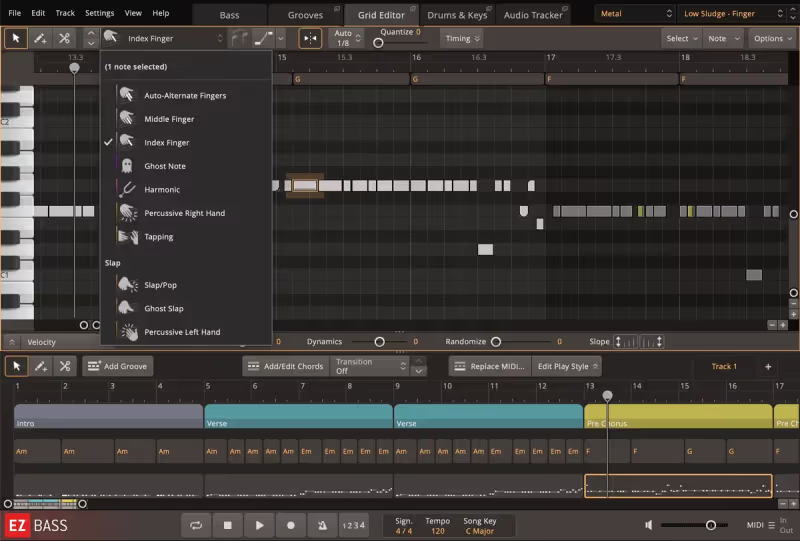
04 Toontrack

EZbass Metal EBX

Best for Djent Riffs

The smartest bass programming workflow here, with audio-to-MIDI conversion and a Grid Editor that generates release-ready riffs, but the full ecosystem buy-in is expensive.

Score
8.6
out of 10

How it scored

  • Realism 9.0

    The engine adjusts string selection and picking automatically. Very human.

  • Playability 9.0

    Grid Editor, audio-to-MIDI, and context-aware articulation switching.

  • Articulation Range 8.0

    Slides, dead notes, slapping, all programmable without MIDI PhD.

  • Footprint 8.5

    1.5 GB expansion, though EZbass core adds to the total.

Why we picked it

Modern metal producers who work fast. The AI 'Grid Editor' is the smartest tool on the market for programming realistic riffs.

Who should skip it

You are on a budget. You need to buy the core EZbass engine before you can even use this expansion.

The good

  • Incredible realism
  • Smart AI features
  • Great tone presets

The bad

  • Requires EZbass Core
  • Can sound 'too perfect'
  • Expensive ecosystem
Engine
EZbass
Type
Bass Expansion
Size
1.5 GB
Price
Check site
Why it scored that way

Finally, the 'Darkglass' sound in a playable format.

Toontrack revolutionized drums with Superior Drummer, and they are doing the same for bass with EZbass. The Metal EBX expansion captures the modern, clanky Dingwall sound that essentially defines the Djent genre. The engine understands musical context, automatically adjusting string selection and alternating picking to sound like a human player. After dragging a MIDI chord progression onto it, the bass line it generated was essentially release-ready.

The "Grid Editor" is the killer feature. You can program complex riffs with articulations like slides, dead notes, and slapping without needing any PhD in MIDI programming. On a recent progressive metal track, I needed a unison riff with the guitars, and EZbass tracked the guitar audio file and converted it to bass MIDI with shocking accuracy.

Playing connects you to YouTube, which may set cookies.

Heard on
Modern Metal Periphery vibe YouTube Covers
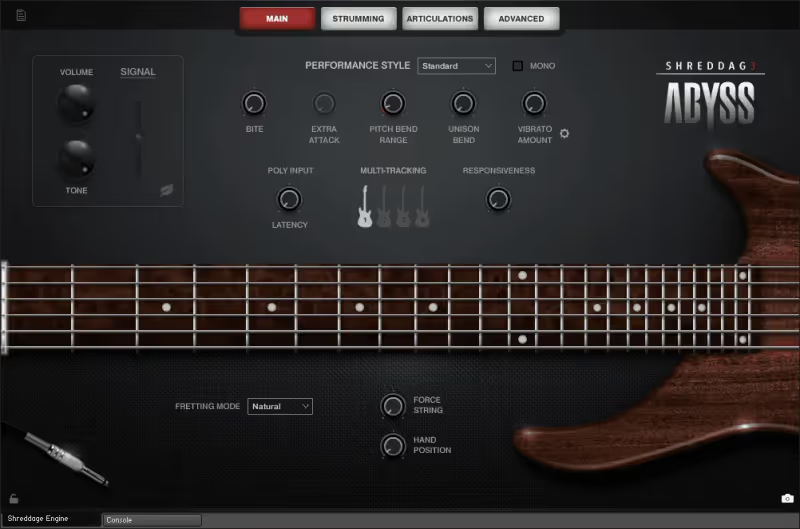
05 Impact Soundworks

Shreddage 3 Abyss

Best for Death Metal

Tested in our studio

A pristine DI signal that tracks down to low G and takes Neural DSP re-amping beautifully, but requires external amp simulation to sound finished.

Tested score
7.1
out of 10

How it scored

  • Realism 8.5

    Deep sampling with clean DI. The raw signal is excellent source material.

  • Playability 6.0

    Console scripts add complexity. This is an edit-heavy instrument.

  • Articulation Range 8.0

    Full range down to low G with solid round-robin depth.

  • Footprint 6.0

    10 GB is heavy, and you still need an external amp sim on top.

Why we picked it

Tone connoisseurs who want to use their own amps. The clean DI signal tracks incredibly low and takes distortion well.

Who should skip it

You want mix-ready tone out of the box. It requires external amp simulation to sound good.

The good

  • DI signal is clean
  • Huge note range
  • Console FX rack

The bad

  • Needs amp sim
  • Edit heavy
  • Complex mapping
Engine
Kontakt Player
Type
6-String Bass
Size
10 GB
Price
Check site
Why it scored that way

Deep, growling, and utterly filthy.

Shreddage has been the go-to name for virtual guitars for a decade, and Abyss brings that same level of deep sampling to the low end. It is recorded DI through high-end analog gear, meaning you get a pristine, clean signal to re-amp however you want. I run it through Neural DSP plugins to match the exact distortion tone of my guitars, and it tracks down to a low G, which is subterranean.

The "Console" scripts allow you to build a pedalboard chain inside the plugin with EQ, compression, and cabinets, but its real strength is as a raw source. I used Abyss on a deathcore breakdown recently, and the low G notes held their pitch and fundamental frequency without flapping or becoming muddy, which is rare for sampled instruments at that register.

Playing connects you to YouTube, which may set cookies.

Heard on
Video Game Scores Deathcore Heavy Metal
06 Submission Audio

Eurobass 3

Best for Metalcore

The definitive modern metalcore bass tone that practically mixes itself, but it only knows how to be aggressive, which makes it a one-genre instrument.

Score
7.6
out of 10

How it scored

  • Realism 9.0

    The percussive clank is indistinguishable from a well-tracked Spector.

  • Playability 8.5

    Almost no tweaking required. Load and play.

  • Articulation Range 4.0

    Pick style only. No finger, no slap. One trick.

  • Footprint 9.0

    2 GB. Remarkably small for this quality.

Why we picked it

Getting that 'Nolly' percussive clank instantly. It is aggressive, bright, and practically mixes itself.

Who should skip it

You need a vintage or warm tone. It only knows how to be aggressive and modern.

The good

  • Spot-on tone
  • Simple to use
  • Aggressive

The bad

  • One trick pony
  • No finger style
  • Limited articulations
Engine
Kontakt Player
Type
Metal Bass
Size
2 GB
Price
Check site
Why it scored that way

If you want the 'Nolly' sound, stop looking. This is it.

Submission Audio changed the virtual bass game forever. Before Eurobass, bass VSTs sounded like MIDI keyboards trying to be guitars. Eurobass sounds like a guy hitting a Spector Euro 5 LX very hard with a thick pick, aggressive, bright, and cutting through any mix with zero processing required. It provides that instant "Nolly" Getgood percussive clank that defines modern metalcore, and it hits the compressor in a way that makes the whole mix jump forward.

There isn't much to tweak, which is actually a blessing for producers who want to focus on writing rather than sound design. You get a DI signal and a few pre-processed tones that sound great out of the box without needing external amp simulation. I replaced a muddy live bass recording with Eurobass on a recent mix, and the track instantly got 50% heavier and tighter, which is a one-trick-pony complaint I am happy to live with.

Playing connects you to YouTube, which may set cookies.

Heard on
Periphery vibe Architects vibe Djent Productions
Check price
07 Native Instruments

Scarbee Rickenbacker Bass

Best for Prog Metal

Tested in our studio

A vintage Rickenbacker mid-range bite that modern Dingwall basses cannot replicate, though the sub-bass is thin enough that you may need to layer a sine underneath.

Tested score
6.6
out of 10

How it scored

  • Realism 7.5

    Captures the hollow Rickenbacker character well, though the interface is dated.

  • Playability 7.0

    Good articulations but the older Kontakt scripting shows its age.

  • Articulation Range 6.5

    Covers the basics. No Riffer or Grid Editor-style extras.

  • Footprint 5.5

    12 GB is heavy for a single bass instrument.

Why we picked it

Classic rock and progressive metal tones. The Rickenbacker character cuts through guitars with a unique, mid-range growl.

Who should skip it

You need sub-bass weight. It focuses on the mid-range 'clank' characteristic of the instrument.

The good

  • Iconic tone
  • Great articulations
  • Mix-ready

The bad

  • Not for downtuning
  • Specific character
  • Older interface
Engine
Kontakt Player
Type
Classic Bass
Size
12 GB
Price
Check site
Why it scored that way

The classic 'Clank' that defined rock and roll history.

While many modern libraries focus on the ultra-modern Dingwall sound, the Rickenbacker 4003 remains the king of character and mid-range bite. Native Instruments captured it well in this collaboration with Scarbee, with that distinct hollow "clank" that sits in a mix without needing tons of EQ to carve out space. It instantly evokes that classic rock or early progressive metal vibe.

For progressive metal or classic rock, it adds a texture that purely synthetic or modern basses cannot match. It isn't as sub-heavy as the modern options (you might need to layer a sub-sine underneath), but for mid-range definition it is hard to beat. I ran it through a saturation plugin on a track that needed to sound "vintage but heavy," and the gnarly, aggressive tone felt completely unique and organic.

Playing connects you to YouTube, which may set cookies.

Heard on
Classic Rock Progressive Metal Indie Rock
Check price

What didn’t make the list

2 cut
  • DjinnBass 2 Submission Audio

    The successor to Eurobass, targeting the Dingwall 7-string market specifically. Left out because Eurobass 3 is still the more widely used of the two and the tonal overlap is near-total.

  • Shreddage 3 Darkwall Impact Soundworks

    A Dingwall sampled through Darkglass Tone Capsule preamps. Extremely convincing for djent, but overlaps heavily with Shreddage 3 Abyss already in this list.

Read more →

Methodology

Who is this for

Working composers and producers who need reliability, speed, and character for professional scoring tasks.

Our testing process

Where we have tested a product, we do it in actual production scenarios, ranging from rapid sketches to commercial pitches, and we evaluate it in a dense template rather than in isolation. Where we have not, the product card says so and the assessment is drawn from specifications and documented behaviour instead.

Why you should trust us

We buy most reviewed plugins ourselves. Occasionally we receive NFRs for evaluation, but this never guarantees a review or positive verdict. We may earn commissions from links, but our editorial choices are never for sale.

Also considered

For every category, we audition the top 8 to 15 standard options, discarding any that suffer from poor scripting, slow load times, or uninspiring sampling.

Frequently Asked Questions

What tunings do extended range basses actually use?

A five string adds a low B below the standard E, and a six string adds a high C above the G. Metal players then drop those further, so drop A on a five string is common and matches a seven string guitar tuned to A. Match the bass to whatever the guitars are doing rather than transposing a four string part down.

How low can a bass go before nobody hears it?

A low B sits around 31 hertz, which most playback systems reproduce poorly or not at all. The note is still audible because the ear reconstructs it from the harmonics above it, which is why definition in the 700 hertz to 2 kilohertz range matters more than boosting the fundamental. Filtering out the grit is what makes a low riff vanish.

Should the bass follow the guitar riff exactly?

Mostly yes in modern metal, and not note for note. Doubling the riff is what gives the low end its rhythmic authority, and the bass usually needs longer notes than the guitars to keep the harmony continuous underneath the palm mutes. Simplify the fastest passages rather than trying to track every note.

How do I keep a low tuned bass defined in a dense mix?

Run a distorted parallel layer above the clean one. The clean signal carries the fundamental and the distorted layer supplies the midrange harmonics the ear uses to place the pitch, which is how metal bass stays audible under two heavily distorted guitars. Keep the clean layer mono and let the distorted layer take the width.

Written By

Felix Ward

Felix is an indie-folk songwriter and session guitarist who values vibe over perfection. He looks for tools that potentialize 'happy accidents' and offer immediate inspiration. If a plugin requires reading a 100-page manual, he's probably already moved on.

Related Guides

All Guides →

New reviews, no noise

Occasional email when we publish something worth your time. No daily digest, no vendor press releases.

We store only your address, never sell it, and delete it as soon as you unsubscribe. See our privacy policy.