The Best Cinematic String Libraries for 2026

Bad string samples sound like accordions being strangled. Good ones make the director cry. We found the ones that bring the tears.

Louis Raveton
By Louis Raveton Composer & Lead Editor at MODWHEEL

What changed: Added Performance Samples Pacific Ensemble Strings and Spitfire BBC Symphony Orchestra Professional to the alternatives, with the reasons neither made the main list.

ModWheel is reader-supported. When you buy through links on this page we may earn an affiliate commission, at no extra cost to you. This never influences which products we recommend, read our testing methodology.

Prices come from the store's own feed and were last checked 8 September 2026. We don't issue discount codes — the price you see is the store's own.

Pick one in 10 seconds

Short version

Compare all 7

Action Strings 2
1. Action Strings 2 Native Instruments
7.2
Engine
Kontakt Player 6.1+
Type
Live String Phrases
Size
30 GB
Engine
Kontakt Player 5.8+
Type
Hybrid String Engine
Size
38 GB
Engine
VST/AU/AAX
Type
Ensemble Strings
Size
4 GB
Hollywood Strings 2
4. Hollywood Strings 2 EastWest Sounds
7.6
Engine
OPUS Engine
Type
Full Orchestra
Size
300 GB
$174 $299 View price
Cinematic Studio Strings
5. Cinematic Studio Strings Cinematic Studio Series
8.2
Engine
Kontakt Player 5.8+
Type
Symphonic Strings
Size
35 GB
Engine
Kontakt Player 5.6+
Type
Chamber Strings
Size
80 GB
7. Berlin Strings Orchestral Tools
7.7
Engine
SINE / Kontakt
Type
Divisi Strings
Size
140 GB

String libraries are the black hole of a composer's bank account. We chase the flawless legato, the grittiest spiccato, and the most realistic room tone, often ending up with hard drives full of mediocrity. The problem is that 'cinematic' means different things to everyone. For some, it is the Zimmer wall of sound. For others, it is a single, fragile cello line.

I have filtered out the noise. This list ignores the dated ROMplers and the overpriced disappointments. These are the seven string libraries that actually live in my template. Whether you need the dry, biting attack for a horror chase or the lush, syrup-thick sustain for a love theme, one of these will do the job without fighting you.

Several of these picks also appear in our Best Action Strings for Fast Ostinatos: A Composer’s Guide roundup, which is worth a look if you are weighing up both.

Top Picks

01 Native Instruments

Action Strings 2

Best for Heist Music

Tested in our studio

A phrase library that finally earns its place in a template, because the MIDI drags out and the harmony becomes yours.

Tested score
7.2
out of 10

How it scored

  • Realism 7.8

    Real recorded bowing, but edited phrases start to tick over into robotic.

  • Legato & Playability 7.0

    MIDI drag adds flexibility that the phrase grid otherwise denies you.

  • CPU & RAM Footprint 6.8

    30 GB install for one rhythmic job.

Why we picked it

Creating driving, rhythmic ostinatos for action scenes. The MIDI drag-and-drop feature finally makes phrase libraries flexible.

Who should skip it

You need emotional sustain or slow-moving chords. It is strictly a rhythm machine.

The good

  • MIDI drag and drop
  • Punchy sound
  • Great interface

The bad

  • One specific sound
  • Can sound robotic
  • Large install
Size
30 GB
Engine
Kontakt Player 6.1+
Type
Live String Phrases
Price
$299
Why it scored that way

The original was stiff. This sequel is actually usable.

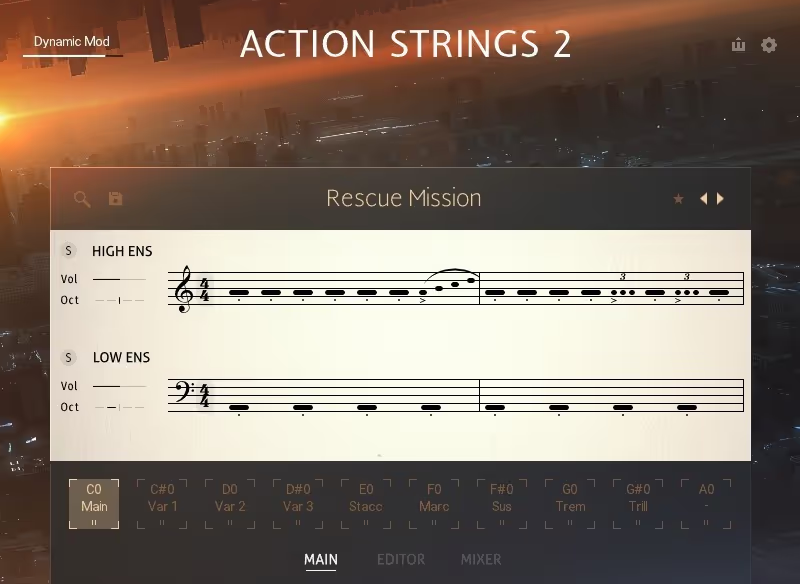
Native Instruments finally fixed the biggest problem with orchestral phrase libraries: the fact that they usually lock you into their pre-recorded melody. Action Strings 2 allows you to drag the MIDI out of the plugin and edit it in your DAW, a feature that single-handedly saves it from the "toy" category. I used this feature on a heist scene where I liked the rhythm but needed to change the harmonic progression to match the picture. Dragging the MIDI allowed me to re-voice the chords while keeping the bowing patterns intact, giving me the best of both worlds: recorded realism and custom flexibility.

It is still somewhat of a one-trick pony. It does driving, aggressive, "Mission Impossible" ostinatos incredibly well, and that is about it. Do not try to write a love theme with this. But for that specific, rhythmic tension that cuts through a dense mix better than almost anything else, it is a sharp utility tool. The sound is dry and punchy, making it easy to sit in a mix with synthesizers and sound effects without getting muddy or lost in the frequency spectrum.

Playing connects you to YouTube, which may set cookies.

Heard on
Action Movies Car Commercials Crime Shows
Check price $299
02 Heavyocity

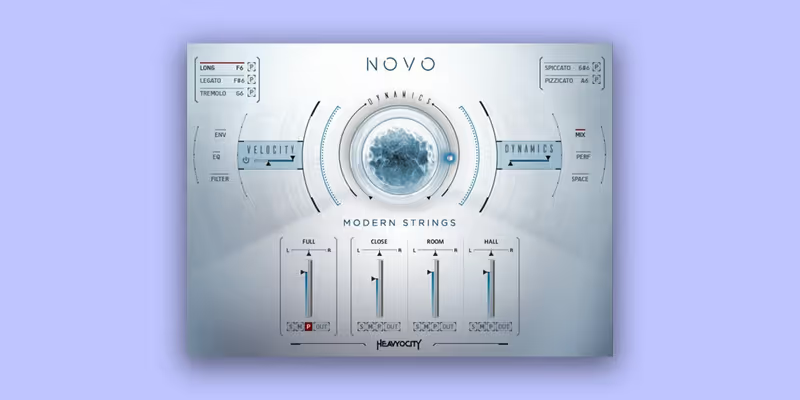
NOVO Modern Strings

Best for Hybrid Scoring

Tested in our studio

Buy it for the sound design engine, not for the strings, and it will save you hours of synth programming on a tension cue.

Tested score
6.5
out of 10

How it scored

  • Realism 6.8

    Aggressive and dry. The traditional sections are competent but limited.

  • Legato & Playability 6.5

    The interface takes real time before it plays back what you intended.

  • CPU & RAM Footprint 6.2

    38 GB, and the loop engine is not cheap once layered.

Why we picked it

Hybrid tension and horror scores. The sound design engine allows you to create terrifying swarms and drones that standard orchestras cannot match.

Who should skip it

You require a traditional, lush Hollywood string sound. The acoustic samples are aggressive and sharp, lacking the warmth needed for romance.

The good

  • Deep sound design engine
  • Massive loop library
  • Aggressive tone

The bad

  • Complex interface
  • Traditional strings are limited
  • Expensive
Size
38 GB
Engine
Kontakt Player 5.8+
Type
Hybrid String Engine
Price
$549
Why it scored that way

Strictly for the composers who want to sound like Hans Zimmer on a bad acid trip.

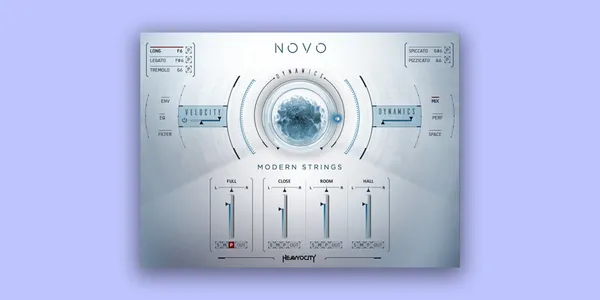
Heavyocity does not care about your Mozart mockups. NOVO is an instrument built for punishment and modern sound design. The traditional string sections are surprisingly competent-aggressive, biting, and dry-but the real value lies in the loop engine. You can mangle, filter, and gate these orchestral samples until they sound like a swarm of bees or a dying engine. I used the "String Designer" on a recent sci-fi thriller to create a bed of tension that sat under dialogue for three minutes, saving me hours of synth programming. It gives the orchestra a mechanical, industrial quality that suits modern, dystopian storytelling where beauty is secondary to impact.

It is undeniably heavy on the CPU, and the interface, which looks like a spaceship, can be a bit distracting when you just want to find a sound. However, for horror, suspense, or trailer music where "impact" is more important than "realism," it is a cheat code. I often layer the "Loop Designer" pulses under a real string section to give the orchestra a rhythmic, synthetic backbone that drives the track forward. It adds a momentum that static string samples often lack, pushing the cue with relentless energy.

Playing connects you to YouTube, which may set cookies.

Heard on
Horror Trailers Sci-Fi Games Industrial Scores
Check price $549
03 UJAM

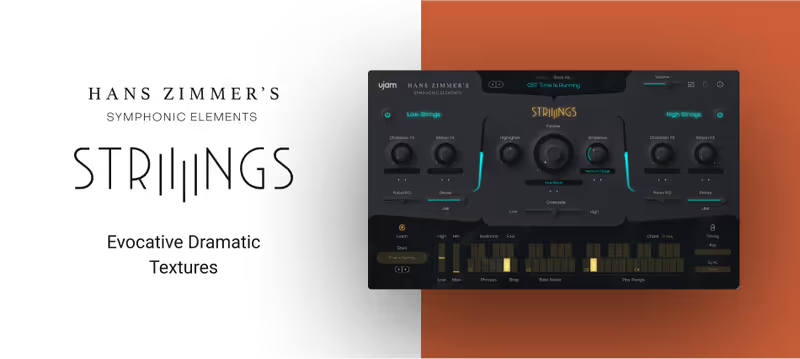
Symphonic Elements STRIIIINGS

Best for Action Rhythms

Not an instrument and not pretending to be one, but at 11 PM with a cue due at midnight it is the fastest tool here.

Score
8.2
out of 10

How it scored

  • Realism 7.2

    Genuinely Hollywood-produced source, undercut by hearing the same phrase twice.

  • Legato & Playability 8.5

    Zero learning curve. A triad gets you a finished-sounding phrase.

  • CPU & RAM Footprint 8.8

    4 GB, the lightest library in this roundup by a wide margin.

Why we picked it

Producers who need the 'Zimmer Sound' without knowing orchestration. It delivers mix-ready action phrases instantly.

Who should skip it

You want creative control over notes. It is a phrase player that locks you into pre-recorded patterns.

The good

  • Instant Hollywood sound
  • Zero learning curve
  • Zimmer production value

The bad

  • Cannot write melodies
  • Phrase-based only
  • Limited variation
Size
4 GB
Engine
VST/AU/AAX
Type
Ensemble Strings
Price
$249
Why it scored that way

It is not an instrument. It is a deadlines saviour.

UJAM takes the massive, private sample archives of Hans Zimmer and packages them into a 'guitarist-friendly' interface that is surprisingly effective. This isn't for writing intricate counterpoint. You play a simple triad, and the plugin triggers a full, Hollywood-produced phrase that instantly sounds like a blockbuster. Purists hate it, but when a director calls me at 11 PM needing a "driving action cue" by midnight, this plugin pays for itself in ten minutes. It is the fastest productivity tool for tight turnaround times.

You have zero control over the individual notes within the phrase, which is a major limitation for serious orchestration. You cannot write a melody with this. But as a background layer to thicken up a mockup, or as a starting point to get the creative juices flowing, it sounds embarrassingly expensive. I often use it to lay down a rhythm track and then orchestrate my own strings on top of it, using it as a high-quality placeholder that sometimes makes the final mix.

Playing connects you to YouTube, which may set cookies.

Heard on
Reality TV Game Menus YouTube Backgrounds
Check price $249
04 EastWest Sounds

Hollywood Strings 2

Best for Film Score

Still the big-budget California sound, and the OPUS engine has made a decade-old library usable again, if you have the machine for it.

Score
7.6
out of 10

How it scored

  • Realism 8.8

    Staggering detail in finger position and portamento. The samples do show their age.

  • Legato & Playability 7.8

    Deep articulation list, but it wants programming rather than playing.

  • Mic Options 9.2

    Main Mics alone sit in a cinematic perspective with no EQ.

  • CPU & RAM Footprint 4.5

    300 GB and genuinely demanding. The weakest showing in the roundup.

Why we picked it

Classic Hollywood blockbuster scoring. It delivers the wide, lush sound associated with big-budget cinema.

Who should skip it

You have limited RAM. It is a resource-intensive library that demands a powerful computer.

The good

  • Industry standard sound
  • Huge articulation list
  • Powerful engine

The bad

  • Resource heavy
  • Large install
  • Older samples
Size
300 GB
Engine
OPUS Engine
Type
Full Orchestra
Price
$174
Why it scored that way

The 'California Sound' in a box. Big, lush, and incredibly detailed.

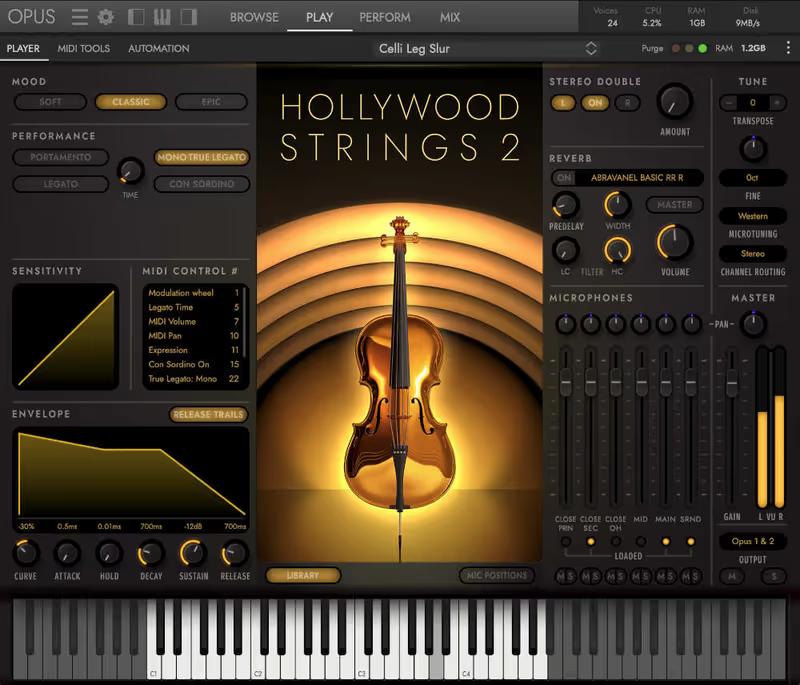
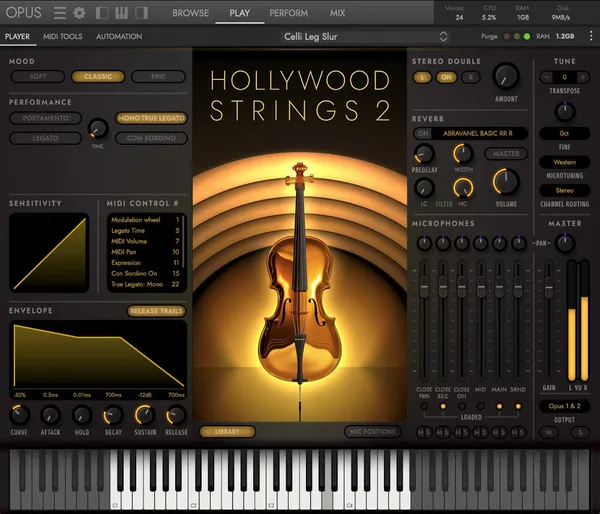
Hollywood Strings has been the industry standard for over a decade for a reason: it defines the "California Blockbuster" sound. Produced by Doug Rogers and Nick Phoenix, the detail in the finger positions, vibrato control, and portamento is staggering. I still pull this library out when I need a sound that is undeniably "big budget." The "Main Mics" position places the strings in a convincing cinematic perspective that sounds mixed right out of the box, saving me hours of EQ and reverb tweaking.

The new OPUS engine has breathed new life into these older samples, making the library faster and cleaner to use than the old PLAY engine nightmare. However, it remains a resource hog. You need a powerful machine to run the "Diamond" edition with all mics enabled. If you want that classic film score sound without spending weeks programming, this is still a top contender, offering a breadth of articulations that few modern libraries can match. It remains the gold standard for that classic, wide-screen Hollywood sound that audiences instantly recognize.

Playing connects you to YouTube, which may set cookies.

Heard on
Blockbuster Movies TV Drama Epic Games
Check price $174 (was $299)
05 Cinematic Studio Series

Cinematic Studio Strings

Best for Emotional Scoring

Tested in our studio

The default professional choice for emotional writing, provided you can live with the legato delay it needs to sound that good.

Tested score
8.2
out of 10

How it scored

  • Realism 9.2

    The legato transitions read as a performance rather than a crossfade.

  • Legato & Playability 9.4

    Forgiving enough that you stop riding the mod wheel like a maniac.

  • Mic Options 6.5

    A largely fixed mix. Fine out of the box, but little room to re-balance.

  • CPU & RAM Footprint 7.5

    35 GB and well behaved in a large template.

Why we picked it

The undisputed king of emotional legatos. The transition logic is so musical that it feels like the software is reading your mind.

Who should skip it

You cannot handle legato latency. The 60ms delay required for realism makes live performance frustrating.

The good

  • Unbeatable legato
  • Consistent short notes
  • Simple interface

The bad

  • Significant legato latency
  • Dark tone (needs EQ)
  • Limited articulations
Size
35 GB
Engine
Kontakt Player 5.8+
Type
Symphonic Strings
Price
Check site
Why it scored that way

If you only buy one string library in your career, this should probably be it.

There is a reason Cinematic Studio Strings (CSS) is on every professional template I know: it just works. The legato engine is dark, lush, and incredibly forgiving. Unlike older libraries where you have to ride the modulation wheel like a maniac to get a musical phrase, CSS instinctively understands your intent. It smooths out the transitions with a "chocolatey" richness that instantly feels expensive. I used it for the main theme of a romantic drama, and the cellos sang with a human quality that brought the director to tears. It captures the emotional weight of a performance in a way that feels organic and connected, rather than just a series of samples.

The only catch is the baked-in latency, which drives some people crazy. The samples need around 60ms to "breathe" before the note speaks, meaning you have to nudge your MIDI track backwards for it to be on the grid. Once you get used to this workflow, it becomes second nature. It is not the most detailed library for incredibly fast runs, but for pure, slow-burning emotion, it is currently unbeaten in the industry. The trade-off for the latency is a realism that other libraries sacrifice for playability.

Playing connects you to YouTube, which may set cookies.

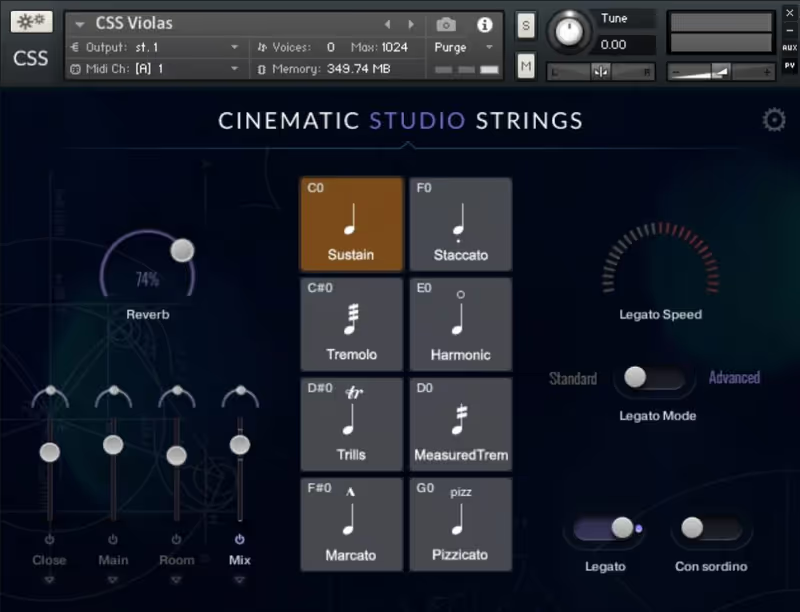
Interface of Cinematic Studio Strings by Cinematic Studio Series
Heard on
Hollywood Blockbusters AAA Game Scores Trailer Music
06 Spitfire Audio

Spitfire Chamber Strings

Best for Period Drama

The right library for anything that has to live under dialogue, because a 4-3-3-3-3 section leaves room the 60-piece one does not.

Score
8.2
out of 10

How it scored

  • Realism 9.4

    You can hear the bow grip the string, which is the whole argument for it.

  • Legato & Playability 8.6

    Performance legato responds well, though it can turn harsh when pushed.

  • Mic Options 9.0

    Full Air Studios mic tree, so the room is yours to place.

  • CPU & RAM Footprint 5.8

    80 GB, and loading the full mic set is a serious commitment.

Why we picked it

Intimate drama and television scoring. The smaller ensemble size provides a detail and grain that pierces through dialogue effortlessly.

Who should skip it

You are scoring a massive superhero blockbuster. It lacks the sheer width and power of a 60-piece symphonic section.

The good

  • Exceptional recorded detail
  • Air Studios room tone
  • Performance legato

The bad

  • Expensive
  • Can be harsh
  • Huge disk footprint
Size
80 GB
Engine
Kontakt Player 5.6+
Type
Chamber Strings
Price
Check site
Why it scored that way

This is the 'Bridgerton' sound. Intimate, detailed, and aggressively realistic.

While big blockbuster scores go for size, the smartest composers know that intimacy often hits harder. Spitfire Chamber Strings (SCS) features a smaller section (4-3-3-3-3) recorded at Air Studios, allowing you to hear the bow gripping the string. It has a texture and grain that massive symphonic libraries lose. I use SCS as my go-to for television drama because it fits inside dialogue without eating up the entire frequency spectrum. The sound is detailed enough to stand alone but transparent enough to let actors speak, making it a reliable tool for underscore that needs to support the scene without overpowering it.

The "Performance Legato" patch is a work of art, allowing me to play runs and slow, lyrical lines on a single track without keyswitching. It can sound a bit harsh in the upper register if you rely too heavily on the close mics, but that rawness is part of its charm. It doesn't sound like a synth pad. It sounds like 16 people in a room playing wood and wire. It brings a "prestige TV" sound to any project instantly, adding a layer of sophistication that cheaper libraries simply cannot fake.

Playing connects you to YouTube, which may set cookies.

Heard on
Bridgerton The Crown Modern TV Drama
07 Orchestral Tools

Berlin Strings

Best for Symphonic Works

The library you graduate to once mud in your counterpoint is the problem you are trying to solve, and you have time to program it.

Score
7.7
out of 10

How it scored

  • Realism 9.0

    Teldex room tone plus blurring articulations that few libraries attempt.

  • Legato & Playability 7.5

    Rewards patience. The engine is not something you learn on a deadline.

  • Mic Options 8.8

    Deep mic control through SINE, with real divisi separation.

  • CPU & RAM Footprint 5.5

    140 GB and heavy once divisi sections are live.

Why we picked it

Detailed, intricate orchestrations. The divisi sections allow for complex counterpoint that would turn other libraries into mud.

Who should skip it

You are on a tight deadline. The complexity of the engine requires time and patience to program correctly.

The good

  • Exceptional recorded detail
  • Teldex room acoustics
  • Divisi options

The bad

  • Very expensive
  • Steep learning curve
  • Resource heavy
Size
140 GB
Engine
SINE / Kontakt
Type
Divisi Strings
Price
Check site
Why it scored that way

The connoisseur's choice. Complex, difficult, and utterly beautiful.

Berlin Strings is the library you graduate to when you are bored of the "easy" options. It offers insane detail, including specific blurring articulations and separate sections for intricate divisi writing, which allows for complex counterpoint that would turn other libraries into mud. The Teldex Studio room tone is legendary. It adds a natural, warm "sheen" of class to everything. I use the "Spiccato Exposed" patch for fast, aggressive passages where I need to hear every single bow stroke clearly, capturing the frenetic energy of a chase scene with absolute precision.

However, this is not a library for beginners. The Capsule (and now SINE) engine can be finicky, requiring a lot of system resources and meticulous programming to sound right. If CSS is an automatic transmission, Berlin Strings is a manual stick shift. You have to drive it-riding the dynamics, matching the vibrato-but when you do, you have total control over the road. It rewards patience with the most realistic resulting sound on the market, allowing for a level of expressiveness that automatic libraries simply cannot reach.

Playing connects you to YouTube, which may set cookies.

Heard on
Film Scores Classical Mockups Detailed Animation

What didn’t make the list

5 cut
  • Synchron Strings Pro Vienna Symphonic Library

    Excellent Synchron Stage room and a strong legato, but the Vienna Synchron Player is a second ecosystem to learn on top of Kontakt.

  • CineStrings CORE Cinesamples

    Warm Sony Scoring Stage tone at a lower price, though the articulation set is thinner than the libraries above.

  • Afflatus Chapter I: Strings Strezov Sampling

    Unusually expressive scripted phrases, but the strong baked-in character makes it hard to sit beside a drier section.

  • Pacific Ensemble Strings Performance Samples

    A 16, 12, 10, 8 ensemble with a fast, playable legato that many composers now reach for first. Sold direct only, so it sits outside the pricing and availability we can track here.

  • BBC Symphony Orchestra Professional Spitfire Audio

    The Maida Vale strings are excellent and the free Discover tier makes the range easy to audition, but the strings are not sold separately from the full orchestra.

Decide Wet or Dry Before Anything Else

This is the choice that decides whether a library fits your template, and it is the one buyers think about last.

A wet library was recorded in a scoring hall with its ambience captured, and it sounds finished the moment you load it. That is the appeal and it is also a commitment, because the hall is baked into every sample and you cannot take it out. Two wet libraries recorded in different halls will never sit together properly.

A dry or close-recorded library arrives sounding thin and unimpressive, and gives you the ability to place it wherever your reverb says. It costs you an afternoon of setup and it buys you a template where everything shares one room.

The practical rule is to pick a lane and stay in it. A composer whose library shelf is half wet and half dry spends the rest of their working life trying to reconcile two halls, which is the single most common reason a large template sounds like several orchestras rather than one.

Buy the Legato, Not the Articulation Count

Product pages sell articulation counts because they are easy to print. The number tells you very little about whether a library will hold a melody.

Legato is the expensive part of a string recording, because every interval has to be performed as a transition rather than as two separate notes, and the number of combinations grows quickly. A library with forty articulations and mediocre legato will disappoint you on the first exposed line, while one with twelve and a beautiful legato will carry a whole cue.

So audition the legato first and ignore everything else until it convinces you. Play a slow melodic line with wide intervals, then a fast one with small steps, and listen for whether the transitions sound like a bow changing direction or like a crossfade.

The friction is that demos never show you this. Demo tracks are written to flatter the library, so the intervals stay in the range the sampling handles well, and finding the edges requires a trial or somebody else’s honest walkthrough.

Check the Section Size Against What You Write

Cinematic covers section sizes that sound nothing alike, and the word tells you nothing about which one you are buying.

A full section of sixty players has weight and inertia. It cannot move quickly, it blooms rather than starts, and it is the sound of a main title. A chamber section of around twenty has definition and speed, it articulates rhythmic writing cleanly, and it is what most modern television underscore actually uses.

Buying the wrong size is a common and expensive mistake. A large section will smear a fast ostinato that a chamber section would nail, and a chamber section will not deliver the wall of sound a trailer brief asks for.

Where your writing genuinely needs both, that is the honest argument for owning two libraries rather than one, and it is a better argument than any difference in tone. Our chamber strings roundup covers the smaller end.

Know What Is Missing Before You Buy

Two things are absent from more string libraries than you would expect, and neither is prominent on a product page.

Second violins. Plenty of libraries record firsts, violas, cellos and basses and leave the seconds out, on the assumption you will transpose the firsts. That works until you write real divisi, where two lines built from identical samples phase against each other instead of sounding like two desks.

Divisi patches. Recorded divisi, with a genuinely reduced player count, is rare. Without it, dividing a section in your DAW stacks two full sections rather than splitting one, which is louder and thicker when the point of divisi is thinner.

Check both against the writing you actually do. If your string parts are melody over sustained harmony, neither matters. If you write counterpoint across desks, they decide the purchase.

What to Buy First, and What to Add

Buy one library that does sustains and legato well, and resist buying anything else until it stops being enough.

That library is the one carrying every emotional line you write, so it is worth paying for and worth learning properly. Shorts, runs and effects can wait, because a cue with beautiful sustains and adequate shorts works and the reverse does not.

The second purchase is decided by what your first one is bad at rather than by what looks exciting. Most composers find it is shorts and ostinatos, some find it is a smaller section, and a few find it is a solo instrument for the exposed moments. There is a roundup behind each of those three.

Buying in that order also spreads the cost across the sales that this category runs constantly, which is worth more than any individual discount.

Read more →

Methodology

Who is this for

Working composers and producers who need reliability, speed, and character for professional scoring tasks.

Our testing process

Where we have tested a product, we do it in actual production scenarios, ranging from rapid sketches to commercial pitches, and we evaluate it in a dense template rather than in isolation. Where we have not, the product card says so and the assessment is drawn from specifications and documented behaviour instead.

Why you should trust us

We buy most reviewed plugins ourselves. Occasionally we receive NFRs for evaluation, but this never guarantees a review or positive verdict. We may earn commissions from links, but our editorial choices are never for sale.

Also considered

For every category, we audition the top 8 to 15 standard options, discarding any that suffer from poor scripting, slow load times, or uninspiring sampling.

Frequently Asked Questions

What makes a string library sound cinematic rather than classical?

The room and the loud end of the dynamic range. Cinematic libraries are recorded on scoring stages with the reflections included and sampled hard at the top, so they sound large before you add anything. A classical library recorded closer and more evenly is more accurate and needs work to sound like a film score.

How many microphone positions should I load?

One or two. Every extra position multiplies RAM and disk streaming for a difference most cues never expose, and mixing several positions introduces phase problems that sound like a lack of definition. Pick a main position, add a close mic only where you need bite, and load the rest when you mix rather than when you write.

Do I need more than one string library?

Most working templates carry two. One detailed library for exposed writing and one large library for weight covers almost everything, and the second one earns its place the first time a cue needs both. A third rarely changes what you can deliver.

Why do my strings still sound fake with a good library?

Usually because the dynamics are static. Sampled strings live on the mod wheel, and a line played at one dynamic will sound synthetic no matter which library it comes from. Move the wheel through every phrase, overlap the note ends so the legato transitions actually trigger, and pull note starts slightly off the grid.

Written By

Louis Raveton

Louis works across immersive scores (Venice Biennale, LVMH) and animation (Canal+), while producing Downtempo and Electro-Dub as Monsieur Shwill and Flagada. He treats his sample drive like a record collection, constantly hunting for the perfect 'imperfect' texture

Related Guides

All Guides →

New reviews, no noise

Occasional email when we publish something worth your time. No daily digest, no vendor press releases.

We store only your address, never sell it, and delete it as soon as you unsubscribe. See our privacy policy.