Best Double Bass Ensembles (2026): Orchestral Lows

The basses are the anchor of the orchestra. Without a solid, growling low end, your epic action cues will feel thin and weak. You need mass, not just volume.

Felix Ward
By Felix Ward Songwriter & Multi-Instrumentalist

What changed: The KOMPLETE 15 Standard link pointed at a different product entirely. It now goes to KOMPLETE 15 Standard.

ModWheel is reader-supported. When you buy through links on this page we may earn an affiliate commission, at no extra cost to you. This never influences which products we recommend, read our testing methodology.

Prices come from the store's own feed and were last checked 8 September 2026. We don't issue discount codes — the price you see is the store's own.

Pick one in 10 seconds

Short version

Compare all 7

Engine
Kontakt Player
Type
Ensemble Engine
Size
10 GB
CineStrings Core 7.6
Engine
Kontakt Player
Type
Orchestral Section
Size
50 GB
$259 $399 View price
Engine
OPUS
Type
Epic Section
Size
100 GB
$209 $399 View price
Engine
Kontakt Player
Type
Hybrid Strings
Size
30 GB
5. KOMPLETE 15 Standard Native Instruments
7.5
Engine
Kontakt Player
Type
Divisi Section
Size
30 GB
Engine
Kontakt
Type
Hyper-Ensemble
Size
40 GB
7. Berlin Basses Orchestral Tools
9.0
Engine
SINE Player
Type
Detailed Section
Size
80 GB

In an orchestral mix, the Double Basses provide the foundation upon which everything else rests. A good bass section needs to be versatile: capable of terrifying, rattling fortissimo shorts for action scenes, and warm, resinous legato sustain for emotional underscore.

The best double bass ensemble VSTs capture the sheer displacement of air that happens when 8-12 massive instruments play in unison. From the detailed aggression of Berlin to the hyped cinematic punch of Hollywood, here are the essential low-end libraries.

The cello carries the line these basses sit underneath, and it is a far harder library to get right. Our Best Emotional Cellos (2026) roundup covers the solo instruments worth the money.

Top Picks

01 Sonuscore

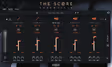
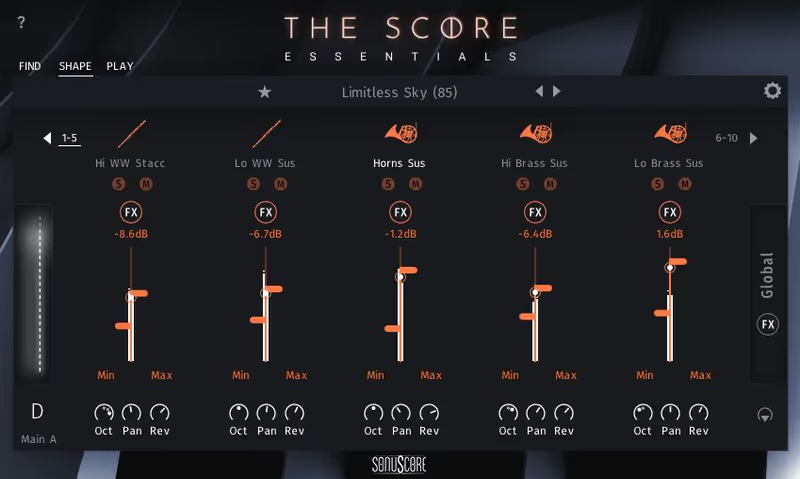
The Score Essentials

Best for TV/Game Music

An arranger with basses in it rather than a bass library, which is the fastest way to a rhythmic bed and the least control over it.

Score
7.3
out of 10

How it scored

  • Low-End Weight 7.5

    Solid under an arrangement, without the girth of the dedicated libraries here.

  • Dynamic Range 6.5

    Simpler samples than the rest of the page, and the engine chooses much of it.

  • Legato Agility 8.0

    The engine plays the line, so agility is a function of the pattern.

  • Spiccato Bite 7.0

    Present and mechanical when the pattern repeats.

Why we picked it

Best for composers on tight deadlines who need to generate complex rhythmic accompaniments instantly.

Who should skip it

Skip this if you want total control over every single note velocity.

The good

  • Incredible engine
  • Very fast workflow
  • Low RAM usage

The bad

  • Samples are simpler
  • Locked to the engine
  • Can sound mechanical
Engine
Kontakt Player
Type
Ensemble Engine
Size
10 GB
Price
$99
Why it scored that way

The ultimate sketching tool for deadlines.

My Experience: The Orchestra isn't just a library. It's a complete performance tool. The engine plays rhythms for you based on chords you hold. If you hold a C-major chord, the basses will automatically chug a specific ostinato pattern while the cellos play a counter-melody. For pumping out TV reality music, background tension, or quick game loops, it saves hours of programming time and lets you focus on the harmony and structure rather than the minutiae of MIDI data.

Deeper Look: The bass sound is tight, clean, and unobtrusive. It’s optimized for rapid movement and clarity. While it lacks the sheer depth of CineBass or the size of Majestica, its strength is its agility. You can play fast, complex rhythmic passages that would sounded muddy on other larger libraries, and the engine keeps them tight and perfectly synchronized to your DAW tempo. It is the ultimate sketching tool.

Playing connects you to YouTube, which may set cookies.
Heard on
Reality TV Indie Games Quick Sketches
Check price $99
02 Cinesamples

CineStrings Core

Best for Cinematic Warmth

The warmest low end on this page and the slowest to move, which is the MGM room doing both.

Score
7.6
out of 10

How it scored

  • Low-End Weight 9.2

    Natural bloom and girth that cannot be added with EQ afterwards.

  • Dynamic Range 8.0

    A full range, recorded in a room that flatters the quiet end.

  • Legato Agility 6.5

    Thick and unhurried. Fast runs are not what it is for.

  • Spiccato Bite 6.5

    Rounded by the room rather than sharp.

Why we picked it

Best for emotional underscore and adding weight/warmth to an ensemble.

Who should skip it

Skip this if you need super-fast, dry, agile runs. The room sound is thick.

The good

  • Beautiful warm tone
  • Sony stage ambience
  • Very easy to use

The bad

  • Not the most agile
  • Older interface
  • Limited articulations
Engine
Kontakt Player
Type
Orchestral Section
Size
50 GB
Price
$259
Why it scored that way

The warm, enveloping hug of the MGM stage.

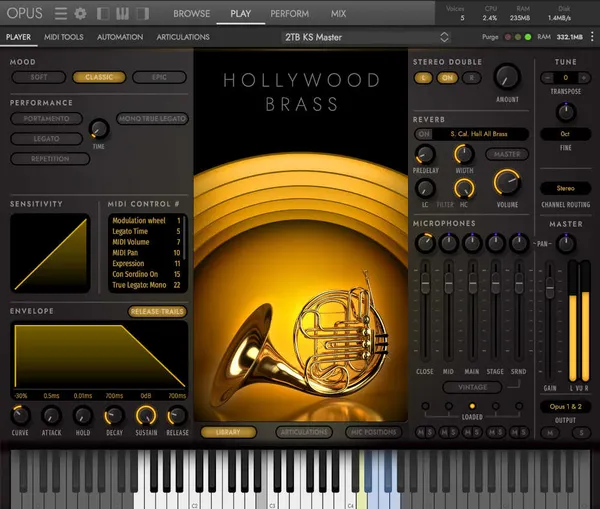
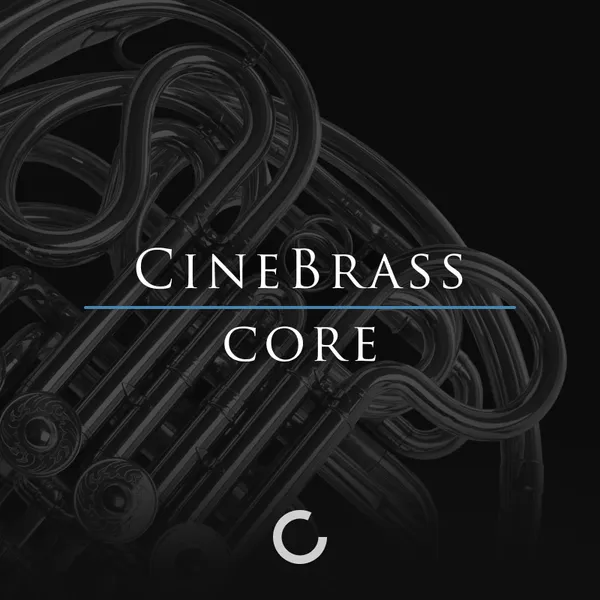
My Experience: If Hollywood Basses are the "bite," CineBass is the "weight" and the "warmth." Recorded at the legendary MGM (Sony) stage, these samples have a natural bloom and low-end girth that is impossible to EQ in artificially. I use the legatos for emotional, foundational pads that need to support the entire orchestra. They don't just sit in the mix. They wrap around it like a warm blanket. The sound is incredibly wide and lush right out of the box.

Deeper Look: The library focuses on the low range, extending down to a thunderous C0. The "Tuilette" patch is a standout: a low, rumbling effect that shakes the subwoofer and adds instant tension. Cinesamples excels at "mix-ready" patches. The "Dennis Sands" mix allows you to load one patch and sound like a finished movie score instantly without touching a single fader or adding any plugins. It captures that classic Hollywood Golden Age sound perfectly.

Playing connects you to YouTube, which may set cookies.

Heard on
Disney Films Emotional Dramas Adventure Scores
Check price $259 (was $399)
03 EastWest Sounds

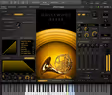
Hollywood Orchestra Opus Edition Diamond

Best for Action Scoring

The most aggressive basses in software, which is why they cut through anything and why they can turn harsh.

Score
8.9
out of 10

How it scored

  • Low-End Weight 9.0

    Growling and heavy, with a top end that stays audible in a dense mix.

  • Dynamic Range 8.8

    Very wide, and the loud end is where it was designed to live.

  • Legato Agility 8.0

    Quick enough for driving lines, and less refined than the Berlin entry.

  • Spiccato Bite 9.6

    The sharpest shorts on the page. Best here.

Why we picked it

Best for action and epic trailer music where you need aggressive, biting shorts.

Who should skip it

Skip this if you want a soft, ambient, mossy texture. These basses want to fight.

The good

  • Incredible biting attack
  • OPUS engine is powerful
  • Industry standard sound

The bad

  • Can sound harsh
  • Large footprint
  • iLok required
Engine
OPUS
Type
Epic Section
Size
100 GB
Price
$209
Why it scored that way

The sound of every blockbuster film since 2010.

My Experience: EastWest's Hollywood series defined the "Trailer Sound" for a decade, and frankly, it still holds the crown for sheer aggression. The basses here are aggressive, growling, and heavy. They have a brilliant top-end bite that cuts through dense mixes effortlessly, even when competing with massive synths and percussion. When I need a spiccato line that drives an action cue forward with mechanical precision and raw power, I almost always reach for these first. The "Bartok pizzicatos" (snap pizz) are also legendary for horror stings.

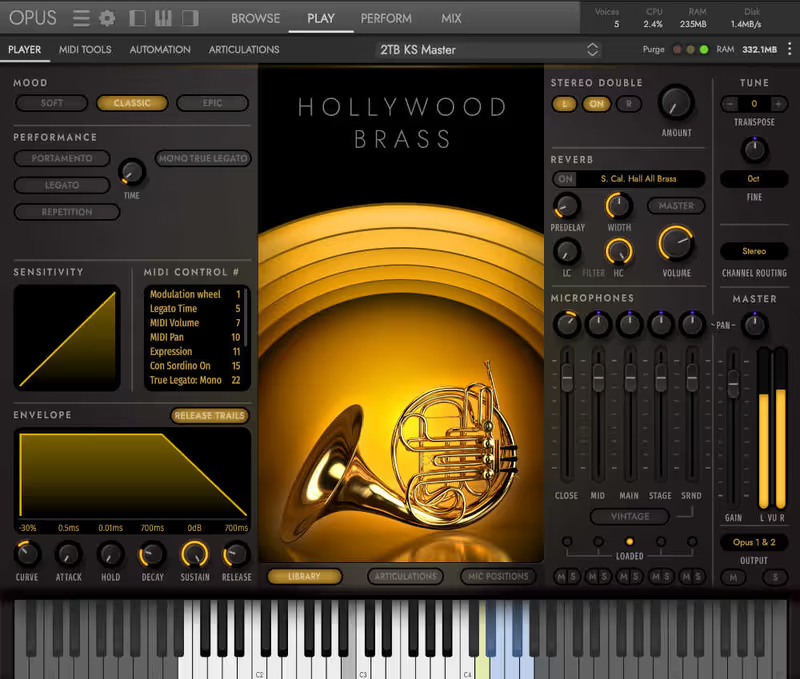
Deeper Look: With the new OPUS engine, the playability has improved massively over the old Play engine. The legato is smoother, and the "Moods" feature lets you instantly switch the mix from "Classic" to "Epic" with a single click. While the room is drier than some European libraries like Berlin, this is actually a plus for modern mixing, allowing you to position the basses exactly where you want them using reverb rather than fighting the baked-in hall sound.

Playing connects you to YouTube, which may set cookies.

Heard on
Hollywood Blockbusters Trailer Music TV Action
Check price $209 (was $399)
04 Heavyocity

NOVO Modern Strings

Best for Hybrid Scoring

Half an acoustic bass section and half a synth, which is the point and the reason it will not carry a classical cue.

Score
7.8
out of 10

How it scored

  • Low-End Weight 8.5

    Modern and punchy, with the weight partly synthetic.

  • Dynamic Range 7.0

    Designed rather than performed, so the range is what the engine allows.

  • Legato Agility 7.5

    Fine, and the traditional side of the library is the thinner half.

  • Spiccato Bite 8.0

    Gritty and processed, which cuts without sounding orchestral.

Why we picked it

Best for hybrid scoring and creating rhythmic bass pulses that blend acoustic and electronic elements.

Who should skip it

Skip this if you are writing a traditional classical symphony.

The good

  • Incredible loop designer
  • Modern, gritty sound
  • Great sound design capability

The bad

  • Expensive
  • Very stylized
  • Traditional side is limited
Engine
Kontakt Player
Type
Hybrid Strings
Size
30 GB
Price
$549
Why it scored that way

Bass textures for the 22nd century.

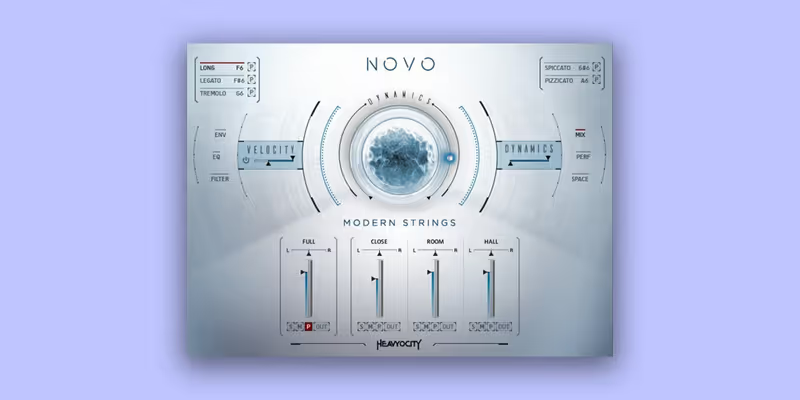
My Experience: NOVO isn't just a bass library. It’s a sophisticated sound design engine. The "Traditional" basses are recorded at Eastwood scoring stage and sound fantastic: very modern, gritty, and punchy on their own. But the "Evolved" section allows you to layer these basses with synths and process them through gates and filters. I use this to create bass lines that sound organic yet futuristic, perfect for sci-fi scores like Blade Runner or Dune.

Deeper Look: I use the "Bass Loops" extensively in my work. Heavyocity has pre-composed pulse rhythms that you can key-sync to your track instantly. It provides instant low-end momentum without having to program it note by note. If you are doing hybrid scoring (orchestra + synth), NOVO bridges that gap perfectly, fusing the weight of real strings with the precision and timbre of electronic sound design. It inspires new ideas immediately.

Playing connects you to YouTube, which may set cookies.

Heard on
Sci-Fi Scores Modern TV Drama Trailer Pulses
Check price $549
05 Native Instruments

KOMPLETE 15 Standard

Best for General Orchestral

The cleanest sketch tool here and the least characterful sound on the page, which is a fair trade at the price it effectively costs.

Score
7.5
out of 10

How it scored

  • Low-End Weight 7.2

    Clean rather than weighty, so it needs help to feel large.

  • Dynamic Range 6.5

    Safe. The extremes are not really covered.

  • Legato Agility 8.8

    Agile, and auto divisi keeps chords from turning into an organ.

  • Spiccato Bite 7.5

    Tidy and unremarkable, which is usable in a mockup.

Why we picked it

Best for sketching and clean orchestral mockups where workflow speed is key.

Who should skip it

Skip this if you need a specific, characterful room tone like Air Studios.

The good

  • Divisi engine is great
  • Very clean sound
  • Included in Komplete

The bad

  • Lacks 'vibe'
  • Can sound generic
  • Dynamics are safe
Engine
Kontakt Player
Type
Divisi Section
Size
30 GB
Price
Check site
Why it scored that way

Accessible, clean, and surprisingly effective.

My Experience: Included in Komplete, the Symphony Series Basses (developed by Audiobro) are remarkably agile and often overlooked. The "Auto Divisi" feature is the real star here: if you play a chord, the engine automatically splits the notes between players, ensuring you don't hear 60 basses playing at once when you just wanted a triad. It keeps the sound completely natural and prevents that synthetic "organ" effect that happens with other libraries. It is incredibly useful for sketching complex harmony.

Deeper Look: The interface is clean, modern, and very user-friendly. You have simple control over microphone mixes (Close, Mid, Far) to dial in the room. While it lacks the sheer character of CineBass or the bite of EastWest, it is the perfect "workhorse" library that does everything well. It blends with everything and never causes phase issues, making it a safe and reliable choice for almost any context where you need a standard orchestral bass.

Playing connects you to YouTube, which may set cookies.

Heard on
TV Scoring Game Mockups Student Projects
Check price
06 8Dio

Majestica

Best for Epic Trailer

Size instead of detail, which makes it useless for counterpoint and unbeatable for the last chord of a trailer.

Score
6.8
out of 10

How it scored

  • Low-End Weight 9.6

    The largest sound on the page by some distance. Best here.

  • Dynamic Range 5.5

    One dynamic, effectively. Detail is not what it was recorded for. Lowest here.

  • Legato Agility 6.0

    Wet and slow, and it smears under fast writing. Lowest on the page.

  • Spiccato Bite 6.0

    The room takes the edge off every short note.

Why we picked it

Best for epic trailer music and finales where volume and width are the only goals.

Who should skip it

Skip this for intimate dramas or detailed counterpoint. It is too muddy.

The good

  • Unbeatable size
  • Instant epic sound
  • Great playable runs

The bad

  • Very wet/muddy
  • Zero detail
  • One trick pony
Engine
Kontakt
Type
Hyper-Ensemble
Size
40 GB
Price
Check site
Why it scored that way

When you need to go bigger than big.

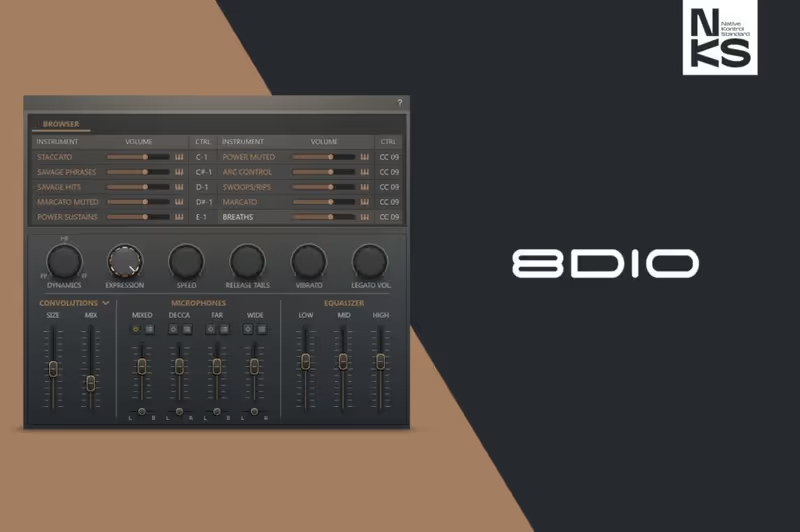
My Experience: Majestica takes the concept of a bass section and multiplies it by three to create something monstrous. With a massive section of basses (and cellos blended in lower octaves), the sound is sheer roaring power that dominates the spectrum. It is not subtle in the slightest. I use this for "Trailer Braams" and massive final chords where I need the speakers to physically move air and shake the floor. It gives you immediate "Trailer" scale.

Deeper Look: Because of the ridiculous section size (240 players total in the orchestra), you lose detail: you won't hear individual bow hairs here. But you gain a "Wall of Sound" that fits perfectly in hybrid mixes. It’s pre-produced to sound huge. The "Spiccato" patches are less about distinct notes and more about percussive blasts of low end. It is a special effect library essentially, but one that every epic composer needs in their template.

Playing connects you to YouTube, which may set cookies.

Heard on
Blockbuster Trailers Superhero Movies Hybrid Orchestral
Check price
07 Orchestral Tools

Berlin Basses

Best for Serious Composition

The most detailed bass section available and the one that will expose lazy programming, which is the same feature described twice.

Score
9.0
out of 10

How it scored

  • Low-End Weight 9.2

    Defined rather than merely large, with Teldex behind it.

  • Dynamic Range 9.6

    A genuine pp to fff, with the articulation list to use it. Best on the page.

  • Legato Agility 8.8

    Agile, and it demands careful programming to sound that way.

  • Spiccato Bite 8.5

    Sharp, with the bow noise and rosin left in.

Why we picked it

Best for complex orchestration and classical mockups requiring supreme detail.

Who should skip it

Skip this if you just want a generic 'boom'. This library demands careful programming.

The good

  • Unmatched detail
  • Teldex room sounds amazing
  • Huge articulation list

The bad

  • Very Expensive
  • SINE player quirks
  • Resource heavy
Engine
SINE Player
Type
Detailed Section
Size
80 GB
Price
Check site
Why it scored that way

For when you need to hear the rosin on the bow.

My Experience: Orchestral Tools is renowned for their "Capsule" concept and now the SINE player, and this library represents the pinnacle of that detail. Berlin Basses offers the most detailed low-end definition I have ever heard in a sample library. You can hear the players breathing, the bite of the bow on the string, and the growl of the rosin. Teldex Studio adds a beautiful, lively room tone that isn't as washy as a hall but not as dead as a booth: it breathes.

Deeper Look: The "Revive" update brought even more articulations to the table. The dynamic range is absolutely huge. You can play a whisper-quiet sul tasto cushion that barely touches the air and then swell into a terrifying marcato that shakes the room. It is the premier choice for composers who write complex, intricate orchestrations where every note needs to be heard clearly and with pure acoustic integrity.

Playing connects you to YouTube, which may set cookies.

Heard on
Classical Mockups A-List Film Scores Detailed Dramas
Check price
Read more →

Methodology

Who is this for

Working composers and producers who need reliability, speed, and character for professional scoring tasks.

Our testing process

Where we have tested a product, we do it in actual production scenarios, ranging from rapid sketches to commercial pitches, and we evaluate it in a dense template rather than in isolation. Where we have not, the product card says so and the assessment is drawn from specifications and documented behaviour instead.

Why you should trust us

We buy most reviewed plugins ourselves. Occasionally we receive NFRs for evaluation, but this never guarantees a review or positive verdict. We may earn commissions from links, but our editorial choices are never for sale.

Also considered

For every category, we audition the top 8 to 15 standard options, discarding any that suffer from poor scripting, slow load times, or uninspiring sampling.

Frequently Asked Questions

Should double basses always double the cellos an octave below?

It is the traditional default and not an automatic one. Doubling gives the line weight and depth, and it also thickens the low mids where an orchestral mockup gets muddy fastest. Try the cello line alone with basses entering only where the phrase needs to land, which is often what a real orchestrator does.

Why does my low end disappear on laptop speakers?

Because the fundamental is below what the speaker can reproduce and the harmonics that imply it have been filtered out. The ear reconstructs a missing fundamental from its overtones, so cutting everything above the bass to clean the mix removes exactly the information that makes it audible on small systems. Leave the upper harmonics alone and check on a phone.

What is divisi and why does it matter for basses?

Divisi means splitting the section so different players take different notes of a chord. Without it, a sampled chord plays every note at full section strength, which sounds like several bass sections rather than one divided into parts. Libraries with an automatic divisi engine handle this for you, and the difference is most obvious in the lowest register.

Do I need a dedicated bass library if I already own a full orchestra?

Only if the basses are exposed. A full orchestral library covers section writing perfectly well, and a dedicated library earns its place when you need the detail of the bow on the string, a genuine pianissimo, or fast agile writing that a general library was not sampled to play.

Written By

Felix Ward

Felix is an indie-folk songwriter and session guitarist who values vibe over perfection. He looks for tools that potentialize 'happy accidents' and offer immediate inspiration. If a plugin requires reading a 100-page manual, he's probably already moved on.

Related Guides

All Guides →

New reviews, no noise

Occasional email when we publish something worth your time. No daily digest, no vendor press releases.

We store only your address, never sell it, and delete it as soon as you unsubscribe. See our privacy policy.