

Best Orchestral EQs (2026): Clean & Surgical

Orchestral mixing isn't about adding 'vibe'—it's about surgery. You need to carve out space for 100 instruments without destroying their natural timbre.

Last Updated: March 2026
Louis Raveton
By Louis Raveton

Louis works across immersive scores (Venice Biennale, LVMH) and animation (Canal+), while producing Downtempo and Electro-Dub as Monsieur Shwill and Flagada. He treats his sample drive like a record collection, constantly hunting for the perfect 'imperfect' texture

In pop mixing, we often reach for EQs that add "color" or "warmth" (like a Pultec or Neve). In orchestral mixing, that is often the enemy. When you are layering solo strings over a synth bed and a percussion ensemble, you don't need more harmonics; you need clarity.

The best orchestral EQs are transparent, surgical, and incredibly precise. They allow you to notch out a specific resonant frequency in a cello section or high-pass a woodwind ensemble without altering the fundamental character of the recording. Here are the essential tools for a clean template.

Quick Summary

  1. 1. Weiss EQ1 Best for Mastering
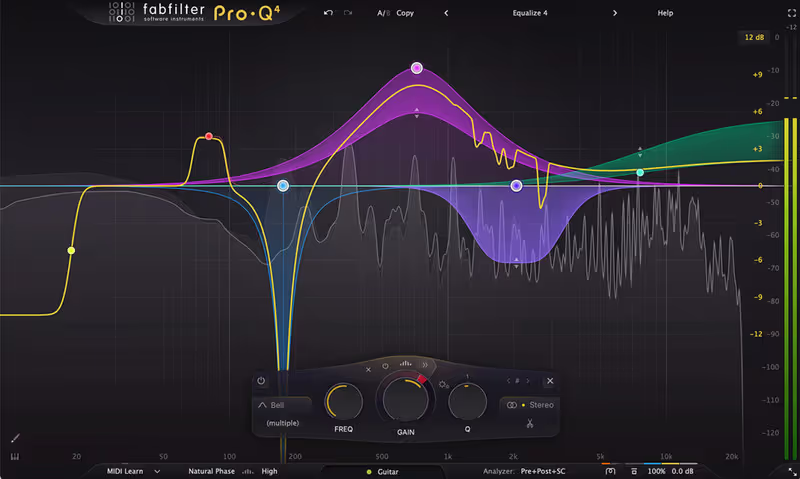
  2. 2. FabFilter Pro-Q 3 Best for Surgical Mixing
  3. 3. Kirchhoff-EQ Best for Orchestral Mastering
  4. 4. Ozone 11 EQ Best for Bus Processing
  5. 5. TDR Nova Best for De-harshing Strings
  6. 6. Gullfoss Best for Mix Clarity
  7. 7. Infinity EQ Best for General Mixing
Read more →

Methodology

Who is this for

Working composers and producers who need reliability, speed, and character for professional scoring tasks.

Our testing process

We test every library in actual production scenarios—ranging from writing rapid sketches to delivering commercial pitches. We evaluate how they perform in a dense template, not just in isolation.

Why you should trust us

We buy most reviewed plugins ourselves. Occasionally we receive NFRs for evaluation, but this never guarantees a review or positive verdict. We may earn commissions from links, but our editorial choices are never for sale.

Also considered

For every category, we audition the top 8 to 15 standard options, discarding any that suffer from poor scripting, slow load times, or uninspiring sampling.

Top Picks

Softube

Weiss EQ1

Best For: Mastering
Engine VST/AU/AAX
Type Hardware Clone
Size 100 MB
Price $549

The $10,000 mastering standard, now in your DAW.

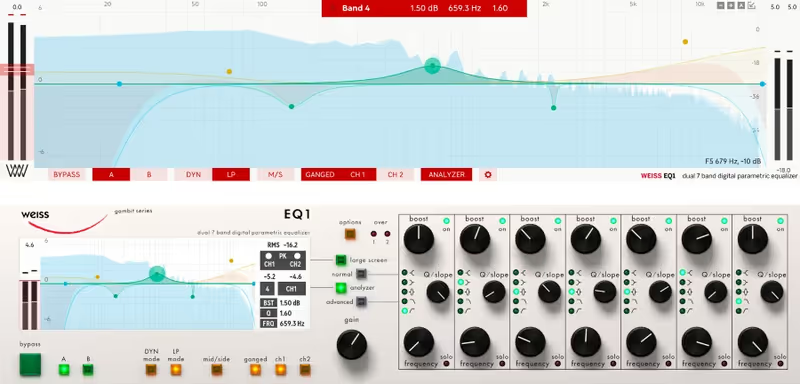
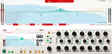
My Experience: The original hardware Weiss EQ1 is legendarily expensive and transparent. Softube's emulation captures that "expensive" sound perfectly. It is a digital EQ, so it doesn't add saturation, but it handles boosts in a way that feels musical and effortless. You can boost the "Air" band at 15kHz by 6dB, and it doesn't sound harsh; it just sounds "open." I use this exclusively on my master bus to add that final touch of shine and expensive gloss to the orchestra.

Deeper Look: It operates in "Minimum Phase" or "Linear Phase," giving you options for how you want to handle the transients. The "Dynamic" version allows you to use it as a highly sophisticated multi-band compressor. It is overkill for individual tracks (and likely too heavy on CPU), but for that final stage where you are gluing the entire orchestra together, it provides a polish that standard DAW EQs simply cannot replicate. It sounds like a record.

Weiss EQ1 by Softube - Review Verdict

Weiss EQ1

Our Verdict

Why we love it

Best for master bus duties and high-end polishing.

Who should skip

Skip this if you are just doing rough demos; it is a finishing tool.

The Good
  • + The 'expensive' sound
  • + Smooth highs
  • + Surgical mode
× The Bad
  • - Very expensive
  • - Complex controls
  • - dated GUI
Famous Uses:
Grammy Records Mastering Houses High-End Pop
FabFilter

FabFilter Pro-Q 3

Best For: Surgical Mixing
Engine VST/AU/AAX
Type Digital EQ
Size 10 MB
Price Check Site

If you walk into any scoring stage in LA, this is on the screen.

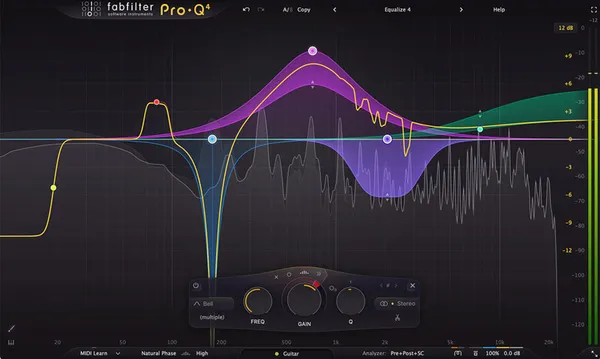
My Experience: I don't know a single composer who doesn't use Pro-Q 3. It has replaced the stock EQ in almost every DAW because the workflow is seamless. The interface allows you to double-click anywhere to create a band, and the "Spectrum Grab" feature lets you literally grab a peak in the analyzer and pull it down. For orchestral work, the "Dynamic EQ" mode is a lifesaver. It allows me to dip the boominess of a Timpani only when it hits hard, leaving the quiet rolls natural and untouched.

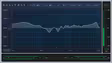
Deeper Look: The masking feature is essential for mixing dense templates. If I put Pro-Q 3 on my Celli and my Basses, I can see the spectrums of both tracks in the same window. The red shading shows me exactly where they are clashing frequencies. It makes carving out space a visual, intuitive process rather than a guessing game. It is extremely CPU efficient, meaning I can run it on every single one of my 500 tracks without the playback engine choking.

FabFilter Pro-Q 3

Our Verdict

Why we love it

Best for every single track in your template. It is the Swiss Army Knife.

Who should skip

Skip this if you specifically want 'analog color' and saturation.

The Good
  • + Incredible workflow
  • + Dynamic EQ bands
  • + Masking detection
× The Bad
  • - Can be transparent
  • - Expensive
  • - No saturation
Famous Uses:
Everything Film Scores Top 40 Mixing
Plugin Alliance

Kirchhoff-EQ

Best For: Orchestral Mastering
Engine VST/AU/AAX
Type Modeled EQ
Size 50 MB
Price Check Site

The only EQ that arguably offers more power than Pro-Q 3.

My Experience: Kirchhoff-EQ entered the market with one goal: to beat FabFilter. In many ways, it succeeds. The internal processing uses 117-bit resolution (yes, really), which theoretically makes it the cleanest digital EQ ever made. For orchestral mastering, where retaining the absolute purity of the signal is paramount, this is unmatched. I love the " modeled" band types. You can switch a band from "Digital" to "British N" to get the curve behavior of a vintage console while keeping the surgical control of a digital plugin.

Deeper Look: The filter slopes are incredibly flexible, going from gentle 6dB shelves to literal brick-wall cuts. This is fantastic for "cleaning" a mix, such as completely removing sub-bass rumble from a flute section without affecting the low-mid warmth. It feels a bit more technical than Pro-Q 3, but for mastering or final bus processing, the sound quality is undeniable. The dynamic engine is also deeper, allowing for precise attack and release control on every single band.

Kirchhoff-EQ

Our Verdict

Why we love it

Best for mastering engineers and audiophiles who demand mathematical perfection.

Who should skip

Skip this if you are already fast with Pro-Q 3; the learning curve is steeper.

The Good
  • + Sound quality
  • + Analog curve models
  • + Deep customization
× The Bad
  • - Complex UI
  • - Heavy on CPU
  • - Slower workflow
Famous Uses:
High-Res Audio Classical Mastering Sound Design
iZotope

Ozone 11 EQ

Best For: Bus Processing
Engine VST/AU/AAX
Type Mastering EQ
Size 500 MB
Price Check Site

The finisher. Built for the final coat of polish.

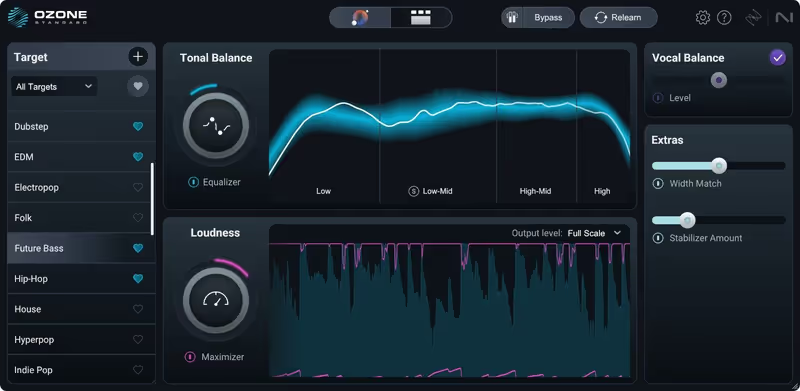
My Experience: I rarely use the standalone Ozone EQ on individual tracks, but on the master bus or instrument sub-groups (like "All Strings"), it is a staple. The "Transient/Sustain" mode is a secret weapon for orchestral mixing. It allows you to EQ the attack of the instruments separately from the room tail. I use this to brighten the "bite" of the spiccato strings without making the hall reverb sound harsh and tinny. It gives the mix a modern, cinematic sheen that is hard to achieve otherwise.

Deeper Look: It interacts perfectly with the rest of the Ozone suite. You can use the "Match EQ" to instantly capture the tonal balance of a reference track (like a John Williams score) and apply it to your own mix. While I wouldn't recommend matching it 100%, dialing it in at 30% acts as a great "sanity check" to ensure your brass isn't too piercing or your low end isn't too weak. It is a smart tool for composers who have to mix their own work quickly.

Ozone 11 EQ

Our Verdict

Why we love it

Best for the mix bus and fixing tonal balance issues quickly.

Who should skip

Skip this if you need a lightweight channel strip EQ.

The Good
  • + Transient mode
  • + Match EQ
  • + Super clean
× The Bad
  • - Can introduce latency
  • - Part of suite
  • - Digital sound
Famous Uses:
Mastering Studios Broadcast Trailer Music
Tokyo Dawn Records

TDR Nova

Best For: De-harshing Strings
Engine VST/AU/AAX
Type Dynamic EQ
Size 10 MB
Price Check Site

Proof that you don't need to spend money to get a pro mix.

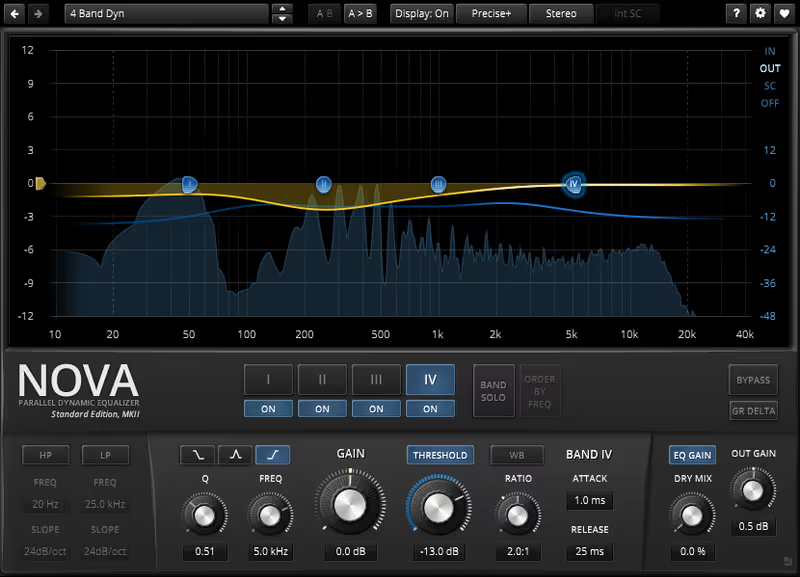
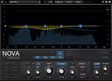
My Experience: If you are starting out or building a laptop rig on a budget, TDR Nova is the first plugin you should download. It is a parallel dynamic equalizer. This means it can compass and EQ at the same time. I use it constantly to de-harsh aggressive string samples. When the violins play high and loud, they can get "screechy" around 3kHz. I set a dynamic band in Nova to compress that frequency only when it crosses a threshold. It smooths out the performance immediately without making the quiet passages sound dull.

Deeper Look: The interface is clean and functional, lacking the fancy animations of FabFilter but offering all the visual feedback you actually need. The "Wideband" gain allows you to use it as a standard transparent compressor as well. It is incredibly stable and low CPU. I have opened projects from 5 years ago that used Nova, and it still loads perfectly. It is a workhorse plugin that belongs in every folder, regardless of your budget.

TDR Nova

Our Verdict

Why we love it

Best for composers on a budget who need dynamic control.

Who should skip

Skip this if you need more than 4 bands of dynamic control.

The Good
  • + Completely free
  • + Dynamic control
  • + Very clean
× The Bad
  • - Limited bands
  • - Basic UI
  • - No masking check
Famous Uses:
Bedroom Producers Budget Mixing Live Sound
Soundtheory

Gullfoss

Best For: Mix Clarity
Engine VST/AU/AAX
Type Smart EQ
Size 100 MB
Price Check Site

It listens to your mix and unclogs it automatically.

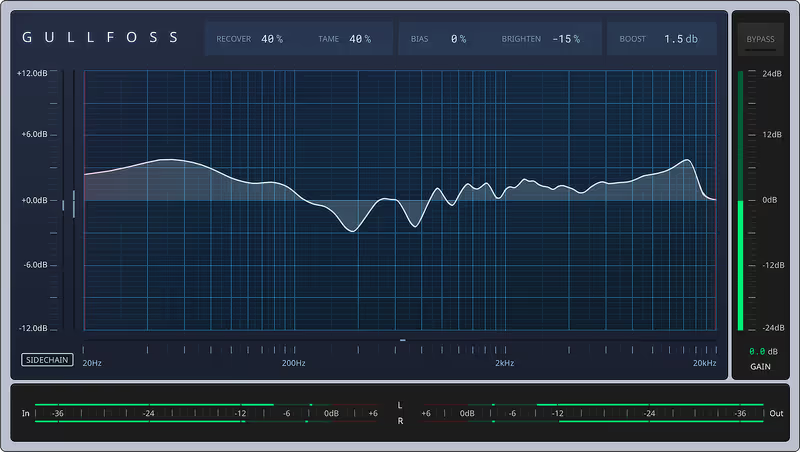
My Experience: Gullfoss is not a traditional EQ where you draw curves. You have "Recover" and "Tame" sliders. Ideally, you put it on your mix bus and push "Recover" up to about 10-15%. Suddenly, details you couldn't hear before pop out. It automatically cuts masking frequencies and boosts hidden elements in real-time. For orchestral mockups, which can often suffer from "sample buildup" resonance in the lower mids (200-400Hz), Gullfoss is magic. It cleans up the mud instantly.

Deeper Look: You have to be careful not to overdo it. Above 30%, it can start to sound phasey and hollow because it is manipulating the signal so aggressively. But used subtly, it is like taking a blanket off the speakers. It improves the perceived clarity and separation of the instruments without you having to manually notch out 50 different frequencies. It is a massive timesaver for composers who need to deliver a clear mix on a tight deadline.

Gullfoss

Our Verdict

Why we love it

Best for clarifyng muddy mixes instantly.

Who should skip

Skip this if you want total manual control; the algorithm decides for you.

The Good
  • + Instant clarity
  • + Reveals details
  • + Easy to use
× The Bad
  • - Can sound phasey
  • - High latency
  • - Expensive
Famous Uses:
Film Scores Live Streaming Podcast Mixing
Slate Digital

Infinity EQ

Best For: General Mixing
Engine VST/AU/AAX
Type Modern Digital EQ
Size 100 MB
Price Check Site

The modern workflow EQ.

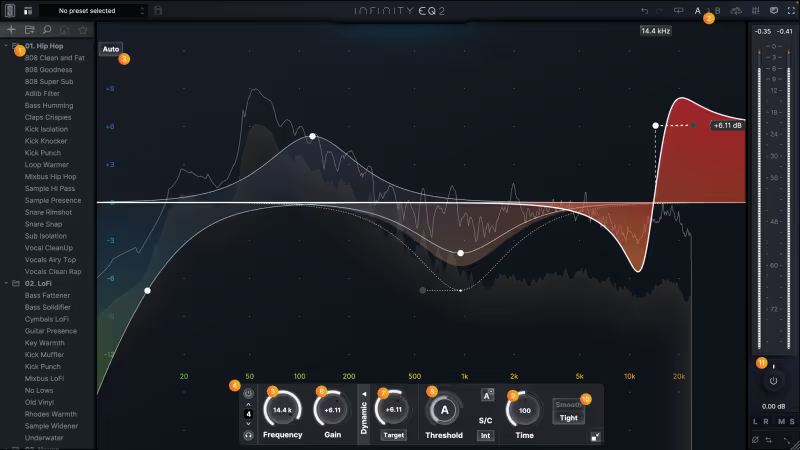
My Experience: Infinity EQ was designed beautifully for the mouse-and-keyboard generation. The way you create bands and slopes feels fluid and almost like a touch-screen interface. Sonically, it is very clean and comparable to Pro-Q 3. While it lacks some of the deep masking features of its rival, it makes up for it with preset curves tailored by pros. If I'm working on a rock/orchestral hybrid track and I need to quickly shape a synth or a guitar, Infinity gets me there fast.

Deeper Look: It is part of the "All Access Pass," which makes it very accessible if you are already in the Slate ecosystem. The "Mid/Side" capabilities are easy to access, allowing you to widen the stereo image by boosting highs on the sides only—a classic trick for making string sections sound wider. It is a solid, no-nonsense digital EQ that looks great and performs reliably in large sessions. It is less "scientific" than Kirchhoff and more "musical."

Infinity EQ

Our Verdict

Why we love it

Best for Slate users who want a fast, modern digital EQ.

Who should skip

Skip this if you already own FabFilter; they cover similar ground.

The Good
  • + Beautiful UI
  • + Fast workflow
  • + Great shelving
× The Bad
  • - Subscription model
  • - No dynamic bands
  • - Less deep than competition
Famous Uses:
Modern Rock Pop Production YouTube Tutorials
Written By

Louis Raveton

Louis works across immersive scores (Venice Biennale, LVMH) and animation (Canal+), while producing Downtempo and Electro-Dub as Monsieur Shwill and Flagada. He treats his sample drive like a record collection, constantly hunting for the perfect 'imperfect' texture