
Best Asian Instruments (2026): East & West

From the delicate pluck of a Koto to the thunderous roar of Taiko drums, Asian instruments offer a sonic palette that is instantly evocative. But achieving respectful realism requires more than just a pentatonic scale.

Tobias Reed
By Tobias Reed Percussionist & Composer

What changed: The page now answers the questions readers ask about the category, in a FAQ section at the foot of it.

ModWheel is reader-supported. When you buy through links on this page we may earn an affiliate commission, at no extra cost to you. This never influences which products we recommend, read our testing methodology.

Prices come from the store's own feed and were last checked 8 September 2026. We don't issue discount codes — the price you see is the store's own.

Pick one in 10 seconds

Short version

Compare all 7

Silk
1. Silk EastWest Sounds
7.8
Engine
Opus
Type
Vocal/Inst Legato
Size
25 GB
$69 $149 View price
Middle East
2. Middle East Native Instruments
7.6
Engine
Kontakt Player
Type
Middle East Ensemble
Size
10 GB
7.3
Engine
Kontakt Player
Type
Ethnic Orchestra
Size
220 GB
4. Koto Nation Impact Soundworks
8.3
Engine
Kontakt
Type
Koto Ensemble
Size
4 GB
5. Ventus Shakuhachi Impact Soundworks
8.4
Engine
Kontakt
Type
Solo Shakuhachi
Size
1 GB
Engine
Kontakt
Type
Taiko & Percussion
Size
150 GB
7. Gu Zheng Soniccouture
8.1
Engine
Kontakt Player
Type
Zither
Size
4 GB

Scoring with Asian instruments is a delicate balancing act. You want the color and timbre of the East, but often the tuning and playability of the West. If a library is too authentic, it might sound out of tune in a modern pop mix. If it's too sanitized, it loses its soul.

I’ve evaluated these libraries on their ability to bridge that gap-offering authentic articulations like pitch bends and glissandos while remaining playable on a standard MIDI keyboard. These are the best tools for the modern Silk Road.

A survey library buys breadth at the cost of depth on any single instrument, which matters most the moment a line is exposed. Best Duduk VSTs (2026): Emotional Winds is the dedicated option for the one instrument here that most often carries a whole cue.

Top Picks

01 EastWest Sounds

Silk

Best for Emotional Solos

The best legato on this list, and the reason to own it even though it will never give you a chord.

Score
7.8
out of 10

How it scored

  • Realism 9.2

    The legato and emotional tone lead this roundup clearly.

  • Articulation Range 8.0

    Huge instrument variety, all of it strictly soloists.

  • Playability 7.5

    Rewards playing, held back by engine quirks and a dated interface.

  • Footprint 6.5

    25 GB, and the samples are dry enough to need your own space.

Why we picked it

Melodic solo lines where emotional expression and legato realism are paramount.

Who should skip it

You need ensembles or chords. Silk is strictly a collection of soloists.

The good

  • Best legato
  • Huge variety
  • Emotional tone

The bad

  • Old UI
  • Dry samples
  • Engine quirks
Engine
Opus
Type
Vocal/Inst Legato
Size
25 GB
Price
$69
Why it scored that way

An old favorite that still dominates for solo legato lines.

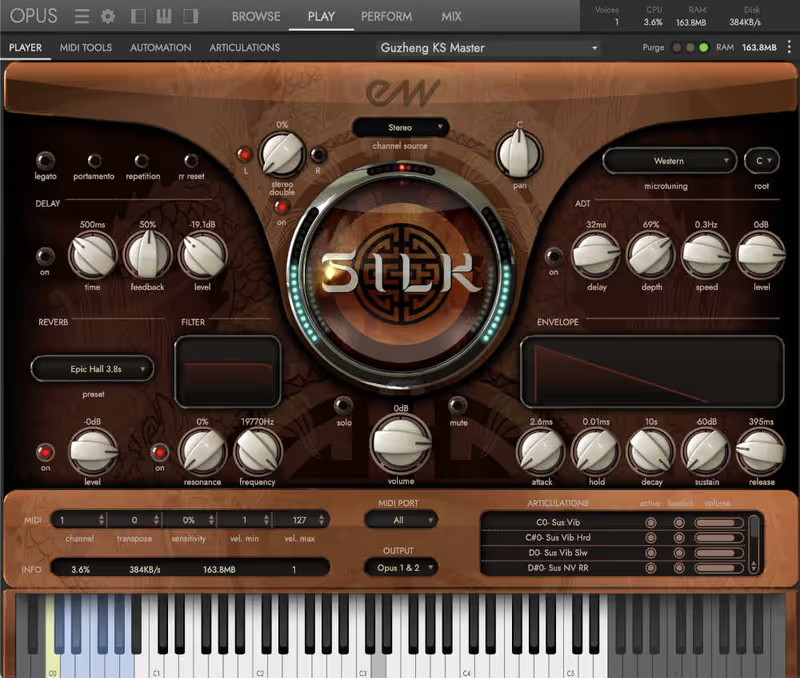
Silk has been around for years, but its legato intervals are still unrivaled in the industry. The Erhu and Duduk in this library capture the weeping, emotional quality of the real instruments, allowing for expressive performances that breathe life into a melody. The scripting allows you to perform realistic bends and grace notes just by playing legatos at different velocities. It sounds heartbreakingly human. I often use the Persian Nay flute for mysterious, desert-wind textures that float above a synth pad without sounding like a generic sample.

It covers a wide geographical area-the Silk Road-meaning you get instruments from China, India, and the Middle East in one package. While the interface shows its age, the sample quality is timeless. The "Master" patches include performances that are so detailed you can hear the musician taking breaths, adding a level of intimacy that newer, more processed libraries often scrub out.

Playing connects you to YouTube, which may set cookies.
Heard on
TV Dramas Travel Docs Fusion Jazz
Check price $69 (was $149)
02 Native Instruments

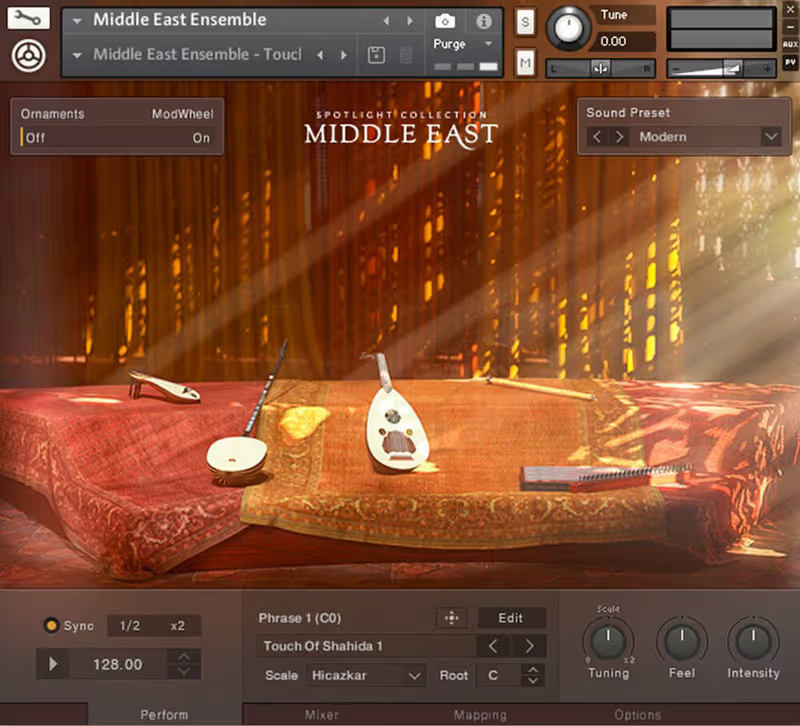
Middle East

Best for Pop Hooks

Tuned and polished for Western ears, which purists will hate and anyone with a deadline will be grateful for.

Score
7.6
out of 10

How it scored

  • Realism 7.0

    Polished rather than documentary. That is a deliberate choice.

  • Articulation Range 6.5

    Preset focused, and not deep once you look past the grooves.

  • Playability 9.0

    The most immediately playable library here, and mix-ready.

  • Footprint 7.8

    10 GB inside the free Kontakt Player.

Why we picked it

Pop producers and beatmakers needing instant, polished Middle Eastern flavors.

Who should skip it

You are a purist ethnomusicologist. It is tuned and polished for Western ears.

The good

  • Super playable
  • Great grooves
  • Mix ready

The bad

  • Not deep
  • Polished sound
  • Presets focused
Engine
Kontakt Player
Type
Middle East Ensemble
Size
10 GB
Price
$99
Why it scored that way

The most playable collection of Oud, Ney, and Percussion.

Western Asia (The Middle East) is a key part of the Asian sonic palette. This library from NI is a marvel of playability. The percussion engine uses a "Groove" slider that allows you to blend between a quantization grid and a raw, human performance. It makes programming complex odd-meter rhythms (like 7/8 or 9/8) incredibly easy and fun. The Oud and Ney are also standout instruments, offering realistic legatos and ornaments.

It is "mix-ready" straight out of the box. The sounds are polished, bright, and punched up with EQ and compression. For pop producers or beatmakers looking to add a "desert vibe" to a track, this is instant gratification. It skips the deep editing of more academic libraries and just gives you sounds that work. I use the percussion loops constantly to add a different flavor of groove to standard 4/4 beats.

Playing connects you to YouTube, which may set cookies.

Heard on
Pop Music Hip Hop Game Desert Levels
Check price $99
03 Strezov Sampling

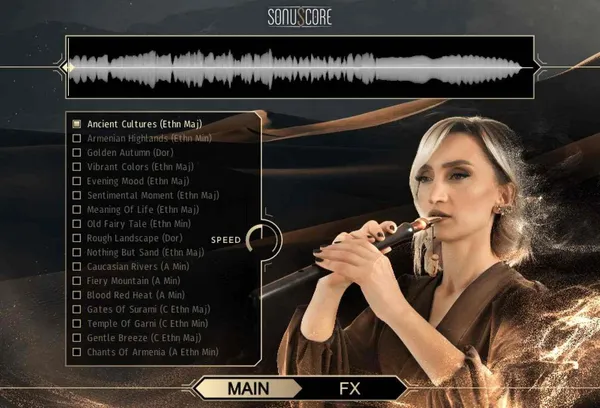
Jade Ethnic Orchestra

Best for Kung Fu

The only library here that delivers an Asian section at blockbuster scale, and the wet recording makes that decision for you.

Score
7.3
out of 10

How it scored

  • Realism 8.8

    Convincing ensembles and a genuinely good choir.

  • Articulation Range 9.2

    Enormous content across instruments and ensemble patches.

  • Playability 8.0

    Mix-ready, provided the baked-in room suits the cue.

  • Footprint 3.0

    220 GB and resource heavy. The largest install in this roundup.

Why we picked it

Cinematic composers who need a "Blockbuster" Asian sound that matches Hans Zimmer style productions.

Who should skip it

You want dry, intimate, close-miked solos. This is big, wet, and orchestral.

The good

  • Massive content
  • Ensemble patches
  • Great choir

The bad

  • Expensive
  • Very wet
  • Resource heavy
Engine
Kontakt Player
Type
Ethnic Orchestra
Size
220 GB
Price
Check site
Why it scored that way

The most comprehensive collection of Chinese instruments available.

Jade is huge. It doesn't just give you a solo Erhu. It gives you an Erhu ensemble, a Xiao flute section, and a massive percussion battery. The approach here is "cinematic first." The instruments are recorded in a way that allows them to blend instantly with a standard symphonic orchestra. The "Mongolian Hooting Throat Singing" patch is worth the price of entry alone, and it creates a guttural, earthy drone that instantly transports the listener to the steppes of Central Asia.

What sets it apart is the "X3M" percussion engine. It makes programming complex taiko rhythms incredibly intuitive. You can map different zones of the keyboard to different drum hits and rolls, allowing you to perform a full percussion bed in one take. The consistency of the room sound across all instruments means you don't have to fight with reverb plugins to make the Koto sit in the same space as the Erhu. Where it sits against the rest of this list: Jade is the generalist here and the only entry that can carry a whole cue on its own, which is why it leads despite costing more than most of the page. Everything below it is a specialist, deeper on one instrument and useless outside it, so the choice comes down to whether you need a section or a soloist. Buy Jade if Asian instrumentation is a recurring part of your work and you want one consistent room across all of it. Buy Soniccouture or Impact Soundworks below if you need one instrument to survive being exposed and solo, because that is where a generalist library always gives up first.

Playing connects you to YouTube, which may set cookies.

Heard on
Mulan Style Scores Dynasty Games Epic Documentaries
Check price
04 Impact Soundworks

Koto Nation

Best for Japanese Score

Deeply sampled and completely specific, so buy it when the brief actually says Japan rather than Asia.

Score
8.3
out of 10

How it scored

  • Realism 8.8

    The plucked detail holds up against reference recordings.

  • Articulation Range 8.2

    Extended range with modern effects on top.

  • Playability 7.8

    Responsive behind an ageing interface.

  • Footprint 8.5

    4 GB and light in a template.

Why we picked it

Japanese period pieces and Anime scores requiring authentic plucked textures.

Who should skip it

You want a general "Asian" library. This is extremely specific to Japan.

The good

  • Deep sampling
  • Extended range
  • Modern FX

The bad

  • Niche
  • Dry sound
  • Old GUI
Engine
Kontakt
Type
Koto Ensemble
Size
4 GB
Price
Check site
Why it scored that way

If you need a Koto, this is the only one you need.

Many libraries throw in a Koto as an afterthought. Impact Soundworks built an entire library around it. Koto Nation includes three distinct instruments: a Bass Koto, a 17-string Koto, and a standard Koto. This range allows you to create a full "Koto Ensemble" that covers the entire frequency spectrum. The detail is absurd-you can hear the plectrum hitting the string, the finger noise, and the resonance of the wood body.

The FX patches are particularly useful for modern scoring. They bowed the strings, scraped them, and hit the body to create horror and suspense textures that are authentically Japanese but totally non-traditional. It fits a "Cyberpunk" setting where you want a blend of traditional culture and futuristic sound design. The "Glissando" generator is also a huge time saver for those iconic harp-like runs.

Playing connects you to YouTube, which may set cookies.

Heard on
Anime Soundtracks Samurai Films Cyberpunk Games
Check price
05 Impact Soundworks

Ventus Shakuhachi

Best for Meditation

One instrument, captured properly, and the phrase engine is what saves it from sounding like a sampled flute.

Score
8.4
out of 10

How it scored

  • Realism 9.0

    The breath noise is the whole instrument and it is captured well.

  • Articulation Range 7.5

    Strong ornaments, but this is a single instrument library.

  • Playability 7.8

    It asks for practice before it sounds like a performance.

  • Footprint 9.2

    1 GB. The lightest entry in this roundup.

Why we picked it

Meditation music, yoga soundtracks, and serene cinematic moments.

Who should skip it

You need a bright, piercing flute. The Shakuhachi is breathy and mellow.

The good

  • Breathy realism
  • Great ornaments
  • Phrase engine

The bad

  • One instrument
  • Soft dynamic
  • Requires practice
Engine
Kontakt
Type
Solo Shakuhachi
Size
1 GB
Price
Check site
Why it scored that way

The sound of Zen. Breath, air, and meditation.

The Shakuhachi is notoriously difficult to emulate because so much of the sound is the breathiness and the pitch bending. Ventus solves this with a unique "ornament system." You can trigger authentic bending techniques and breath noises that are impossible to play on a standard keyboard. It captures the meditative, airy quality of the instrument. You can almost smell the incense when you play it.

I love the "Agile" mode scripting, which allows you to play fast runs without keyswitching. But the real star is the recorded phrases. Sometimes you just need a real performance, and the included phrase library is extensive. You can drag and drop these audio files into your DAW or trigger them via MIDI, ensuring you get a 100% authentic performance for those critical solo moments.

Playing connects you to YouTube, which may set cookies.

Heard on
Yoga Music Ghost of Tsushima Nature Docs
Check price
06 Evolution Series

Evolution Series: World Percussion

Best for War Drums

Clean, natural taiko with the dynamics intact, which means you get power only if you are willing to mix it.

Score
7.2
out of 10

How it scored

  • Realism 9.4

    Natural sound and huge dynamic range. The best captured library here.

  • Articulation Range 9.0

    Deep enough to score an entire action sequence from one library.

  • Playability 7.0

    Nothing is pre-processed, so it needs real mixing work.

  • Footprint 3.5

    150 GB. Only Jade asks for more.

Why we picked it

Epic action sequences and trailer music that needs organic power.

Who should skip it

You want "Trailer Hits" that are pre-distorted. This is clean and natural.

The good

  • Natural sound
  • Huge dynamics
  • Beautiful UI

The bad

  • Expensive
  • Large install
  • Requires mixing
Engine
Kontakt
Type
Taiko & Percussion
Size
150 GB
Price
Check site
Why it scored that way

Thunderous, epic, and flawlessly recorded. The Taiko to beat.

There are a million Taiko libraries, but most of them sound pre-processed and hype-y. Evolution Series captures the instrument as it actually sounds in a room: resonant, deep, and dynamic, retaining the natural character of the drums. You can feel the skin of the drum vibrating with every hit. The dynamic range is huge-you can play gentle, rhythmic pulses that barely tickle the subwoofers, or thunderous hits that shake the floor and rattle the walls of your studio.

The "World Percussion" collection is modular, so you can buy just the Asia pack if you want. It includes not just big Taikos but also smaller, sharper drums and cymbals that are essential for creating a driving, high-energy top loop. Comparing this to the "Epic" percussion found in trailer libraries, this feels much more organic and respectful to the source material. It sounds like music, not just noise.

Playing connects you to YouTube, which may set cookies.

Heard on
Action Movies Trailers Historical Epics
Check price
07 Soniccouture

Gu Zheng

Best for Water Scenes

A delicate, harp-like instrument with beautiful tremolos, and no answer at all when the cue turns aggressive.

Score
8.1
out of 10

How it scored

  • Realism 8.8

    Lovely tone with genuinely convincing tremolos.

  • Articulation Range 7.0

    Limited playing styles, extended by the sound design layer.

  • Playability 8.2

    Immediate, though it sits quiet and needs level.

  • Footprint 8.5

    4 GB and undemanding.

Why we picked it

Romantic scenes and lighter, magical fantasy scoring requiring harp-like textures.

Who should skip it

You want aggressive sounds. The Gu Zheng is delicate and plucked.

The good

  • Beautiful tone
  • Great tremolos
  • Sound design

The bad

  • Niche
  • Quiet
  • Limited styles
Engine
Kontakt Player
Type
Zither
Size
4 GB
Price
Check site
Why it scored that way

The Chinese harp. Elegant, rippling, and beautiful.

The Gu Zheng is often called the Chinese Harp. Soniccouture sampled it with their usual obsessive detail, capturing every nuance of the instrument. The "Tremolo" articulations create that rippling, water-like texture that is ubiquitous in Chinese cinema and immediately sets a mood. They also included "Pitch Bend" controls that allow you to mimic the left-hand pressure technique used by real players to bend notes after plucking. It sounds fluid, expressive, and incredibly authentic in a mix.

Beyond the traditional sound, they included sound design patches that turn the Gu Zheng into a ambient pad machine suitable for modern scoring. By time-stretching and processing the long decays of the strings, they created textures that are perfect for underscore and atmospheric beds. It is a beautiful instrument that sits well in a mix, providing harmonic support without clogging up the midrange like a piano might, making it an essential tool for delicate arrangements.

Playing connects you to YouTube, which may set cookies.

Heard on
Romance Films Fantasy Magic Ambient
Check price
Read more →

Methodology

Who is this for

Working composers and producers who need reliability, speed, and character for professional scoring tasks.

Our testing process

Where we have tested a product, we do it in actual production scenarios, ranging from rapid sketches to commercial pitches, and we evaluate it in a dense template rather than in isolation. Where we have not, the product card says so and the assessment is drawn from specifications and documented behaviour instead.

Why you should trust us

We buy most reviewed plugins ourselves. Occasionally we receive NFRs for evaluation, but this never guarantees a review or positive verdict. We may earn commissions from links, but our editorial choices are never for sale.

Also considered

For every category, we audition the top 8 to 15 standard options, discarding any that suffer from poor scripting, slow load times, or uninspiring sampling.

Frequently Asked Questions

Can I write for these instruments without knowing the tradition?

You can, and the results improve enormously if you spend an hour listening first. The ornaments, the slides and the way a phrase ends carry the identity of the music far more than the scale does, so a line that ignores them sounds like a western melody played on an unusual timbre. Reference recordings teach this faster than any manual.

Why do my erhu or koto lines sound wrong?

Usually because they are phrased like violin parts. An erhu slides between notes constantly and its vibrato widens through a held note, while a koto is plucked with ornaments that fall between the written pitches. Both instruments live in the movement between notes rather than in the notes themselves.

Which scales should I use?

It depends entirely on which tradition, and the pentatonic shortcut conflates several that are not alike. Japanese, Chinese and Korean music use different modes and different tuning conventions, and treating them as one sound is the most common way a cue ends up sounding generic. Pick the country the scene is in and work from its own repertoire.

How do I blend these instruments with an orchestra?

Give them room rather than doubling them. These instruments are quiet, expressive and full of detail, so putting them in unison with a string section wastes everything that makes them worth using. Thin the orchestration where the solo enters and let the ornaments be audible.

Written By

Tobias Reed

Tobias is a classically trained percussionist who transitioned into trailer music composition. He has an encyclopedic knowledge of world rhythm instruments and has recorded samples for several boutique libraries. He judges VSTs by their dynamic layers and round-robin authenticity.

Related Guides

All Guides →

New reviews, no noise

Occasional email when we publish something worth your time. No daily digest, no vendor press releases.

We store only your address, never sell it, and delete it as soon as you unsubscribe. See our privacy policy.