

Best 'Found Sound' Percussion: Clocks, Glass & Industrial

Standard orchestral percussion sounds like 1995. The modern sound is smashing a grandfather clock with a sledgehammer. Here's how to do it without the cleanup.

Louis Raveton
By Louis Raveton Composer & Lead Editor at MODWHEEL

What changed: Every pick now carries a verdict line and scores for source character, playability, versatility and footprint, and there is a decision router at the top. It also answers the questions readers ask about the category.

ModWheel is reader-supported. When you buy through links on this page we may earn an affiliate commission, at no extra cost to you. This never influences which products we recommend, read our testing methodology.

Prices come from the store's own feed and were last checked 8 September 2026. We don't issue discount codes — the price you see is the store's own.

Pick one in 10 seconds

Short version
  • The cue needs metal that rings rather than metal that hits Rust 4
  • The scene needs a clock and it needs to be convincing Clocks
  • You are building a riser out of real recordings Meteor
  • The texture has to move on its own under a scene Kinetic Metal
  • The drums have to sound like a building coming down Damage 2
  • You want cold, icy texture and very little else Glass and Steel

Compare all 7

Damage 2
1. Damage 2 Heavyocity
7.1
Engine
Kontakt Player
Type
Cinematic Percussion
Size
60 GB
Rust 4
2. Rust 4 Soundiron
8.1
Engine
Kontakt Full
Type
Metallic Objects
Size
3 GB
Meteor 7.8
Engine
UVI Workstation
Type
Riser Generator
Size
10 GB
4. Kinetic Metal Native Instruments
7.9
Engine
Kontakt Player
Type
Motion Texture
Size
2 GB
5. Clocks Soundiron
7.5
Engine
Kontakt Full
Type
Timepieces
Size
1 GB
6.4
Engine
Kontakt Player
Type
Epic Percussion
Size
200 GB
7. Glass and Steel Spitfire Audio
7.6
Engine
Spitfire App
Type
Bowed Textures
Size
2 GB

We have reached 'Peak Drum'. Everyone has the same taikos, the same timpani, the same snares. To make a score stand out in 2026, you need texture. You need the sound of twisting metal, shattering glass, and ticking mechanisms.

This is 'Found Sound'-the art of turning garbage into rhythm. These libraries don't sound like instruments, they sound like the world collapsing. Whether you are scoring a psychological thriller or just adding grit to a techno track, these are the essential toolkits.

Found sound and clock libraries overlap almost completely in method and differ mainly in what the microphones were pointed at. Best Cinematic Clock VSTs (2026): Ticking & Time covers the ticking, mechanical end of it.

Top Picks

01 Heavyocity

Damage 2

Best for Trailer Impacts

Tested in our studio

The sound of the last decade of trailers, at a size that makes it a permanent decision about your drive.

Tested score
7.1
out of 10

How it scored

  • Source Character 9.2

    Junkyard recordings processed to the edge, which is the house sound.

  • Playability 8.8

    The loop engine is the reason it survives on deadlines.

  • Versatility 7.0

    Everything it does is large. Quiet drama is out.

  • Footprint 3.5

    Sixty gigabytes and CPU heavy. Lowest on the page.

Why we picked it

The undisputed king of epic, cinematic percussion. If you need drums that sound like buildings collapsing, this is the only choice.

Who should skip it

You need subtle, underscore tension. It is too big and aggressive for quiet drama.

The good

  • Massive scale
  • Industry standard
  • Incredible loop engine

The bad

  • Very expensive
  • Can be 'too much'
  • CPU heavy
Engine
Kontakt Player
Type
Cinematic Percussion
Size
60 GB
Price
$399
Why it scored that way

This is what every trailer since 2012 has sounded like.

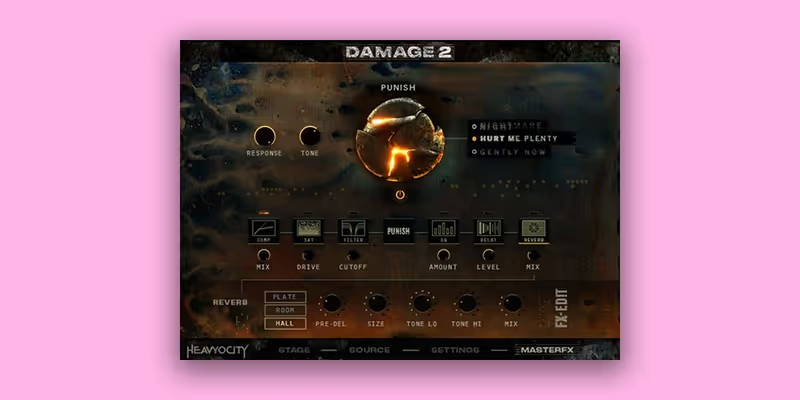
If you turn on the radio or watch a modern action movie trailer, you are almost certainly hearing Damage. Heavyocity essentially took a junkyard, recorded everything being smashed and destroyed, and then processed it through enough distortion to melt a speaker cone. Damage 2 takes that 10-year legacy and makes it cleaner, punchier, and vastly more versatile, moving beyond just "loud" into "architectural" sound design.

The "Kit Designer" allows me to build custom ensembles from dumpsters, metal sheets, and exploding cars, which is a game-changer for avoiding the "preset fatigue" that plagued the original library. It is aggressive-very aggressive. I used the "Armageddon" kit on a recent chase scene, and the low-end thud of the dumpster hits shook the room so hard I thought my sub was going to blow. It is not for subtle underscoring, but for "The World Is Ending" moments, nothing hits harder.

Playing connects you to YouTube, which may set cookies.
Heard on
Mad Max Call of Duty Action Movies
Check price $399
02 Soundiron

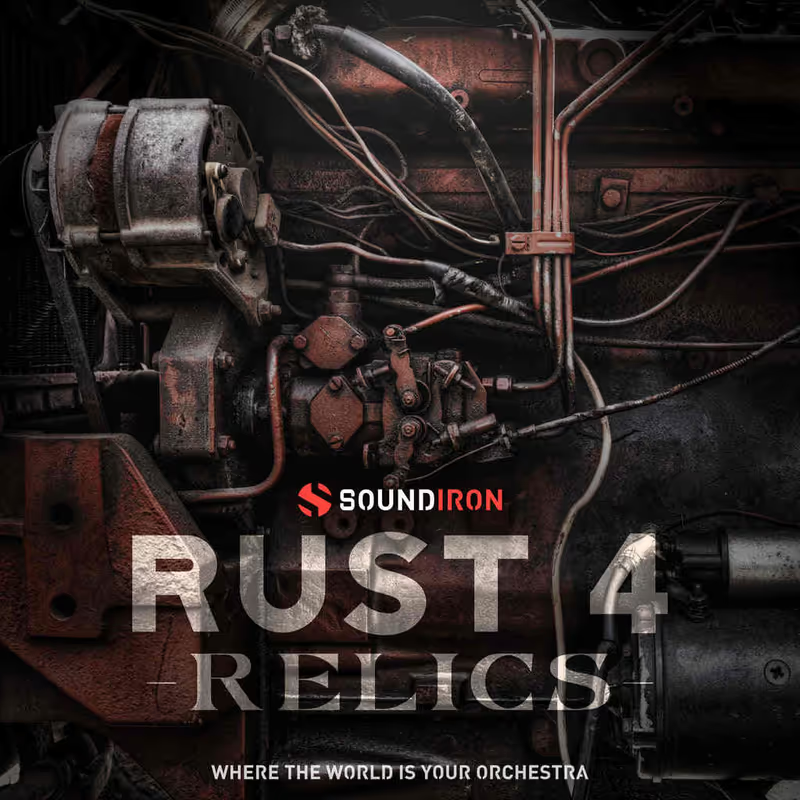
Rust 4

Best for Horror Textures

Tested in our studio

Metal recorded for its resonance rather than its impact, which is the half of found sound everybody else skips.

Tested score
8.1
out of 10

How it scored

  • Source Character 9.4

    Gas tanks and sewage pipes with the harmonic tails intact. Best here.

  • Playability 8.5

    Genuinely playable rather than a one-shot collection.

  • Versatility 6.0

    Atmospheric only, with no traditional percussion in it.

  • Footprint 8.5

    Three gigabytes, and it needs full Kontakt.

Why we picked it

Adding organic, metallic texture to horror and thriller scores. The resonance is unmatched for creating eerie atmospheres.

Who should skip it

You want traditional percussion loops. This is strictly for atmospheric sound design.

The good

  • Unique tonality
  • Cheap
  • Very playable

The bad

  • Requires full Kontakt
  • Niche sound
  • Dry samples
Engine
Kontakt Full
Type
Metallic Objects
Size
3 GB
Price
$59
Why it scored that way

The sound of Tetanus. In a good way.

Soundiron are the undisputed kings of weird sampling, and Rust 3 is a masterclass in capturing the soul of inanimate objects. While Damage focuses on the impact, Rust focuses entirely on the rich, harmonic resonance of metal-old gas tanks, sewage pipes, and strange kinetic sculptures. I often use this library when I need a sound that feels "heavy" but isn't necessarily a drum. The tonal sustain is incredible, creating long, evolving textures from simple strikes.

The sounds are eerie, mournful, and incredibly atmospheric. Playing a melody on a rusted water tank creates a texture that a standard synthesizer just can't replicate. It has inherent imperfections and overtones that feel "real." On a recent horror game project, I used the "Modular Box Cello" patch to create a melody that sounded like a ghost crying inside a ventilation shaft. It feels old, haunted, and physically tangible. It evokes a sense of decay that is perfect for post-apocalyptic settings.

Playing connects you to YouTube, which may set cookies.

Heard on
Silent Hill Experimental Ambient Indie Horror Games
Check price $59
03 UVI

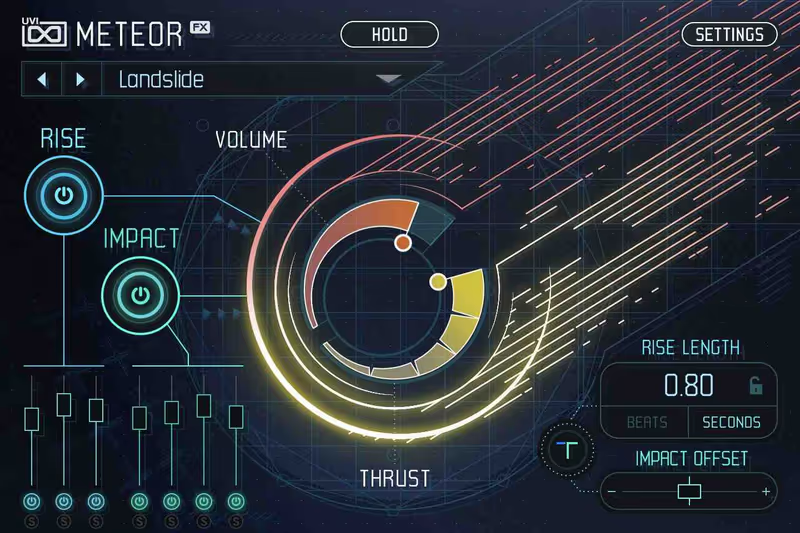
Meteor

Best for Transitions

Tested in our studio

A riser builder rather than a riser library, which is more work and the only way to avoid the sound everyone else has.

Tested score
7.8
out of 10

How it scored

  • Source Character 8.5

    Thunder, ice and metal scrapes rather than white noise.

  • Playability 7.5

    The interface takes learning before the workflow gets fast.

  • Versatility 8.0

    Rises, falls and impacts from the same set of sources.

  • Footprint 7.0

    Ten gigabytes in UVI Workstation.

Why we picked it

Designers who need to create custom risers and impacts from scratch. It turns raw field recordings into trailer hits instantly.

Who should skip it

You want ready-to-go loops. This is a sound design instrument that requires some tweaking.

The good

  • Fast workflow
  • Great source material
  • Time-sync built-in

The bad

  • Interface takes learning
  • Specific utility
  • Can sound generic
Engine
UVI Workstation
Type
Riser Generator
Size
10 GB
Price
$99
Why it scored that way

The ultimate 'Whoosh' machine.

Creating risers and transition effects from scratch is usually a boring, technical chore, but Meteor makes it genuinely fun. It acts as a layered "Ris-and-Hit" generator on steroids, allowing you to combine field recordings-like thunder, ice cracking, or metal scrapes-to build custom cinematic effects. I love that it doesn't sound like a generic white-noise sweep. Every rise has a distinct organic texture to it, adding character where synths fail.

The library of sources is fantastic, featuring high-definition recordings of nature and destruction that would cost thousands to license individually. Being able to time-stretch a recording of an avalanche to sync perfectly with my project tempo is a superpower for trailer editing. I used Meteor to create a custom "Logo reveal" sound for a client recently, layering a cymbal scrape with a backwards piano, and it was done in under two minutes. It saves hours of manual editing and processing time.

Playing connects you to YouTube, which may set cookies.

Heard on
Trailer Music EDM Buildups Cinematic Swells
Check price $99
04 Native Instruments

Kinetic Metal

Best for Magical Ambiance

Tested in our studio

A morphing engine disguised as a steampunk toy, which is the most musical thing on this page and the hardest to aim.

Tested score
7.9
out of 10

How it scored

  • Source Character 9.0

    Clocks, music boxes and machines, with a synthesis layer underneath.

  • Playability 8.0

    The wheel maps to the mod wheel and does most of the performance.

  • Versatility 6.5

    Unpredictable, with the effects baked in and hard to remove.

  • Footprint 8.0

    Two gigabytes, and CPU heavy for its size.

Why we picked it

Fantasy and magical realism scores that need movement. The morphing engine creates textures that constantly evolve and breathe.

Who should skip it

You need a dry, precise sound. The effects are baked in and very specific.

The good

  • Unique interface
  • Motion-heavy sounds
  • Very musical

The bad

  • Unpredictable
  • Hard to mix sometimes
  • High CPU usage
Engine
Kontakt Player
Type
Motion Texture
Size
2 GB
Price
Check site
Why it scored that way

Steampunk in a plugin. Beautiful, ticking moving parts.

This instrument looks like a steampunk toy-featuring a big gear wheel interface-but the sound engine underneath is incredibly sophisticated. It combines samples of machines, clocks, and metals with a synthesis layer. As you turn the wheel (which I map to my mod wheel), the sound morphs from a literal recording-like a music box or a ratchet-into a washed-out, ghostly pad that retains the rhythmic characteristics of the original sample. It bridges the gap between mechanical noise and musical atmosphere.

It is fantastic for adding motion to a stagnant track. It ticks, whirs, and breathes, ensuring that the soundscape never sits perfectly still. For magical realism or fantasy scores, it adds a layer of intricate detail that keeps the listener's ear engaged without overpowering the melody. I used the "Clockwork" preset on a documentary about time travel, and the subtle ticking rhythm provided a constant forward momentum that glued the scene together.

Playing connects you to YouTube, which may set cookies.

Heard on
Fantasy Games Magical Realism Steampunk
Check price
05 Soundiron

Clocks

Best for Ticking Tension

Tested in our studio

One job, done completely, which is worth a slot in the template even though you will use it four times a year.

Tested score
7.5
out of 10

How it scored

  • Source Character 8.8

    Grandfather clocks through to pocket watches, all cleanly captured.

  • Playability 8.5

    Simple and immediate, which is all a ticking cue needs.

  • Versatility 3.5

    It is clocks. Lowest on the page and openly so.

  • Footprint 9.2

    One gigabyte, needing full Kontakt.

Why we picked it

Creating instant subconscious tension. The rhythmic ticking is essential for 'race against time' scenes in thrillers and dramas.

Who should skip it

You need a melodic instrument. It is strictly a collection of percussive timepieces.

The good

  • Does one thing perfectly
  • Cheap
  • Essential utility

The bad

  • It's just clocks
  • Limited use cases
  • Repetitive
Engine
Kontakt Full
Type
Timepieces
Size
1 GB
Price
Check site
Why it scored that way

The sound of a deadline approaching.

You don't realize how much you need a high-quality clock sample library until you are scoring a scene where a bomb is ticking or a character is waiting nervously in a lobby. "Clocks" covers every timepiece imaginable, from massive, booming grandfather clocks to tiny, frantic pocket watches. I keep this in my template specifically for "ticking clock" moments, which happen more often in film scoring than you might think. Having a dedicated tool for this saves me from scouring generic SFX libraries for hours.

The "rhythmic loops" section is where it really shines for me. They create a subconscious tension that drives a scene forward without sounding like "music" or interfering with dialogue. It is the ultimate subtle suspense tool. On a recent thriller project, I used a slowed-down grandfather clock loop as the rhythmic backbone for the entire third act, and it added a layer of inevitability that drums simply couldn't convey. It created a subconscious urgency that kept the audience on the edge of their seats.

Playing connects you to YouTube, which may set cookies.

Heard on
Sherlock Holmes Thrillers Game Shows
Check price
06 Spitfire Audio

Hans Zimmer Percussion

Best for Main Titles

Tested in our studio

The most impressive recordings on this page and the least practical library on your drive, which is the usual Spitfire bargain.

Tested score
6.4
out of 10

How it scored

  • Source Character 9.6

    Oil drums and blast shields in a hall nobody else has access to. Best here.

  • Playability 7.5

    Slow to load, and straightforward once it is open.

  • Versatility 6.5

    Enormous by design, so it does not do restraint.

  • Footprint 2.0

    Two hundred gigabytes. Lowest on the page by a wide margin.

Why we picked it

The definitive 'Hollywood Sound'. It provides the exact massive, wide drum sound heard in nearly every modern blockbuster.

Who should skip it

You are working with limited drive space. It is a massive library that demands high computing power.

The good

  • The Zimmer Sound
  • Incredible recording quality
  • Massive low end

The bad

  • Hard drive filler
  • Expensive
  • Slow load times
Engine
Kontakt Player
Type
Epic Percussion
Size
200 GB
Price
Check site
Why it scored that way

The reason your drums sound small is because you aren't using this.

This isn't "found sound" in the traditional "guy with a field recorder" sense, but the "Junk" and "Metal" galleries in HZ Percussion are legendary for a reason. Zimmer is famous for sampling weird things-oil drums, blast shields, giant sheets of titanium-and playing them in a massive hall. The result is a percussion sound that feels industrial yet sophisticated, with a natural decay that no reverb plugin can fake.

The sound is huge-almost too huge for small mixes. The Air Studios hall creates a natural reverb tail that sounds expensive and wide. When you hit the "Anvil" patch, it sounds like Thor slamming a hammer. It is physical. It is standard orchestral percussion aimed at people who are bored of timpani. I used the "Paper Djun" drum on a trailer track recently, and the low-end thud was so massive I had to high-pass it just to leave room for the bass synth.

Playing connects you to YouTube, which may set cookies.

Heard on
Dune Inception Dark Knight
07 Spitfire Audio

Glass and Steel

Best for Nordic Drama

Tested in our studio

A small, cold texture library that costs almost nothing, and it will run out of ideas before the cue does.

Tested score
7.6
out of 10

How it scored

  • Source Character 8.5

    Icy and pure, and mix-ready without processing.

  • Playability 8.0

    A simple playback instrument with very little to set.

  • Versatility 5.0

    Limited articulations and no close mics to reshape it with.

  • Footprint 9.0

    Two gigabytes in the Spitfire app.

Why we picked it

Budget-conscious composers needing cold, icy textures. It is perfect for Nordic Noir and modern minimalist drama.

Who should skip it

You need deep sound design options. It is a simple playback instrument with limited controls.

The good

  • Very cheap
  • Simple interface
  • Great tone

The bad

  • Not very flexible
  • Limited articulations
  • No close mics
Engine
Spitfire App
Type
Bowed Textures
Size
2 GB
Price
Check site
Why it scored that way

Cheap, cheerful, and surprisingly useful.

Part of the affordable "Originals" range, this is a simplified toolkit of bowed glass and struck metal that punches way above its price point. It is icy, cold, and pure. While it definitively lacks the deep editing options and round-robins of the bigger legacy libraries, the raw sound is pristine and mix-ready. I often reach for this when I need a texture that sits "behind" the strings without muddying up the midrange. It adds a high-frequency shimmer that lifts the entire track without needing EQ.

It is perfect for "Nordic Noir" scoring-that cold, detached, wintery vibe that is so popular right now. The "Bowed Glass" patch is one of my favorite pad sounds ever. It cuts through a mix like a laser but still feels organic. I used it to double a violin melody on a sad cue, and it added this fragile, glass-like quality that made the violin sound like it was shivering. It is the perfect layer for adding cold, fragile emotion to an otherwise standard cue.

Playing connects you to YouTube, which may set cookies.

Heard on
TV Crime Documentaries Ambient Music
Read more →

Methodology

Who is this for

Working composers and producers who need reliability, speed, and character for professional scoring tasks.

Our testing process

Where we have tested a product, we do it in actual production scenarios, ranging from rapid sketches to commercial pitches, and we evaluate it in a dense template rather than in isolation. Where we have not, the product card says so and the assessment is drawn from specifications and documented behaviour instead.

Why you should trust us

We buy most reviewed plugins ourselves. Occasionally we receive NFRs for evaluation, but this never guarantees a review or positive verdict. We may earn commissions from links, but our editorial choices are never for sale.

Also considered

For every category, we audition the top 8 to 15 standard options, discarding any that suffer from poor scripting, slow load times, or uninspiring sampling.

Frequently Asked Questions

What counts as found sound?

Anything recorded that was not built to be an instrument. Metal, glass, machinery, doors and rooms all qualify, and the point is that the source carries associations a sampled orchestra does not. A library of them is simply someone else having done the recording and the editing for you.

Should I record my own instead of buying a library?

Do both, for different reasons. Your own recordings are unique and nobody else can place the cue, and a library is faster, better edited and mapped for playing. Most composers use libraries under deadline and record their own when a project has an identity worth building.

How do I make an object sound musical rather than like an effect?

Put it in tempo and in key. A metallic hit dropped on a bar line reads as percussion where the same hit floating between beats reads as a sound effect, and tuning the resonance to the cue does the rest. Most found sound has a pitch in it, and finding that pitch is usually the whole job.

How do I keep found sound from sounding cheap?

Treat it like an instrument, which means reverb from the same bus as everything else and dynamics that follow the cue. Raw recordings sit outside the mix because they carry their own room and their own noise floor, so match the space first and shape the transient second.

Written By

Louis Raveton

Louis works across immersive scores (Venice Biennale, LVMH) and animation (Canal+), while producing Downtempo and Electro-Dub as Monsieur Shwill and Flagada. He treats his sample drive like a record collection, constantly hunting for the perfect 'imperfect' texture

Related Guides

All Guides →

New reviews, no noise

Occasional email when we publish something worth your time. No daily digest, no vendor press releases.

We store only your address, never sell it, and delete it as soon as you unsubscribe. See our privacy policy.