




Tested in our studio
The felt piano most scores reach for, and the particle engine earns its keep on days when the blank page is the problem.
How it scored
- Realism 8.8
A properly captured Yamaha CFX, felt layer included.
- Playability 8.5
Mix-ready under the hand with no EQ needed.
- Articulation Range 7.0
One piano plus the particle layer. Not a broad instrument.
- Footprint 5.5
16 GB, and the particle engine is a real CPU drain on older machines.
Why we picked it
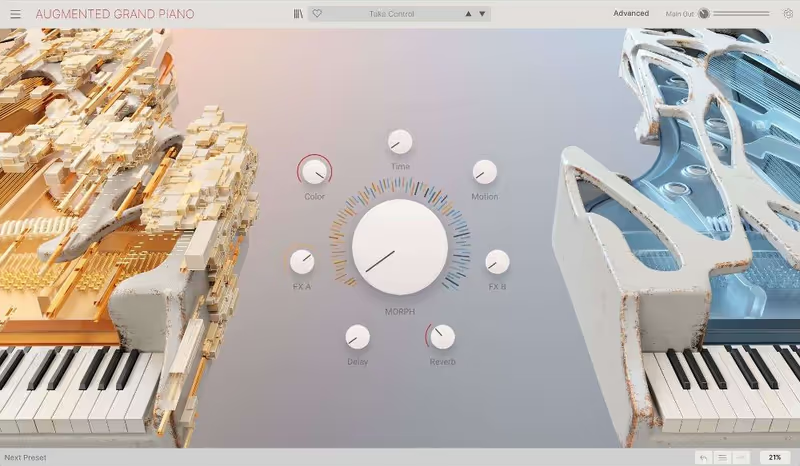
Anyone needing instant inspiration from a single chord. The particle engine generates complex, moving textures that do the writing for you.
Who should skip it
You are working on an old machine. The particle engine is a significant CPU drain that demands a modern computer.
The good
- Particle engine inspires
- Beautiful felt tone
- Mix-ready sound
The bad
- High CPU usage
- Large install size
- Used by everyone
- Size
- 16 GB
- Engine
- Kontakt Player 6.2+
- Type
- Yamaha CFX Grand
- Price
- $139
Why it scored that way
The particle engine alone is worth the price of admission.
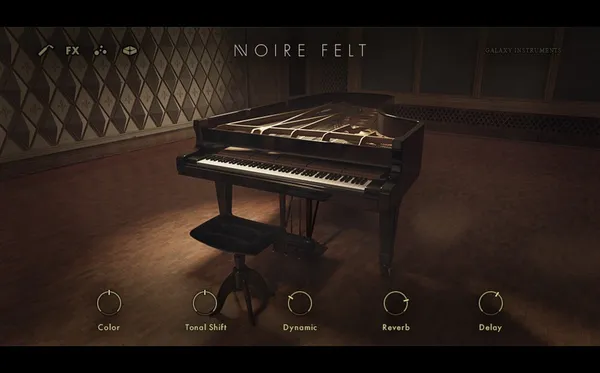
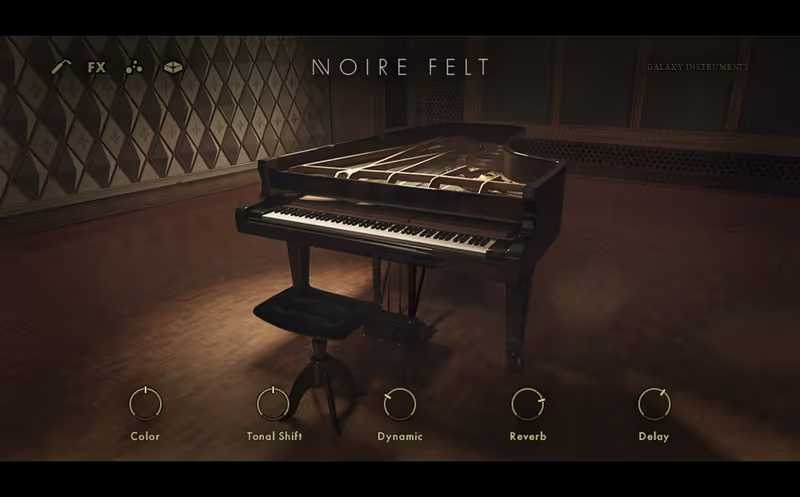
Nils Frahm's concert grand has become the industry standard for a reason, but it's the 'Particles' engine that keeps it in my template. The 'felt' setting provides that intimate, muffled tone that every director seems obsessed with right now, but enabling the particle engine generates rhythmic, tonal halos around my playing that makes simple triads sound like complex, evolving scores. I used this on a documentary about space, and the shimmering delays it added made the piano feel like it was floating in zero gravity, adding a layer of mystery that directed the scene perfectly.
It is undeniably heavy on resources. I have had moments where loading this into a template with 500 other tracks made my CPU meter panic. However, for a solitary emotional cue or a minimalistic underscore where the piano for a solitary emotional cue or a minimalistic underscore where the piano is the star, it provides a finished production sound instantly. The way the release samples interact with the pedal noise creates a sense of realism that makes me forget I am playing a MIDI keyboard. It captures the sound of a physical object being played in a real room.
Playing connects you to YouTube, which may set cookies.
Price history and lowest recorded price
Check price $139