
Best Electric Piano VSTs (2026): Rhodes & Wurli

Digital pianos are cold. Electric pianos are warm. Whether it's the bell-like chime of a Fender Rhodes or the bite of a Wurlitzer, nothing glues a track together like these keys.

Ewan Clarke
By Ewan Clarke Synth Specialist & Sound Designer

What changed: The page now answers the questions readers ask about the category, in a FAQ section at the foot of it.

ModWheel is reader-supported. When you buy through links on this page we may earn an affiliate commission, at no extra cost to you. This never influences which products we recommend, read our testing methodology.

Prices come from the store's own feed and were last checked 8 September 2026. We don't issue discount codes — the price you see is the store's own.

Pick one in 10 seconds

Short version

Compare all 7

Engine
VST/AU/AAX
Type
Modeled Sample
Size
25 GB
Lounge Lizard EP-5
2. Lounge Lizard EP-5 Applied Acoustics Systems
7.8
Engine
VST/AU/AAX
Type
Physical Modeling
Size
100 MB
$99 $199 View price
Engine
VST/AU/AAX
Type
Songwriting Keys
Size
2 GB
Engine
Kontakt Player
Type
Morphing Keys
Size
10 GB
Stage-73 V 8.5
Engine
VST/AU/AAX
Type
Physical Modeling
Size
500 MB
Keyscape
6. Keyscape Spectrasonics
7.8
Engine
STEAM Engine
Type
Collector Keys
Size
77 GB
Engine
Kontakt Player
Type
Deep Sampled
Size
13 GB

Synthesis is great, but sometimes you just need physics. The magic of an electric piano comes from the imperfection: the hammers hitting the tines, the buzz of the pickups, and the warmth of the tube amp.

Getting that organic, electromechanical feel in a plugin requires deep sampling or sophisticated physical modeling. We tested the best virtual electric pianos to find the ones that don't just sound like keyboards, but feel like instruments.

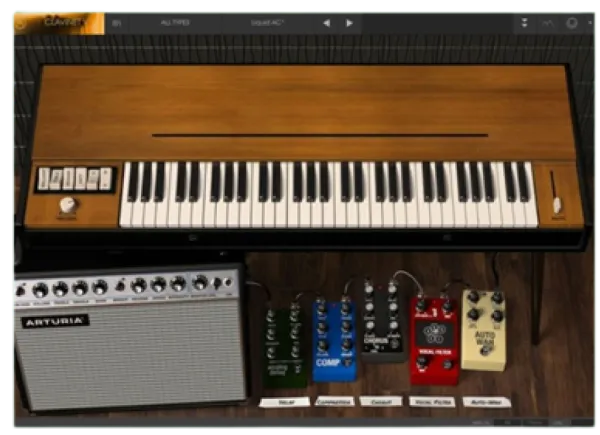
The clavinet is the other half of the vintage keyboard story and a different instrument entirely, plucked rather than struck. Our Best Clavinet VSTs (2026): Funk, Soul & Retro Scoring roundup covers it.

Top Picks

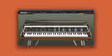
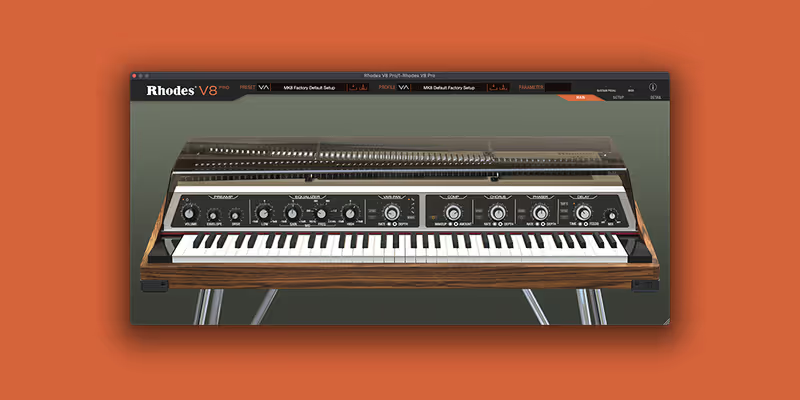
01 Rhodes

V8 Pro Virtual Instrument

Best for Neo-Soul

Tested in our studio

The most authoritative Rhodes here because it is the official one, and it will do nothing else.

Tested score
8.1
out of 10

How it scored

  • Tine Response 9.4

    Dynamics behave like the instrument. Deep enough to keep adjusting.

  • Analog Authenticity 9.5

    The preamp modelling is the reason it sounds like the room, not the sample.

  • Effects Quality 8.5

    Strong, and built around one instrument's signal path.

  • CPU Footprint 5.0

    25 GB and demanding with it.

Why we picked it

Best for purists who want the 100% authentic, official Rhodes sound.

Who should skip it

Skip this if you want a Wurlitzer. This is strictly a Rhodes.

The good

  • The official sound
  • Deep customization
  • Incredible preamp modeling

The bad

  • Expensive
  • CPU intensive
  • Only one model
Engine
VST/AU/AAX
Type
Modeled Sample
Size
25 GB
Price
$299
Why it scored that way

The only one with the right name on the front.

My Experience: It took them decades, but Rhodes finally made their own VST, and frankly, it embarrasses most of the competition. Because they own the schematics, the "V8 Pro" captures the mechanical nuance of the MK8 piano perfectly. It isn't just about the tone. It's about the impedance. The way the sound breaks up when you hit chords hard feels exactly like the hardware sitting in my studio. It delivers that elusive "weighted" feel that most digital emulations completely fail to replicate.

Deeper Look: The "Pro" version gives you access to the internal setup of the piano. You can adjust the timbre, fine-tune the damper response, and even change the mic placement. The built-in "Vari-Pan" effect (the classic stereo wobble) is synced perfectly. It is CPU heavy because it is meticulously detailed, but for a solo jazz performance or a neo-soul track where the keys are front and center, this is the new reference standard. The level of control you have over the preamp drive allows for saturations that feel analog rather than digital.

Playing connects you to YouTube, which may set cookies.
Heard on
Herbie Hancock Radiohead Robert Glasper
Check price $299
02 Applied Acoustics Systems

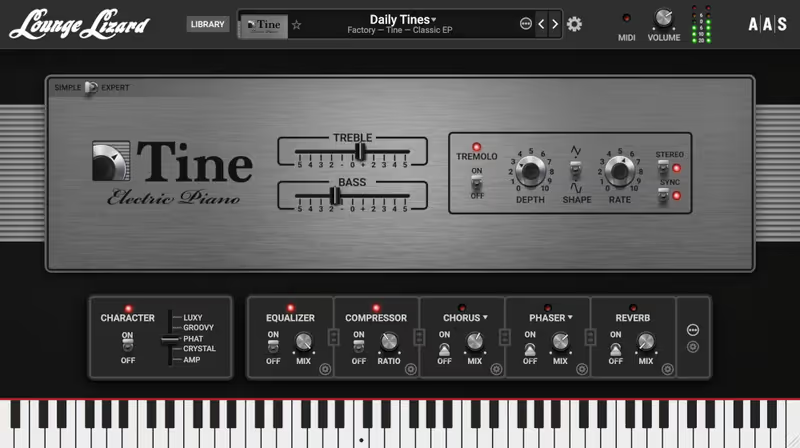
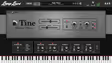
Lounge Lizard EP-5

Best for Live Performance

The most responsive electric piano here to play and the least convincing to record, which is the usual cost of modelling.

Score
7.8
out of 10

How it scored

  • Tine Response 8.8

    Modelled rather than sampled, so it never runs out of velocity layers.

  • Analog Authenticity 6.0

    No room noise and too clean. Weakest against this page's test.

  • Effects Quality 7.0

    Everything you need, presented without charm.

  • CPU Footprint 9.5

    100 MB, instant load, stable on stage. Best here.

Why we picked it

Best for sound designers and live players who need stability and low CPU usage.

Who should skip it

Skip this if you prefer the gritty, noisy realism of 50-year-old hardware.

The good

  • Instant load time
  • Infinite tweakability
  • Very responsive

The bad

  • Can sound 'too perfect'
  • Lacks room noise
  • Interface is utilitarian
Engine
VST/AU/AAX
Type
Physical Modeling
Size
100 MB
Price
$99
Why it scored that way

Physics over samples.

My Experience: I have used Lounge Lizard on almost every project for ten years. Why? Because it loads in 0.1 seconds. Unlike the 80GB sample libraries, this uses physical modeling synthesis to generate tone. This means it is incredibly expressive. There are no velocity jumps between layers. You can tighten the tines, move the pickups, or change the hammer hardness in real-time. It feels more like a synthesizer than a sampler, which means you can push it into territories that a real Rhode simply cannot go.

Deeper Look: EP-5 brings a new "Library" interface that makes browsing presets much faster. The effects section is excellent, with a great compressor and equalizer that help the piano cut through a mix. Because it is synthesized, the file size is tiny (less than 100MB), making it perfect for laptop producers or live performance rigs where hard drive space and stability are critical. It sounds cleaner and more "hi-fi" than the gritty samples of Keyscape. It is absolute reliability in plugin form, never crashing and always sounding pristine.

Playing connects you to YouTube, which may set cookies.

Heard on
Pop Production Live Touring Sound Design
Check price $99 (was $199)
03 XLN Audio

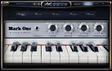
Addictive Keys Mark One

Best for Songwriting Demos

The quickest way to a usable electric piano in a song, and the first to run out of depth if you keep pushing.

Score
7.6
out of 10

How it scored

  • Tine Response 7.0

    The engine is showing its age against newer rivals.

  • Analog Authenticity 7.5

    Mic blending does a lot of the convincing here.

  • Effects Quality 7.0

    Enough to finish a demo. Presets start to resemble each other.

  • CPU Footprint 8.8

    2 GB and undemanding.

Why we picked it

Best for songwriters who want a great sound without getting lost in technical details.

Who should skip it

Skip this if you need deep physical modeling controls.

The good

  • Easy to use
  • Good mic blending
  • Affordable

The bad

  • Aging engine
  • Not as detailed as new rivals
  • Presets can sound similar
Engine
VST/AU/AAX
Type
Songwriting Keys
Size
2 GB
Price
$99
Why it scored that way

The studio standard for songwriters.

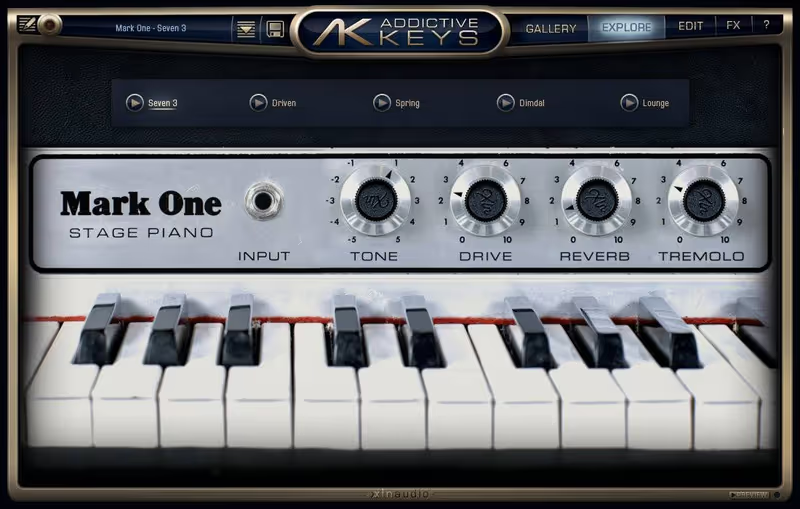
My Experience: XLN Audio understands songwriters better than almost anyone. Addictive Keys isn't about deep menu diving. It's about getting a great sound fast. The "Mark One" plugin loads quickly and sounds great immediately. The interface lets you mix different microphone perspectives (e.g., Close vs. Floor) to change the tone from intimate to ambient. It avoids the paralysis of choice that often plagues larger libraries, letting you focus entirely on the chord progression.

Deeper Look: It runs inside the Addictive Keys shell, meaning you can mix and match it with their Grand Piano or Upright. The "Memo" feature lets you record ideas directly inside the plugin without even opening your DAW transport, which is a neat creative touch. While it lacks the extreme nuance of Keyscape, it fits perfectly in a dense pop or rock mix where you just need the keys to do their job without fuss. It is the definition of a "workhorse" plugin that you will reach for simply because it works.

Playing connects you to YouTube, which may set cookies.

Heard on
Indie Pop Rock Home Studios
Check price $99
04 e-instruments

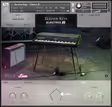
Session Keys Electric R

Best for Modern R&B

The only one here that treats the electric piano as raw material, which is either the appeal or the objection.

Score
7.2
out of 10

How it scored

  • Tine Response 8.0

    Real bark in the low end when you dig in.

  • Analog Authenticity 7.0

    Produced rather than documentary. It arrives already mixed.

  • Effects Quality 6.8

    Pentamorph is genuinely novel. The reverb is not.

  • CPU Footprint 7.0

    10 GB under Kontakt Player.

Why we picked it

Best for modern producers who want to morph between vintage and sound design textures.

Who should skip it

Skip this if you just want a dry, static piano. The fun is in the morphing.

The good

  • Pentamorph is unique
  • Great low-end bark
  • Smart chord feature

The bad

  • Can sound produced
  • Interface is dark
  • Reverb is just okay
Engine
Kontakt Player
Type
Morphing Keys
Size
10 GB
Price
$79
Why it scored that way

Vintage tone with a modern twist.

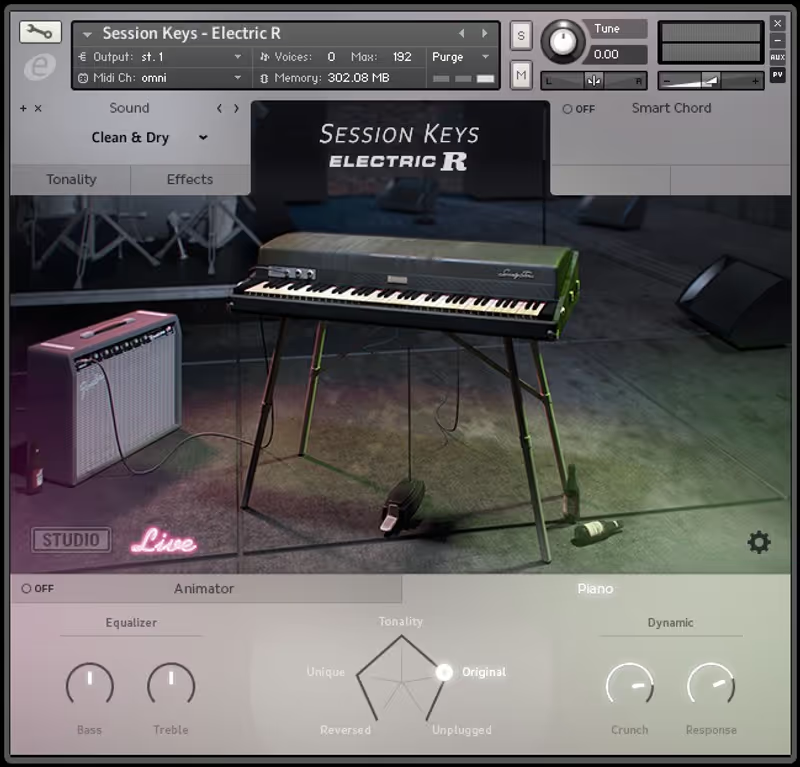
My Experience: e-instruments flies under the radar, but their Session Keys series is fantastic. The "Electric R" captures a 1976 Mark I Stage piano. It has a distinct "bark" in the low end that I love for funk and neo-soul. But the secret weapon is the "Pentamorph" controller. A single pentagonal knob that lets you morph between five disjointed soundscapes instantly. This feature alone makes it one of the most creatively inspiring electric piano instruments on the market today.

Deeper Look: You can morph from a dry studio sound to a reversed, ghostly texture with one mouse movement. This makes it incredible for modern R&B or Lo-Fi tracks where you want the keys to evolve. The "Smart Chord" feature is also great for non-players, allowing you to trigger complex jazz voicings with single keys. It’s a great middle ground between a traditional instrument and a sound design tool. It bridges the gap between being a faithful emulation and a forward-thinking synthesizer for keyboard sounds.

Playing connects you to YouTube, which may set cookies.

Heard on
Lo-Fi Hip Hop Neo Soul Electronic
Check price $79
05 Arturia

Stage-73 V

Best for Funk/Rock

The best effects rig on this page wrapped around a piano that gives itself away in the top octave.

Score
8.5
out of 10

How it scored

  • Tine Response 7.5

    Convincing until the highs, where the modelling turns synthetic.

  • Analog Authenticity 7.8

    The amp and cabinet stage carries it further than the tines do.

  • Effects Quality 9.4

    A full custom chain. Best here, and this page tests for it.

  • CPU Footprint 9.2

    500 MB and efficient enough to stack.

Why we picked it

Best for users who want to build a full custom FX chain and amp rig for their keys.

Who should skip it

Skip this if you want the instant realism of a 50GB sample library.

The good

  • Incredible FX chain
  • Very flexible
  • CPU efficient

The bad

  • Can sound synthy in highs
  • Lacks the instant realism of a sampled library
  • Preset browser is dense
Engine
VST/AU/AAX
Type
Physical Modeling
Size
500 MB
Price
$99
Why it scored that way

The complete customizable rig.

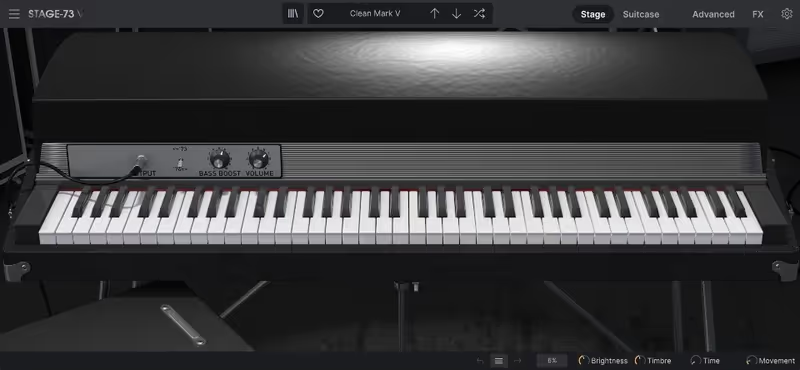
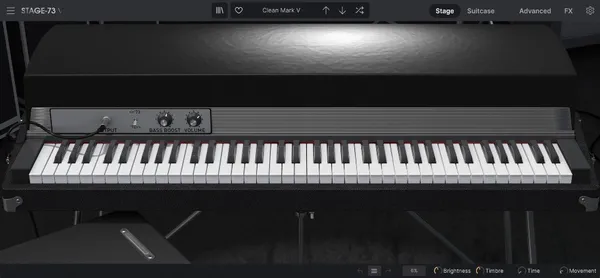
My Experience: If you own the V Collection, you already have this, and it is excellent. Arturia's modeling has improved steadily, and the Stage-73 V now rivals Lounge Lizard for responsiveness. The best part is the pedalboard. You can run the Rhodes through a visually modeled Twin Reverb amp, a phaser, and a wah pedal all in one window. It is an instant specialized tone machine. You can basically build a full guitar rig for your keyboard without leaving the plugin interface.

Deeper Look: The physical modeling allows you to open the "lid" and screw around with the pickup alignment and hammer hardness. I find it perfect for aggressive rock or funk tones where you want to distort the signal significantly. Because it's a model, it handles distortion much better than samples, which can often sound harsh when overdriven. It’s a sound designer's dream. It invites you to experiment with non-traditional sounds, turning a classic keyboard into something completely alien.

Playing connects you to YouTube, which may set cookies.

Heard on
Psychedelic Rock French House Synth Pop
Check price $99
06 Spectrasonics

Keyscape

Best for Professional Recording

The best-sounding collection of electric pianos available and the most expensive thing on this page to own or to run.

Score
7.8
out of 10

How it scored

  • Tine Response 9.5

    Nothing here reads dynamics better. Best on the page.

  • Analog Authenticity 9.2

    Rare instruments captured with their faults intact.

  • Effects Quality 8.8

    Patches arrive mix-ready, which is most of the appeal.

  • CPU Footprint 3.5

    77 GB and a genuine resource hog. Lowest here by far.

Why we picked it

Best for studio producers who demand the absolute highest audio fidelity.

Who should skip it

Skip this if you are running an old laptop. It is a resource hog.

The good

  • Unmatched realism
  • Huge variety of rare keys
  • Mix-ready patches

The bad

  • Very expensive
  • Huge install size
  • Heavy CPU load
Engine
STEAM Engine
Type
Collector Keys
Size
77 GB
Price
Check site
Why it scored that way

The collector's edition.

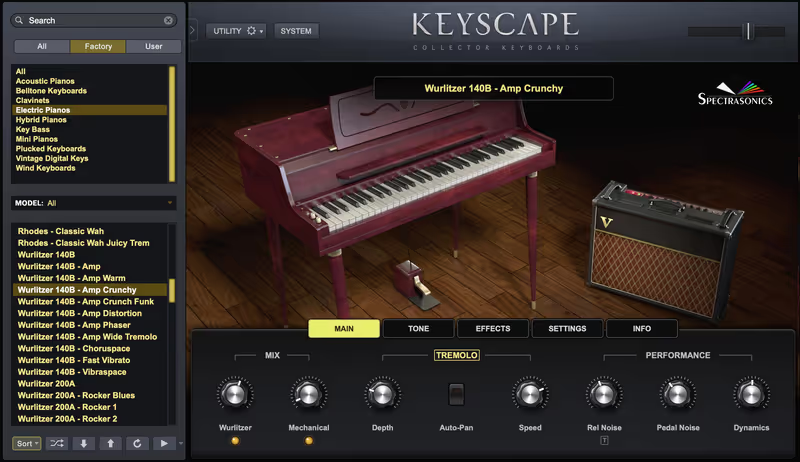
My Experience: Keyscape is widely regarded as the best keyboard library ever made, and for good reason. They didn't just sample a Rhodes. They restored pristine vintage units and sampled them with insane attention to detail. The "LA Custom" Rhodes is the most record-ready sound I’ve ever heard. You can hear the pedals squeak, the amp hum, and the air in the room. It sits in a mix effortlessly. The mechanical noise layers are so realistic that you will often check under your desk to see if something is rattling.

Deeper Look: It includes not just Rhodes and Wurlis, but obscure instruments like the Pianet and Dulcitone. The "hybrid" patches, where they mix two instruments together (like a Celeste and a Rhodes), are inspiring for cinematic scoring. Be warned: it is absolutely massive (77GB) and heavy on resources. You need a fast SSD and plenty of RAM, but the tone is undeniable. It is a resource hog, but the trade-off is sonic perfection that simply cannot be distinguished from a recording of the real thing.

Playing connects you to YouTube, which may set cookies.

Heard on
Top 40 Pop Film Scoring Worship Music
Check price
07 Scarbee

Scarbee Classic EP-88s

Best for Jazz Trio

The finest dynamic control here across a full 88, and too well-behaved to hold up a rock track.

Score
7.7
out of 10

How it scored

  • Tine Response 9.2

    The reason to buy it. Rewards players who use the whole range.

  • Analog Authenticity 8.0

    Clean to the point of being polite. Little dirt to work with.

  • Effects Quality 6.5

    Dated panel and a thin effects section. Weakest here.

  • CPU Footprint 7.0

    13 GB, and the download is the painful part.

Why we picked it

Best for jazz pianists who need the full 88-key range and extreme dynamic control.

Who should skip it

Skip this if you play heavy rock. It can be a bit too polite.

The good

  • 88 key range
  • Incredible dynamics
  • Legendary developer

The bad

  • Large download
  • Interface is a bit dated
  • Can be too clean
Engine
Kontakt Player
Type
Deep Sampled
Size
13 GB
Price
Check site
Why it scored that way

The high-definition classic.

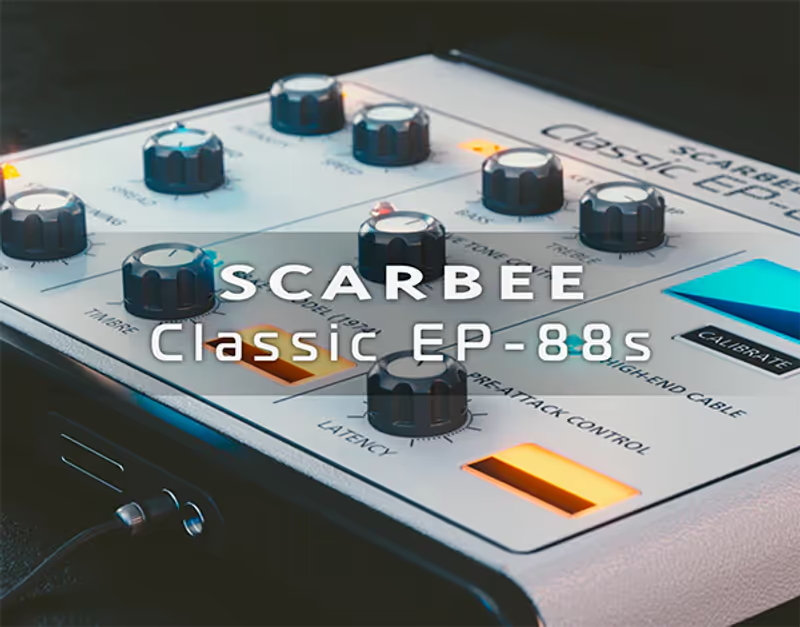
My Experience: Thomas Scarbee invented this game, and the EP-88s is his masterpiece. It samples 88 keys (most Rhodes are 73), giving you access to the extreme low and high ranges. The detail is excruciating. In a good way. It captures the "release samples" (the sound of the key lifting off) perfectly. It feels sticky and tactile. playing it actually requires you to adjust your touch because the dynamic response is so true to the original heavy action.

Deeper Look: Unlike Keyscape, which is polished, this feels raw. It sounds like a well-maintained instrument in a nice room without too much processing. It’s perfect for jazz players who need to express subtle dynamics. The "Horror" presets included are a funny bonus, warping the samples into terrifying drones, but the core bread-and-butter sound is top-tier. It is aimed squarely at the player who cares more about the feel of the keybed than the sheen of the production.

Playing connects you to YouTube, which may set cookies.

Heard on
Jazz Fusion Smooth Jazz Session Work
Check price
Read more →

Methodology

Who is this for

Working composers and producers who need reliability, speed, and character for professional scoring tasks.

Our testing process

Where we have tested a product, we do it in actual production scenarios, ranging from rapid sketches to commercial pitches, and we evaluate it in a dense template rather than in isolation. Where we have not, the product card says so and the assessment is drawn from specifications and documented behaviour instead.

Why you should trust us

We buy most reviewed plugins ourselves. Occasionally we receive NFRs for evaluation, but this never guarantees a review or positive verdict. We may earn commissions from links, but our editorial choices are never for sale.

Also considered

For every category, we audition the top 8 to 15 standard options, discarding any that suffer from poor scripting, slow load times, or uninspiring sampling.

Frequently Asked Questions

What is the difference between a Rhodes and a Wurlitzer?

A Rhodes strikes a metal tine next to a tuning fork, which gives the bell-like sustain everyone recognises. A Wurlitzer strikes a flat metal reed, which barks and distorts when you play hard and decays faster. The Rhodes is the sweeter of the two and the Wurlitzer is the one with attitude.

Why does my electric piano sound sterile?

It is probably going straight into the mix with no amplifier and no dynamic variation. These are electromechanical instruments, so the amp, the tremolo and the way the tone opens up as you play harder are all part of the sound. A flat velocity part through a clean signal path will sound like a sample library.

How much tremolo should I use?

Less than the preset suggests, and know which kind you have. A Rhodes suitcase tremolo pans between two speakers, so it widens as well as pulses, while a Wurlitzer varies amplitude in mono. Set the rate against the tempo of the track and pull the depth back until it moves without announcing itself.

Should I use the library effects or my own?

The amp and tremolo are usually worth using because they are modelled as part of the instrument. The reverb and delay generally are not, since sharing one reverb across the mix is what puts everything in the same room. Print the amp and treat the result like a recorded instrument.

Written By

Ewan Clarke

Ewan is a sound designer whose patches have appeared in major wavetable synths and cinematic scoring libraries. A self-confessed modular addict, he bridges the gap between West Coast experimentation and pop-ready polish. He believes every preset should tell a story.

Read Next

More Keys →

Related Guides

All Guides →

New reviews, no noise

Occasional email when we publish something worth your time. No daily digest, no vendor press releases.

We store only your address, never sell it, and delete it as soon as you unsubscribe. See our privacy policy.