

The one to buy if you want to reach inside the instrument, since modelling lets you change things a sample can never expose.
How it scored
- Realism 8.0
Convincing, though it lands closer to perfect than gritty.
- Playability 8.8
No velocity layer stepping, so hard playing stays continuous.
- Articulation Range 8.5
Physical parameters plus genuinely good onboard amps.
- Footprint 7.5
200 MB on disk, but heavier on CPU than any sampled rival here.
Why we picked it
Best for sound designers who want to tweak the physical properties of the instrument.
Who should skip it
Avoid if you prefer the static consistency of samples over modeled behavior.
The good
- Highly tweakable physics
- Great built-in amps
- No velocity layer stepping
The bad
- Can sound 'perfect' vs 'gritty'
- CPU heavier than samples
- Pricey
- Engine
- VST/AU/AAX
- Type
- Physical Modeling
- Size
- 200 MB
- Price
- $99
Why it scored that way
The physical modeling triumph.
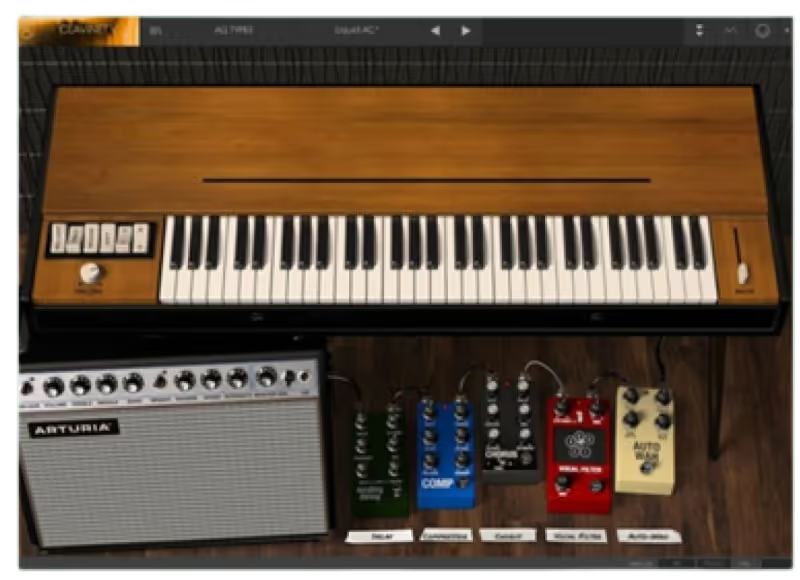
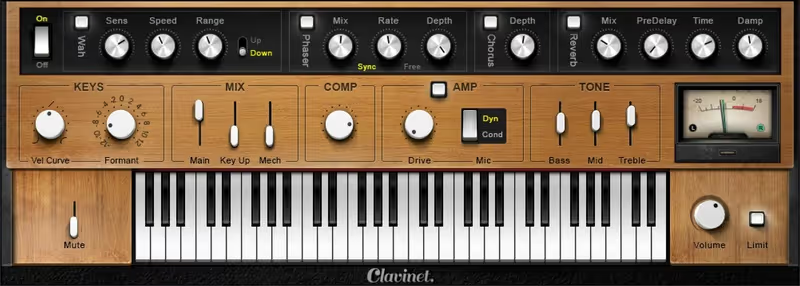
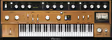
Arturia's decision to use physical modeling (Phi) instead of sampling for the Clavinet V was a bold move, and it paid off. Samples capture a snapshot, but modeling captures the behavior. When you hammer on a key, you feel the virtual string fighting back. I love the fact that you can virtually 'open the lid' and tweak the pickup alignment. Changing the pickup position by a few millimeters drastically alters the harmonic content, giving you that phasey, nasal bite or a warmer, rounder tone.
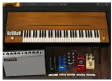
The built-in amp simulation is excellent, providing that Fender Twin reverb crunch that is essential for the sound. But the real star is the effects pedalboard. Being able to run the Clavinet through a modeled Cry Baby wah and a flanger before it hits the amp creates those psychedelic textures instantly. It feels alive under your fingers. It’s technical, tweakable, and sits in a mix with an aggressive presence that sampled instruments often lack.
Playing connects you to YouTube, which may set cookies.