7 Best Limiter Plugins for Maximum Impact

When the mix needs to be loud but the delicate textures cannot turn into distorted chaos.

Louis Raveton
By Louis Raveton

Louis works across immersive scores (Venice Biennale, LVMH) and animation (Canal+), while producing Downtempo and Electro-Dub as Monsieur Shwill and Flagada. He treats his sample drive like a record collection, constantly hunting for the perfect 'imperfect' texture

Finding the best limiter plugins for trailer mixing is rarely about transparency. Everyone claims their brickwall algorithm is invisible. The reality is that pushing a mix to a commercial loudness level always adds artifacts. Finding the best cinematic limiters for post-production means choosing the right flavor of distortion when you hit the ceiling.

I have tracked overly dynamic orchestral sections and pushed them through every major limiter plugin available. Some crackle under pressure like broken glass. Others introduce a smeared, dusty texture that actually glues the low end together. Let us look at the tools that actually survive a dense scoring stage session without turning your dynamics into pure noise.

Quick Summary

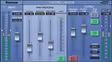
MLimiterMB
1. MLimiterMB
MeldaProduction
Surgical Limiting
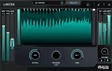
Oxford Limiter
2. Oxford Limiter
Sonnox
Broadcast Limiting
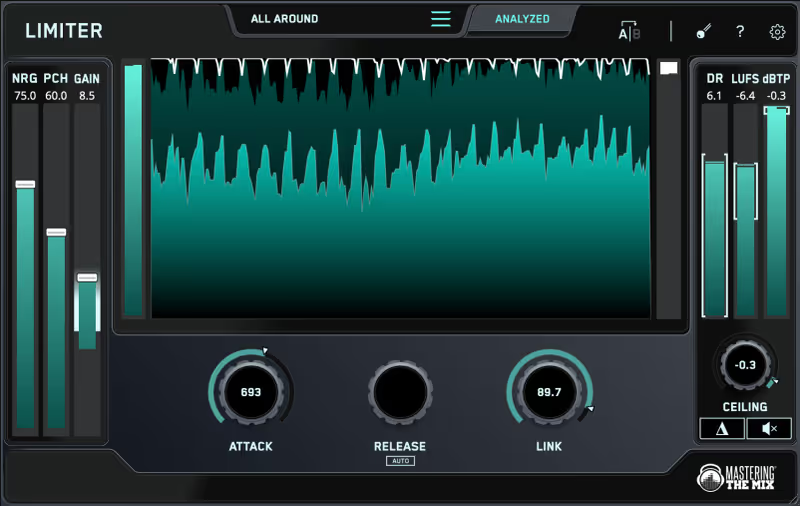
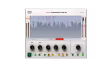
Mastering Limiter
3. Mastering Limiter
Minimal System Group
Quick Loudness
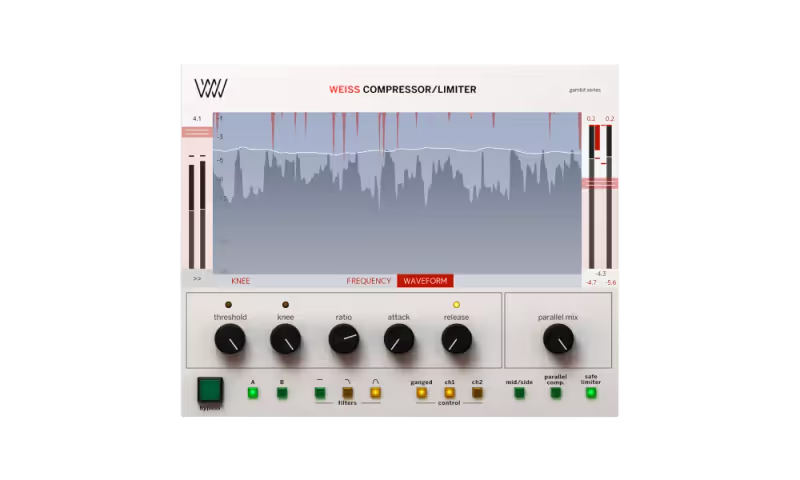
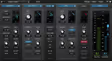
Weiss Compressor/Limiter
4. Weiss Compressor/Limiter
Softube
Premium Mastering
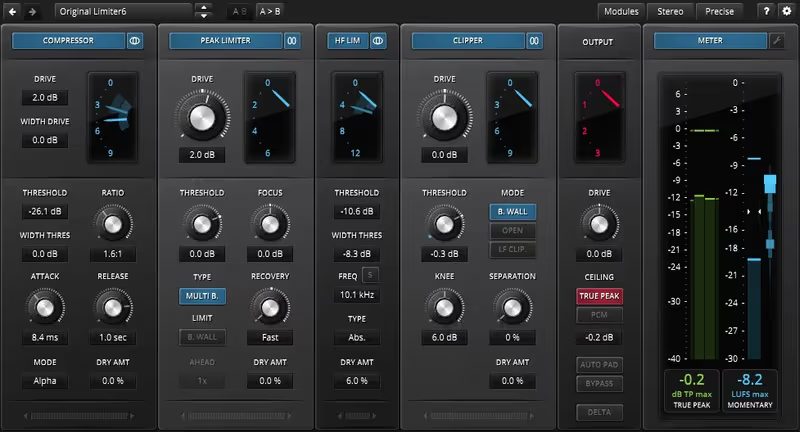
TDR Limiter 6 GE
5. TDR Limiter 6 GE
Tokyo Dawn Labs
Staged Limiting
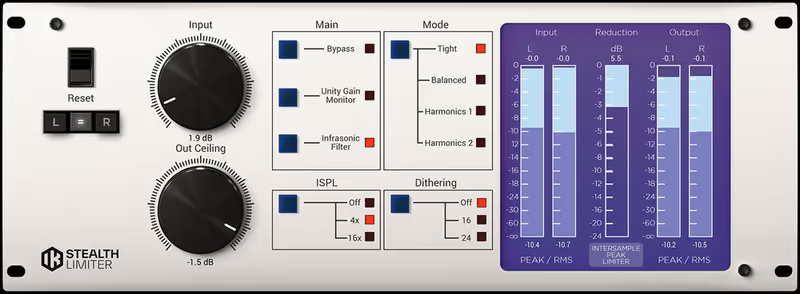
Stealth Limiter
6. Stealth Limiter
IK Multimedia
Transparent Limiting
Brickwall Limiter
7. Brickwall Limiter
IK Multimedia
Stem Protection
Read more →

Methodology

Who is this for

Working composers and producers who need reliability, speed, and character for professional scoring tasks.

Our testing process

We test every library in actual production scenarios—ranging from writing rapid sketches to delivering commercial pitches. We evaluate how they perform in a dense template, not just in isolation.

Why you should trust us

We buy most reviewed plugins ourselves. Occasionally we receive NFRs for evaluation, but this never guarantees a review or positive verdict. We may earn commissions from links, but our editorial choices are never for sale.

Also considered

For every category, we audition the top 8 to 15 standard options, discarding any that suffer from poor scripting, slow load times, or uninspiring sampling.

Top Picks

MeldaProduction

MLimiterMB

Best For: Surgical Limiting
Format VST/AU/AAX
Authorization Serial
Price $52

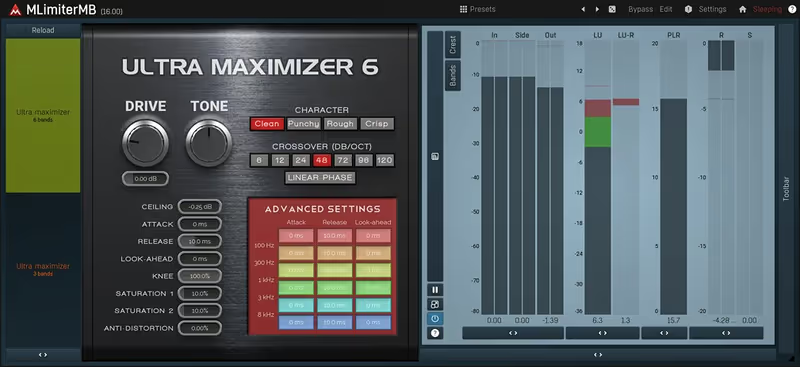
The interface looks like a discarded spreadsheet but the granular control is undeniably powerful.

Multiband limiting is usually a shortcut to destroying a mix, but this plugin is different. I used this on a deadline last week when a heavy bass synth was completely masking the string section. By clamping down specifically on the low-mid frequencies, I could pull the neon textures back into focus. It feels like surgery rather than brute force. The learning curve is absolutely brutal and the UI design is stuck in the past decade.

Despite the terrible visual experience, it is one of the best limiter plugins for surgical correction. You can isolate a specific frequency range and compress it until it feels like crushed rust. It handles overly resonant low frequencies without pumping the entire track. This isn't for detail-oriented programming out of the box, but it's perfect for sketching a loud master quickly.
MLimiterMB by MeldaProduction - Review Verdict

MLimiterMB

Our Verdict

Why we love it

Best for complex mixes where specific frequency bands need targeted limiting.

Who should skip

Avoid if you want a simple one-knob interface and fast workflow.

The Good
  • + Extreme multiband control
  • + Customizable crossover filters
  • + Built-in saturation modules
× The Bad
  • - Unforgiving learning curve
  • - Cluttered user interface
  • - High CPU usage on dense projects
Famous Uses:
Heavy synthwave mastering Sound design bus Complex dialogue stems
Sonnox

Oxford Limiter

Best For: Broadcast Limiting
Format VST/AU/AAX
Authorization iLok
Price $65

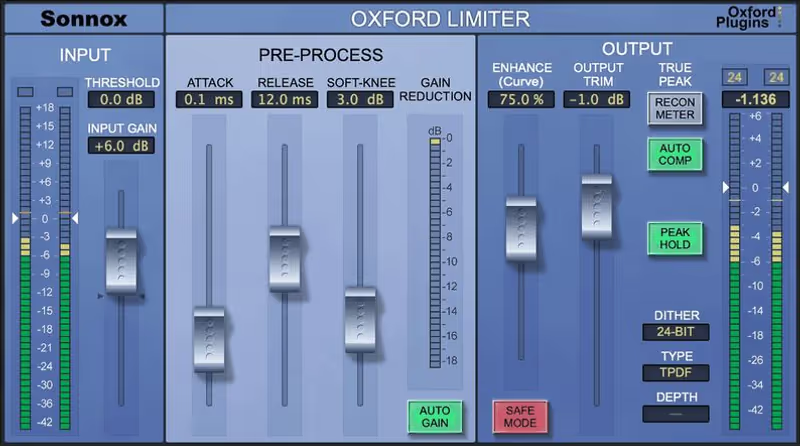
It has been around for decades because it refuses to destroy your transients.

This plugin is an absolute staple when I am finalizing a cue for a discerning client. Many modern alternatives try to inject artificial color, but this one simply makes the mix louder while preserving the original transient detail. I recently dropped this on a dense orchestral track and it caught all the rogue percussion spikes without adding that horrible crushed texture. It feels surgical, precise, and completely reliable for broadcast standards.

The enhancement curve adds a subtle harmonic lift that feels like polishing tarnished metal. It is definitely an older alternative to modern limiters, but it remains one of the best choices for retaining clarity. It does not try to sound analog or dusty. It just prevents you from clipping the master out put while keeping the stereo image completely intact.

Oxford Limiter by Sonnox - Review Verdict

Oxford Limiter

Our Verdict

Why we love it

Best for broadcast compliance and transparent loudness maximization.

Who should skip

Avoid if you are looking for heavy analog coloration or distortion.

The Good
  • + Incredibly transparent limiting
  • + Great enhance feature
  • + True peak detection
× The Bad
  • - Expensive compared to rivals
  • - Visually dated interface
  • - Lacks multiband support
Famous Uses:
Television post-production Game audio mastering Clean orchestral bus
Minimal System Group

Mastering Limiter

Best For: Quick Loudness
Format VST/AU
Authorization Serial Key
Price $19

A cheap and cheerful brickwall that gets the job done when finesse is not required.

Sometimes you do not need surgical precision. You just need the client demo to be loud enough to compete with Spotify references. I throw this on rough mixes when the director asks for more tension and volume immediately. It introduces a slightly broken, gritty texture when pushed hard. This artifact actually works wonderfully on heavy industrial percussion or distorted bass patches. It is definitely not transparent at extreme settings.

When comparing this vs premium competitors, you clearly hear the limits of the algorithm. The high frequencies can become harsh and brittle if you dig too deep into the threshold. However, for the price point, it is incredibly efficient. It gets the track to a commercial loudness level without draining your CPU. It is a solid utilitarian tool for rapid volume matching.

Why we love it

Best for fast demo mastering and adding gritty volume to instrument buses.

Who should skip

Avoid if you need pristine transparency for delicate acoustic mixes.

The Good
  • + Very CPU efficient
  • + Extremely affordable
  • + Fast workflow
× The Bad
  • - Introduces noticeable distortion
  • - Brittle high frequencies
  • - Very basic feature set
Famous Uses:
Draft mix approvals Heavy electronic drums Industrial sound design
Softube

Weiss Compressor/Limiter

Best For: Premium Mastering
Format VST/AU/AAX
Authorization iLok Cloud
Price $299

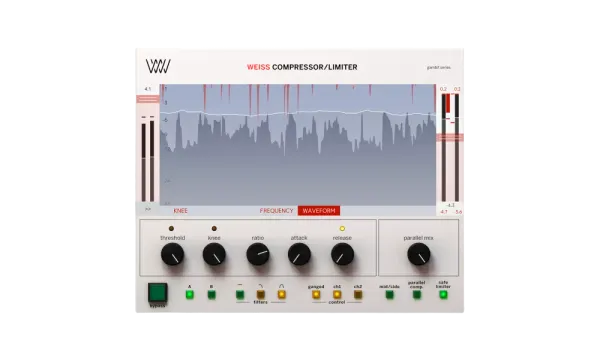
You are paying a premium for pure algorithmic pedigree and unmatched digital transparency.

This is the tool I reach for when working on a delicate film score that demands absolute perfection. The hardware original costs as much as a small car, and this plugin captures that exact digital architecture. When pushing an intimate string quartet, the decay of the room never feels artificially squashed. It retains a terrifying level of depth and dimension. The interface commands respect and forces you to listen critically.

It is undeniably one of the best mastering limiters ever coded. The transparent compression handles massive dynamic swings without introducing a single speck of unwanted dust or grain. It is a heavy plugin that requires a modern processor to run smoothly. If you are struggling with a muddy mix, this will expose all your mistakes with ruthless clarity.

Why we love it

Best for high-end mastering and critical bus compression where transparency is vital.

Who should skip

Avoid if you are on a tight budget or working on older computers.

The Good
  • + Unmatched audio quality
  • + 1:1 hardware code port
  • + Incredible metering
× The Bad
  • - Very expensive
  • - High CPU consumption
  • - Complex parameter layout
Famous Uses:
Feature film scores Classical music mastering High-end vocal chains
Tokyo Dawn Labs

TDR Limiter 6 GE

Best For: Staged Limiting
Format VST/AU/AAX
Authorization Serial Key
Price $19

A modular beast that rewards patient tweaking with incredibly clean loudness curves.

I love loading this plugin when a dense orchestral track needs a massive perceived volume boost. It breaks the limiting process into a compressor, a high-frequency limiter, and a final clipper. By staging the dynamics across these modules, you can achieve ridiculous loudness without crushing the life out of the mix. I recently used the high-frequency module to tame some brittle brass patches that sounded like screeching metal.

This is a deeply analytical tool. It is an excellent alternative to single-stage brickwall limiters that often ruin your transients. You can shave off the sharpest peaks with the clipper before letting the peak limiter handle the rest. The workflow takes time to fully grasp. If you want instant gratification, this dense modular interface will likely just confuse you.

TDR Limiter 6 GE by Tokyo Dawn Labs - Review Verdict

TDR Limiter 6 GE

Our Verdict

Why we love it

Best for analytical engineers who want total control over the peak limiting stages.

Who should skip

Avoid if you prefer a streamlined, simple one-knob approach to mastering.

The Good
  • + Modular dynamic staging
  • + Excellent high-frequency control
  • + Very transparent clipping
× The Bad
  • - Steep learning curve
  • - Can be overly analytical
  • - Dense UI design
Famous Uses:
Electronic dance music Cinematic trailer impacts Complex stem mastering
IK Multimedia

Stealth Limiter

Best For: Transparent Limiting
Format VST/AU/AAX
Authorization IK Product Manager
Price $99

It promises invisible loudness, and it surprisingly delivers on that very bold claim.

Most limiters that market themselves as completely transparent are lying. This one gets remarkably close to the truth. I dropped this on a fragile piano cue where any artifact would instantly ruin the emotion. It handled the transient spikes without smearing the delicate decay of the reverb tail. The inter-sample peak detection is exceptionally robust. It simply blocks the audio from clipping the digital ceiling.

When evaluating this in a detailed review context, the lack of added texture is striking. You will not find any faux-analog rust or tube warmth here. It focuses entirely on pure digital limiting. The interface is clean, dark, and easy to navigate. The only real downside is that the release characteristics occasionally feel slightly rigid on heavily rhythmic synth bass patches.

Stealth Limiter by IK Multimedia - Review Verdict

Stealth Limiter

Our Verdict

Why we love it

Best for acoustic mixes and scenarios where absolute transparency is the only goal.

Who should skip

Avoid if your mix desperately needs analog warmth, glue, or harmonic saturation.

The Good
  • + Extreme transparency
  • + True peak compliance
  • + Clean interface
× The Bad
  • - Rigid release behavior
  • - Zero color options
  • - Somewhat CPU heavy
Famous Uses:
Solo piano mastering Acoustic jazz tracking Clean vocal bus
IK Multimedia

Brickwall Limiter

Best For: Stem Protection
Format VST/AU/AAX
Authorization IK Product Manager
Price $49

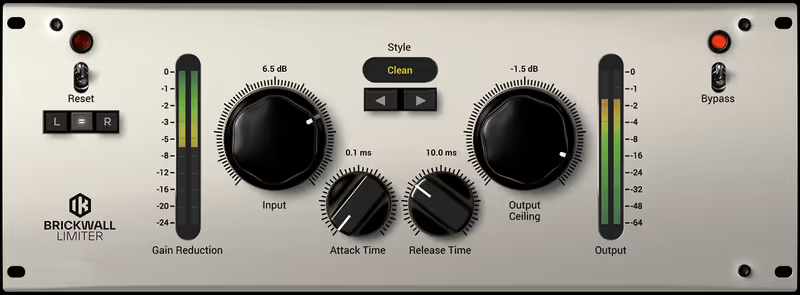
A very solid workhorse plugin when you need to quickly cap a rogue signal.

I keep this tool loaded in my template purely for stem management. When delivering massive batches of audio files for a film, you need a reliable safety net. This plugin catches any stray peaks before they clip the output. The release styles range from fast and aggressive to slow and pumping. I deliberately pushed it too hard on a drum bus just to see it fail, and it generated a lovely distorted crunch.

It is not the most sophisticated tool on the market. In a direct vs test against premium mastering options, the stereo field narrows slightly when pushed to extremes. However, as an insert on individual sub-mixes, it is fantastic. It prevents clipping and adds a noticeable layer of cohesion to loose, messy drum recordings.

Why we love it

Best for stem limiting and providing a safety net on unpredictable sub-mixes.

Who should skip

Avoid if you are aiming for mastering-grade width and total pristine clarity.

The Good
  • + Multiple release profiles
  • + Reliable peak catching
  • + Very easy to use
× The Bad
  • - Can narrow stereo width
  • - Harsh at extreme settings
  • - Visually uninspiring
Famous Uses:
Drum bus limiting Stem delivery safety Aggressive parallel compression
Written By

Louis Raveton

Louis works across immersive scores (Venice Biennale, LVMH) and animation (Canal+), while producing Downtempo and Electro-Dub as Monsieur Shwill and Flagada. He treats his sample drive like a record collection, constantly hunting for the perfect 'imperfect' texture