
The 7 Best Vocal Reverb Plugins for Professional Mixes

"A great vocal reverb should wrap entirely around the performance without stepping on a single lyric."

Henry Foster
By Henry Foster

Henry is a mixing engineer with a background in broadcast and post-production. He obsesses over signal flow, gain staging, and the subtle coloration of analog-modeled plugins. His reviews focus on technical precision, CPU efficiency, and UI workflow.

Choosing the right reverb for a lead vocal is one of the most critical decisions in mixing. If the decay is too bright, it clashes with the cymbals and makes the singer sound harsh. If it is too dark, it clutters the low-mids and pushes the vocal back into the track, ruining the intimacy. The best vocal reverbs manage to create massive, three-dimensional spaces while remaining entirely invisible when the singer is active.

After mixing thousands of vocal tracks across pop, rock, and electronic genres, I have learned that you truly only need a handful of exceptional algorithms. Whether you require the unmistakable, grainy density of a vintage 1980s digital unit or a hyper-realistic, modern acoustic chamber, these tools represent the pinnacle of spatial processing. These are the absolute best vocal reverb vst solutions that I rely on daily to push a good performance into a truly great, immersive one.

Quick Summary

Pro-R 2
1. Pro-R 2
FabFilter
Modern Pop
TSAR-1 Reverb
2. TSAR-1 Reverb
Softube
Vintage Depth
LX480 Essentials
3. LX480 Essentials
Relab Development
80s Vocals
VerbSuite Classics
4. VerbSuite Classics
Slate Digital
Realistic Rooms
Blackhole
5. Blackhole
Eventide
Cinematic Atmosphere
Lexicon 224 Digital Reverb
6. Lexicon 224 Digital Reverb
Universal Audio
Blade Runner
Neoverb
7. Neoverb
iZotope
Fast Mixes
Read more →

Methodology

Who is this for

Working composers and producers who need reliability, speed, and character for professional scoring tasks.

Our testing process

We test every library in actual production scenarios—ranging from writing rapid sketches to delivering commercial pitches. We evaluate how they perform in a dense template, not just in isolation.

Why you should trust us

We buy most reviewed plugins ourselves. Occasionally we receive NFRs for evaluation, but this never guarantees a review or positive verdict. We may earn commissions from links, but our editorial choices are never for sale.

Also considered

For every category, we audition the top 8 to 15 standard options, discarding any that suffer from poor scripting, slow load times, or uninspiring sampling.

Top Picks

FabFilter

Pro-R 2

Best For: Modern Pop
Format VST/AU/AAX
Interface Interactive graphical EQ for decay
Extras Built-in auto-ducking
Price $199

FabFilter brings their surgical interface to spatial processing, making muddy reverbs a total impossibility.

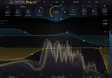
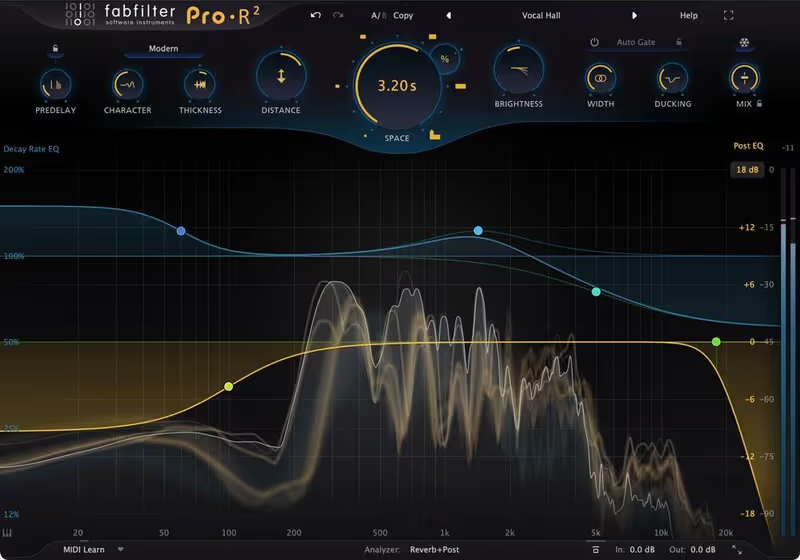
Pro-R 2 feels like cheating. It simply does not muddy up a mix, no matter how long you make the decay tail. Instead of forcing you to hunt for generic 'High Damping' or 'Low Damping' knobs, the interface gives you an interactive EQ curve overlaid directly onto the reverb decay. I used this on a dense, modern pop vocal recently. The singer naturally had a nasal resonance around 1kHz; instead of endlessly EQing the dry track, I simply pulled down the decay time specifically at 1kHz. It cleared the vocal up instantly while leaving the bright, airy tail completely untouched.

What cements it as the best vocal reverb plugin for surgical mixing is the built-in ducking feature. It perfectly clamps down on the wet signal while the vocalist is singing, allowing the tail to swell up beautifully in the gaps. It provides an impossibly clean, larger-than-life space without ever obscuring the lyrics. It is pure, futuristic workflow.
Pro-R 2 by FabFilter - Review Verdict

Pro-R 2

Our Verdict

Why we love it

Best for modern pop vocals because its integrated EQ and auto-ducking ensure the reverb remains totally transparent.

Who should skip

Avoid if you want gritty, vintage, lo-fi character.

The Good
  • + Incredible control over frequency-dependent decay times.
  • + Visually intuitive and lightning fast.
  • + Auto-ducking cleans up dense mixes effortlessly.
× The Bad
  • - Too clean and clinical for lo-fi aesthetics.
  • - Somewhat expensive compared to simpler alternatives.
  • - Lacks a truly defined 'vintage' hardware sound.
Famous Uses:
Serban Ghenea style mixing Top 40 Producers Modern Electronic
Softube

TSAR-1 Reverb

Best For: Vintage Depth
Format VST/AU/AAX
Algorithm Single, true-stereo complex algorithm
Controls Simple faders: Time, Density, Tone
Price $149

Softube strips away the excessive parameters to deliver instant, stunning vintage character.

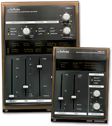
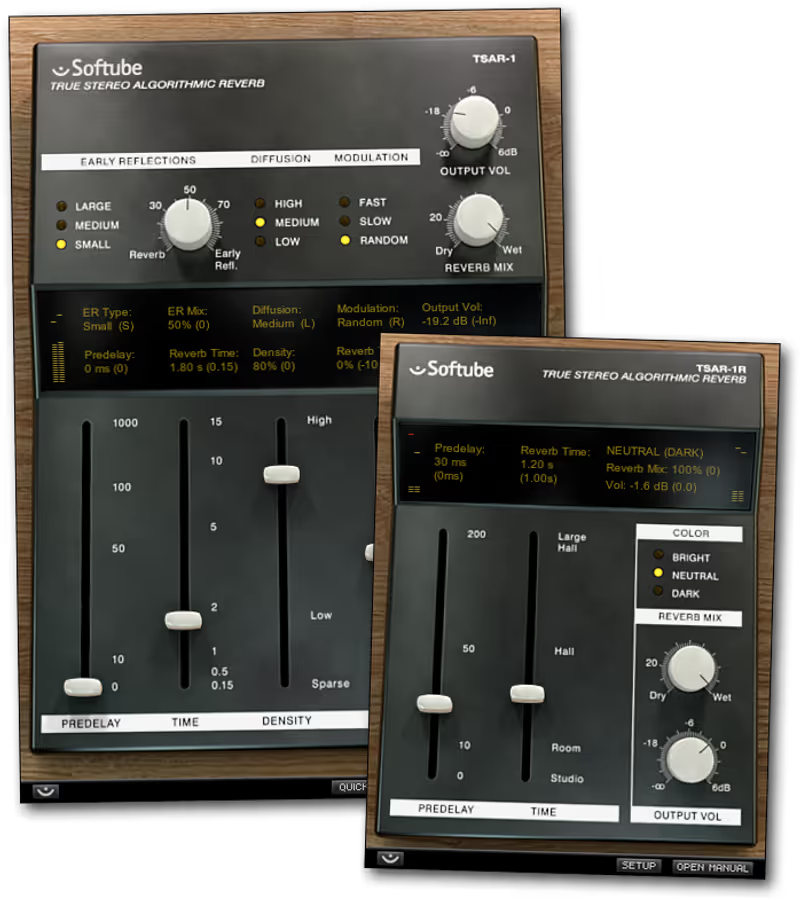
TSAR-1 is my absolute favorite 'set-and-forget' vocal reverb. While other plugins offer hundreds of algorithms ranging from 'Small Tile Bathroom' to 'Infinite Cavern', TSAR-1 focuses on one incredibly complex, musical algorithm. It naturally rolls off harsh high frequencies, providing a dark, smooth tail that tucks effortlessly behind a lead vocal. During a gritty rock mix, I threw this on the lead vocal with a 1.5-second decay. It instantly provided a beautiful sense of depth without masking any of the aggressive mid-range bark of the performance.

The true stereo operation ensures that the space remains wide and believable. Instead of menu diving, you get simple sliders for density, tone, and time. I find this approach incredibly refreshing. It forces you to rely on your ears rather than over-thinking the physics of the virtual room. For those who want the absolute best vocal verb review focused on speed and sound quality, this is a top recommendation.

TSAR-1 Reverb by Softube - Review Verdict

TSAR-1 Reverb

Our Verdict

Why we love it

Best for fast, intuitive mixing because its unified algorithm provides gorgeous tone with minimal sliders.

Who should skip

Avoid if you require surgically precise EQ of the reverb tail.

The Good
  • + Stunning, instantly usable sound.
  • + Incredibly fast to dial in.
  • + Low CPU consumption.
× The Bad
  • - Lacks deep tweaking options.
  • - Not intended for endless ambient wash.
  • - Does not try to emulate specific hardware units.
Famous Uses:
Classic Rock Mixers Indie Producers Vintage Pop Emulation
Relab Development

LX480 Essentials

Best For: 80s Vocals
Format VST/AU/AAX
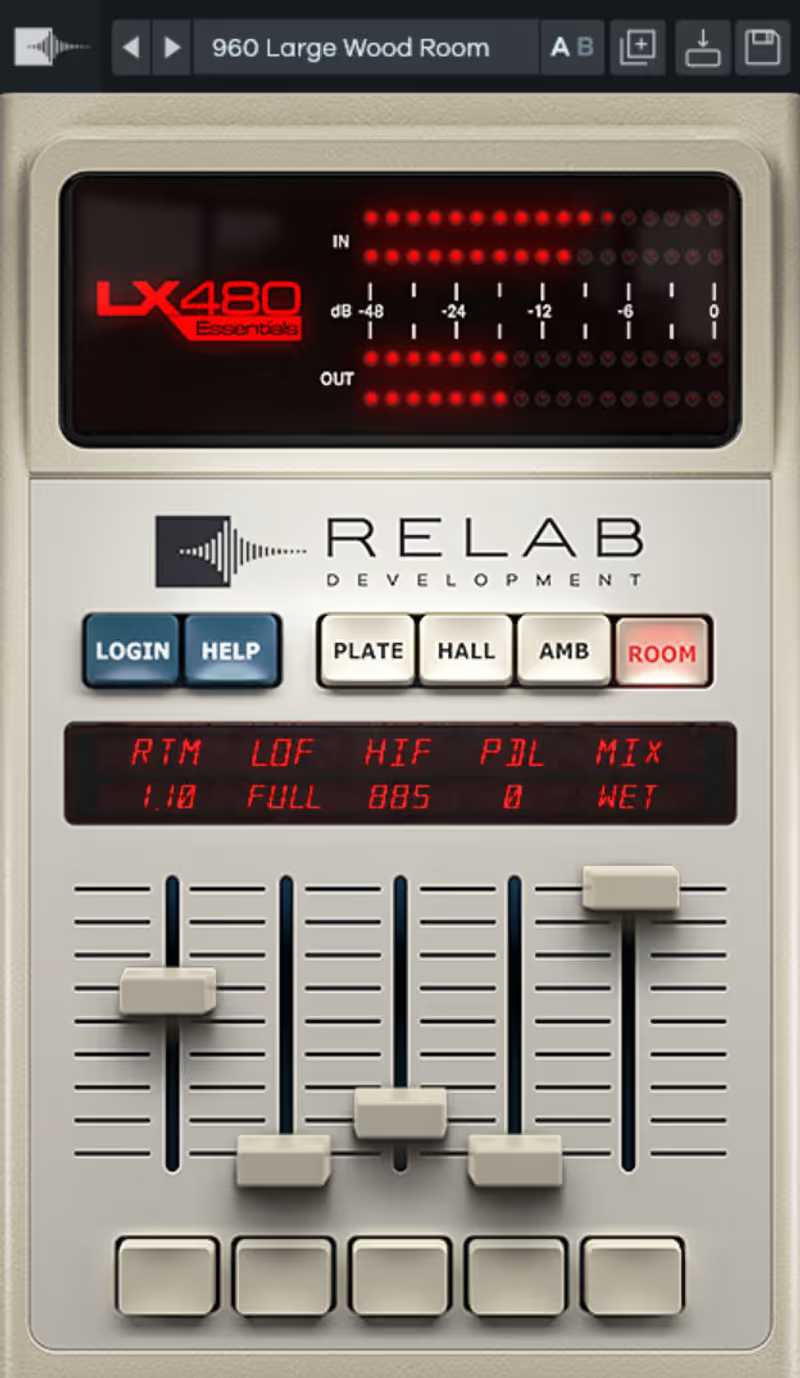
Models Lexicon 480L Fat Plate, Hall, Room
Algorithm Bit-accurate hardware emulation
Price $39

Relab captured the exact grainy, unmistakable density that defined 1980s and 90s pop vocals.

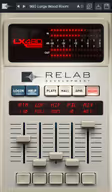
If you want the exact vocal sound that dominated the radio in the late 80s and 90s, you need a Lexicon. The LX480 Essentials strips the complex remote control interface of the full hardware and gives you instant access to the legendary Fat Plate, Medium Hall, and Small Wood Room algorithms. Taking a dry, lifeless vocal and putting it through the Fat Plate algorithm is literal magic; it instantly creates that massive, diffused, slightly grainy halo that makes a chorus feel colossal.

I used this recently on a synthwave project where modern, clean reverbs felt completely out of place. The LX480 provided the perfect touch of vintage digital aliasing and density. It sits aggressively in a mix, intentionally coloring the sound rather than pretending to be transparent. For capturing true retro authenticity, it is undeniably the best classic reverb option on the market today.

LX480 Essentials by Relab Development - Review Verdict

LX480 Essentials

Our Verdict

Why we love it

Best for 80s pop and synthwave because it precisely nails the iconic Lexicon 480L sound.

Who should skip

Avoid if you prefer a modern, hyper-transparent, invisible space.

The Good
  • + Perfect vintage Lexicon tone.
  • + Sits powerfully in very dense mixes.
  • + Streamlined interface is much easier than original.
× The Bad
  • - Intentionally colored and sometimes grainy.
  • - The 'Essentials' version lacks the deeper tweaks of the full plugin.
  • - No modern graphical EQ options.
Famous Uses:
Michael Jackson (hardware) Madonna (hardware) Synthwave Producers
Slate Digital

VerbSuite Classics

Best For: Realistic Rooms
Format VST/AU/AAX
Type Dynamic Convolution (Fusion IR)
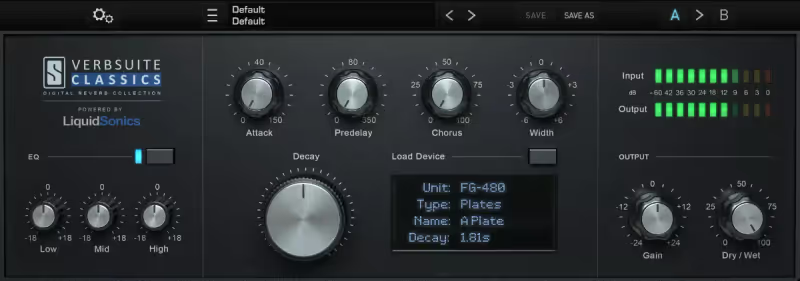
Models Bricasti, Lexicon, EMT, TC Electronic
Price $149

Slate Digital combined the realism of convolution with the dynamic movement of algorithmic reverbs.

Standard convolution reverbs sound realistic but often feel static and dead on long vocal tails. VerbSuite solves this by using proprietary 'Fusion' impulse responses that actually capture the changing modulation of vintage hardware over time. Having the Bricasti M7, EMT 250, and Lexicon 480L essentially housed inside one unified, simple interface is a massive workflow upgrade. When I am mixing an R&B vocal and it needs a hyper-realistic, lush room, I immediately reach for the Bricasti 'FG-BM7' models included here.

During a recent acoustic ballad session, the lead vocal felt entirely disconnected from the piano. A short 0.8-second 'BM7 Room' preset instantly placed them in the exact same physical space without muddying the precious low-mid frequencies. It is an extraordinary workhorse. If you require access to dozens of famous hardware units in one plugin, this is the best convolution vst collection you can buy.

Why we love it

Best for ultimate versatility because it provides access to practically every famous hardware unit in one interface.

Who should skip

Avoid if you want wild, creative sound design tools.

The Good
  • + Access to millions of dollars of hardware.
  • + Fusion IRs solve the 'static' problem of standard convolution.
  • + Very simple, unified interface for all units.
× The Bad
  • - Lacks intense modulation tweakability.
  • - Can be overwhelming due to the sheer number of options.
  • - Requires a relatively large hard drive footprint for IRs.
Famous Uses:
Commercial Studios Slate All Access Pass Users R&B Mixers
Eventide

Blackhole

Best For: Cinematic Atmosphere
Format VST/AU/AAX
Algorithm Massive, unnatural ambient wash
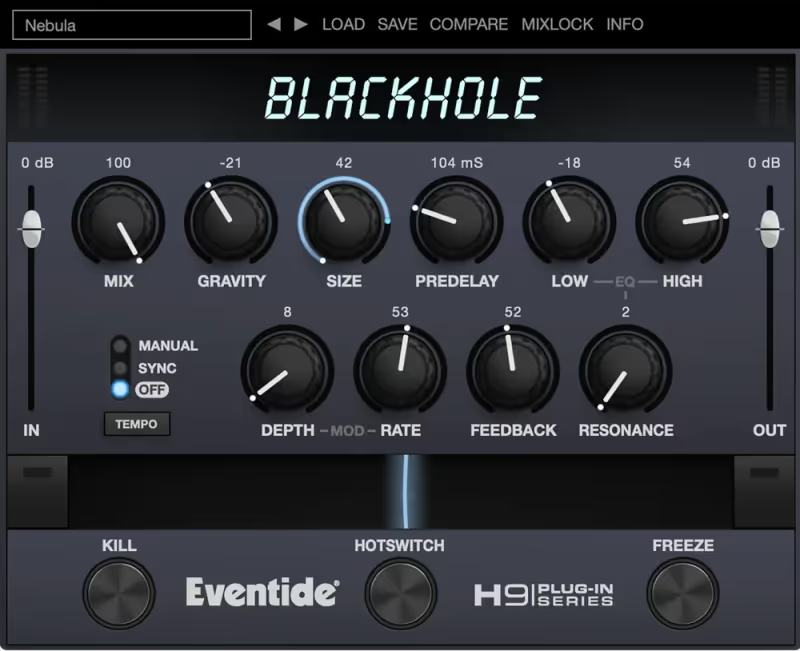
Control Gravity control for reverse envelope
Price $39

When you need a vocal to sound like it is echoing across the literal universe, you open Blackhole.

Blackhole is not meant to simulate a small wooden room. It is designed to shatter reality. I use this exclusively for massive, cinematic vocal throws or ambient background textures. The gravity control is incredible—it allows you to invert the decay envelope, meaning the reverb tail actually louder over time rather than decaying naturally. Throwing a single ad-lib vocal through this creates an endless, swirling drone that can serve as the bed for an entire track.

What makes it brilliant is the built-in modulation and the 'Hotswitch', which allows you to seamlessly morph between two completely different plugin states in real-time. On a recent post-rock instrumental, I morphed a tight vocal slapback into an endless 10-second modulated wash just by automating the Hotswitch, creating a monumental crescendo. If you need the best ambient reverb for pure, unrestricted vastness, this is the definitive answer.

Blackhole by Eventide - Review Verdict

Blackhole

Our Verdict

Why we love it

Best for cinematic and ambient vocals as the massive algorithms provide impossibly huge, unearthly spaces.

Who should skip

Avoid if you are mixing a tight, dry hip-hop vocal.

The Good
  • + The biggest, widest reverb available.
  • + Gravity and Ribbon controls allow intense automation.
  • + Modulation section sounds gorgeous.
× The Bad
  • - Completely useless for realistic rooms.
  • - Tails can easily swamp a mix.
  • - Highly specialized tool.
Famous Uses:
Sigur Ros style ambience Hans Zimmer Shoegaze Producers
Universal Audio

Lexicon 224 Digital Reverb

Best For: Blade Runner
Format UAD DSP / Native
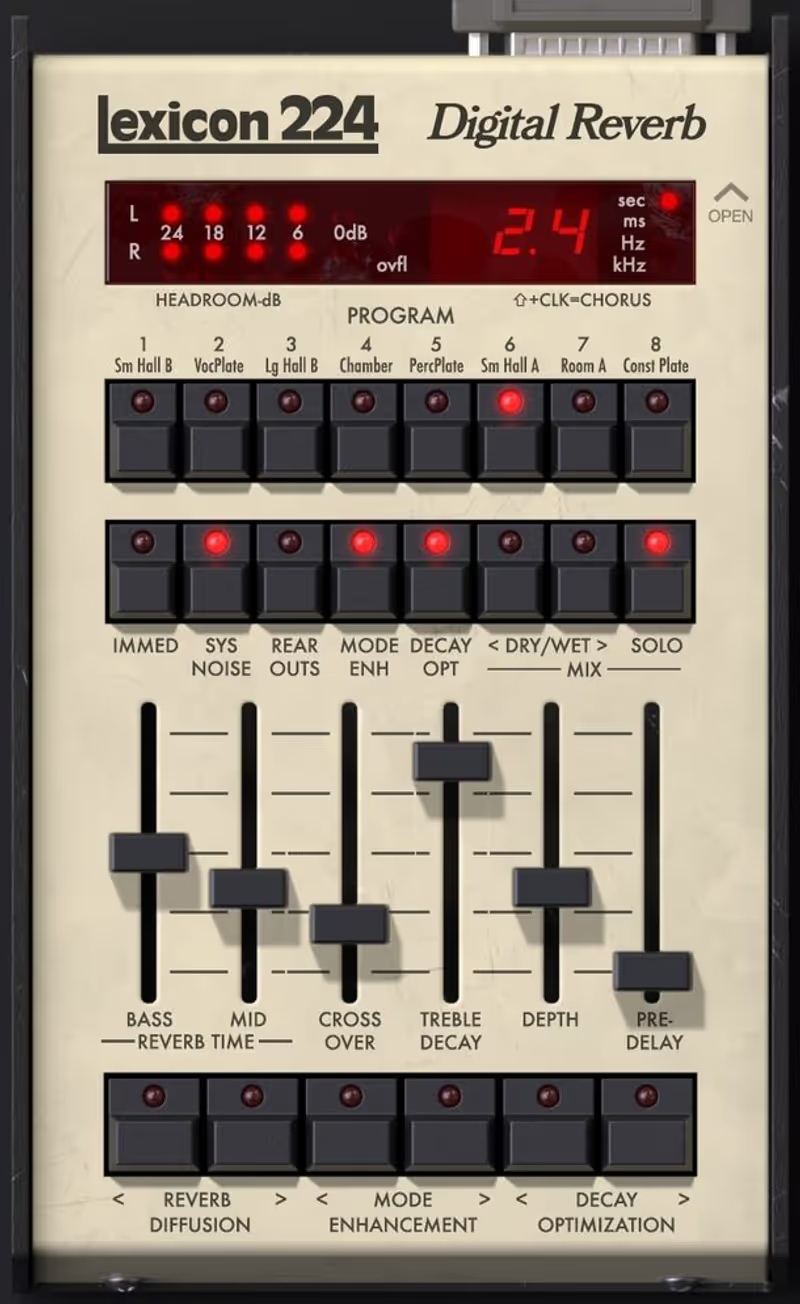
Modes 8 classic programs (Concert Hall, Plate, Room)
Controls Bass/Mid split decay times
Price $49

Universal Audio gives you the exact grainy, unmistakable density of the original 224 hardware.

The Lexicon 224 is arguably the most famous digital reverb in history, and UAD's emulation is staggering. When I need that specific, slightly gritty synthetic tail—the kind you hear on classic Vangelis soundtracks or Peter Gabriel records—nothing else will do. The algorithms are distinctly lo-fi by modern standards, and that is precisely why they cut through a mix so well. I frequently use the 'Concert Hall B' program on lead vocals; the modulation on the tail is impossibly lush, wrapping around the singer like an analog blanket.

It gives you access to the exact bit-reduction options of the hardware, allowing you to switch between the cleaner 'system 81' or the crunchier earlier version. I used this on a modern synth-pop track recently to make the lead vocal intentionally retro. It sat effortlessly in the dense electronic arrangement without needing external EQ. It is undeniably the best classic reverb alternative for serious vintage authenticity.

Why we love it

Best for vintage authenticity because it perfectly models the exact 12-bit gritty algorithms of the 1978 original.

Who should skip

Avoid if you want invisible, realistic acoustic spaces.

The Good
  • + The tone is instantly recognizable and legendary.
  • + The modulation algorithm is beautifully thick.
  • + Split bass/mid decay controls offer great flexibility.
× The Bad
  • - Intentionally lo-fi and somewhat noisy.
  • - The historical interface takes getting used to.
  • - Lacks modern visual feedback.
Famous Uses:
Vangelis Talking Heads Peter Gabriel
iZotope

Neoverb

Best For: Fast Mixes
Format VST/AU/AAX
Interface Blend pad for up to 3 distinct spaces
Extras AI Assistant Unmasking & Auto-EQ
Price $29

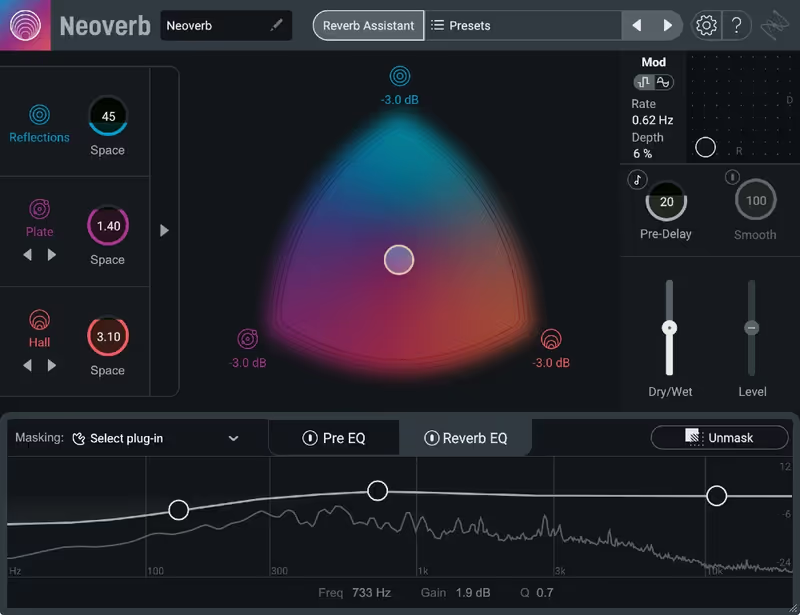
iZotope uses AI to listen to your vocal and perfectly sculpt a reverb tail that will never clash.

Neoverb is built for speed and clarity. The built-in Reverb Assistant analyzes your vocal track, identifies harsh resonant frequencies, and automatically generates a custom EQ curve to ensure the reverb sits perfectly against the dry signal. I use this heavily on tight deadlines. The blend pad interface is spectacular, allowing you to simultaneously mix a plate, a room, and a massive hall by simply dragging a node around a triangle. It creates wildly complex, believable spaces in seconds.

I was recently tasked with mixing a very dense, multi-layered choral arrangement. Traditional reverbs were turning the low-mids to absolute mush. I ran Neoverb's assistant, and it instantly ducked the problematic 250Hz area in the reverb tail, allowing the choir to sound massive without losing their enunciation. It is a stunning, futuristic tool that easily earns its spot in any conversation about the best vocal mod vst available today.

Neoverb by iZotope - Review Verdict

Neoverb

Our Verdict

Why we love it

Best for tight deadlines because the AI-assisted EQ automatically cleans the tail, ensuring a perfect fit in seconds.

Who should skip

Avoid if you despise AI assistance and want manual control of vintage models.

The Good
  • + Reverb Assistant saves a massive amount of time.
  • + Auto-unmasking ensures the vocal stays crystal clear.
  • + Blend pad is a very intuitive sound design tool.
× The Bad
  • - The AI choices can sometimes feel too safe and clinical.
  • - High CPU usage on older machines.
  • - Does not impart a colorful 'analog' tone.
Famous Uses:
Modern Bedroom Producers Fast Turnaround Mixing Podcast/Broadcast
Written By

Henry Foster

Henry is a mixing engineer with a background in broadcast and post-production. He obsesses over signal flow, gain staging, and the subtle coloration of analog-modeled plugins. His reviews focus on technical precision, CPU efficiency, and UI workflow.