
Tested in our studio
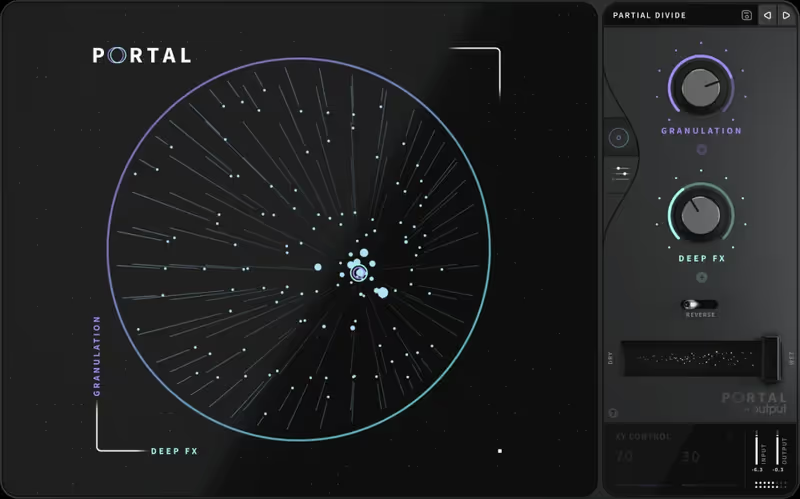
The fastest route to musical granular movement, and distinctive enough that it can stamp itself on everything you use it in.
How it scored
- Sound Design Range 6.5
Rhythmic work only. It is an effect, not a granular synth.
- Preset Quality 9.0
The preset library does almost all of the persuading.
- CPU Footprint 7.8
Reasonable across a few instances.
- Modulation Depth 5.0
Macros over grain control. No surgical editing at all.
Why we picked it
Best for rhythmic glitching and musical delays because of its intuitive macro controls.
Who should skip it
Avoid if you need deep, surgical grain editing for ambient stretch effects.
The good
- Very intuitive and musical interface.
- Excellent preset library.
- Great for rhythmic elements.
The bad
- Not a traditional synthesizer.
- Lacks deep grain editing.
- Can make everything sound like 'Portal'.
- Format
- VST/AU/AAX
- Protection
- Serial
- Price
- $149
Why it scored that way
A granular effect that is actually musical rather than purely chaotic.
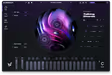
Portal is the tool I load when a synth line feels rigid and needs immediate rhythmic movement. During a recent electronic dub session, I ran a very dry pluck through Portal, and it immediately spat out a stuttering, pitched-delay effect that became the core groove. It excels at taking rhythmic elements and adding a layer of controlled, bouncing digital dust. This makes it arguably the best granular delay for producers who want quick, usable results.
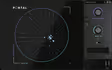
The circular macro interface is intuitive, but it lacks the deep, microscopic waveform editing found in more scientific granular tools. If you want to surgically isolate a three-millisecond grain of audio and stretch it to infinity, this is not the right plugin. It is an effect meant to be played live and tweaked aggressively, prioritizing workflow speed over deep mathematical precision.
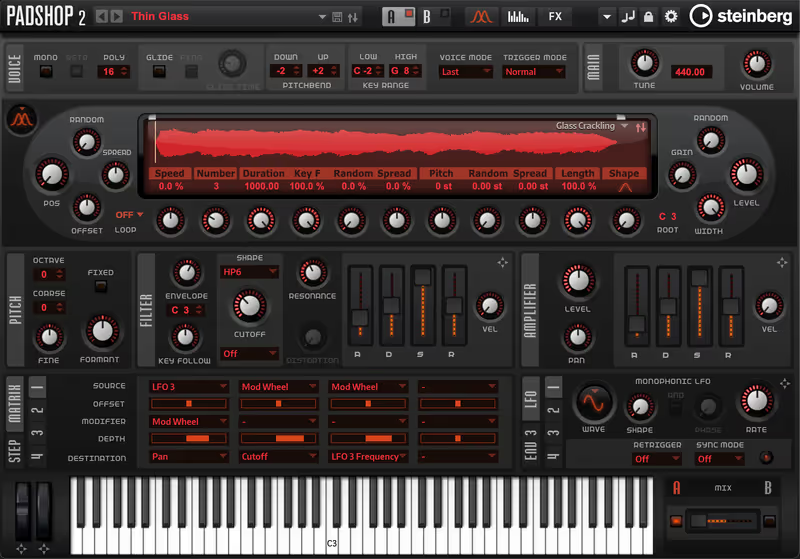
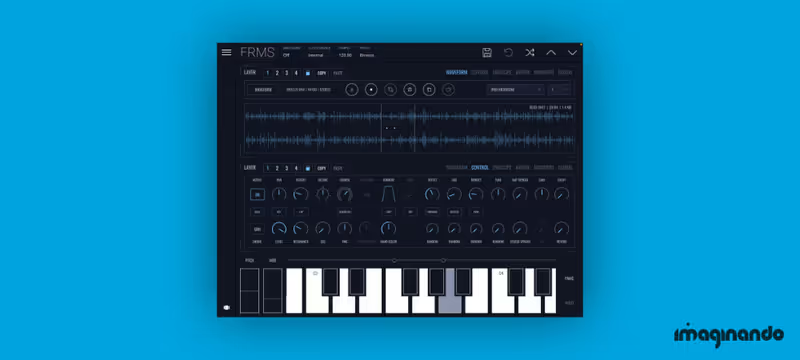
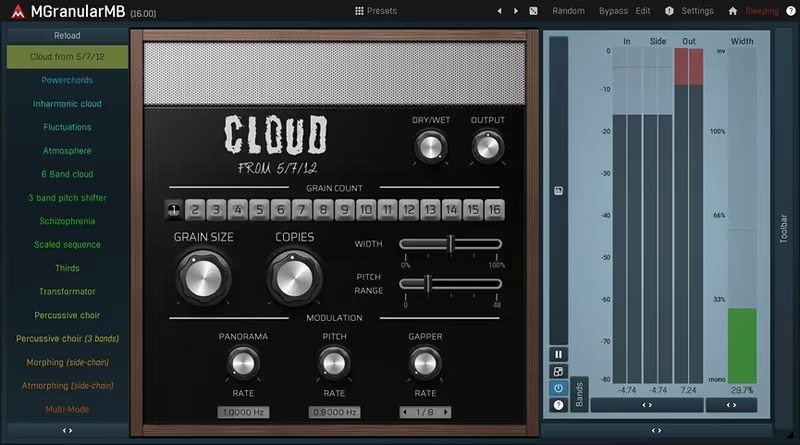
Where it sits against the rest of this list: Portal is an effect rather than a synthesiser, and that distinction determines whether it is the right purchase. Apart from MGranularMB, everything else on this page generates sound from a source you load, whereas Portal sits on a channel and granulates whatever is already playing. That makes it the fastest route to granular texture inside an existing arrangement, and the reason it appears on so many mix templates. Its tempo-synced approach keeps results musical rather than chaotic, which is both its strength and its ceiling. If you want to build an instrument from a grain cloud, Padshop or FRMS below are the tools. If you want to make the track you already have sound broken in a controlled way, this is it.
Playing connects you to YouTube, which may set cookies.