Best 'Blade Runner' Synths: Top CS-80 Emulations

The Yamaha CS-80 is the leviathan of synths. It weighs 200 pounds and costs $60k. Luckily, we can get that Vangelis sound for less than the price of the flight case.

Last Updated: January 2026
Ewan Clarke
By Ewan Clarke

Ewan is a sound designer whose patches have appeared in major wavetable synths and cinematic scoring libraries. A self-confessed modular addict, he bridges the gap between West Coast experimentation and pop-ready polish. He believes every preset should tell a story.

There is a reason Vangelis famously refused to travel without his CS-80. It is an instrument that breathes. The ribbons, the polyphonic aftertouch, the sheer instability of the oscillators-it feels alive. Capturing that chaos in code is famously difficult.

Most emulations sound too clean. They lack the 'heaviness' of the original hardware. I have stacked the contenders against each other to see who managed to capture the ghost in the machine.

Quick Summary

  1. 1. CS-80 V4 Best for Vangelis Brass
  2. 2. GX-80 Synthesizer Best for Hybrid Textures
  3. 3. Diva Best for Custom Patches
  4. 4. Repro Best for Dark Drones
  5. 5. CS-M Best for Indie Electronica
  6. 6. Syntronik V-80 Best for Background Pads
  7. 7. ME80 Best for Solo Leads
Read more →

Methodology

Who is this for

Working composers and producers who need reliability, speed, and character for professional scoring tasks.

Our testing process

We test every library in actual production scenarios—ranging from writing rapid sketches to delivering commercial pitches. We evaluate how they perform in a dense template, not just in isolation.

Why you should trust us

We buy most reviewed plugins ourselves. Occasionally we receive NFRs for evaluation, but this never guarantees a review or positive verdict. We may earn commissions from links, but our editorial choices are never for sale.

Also considered

For every category, we audition the top 8 to 15 standard options, discarding any that suffer from poor scripting, slow load times, or uninspiring sampling.

Top Picks

Arturia

CS-80 V4

Best For: Vangelis Brass
Engine VST/AU/AAX
Type Physical Modeling
Size 200 MB
Price $149

The closest you will get to the real thing without a structural engineer report for your floor.

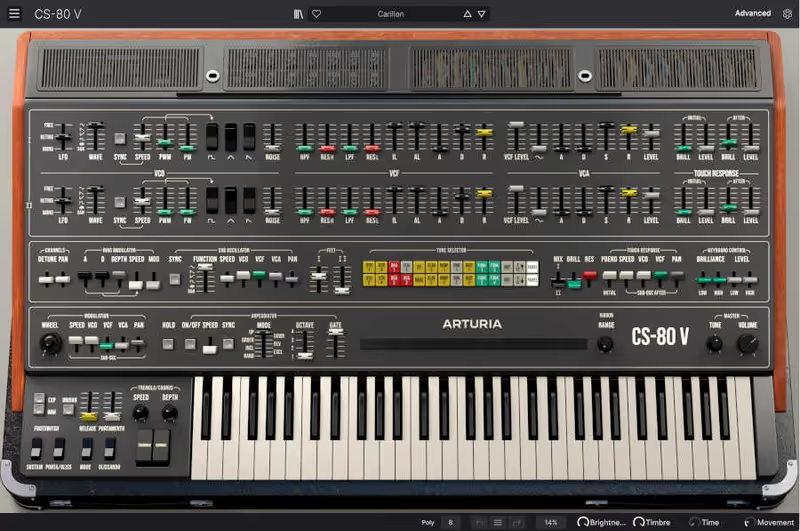
Arturia has been iterating on this emulation for years, and V4 is the version where they finally cracked the code. The old versions sounded thin and digital, but this one has genuine weight and heft. The new "Dispersion" settings-which model the aging of individual electronic components-allow me to dial in the oscillator drift until it sounds like a unit that has been left in a damp basement since 1982. On a recent retro-score, pushing this drift knob transformed a sterile pad into a wobbly, living texture that filled the entire stereo field.

The Modulation Matrix kicks it into the modern era, allowing you to route anything to anything, which solves the frustrating limitations of the original hardware. It is undeniably CPU hungry, and the interface is still a bit "mouse-heavy" for such a tactile synth, but the sound makes up for it. The famous "Blade Runner" brass patches alone are worth the entry price. I played a single chord, opened the filter with aftertouch, and it was instant Vangelis.

CS-80 V4

Our Verdict

Why we love it

Purists who demand absolute authenticity. The component modeling and MPE support make it feel alive under your fingers.

Who should skip

You have a slow computer. The deep physical modeling eats CPU cycles for breakfast.

The Good
  • + Incredible filter sound
  • + MPE support is crucial
  • + Component dispersion
× The Bad
  • - Pricey
  • - GUI can be fiddly
  • - Large CPU footprint
Famous Uses:
Blade Runner 2049 Stranger Things Synthwave
Cherry Audio

GX-80 Synthesizer

Best For: Hybrid Textures
Engine VST/AU/AAX
Type Hybrid Modeling
Size 100 MB
Price $69

The bargain of the century. 90% of the sound for 20% of the price.

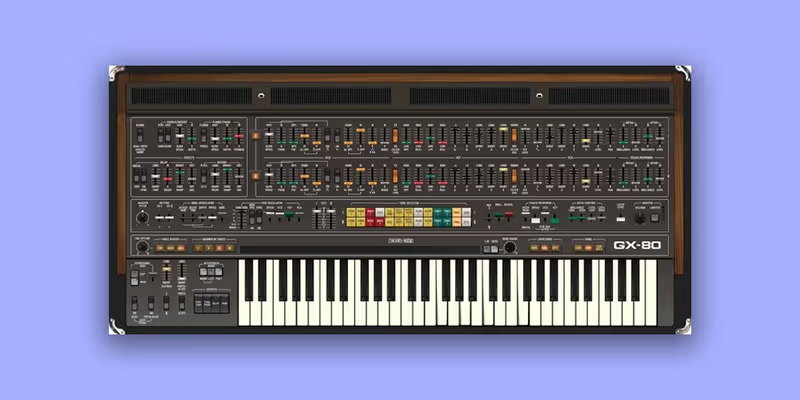
Cherry Audio has disrupted the market by selling incredible synths for the price of a takeout dinner, and the GX-80 is their absolute masterpiece. Not content with just emulating the CS-80, they decided to model the ultra-rare GX-1 (the massive organ precursor used by Stevie Wonder) and mash them together. I layered a CS-80 saw wave with a GX-1 pulse wave on a recent track, and the result was a bass tone so thick it rattled my subwoofer without any EQ, shaking the entire room with analog weight.

It sounds slightly brighter and "buzzier" than the Arturia version, but in a dense mix, that actually helps it cut through without needing high-shelf boosting. The dual-layer architecture means you can stack voices in ways that were physically impossible on the original hardware. I frequently use it for huge, detuned leads where I need that classic 70s progression rock sound but with modern stability. It is the best value synth on the market, period. It brings the dual-layer magic of the GX-1 to everyone.

Why we love it

Producers who want bang for their buck. You get two legendary synths (CS-80 and GX-1) for less than the price of a dinner.

Who should skip

You need MPE expression. It lacks the deep polyphonic aftertouch expression of the Arturia.

The Good
  • + Insane value
  • + GX-1 waveforms included
  • + Light on CPU
× The Bad
  • - Less 'weight' than Arturia
  • - Effects are just okay
  • - Smaller preset library
Famous Uses:
Modern Synthpop Indie Games Electro Pop
u-he

Diva

Best For: Custom Patches
Engine VST/AU/AAX
Type Virtual Analog
Size 50 MB
Price $179

If you swap the filters, is it still a CS-80?

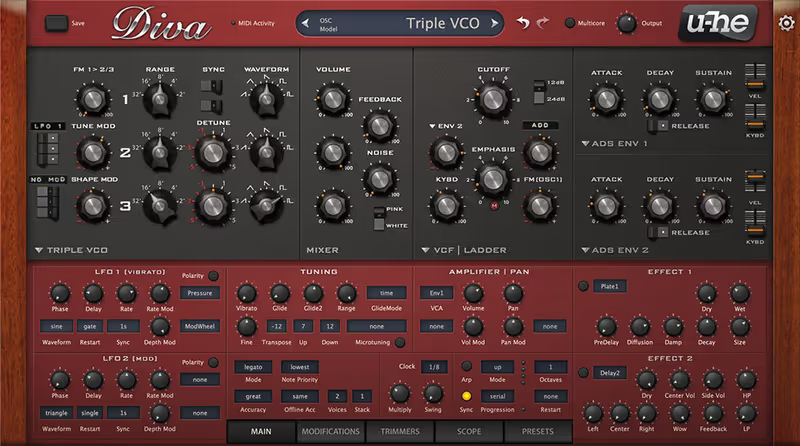
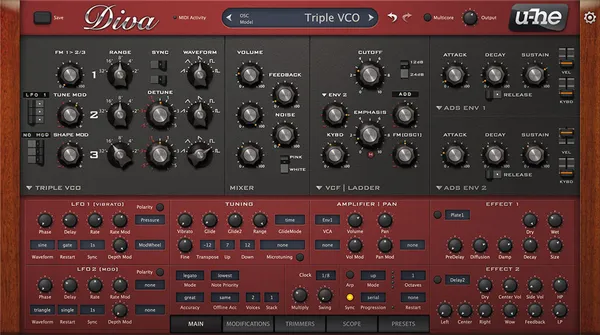
Diva is the best sounding virtual analog synth, period. While it is not a dedicated 1:1 CS-80 emulation, its modular nature allows you to swap the oscillator and filter modules to "UHBI" (Oberheim/CS style models) and get terrifyingly close to the target sound. I actually prefer using Diva for CS-80 style brass because I can run it through a Moog-style ladder filter for extra drive, creating a hybrid tone that is historically inaccurate but musically superior.

The advantage here is that you aren't stuck with the CS-80's quirky limitations or confusing layout. You get the best of both worlds: that unstable, drifting analog oscillator sound, but with a modern, understandable envelope and modulation workflow. I used a custom "CS-Style" patch in Diva for a sci-fi short film, and the director commented on how "massive" and "wide" the synths sounded compared to the temp track.

Diva

Our Verdict

Why we love it

Sound designers who care about tone above all else. Swapping the filter modules allows for 'impossible' hybrid synths that sound incredible.

Who should skip

You want a 1:1 replica of the CS-80 workflow. It is a Frankenstein synth, not a historical document.

The Good
  • + Best sound quality
  • + Flexible architecture
  • + Modern modulation
× The Bad
  • - CPU killer
  • - Not authentic workflow
  • - Complex routing
Famous Uses:
Hans Zimmer Junkie XL Modern Cinema
u-he

Repro

Best For: Dark Drones
Engine VST/AU/AAX
Type Prophet-5 Model
Size 100 MB
Price $149

A different flavor of huge.

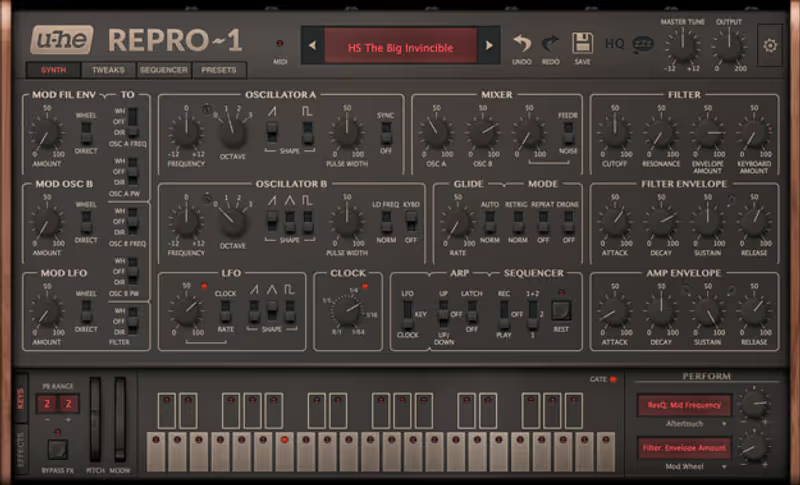
If you are looking for the CS-80 sound, often what you are really looking for is just "Expensive Analog Polyphony," and Repro-5 delivers that in spades. Modeled on the Prophet-5, it gives you that same weight and majesty, just with a slightly more American, aggressive edge. I recently swapped out an Arturia CS-80 pad for a Repro-5 patch in a mix because the CS-80 was taking up too much headroom. The Repro-5 sat better while still providing that massive emotional swell.

Sometimes the CS-80 is too polite, too brassy, and too weird. The Repro-5 is darker, growlier, and feels more "rock and roll." If the standard Vangelis brass isn't cutting it for your track, try this instead. The distortion unit in the effects chain is absolutely incredible for adding distortion unit in the effects chain is absolutely incredible for adding grit to pads, turning a lush sound into a menacing drone. It is a glorious alternative to the Yamaha sound. It brings a grittier, American character to the table.

Repro

Our Verdict

Why we love it

Creating massive, dark cinematic drones. It captures the weight and majesty of analog polyphony with a grittier, American edge.

Who should skip

You specifically need the 'Blade Runner' brass sound. This models a Prophet-5, which has a completely different filter character.

The Good
  • + Incredible distortion
  • + Heavy low end
  • + Lush modulation
× The Bad
  • - Not a CS-80
  • - CPU heavy
  • - Monophonic sequencer
Famous Uses:
Cyberpunk Dark Techno Industrial
UVI

CS-M

Best For: Indie Electronica
Engine UVI Workstation
Type Sampled Hardware
Size 2 GB
Price Check Site

Not an emulation. A recording. The grit is real.

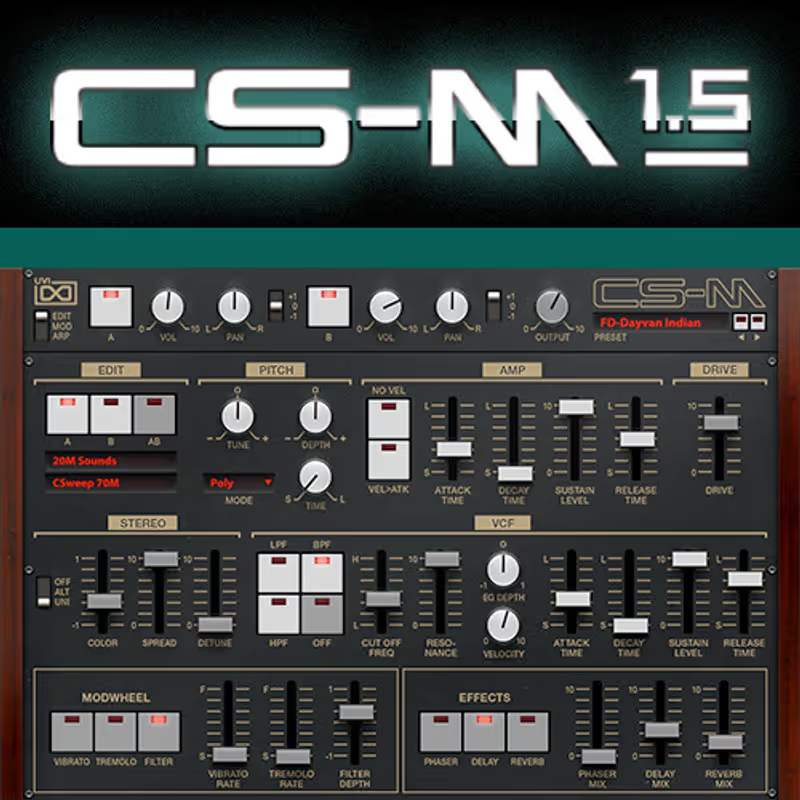
Unlike the other plugins on this list, UVI didn't model the circuits. They deep-sampled the actual hardware. This means you don't get the infinite tweakability of oscillator drift, but you get something else: the actual electrical noise and dirt of the real machines. There is a gritty texture to sample-based synths that mathematical models still struggle to beat. I used the "CS-70" samples on a lo-fi hip-hop track, and the inherent hiss and wobble gave the beat an instant vintage character that no EQ plugin could replicate.

It focuses on the lesser-known "CS" siblings (CS-20, CS-40, CS-70), which is remarkably refreshing. It sounds dustier, darker, and more "lo-fi" than the pristine CS-80 emulations. If you want that warped, Boards of Canada style warble rather than the shiny, cinematic Vangelis brass, this is your weapon. The UVI effects engine also includes a great tape delay that pairs perfectly with these samples.

CS-M

Our Verdict

Why we love it

Lo-fi producers who prioritize grit over accuracy. The real hardware noise samples give it a dustier vibe than any model.

Who should skip

You want to design sounds from scratch. It is a sample player, so you are limited to the recorded waves.

The Good
  • + Real hardware noise
  • + Unique character
  • + Cheap
× The Bad
  • - Static samples (no drift)
  • - Limited modulation
  • - Not a true CS-80
Famous Uses:
Lo-Fi Hip Hop Ambient IDM
IK Multimedia

Syntronik V-80

Best For: Background Pads
Engine Syntronik
Type Sample + Modeling
Size 5 GB
Price Check Site

Good for browsing presets, less good for sound design.

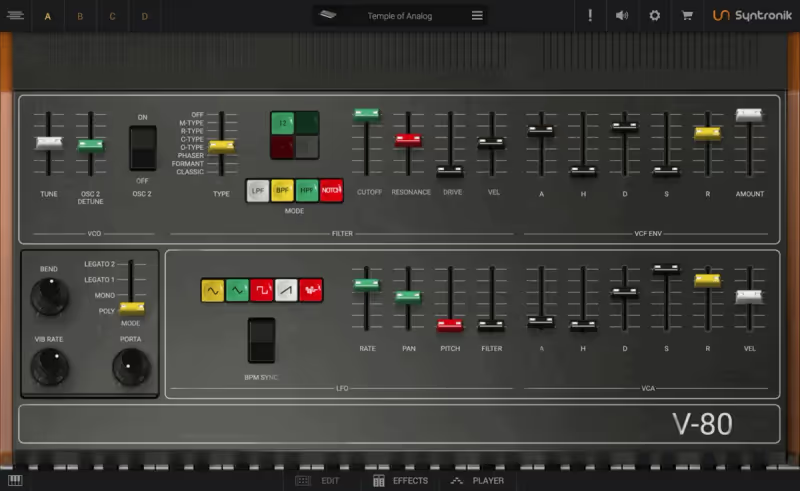
IK Multimedia's approach is quantity and speed. You get a lot of serviceable sounds incredibly fast. The V-80 captures the "bigness" of the original patches well, and the samples are recorded with a nice stereo width. Their proprietary "Drift" technology attempts to add some life back into the static samples, and honestly, it works surprisingly well. I used a V-80 pad on a quick commercial turnaround where I didn't have time to sound design, and the client loved the "80s warmth" immediately. It delivers instant gratification for retro leads.

The interface is polarizing-it looks like a 500-series lunchbox rack-but functionally it is simple. If you just need "That 80s Pad" for a background layer and don't want to spend three hours programming envelopes and routing modulation matrices, it does the job efficiently. It is not the deepest engine, but it sits in a mix without fighting for space, which is a huge plus for dense arrangements, fitting perfectly where massive modeled synths would take up too much sonic room.

Syntronik V-80

Our Verdict

Why we love it

Composers who need mix-ready sounds instantly. It provides the 'vibe' of the 80s without the complexity of a full synth engine.

Who should skip

You are a sound designer. The interface is dumbed down and offers very little deep modulation control.

The Good
  • + Mix-ready sounds
  • + Drift tech works
  • + Part of big bundle
× The Bad
  • - Ugly interface
  • - Limited tweaking
  • - Large install size
Famous Uses:
Pop Demos Jingles Rapid Prototyping
Memorymoon

ME80

Best For: Solo Leads
Engine VST (Win Only)
Type Indie Emulation
Size 10 MB
Price Check Site

It looks like Windows 98, but it sounds like 1978.

This plugin is ugly-let's get that out of the way immediately. It looks like it was designed for Windows 98. But if you close your eyes and play it, it might be the most responsive CS-80 of the entire bunch. The aftertouch mapping is incredibly musical and feels connected to the sound engine in a deep way. Before Arturia released their V4 update, ME80 was my secret weapon for all things Blade Runner. I trusted it on lead lines because it never felt static.

It has a specific "creamy" quality to the low-pass filter that sits beautifully in a track without needing EQ. It is a labor of love from a single developer, and you can hear the obsessiveness in the oscillator behavior. It doesn't have the marketing budget of the big boys (or the GUI designer), but it has the soul. If you are on a PC and can tolerate the interface, it is a hidden gem.

ME80

Our Verdict

Why we love it

Synth geeks who care about 'feel' over graphics. The aftertouch response is arguably the most musical of the bunch.

Who should skip

You are on Mac or need a scalable GUI. It looks like Windows 95 and is a pain to install.

The Good
  • + Amazing filter
  • + Great aftertouch
  • + Cheap
× The Bad
  • - Windows only (mostly)
  • - Terrible GUI
  • - Hard to find
Famous Uses:
User Forums Vangelis Tribute Acts Synth Geeks
Written By

Ewan Clarke

Ewan is a sound designer whose patches have appeared in major wavetable synths and cinematic scoring libraries. A self-confessed modular addict, he bridges the gap between West Coast experimentation and pop-ready polish. He believes every preset should tell a story.