



7 Best Neurobass Synths for Heavy Dubstep (2026)

If your sub bass phases out during a heavy drop, your listeners will immediately click away.

Ewan Clarke
By Ewan Clarke Synth Specialist & Sound Designer

What changed: Every pick now carries a verdict line and scores for modulation depth, low-end weight, CPU and workflow, and there is a decision router at the top. It also answers the questions readers ask about the category.

ModWheel is reader-supported. When you buy through links on this page we may earn an affiliate commission, at no extra cost to you. This never influences which products we recommend, read our testing methodology.

Prices come from the store's own feed and were last checked 1 September 2026. We don't issue discount codes — the price you see is the store's own.

Pick one in 10 seconds

Short version
  • The sound needs modulation routed at audio rate Phase Plant
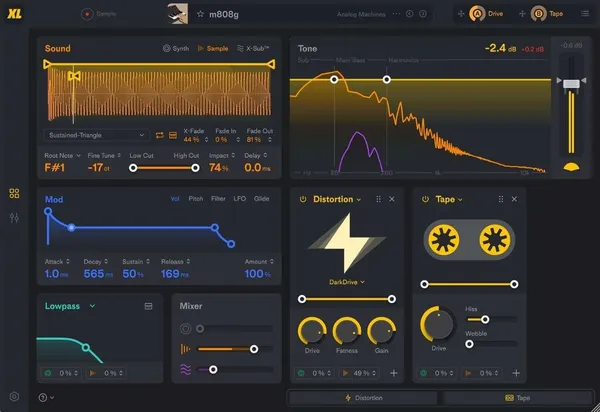
  • The sub has to translate on a laptop speaker as well as a system SubLab XL
  • You want the growl thick before any processing MASSIVE X
  • You want punch and unison without a learning curve Spire
  • You want to see the modulation while you design it Pigments 7
  • The patch has to combine sampled material with synthesis Falcon 2026

Compare all 7

Phase Plant
1. Phase Plant Kilohearts
7.7
Protection
Kilohearts Center
Pigments 7 7.8
Protection
Arturia Software Center
MASSIVE X
3. MASSIVE X Native Instruments
7.2
Protection
Native Access
Protection
iLok
SynthMaster 3
5. SynthMaster 3 KV331 Audio
7.3
Protection
Serial Key
$49 $99 View price
Spire
6. Spire Reveal Sound
8.1
Protection
Serial Key
$76 $189 View price
SubLab XL
7. SubLab XL Future Audio Workshop
8.0
Protection
Serial Key
$39 $80 View price

Finding the best synth for dubstep requires looking past basic analog emulations and focusing on complex digital modulation. Modern tearout production demands absolute control over phase alignment and intricate FM routing. The top neurobass VST plugins handle these extreme processing tasks without generating unwanted digital artifacts.

You need a synthesizer capable of stacking multiple oscillators while maintaining a tight, punchy low-end response. A good wavetable engine replaces the need for dozens of external saturation plugins. The right choice depends on your approach, such as preferring visual routing matrices or semi-modular architectures.

Several of these picks also appear in our Best VSTs for Cyberpunk & Dystopian Sci-Fi roundup, which is worth a look if you are weighing up both.

Neuro patches and a played bass guitar solve different halves of the same low end. When the track wants strings rather than oscillators, our Best 8-String & Extended Range Basses for Metal roundup is the companion to this one.

Top Picks

01 Kilohearts

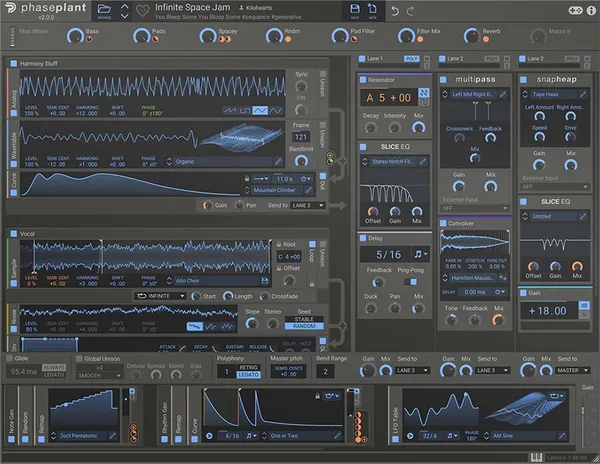
Phase Plant

Best for Modular Design

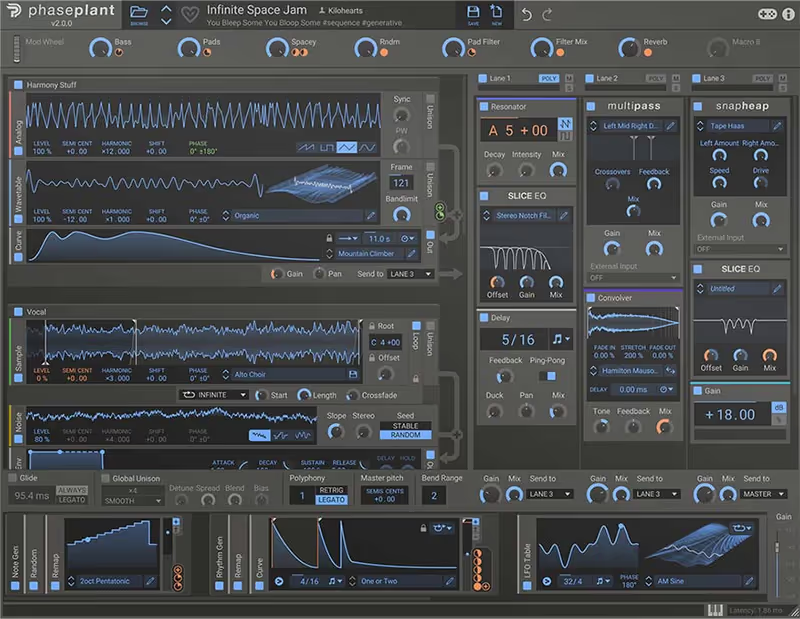
The deepest routing available here and a blank page to start from, which is the whole appeal and the whole cost.

Score
7.7
out of 10

How it scored

  • Modulation Depth 9.8

    Audio-rate FM between any generators without leaving the plugin. Best here.

  • Low-End Weight 8.5

    As solid as the patch you build. It adds no weight on its own.

  • CPU Efficiency 7.0

    A complex neuro patch is expensive, which is the nature of the design.

  • Workflow Speed 5.5

    An empty rack every time. Lowest on the page.

Why we picked it

Best for complex sound design because of its limitless modular routing and audio-rate modulation capabilities.

Who should skip it

Avoid if you prefer a traditional, fixed-architecture layout with immediate visual feedback.

The good

  • Limitless routing possibilities
  • Incredible audio-rate modulation
  • Integrates perfectly with Kilohearts snapins

The bad

  • Blank canvas can be intimidating
  • Requires purchasing additional effects
  • Interface lacks visual character
Format
VST/AU/AAX
Protection
Kilohearts Center
Price
$199
Why it scored that way

This is arguably the most flexible sound design environment currently available for modern bass music.

Phase Plant has completely redefined my approach to designing heavy bass sounds by offering a truly limitless semi-modular workspace. The ability to route audio-rate modulation between any number of oscillators, samplers, and wavetable generators is hard to match anywhere else. I regularly use it to create complex FM neurobass patches that would otherwise require multiple plugin instances and complicated DAW routing.

The completely blank canvas approach can be intimidating if you just want to load a preset and start writing immediately. However, once you understand the signal flow, it becomes the ultimate alternative to rigid, fixed-architecture synthesizers. If you are serious about heavy electronic sound design it belongs on the shortlist, though the interface is functional rather than characterful and further effects cost extra.

Playing connects you to YouTube, which may set cookies.
Heard on
Virtual Riot Skrillex Noisia
Check price $199
02 Arturia

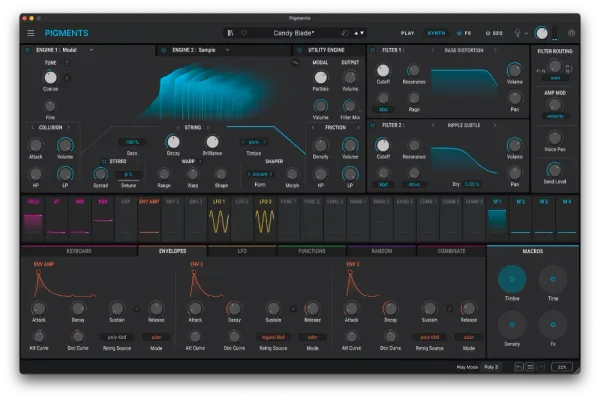
Pigments 7

Best for Visual Design

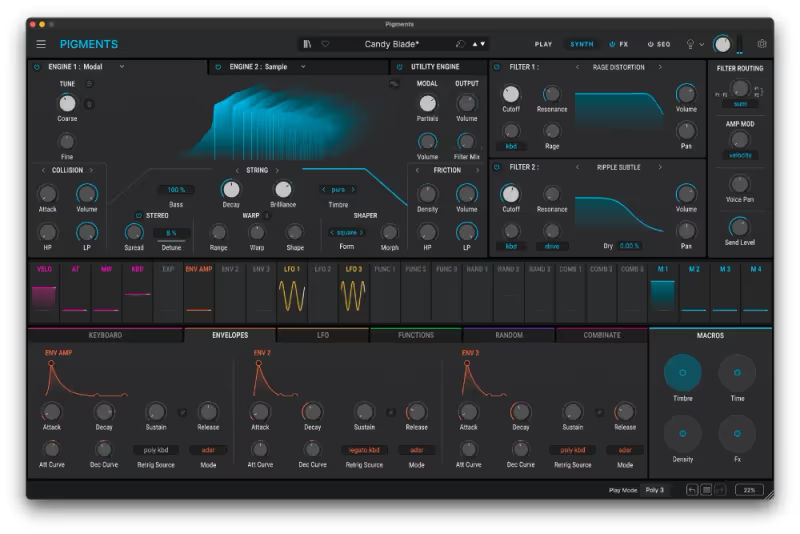
The clearest view of a complex patch on this page, and the heaviest interface to pay for it.

Score
7.8
out of 10

How it scored

  • Modulation Depth 9.0

    Animated routing that makes a dense modulation scheme readable.

  • Low-End Weight 8.0

    Solid rather than enormous, with the filters doing the shaping.

  • CPU Efficiency 5.5

    Animations and dense patches together. Lowest here.

  • Workflow Speed 8.8

    Colour-coded and fast to navigate. Best on the page.

Why we picked it

Best for visual sound design because every modulation routing is clearly animated and color-coded.

Who should skip it

Avoid if you have an older computer that struggles with heavy GUI animations.

The good

  • Incredible visual feedback
  • Four diverse synthesis engines
  • Excellent built-in effects

The bad

  • GUI animations can cause lag
  • High CPU usage on complex patches
  • Factory presets lean toward cinematic
Format
VST/AU/AAX
Protection
Arturia Software Center
Price
$199
Why it scored that way

Pigments offers the most intuitive visual feedback of any complex synthesizer on the market today.

Arturia Pigments excels at making complex modulation patching visually understandable through its brilliant color-coded interface and animated routing matrix. The dual engine architecture allows you to easily combine a gritty granular sample layer with a heavy wavetable bass patch. I frequently rely on its deep randomization features to generate unexpected metallic textures for heavy tearout bass fills.

While the visual feedback is outstanding, the sheer amount of animation can occasionally cause interface lag on older operating systems. Despite this minor friction point, it remains one of the best Serum alternatives for producers who need intense visual confirmation of their sound design. The included effects rack is robust and full of vintage emulations, though the factory presets lean cinematic, which suits scoring more than club work.

Playing connects you to YouTube, which may set cookies.
Heard on
Zedd Feed Me Pegboard Nerds
Check price $199
03 Native Instruments

MASSIVE X

Best for Heavy Bass

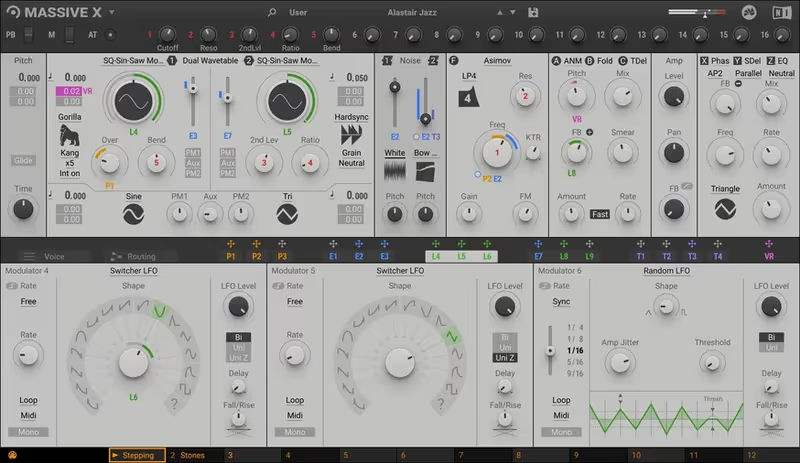
The heaviest mid-bass growl here before any processing, sold behind routing you cannot see.

Score
7.2
out of 10

How it scored

  • Modulation Depth 8.0

    Performer envelopes handle rhythm well, with no visual feedback at all.

  • Low-End Weight 9.4

    Thicker raw than the rest of this page. Best here.

  • CPU Efficiency 7.0

    Middling and predictable.

  • Workflow Speed 4.5

    Convoluted routing and no custom wavetables. Lowest on the page.

Why we picked it

Best for thick modern basslines because the raw wavetable oscillators have incredible depth.

Who should skip it

Avoid if you rely heavily on clear, animated visual feedback for your modulation routing.

The good

  • Incredibly thick raw sound quality
  • Unique performer modulation system
  • Excellent sounding analog-style filters

The bad

  • Convoluted visual routing interface
  • No visual feedback for modulation
  • Cannot import custom wavetables
Format
VST/AU/AAX
Protection
Native Access
Price
$199
Why it scored that way

Massive X delivers an incredibly thick, modern sound character despite its controversial user interface.

Massive X provides an undeniably heavy, punchy sound engine that sits perfectly in a dense, modern electronic mix. The specialized performer envelopes and unique voice routing options allow for creating highly complex, evolving rhythmic basslines effortlessly. I still rely on it heavily for mid-bass growls because the raw oscillator quality is noticeably thicker than most competing wavetable synthesizers.

The primary frustration is the convoluted visual routing interface, which lacks the immediate clarity of its famous predecessor. It takes significant time to master the signal flow, but it remains a fantastic Phase Plant alternative for raw audio quality. If you can overcome the steep learning curve the sonic rewards are worth the effort, but there is no visual feedback for modulation, which slows patch debugging.

Playing connects you to YouTube, which may set cookies.
Heard on
Excision Subtronics Kill The Noise
Check price $199
04 UVI

Falcon 2026

Best for Hybrid Workstation

Tested in our studio

A workstation rather than a synth, which is why it can do everything here and why it takes a week to get started.

Tested score
6.8
out of 10

How it scored

  • Modulation Depth 9.4

    Event scripting builds sequencers inside the instrument.

  • Low-End Weight 8.2

    Depends on the layers, and the sampling side widens what is possible.

  • CPU Efficiency 6.0

    Layered synthesis and sampling together is not cheap.

  • Workflow Speed 3.5

    The steepest learning curve on the page by a distance. Lowest here.

Why we picked it

Best for hybrid sound design because it flawlessly integrates deep sampling with complex synthesis engines.

Who should skip it

Avoid if you want immediate, simple results without having to read a lengthy manual.

The good

  • Unmatched hybrid sampling and synthesis
  • Powerful custom event scripting
  • Incredible variety of built-in effects

The bad

  • Extremely difficult learning curve
  • Interface feels very clinical
  • Requires iLok authorization
Format
VST/AU/AAX
Protection
iLok
Price
$299
Why it scored that way

Falcon is a true powerhouse capable of replacing nearly every other synthesizer in your entire plugin folder.

UVI Falcon is an incredibly deep workstation that allows you to layer intricate wavetable synths with deeply multi-sampled instruments. The scripting capabilities and event processors allow you to build custom generative sequencers directly within the synth architecture. I used it recently to layer a heavy FM bass patch with a granularly processed cello sample for a unique hybrid dubstep drop.

The interface is notoriously difficult to learn, feeling more like a programming environment than a traditional musical instrument. It is arguably the best omnisphere alternative for composers who want to dive deeply into technical sound design. If you are willing to study the manual there is very little it cannot do, though it requires iLok authorisation and the interface stays resolutely clinical.

Playing connects you to YouTube, which may set cookies.
Heard on
Hans Zimmer Mick Gordon Junkie XL
Check price $299
05 KV331 Audio

SynthMaster 3

Best for Versatile Synths

Flagship synthesis at a mid-range price, presented all at once with no way to hide the parts you are not using.

Score
7.3
out of 10

How it scored

  • Modulation Depth 8.5

    Granular, wavetable and virtual analog with drawable modulation shapes.

  • Low-End Weight 7.5

    Capable on reeses, and it needs help to reach the weight above it.

  • CPU Efficiency 7.5

    Reasonable until several layers are running.

  • Workflow Speed 5.5

    Cluttered, and the workflow does not always go where you expect.

Why we picked it

Best for budget-conscious producers because it offers flagship synthesis power at an accessible price.

Who should skip it

Avoid if you prefer highly polished, minimalist user interfaces with sparse parameter layouts.

The good

  • Incredible value for the price
  • Massive library of factory presets
  • Deep granular and wavetable engines

The bad

  • Interface can feel cluttered
  • Workflow is occasionally unintuitive
  • Steep learning curve for beginners
Format
VST/AU/AAX
Protection
Serial Key
Price
$49
Why it scored that way

SynthMaster provides an absurd amount of synthesis power at a very accessible price point.

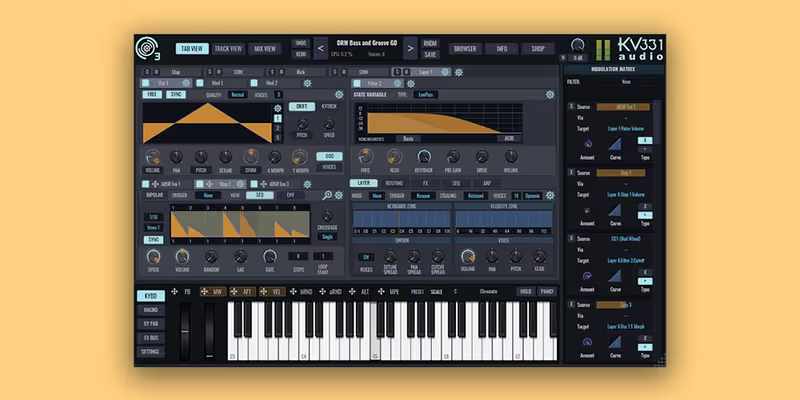
SynthMaster 3 introduces an impressive new granular engine alongside its already massive array of wavetable and virtual analog capabilities. The deeply customizable architecture allows you to draw your own custom oscillator waveforms and intricate modulation shapes. I find it highly effective for designing complex neurobass reeses, especially when utilizing the new layered voice architecture.

The user interface can feel somewhat cluttered and overwhelming due to the sheer number of available parameters packed into single panels. Despite the dense layout, it stands as an excellent budget-friendly alternative to more expensive flagship synthesizers. The factory preset library is large enough to cover most electronic genres, but the single-panel layout feels cluttered and the learning curve stays steep for anyone new to the synth.

Heard on
Armin van Buuren Martin Garrix Zedd
Check price $49 (was $99)
06 Reveal Sound

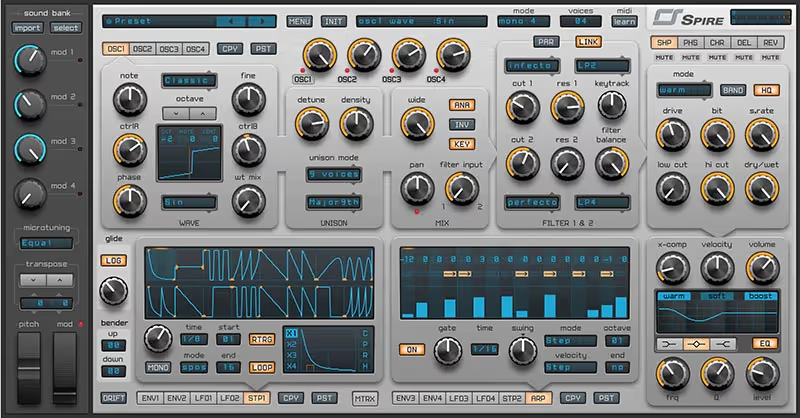
Spire

Best for Virtual Analog

The fastest route to a punchy bass on this page, and the least able to go anywhere unusual afterwards.

Score
8.1
out of 10

How it scored

  • Modulation Depth 6.0

    A dated matrix and no custom wavetables. Lowest here.

  • Low-End Weight 9.0

    The unison engine is why this survives on bass duty.

  • CPU Efficiency 8.8

    Light on current machines, even stacked.

  • Workflow Speed 8.5

    Everything is one page away and the presets are usable.

Why we picked it

Best for aggressive, punchy sounds because of its incredibly thick unison engine and hard-sync capabilities.

Who should skip it

Avoid if you strictly require importing custom wavetables or using complex granular synthesis engines.

The good

  • Incredibly punchy unison engine
  • Great sounding internal distortion
  • Low CPU usage on modern machines

The bad

  • Dated modulation matrix workflow
  • No custom wavetable import
  • Interface feels slightly small
Format
VST/AU/AAX
Protection
Serial Key
Price
$76
Why it scored that way

Spire remains the undisputed king of aggressive, punchy virtual analog synth sounds.

Spire is widely famous for its trance leads, but its aggressive unison engine is absolutely perfect for thick, distorted basslines. The hard-sync oscillators and robust internal distortion algorithms allow you to create piercing neurobass sounds with minimal effort. I frequently reach for it when I need a bass patch that will cut directly through a highly saturated, dense mix.

The modulation system is somewhat dated compared to modern drag-and-drop interfaces, requiring you to use a traditional modulation matrix. However, it is an excellent alternative to modern wavetable synths when you need classic analog aggression. The built-in chorus and delay are consistently strong, though the modulation matrix workflow shows its age next to drag-and-drop rivals and custom wavetable import is absent.

Heard on
Hardwell Armin van Buuren Ferry Corsten
Check price $76 (was $189)
07 Future Audio Workshop

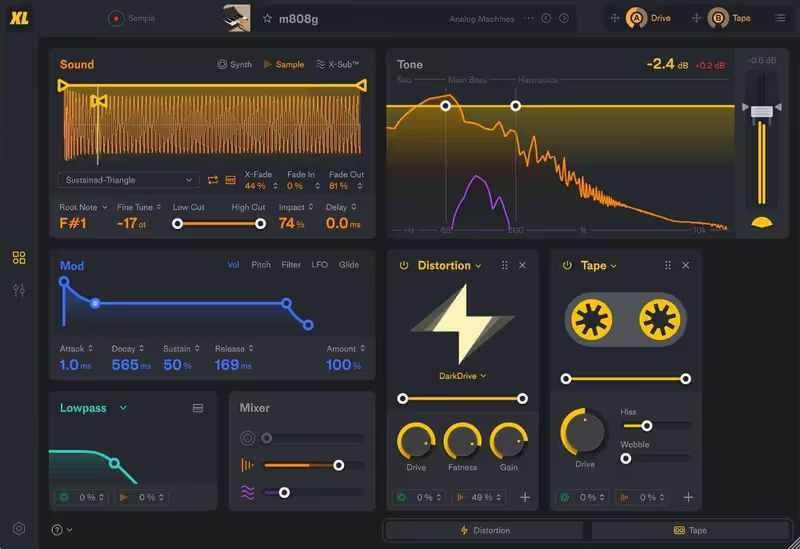
SubLab XL

Best for Sub Bass

One job done better than any generalist here, and no help whatsoever above about 200Hz.

Score
8.0
out of 10

How it scored

  • Modulation Depth 4.0

    Very little to modulate. It is not that kind of instrument. Lowest here.

  • Low-End Weight 9.8

    The x-sub layer keeps the fundamental audible on small speakers. Best here.

  • CPU Efficiency 9.0

    Small and light, as a single-purpose synth should be.

  • Workflow Speed 9.2

    Phase alignment is handled for you, which is the tedious part gone.

Why we picked it

Best for foundational sub bass because the x-sub engine ensures translation across all speaker systems.

Who should skip it

Avoid if you need a versatile synthesizer for complex mid-bass growls or polyphonic pads.

The good

  • Perfectly tuned sub bass instantly
  • Excellent x-sub harmonic generator
  • Great built-in distortion algorithms

The bad

  • Limited to low-frequency design
  • Lack of complex modulation options
  • Small factory preset library
Format
VST/AU/AAX
Protection
Serial Key
Price
$39
Why it scored that way

SubLab XL makes designing perfectly tuned, massive sub bass completely effortless.

SubLab XL focuses entirely on the low end, providing specialized tools to ensure your sub bass translates perfectly across all speaker systems. The unique x-sub engine automatically generates subharmonics that keep your bass audible even on small laptop speakers. I use this plugin exclusively for my foundational sub layers because it eliminates the tedious process of manual phase alignment.

Because it is specifically designed for sub bass, it lacks the complex modulation required for creating intricate mid-bass neuro growls. Despite this specialized focus, it is the absolute best sub bass alternative to generic wavetable synthesizers. It removes the guesswork from low-end mixing, but it stays confined to that single job, with limited modulation options and a fairly small preset library.

Playing connects you to YouTube, which may set cookies.
Heard on
Richie Souf Murda Beatz Kenny Beats
Check price $39 (was $80)
Read more →

Methodology

Who is this for

Working composers and producers who need reliability, speed, and character for professional scoring tasks.

Our testing process

Where we have tested a product, we do it in actual production scenarios, ranging from rapid sketches to commercial pitches, and we evaluate it in a dense template rather than in isolation. Where we have not, the product card says so and the assessment is drawn from specifications and documented behaviour instead.

Why you should trust us

We buy most reviewed plugins ourselves. Occasionally we receive NFRs for evaluation, but this never guarantees a review or positive verdict. We may earn commissions from links, but our editorial choices are never for sale.

Also considered

For every category, we audition the top 8 to 15 standard options, discarding any that suffer from poor scripting, slow load times, or uninspiring sampling.

Frequently Asked Questions

What actually makes a bass sound neuro rather than just distorted?

Resampling. The sound comes from processing a patch heavily, printing it to audio, then processing that audio again, often several times, so the modulation is baked into the source before the next stage of distortion. That is why the movement sounds impossible to play in one pass, because it was not played in one pass.

Why does my sub disappear on a club system?

Phase cancellation between layers is the usual cause. If the sub and the mid bass both contain low frequency content and they are not aligned, the two partly cancel, and a large system exposes it where headphones do not. Use one sub source, keep it mono, and high-pass everything else above it.

Should the sub and the mid bass be separate layers?

Almost always. A clean sine or triangle carries the fundamental and stays untouched, while the layer above it takes all the distortion, formant movement and filtering. Processing one layer that spans the whole range means every bit of distortion you add also disturbs the part of the sound the system reproduces loudest.

How do I keep a heavily distorted bass in tune?

Tune the sub layer to the key and let the distorted layer supply character rather than pitch. Distortion generates harmonics above the fundamental, so a growl can read as sharp even when the note is correct, and pushing the mid layer harder makes it worse. If it still fights the harmony, drop the mid layer an octave.

Written By

Ewan Clarke

Ewan is a sound designer whose patches have appeared in major wavetable synths and cinematic scoring libraries. A self-confessed modular addict, he bridges the gap between West Coast experimentation and pop-ready polish. He believes every preset should tell a story.

Related Guides

All Guides →

New reviews, no noise

Occasional email when we publish something worth your time. No daily digest, no vendor press releases.

We store only your address, never sell it, and delete it as soon as you unsubscribe. See our privacy policy.