
Best Cinematic Bass Synths (2026): Trailer Power

A cinematic track is only as good as its low end. From the "Braam" sounds of Inception to the pulsing analog basses of heavy trailers, specialized tools are needed to move air.

Last Updated: January 2026
Ewan Clarke
By Ewan Clarke

Ewan is a sound designer whose patches have appeared in major wavetable synths and cinematic scoring libraries. A self-confessed modular addict, he bridges the gap between West Coast experimentation and pop-ready polish. He believes every preset should tell a story.

You can make bass with any synth, but "cinematic" bass is different. It needs dirt, width, and enormous sub frequencies that you feel in your chest. Standard EDM basses often sound too "clean" or "pokey" for film work.

I’ve tested the heaviest hitters in the industry to find patches that are mix-ready for the big screen. These instruments are designed to shake theaters and rattle car windows without muddying up your mix.

Quick Summary

  1. 1. SubLab XL Best for Sub Reinforcement
  2. 2. Analog Lab Pro Best for Trailer Braams
  3. 3. Signal Best for Tension Beds
  4. 4. Diva Best for Analog Bass
  5. 5. Cyclop Best for Wobble Bass
  6. 6. Braams Best for Trailer Hits
  7. 7. Hexeract Best for Horror Drones
Read more →

Methodology

Who is this for

Working composers and producers who need reliability, speed, and character for professional scoring tasks.

Our testing process

We test every library in actual production scenarios—ranging from writing rapid sketches to delivering commercial pitches. We evaluate how they perform in a dense template, not just in isolation.

Why you should trust us

We buy most reviewed plugins ourselves. Occasionally we receive NFRs for evaluation, but this never guarantees a review or positive verdict. We may earn commissions from links, but our editorial choices are never for sale.

Also considered

For every category, we audition the top 8 to 15 standard options, discarding any that suffer from poor scripting, slow load times, or uninspiring sampling.

Top Picks

Future Audio Workshop

SubLab XL

Best For: Sub Reinforcement
Engine VST/AU/AAX
Type Sub Synth
Size 200 MB
Price $50

The surgeon’s tool for low end. Clean, powerful, and precise.

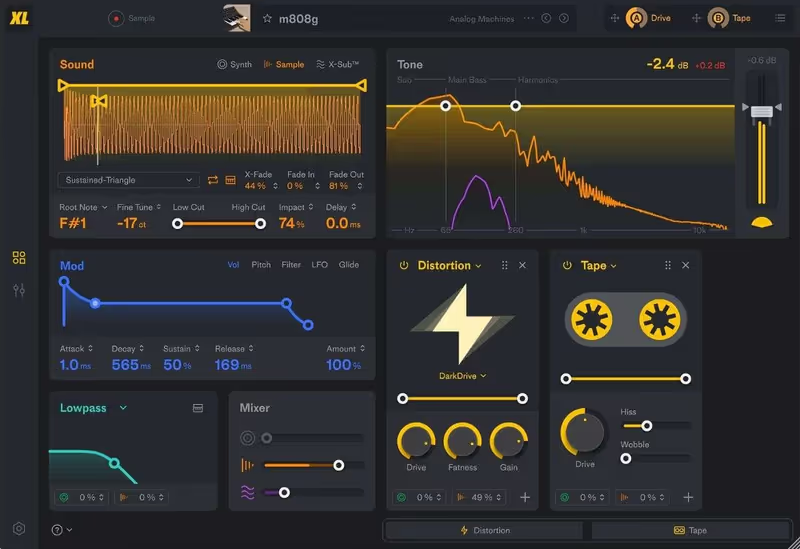
Cinematic bass isn't just about noise. It's about the sub. SubLab XL is designed to generate the cleanest, most powerful sub-bass possible. It combines a synth engine with a sample layer (for the "click" or texture) and a specialized maximizing limiter. The result is a bass that translates perfectly from IMAX theaters to iPhone speakers. It ensures your low end is phase-coherent and solid, providing a foundation that never wavers.

The distortion engine allows you to add upper harmonics so the bass is audible on small speakers, while keeping the fundamental sine wave strictly clean. This separation is crucial for professional mixing. If you struggle to get your low end to sit right in a dense orchestral mix, replacing your bass patch with SubLab XL is usually the solution. It just works, giving you power without the mud.

SubLab XL

Our Verdict

Why we love it

Mixing engineers and producers who need technically perfect sub-bass.

Who should skip

You want complex mid-range textures. This lives in the sub frequencies.

The Good
  • + Perfect subs
  • + Great distortion
  • + Harmonic control
× The Bad
  • - Not for leads
  • - Specific use
  • - Can be dry
Famous Uses:
Hip Hop Film Score Pop
Arturia

Analog Lab Pro

Best For: Trailer Braams
Engine VST/AU/AAX
Type Analog Model
Size 4 GB
Price $199

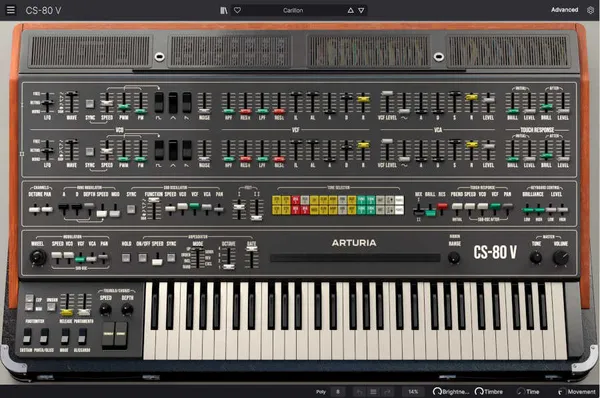
It’s not real, but it should be. The ultimate analog bass.

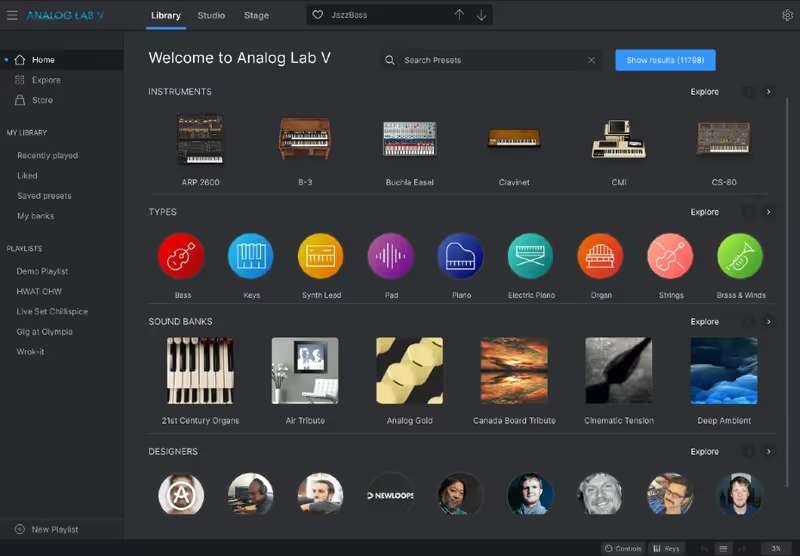
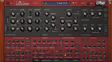
Monolith (often found within Arturia's Analog Lab) is a beast. It takes the filter of a Moog, the oscillators of an Oberheim, and the envelope snappiness of a Pro-One. The result is a bass tone that is impossibly thick. For cinematic work, the "Unison" mode is key-it stacks voices without the phase cancellation issues that plague lesser synths. It sounds wide and expensive instantly.

The "Macro" controls are typically mapped to "Darkness" and "Timbre," allowing you to automate the bass from a subtle rumble to a screaming lead over the course of a trailer build. This dynamic range is essential for modern scoring where a sound needs to evolve. It feels like having a wall of modular synthesizers pre-patched for maximum aggression.

Analog Lab Pro

Our Verdict

Why we love it

Composers who want that massive analog wall-of-sound for trailer impacts.

Who should skip

You want a clean digital sine wave. This is a character synth full of harmonics.

The Good
  • + Huge sound
  • + Great filters
  • + Simple macros
× The Bad
  • - CPU heavy
  • - Not a real hardware
  • - Presets only (in Lab)
Famous Uses:
Action Trailers Modern Sci-Fi Dark Synthwave
Output

Signal

Best For: Tension Beds
Engine Kontakt Player
Type Pulse Engine
Size 20 GB
Price $99

The pulse engine. If you need movement, you need Signal.

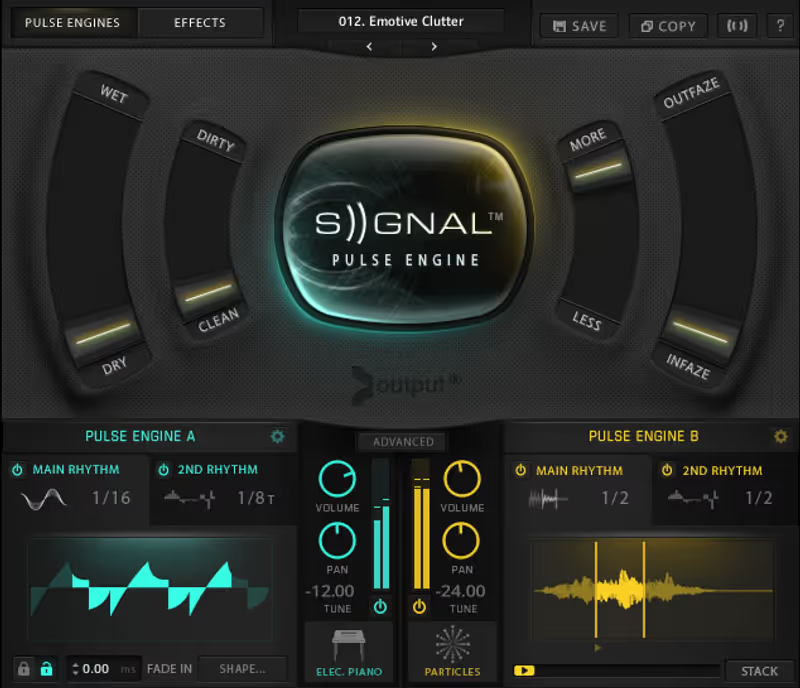
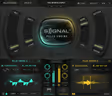
Bass in film scores often needs to "pulse" to keep the tension high. Signal is built for this task. It layers two sound sources (like a Moog and a Cello) and rhythmically modulates them. You don't play melodies on Signal. You hold down a root note and let it drive the scene. It instantly creates that "tension bed" that underscores dialogue or investigation scenes with ease.

The macro sliders are brilliant-usually mapped to "distortion" or "rhythm complexity"-allowing you to perform the loop in real time. It prevents the dreaded "static loop" fatigue. Because it blends organic samples with synths, the bass feels texturally interesting and fits well in hybrid scores where a pure synth might stick out too much, adding organic grit to the pulse.

Signal

Our Verdict

Why we love it

TV composers who need to write 40 minutes of tension music in a day.

Who should skip

You want to play funky basslines. This is a pulse/rhythm machine.

The Good
  • + Instant rhythm
  • + Huge library
  • + Great UI
× The Bad
  • - CPU heavy
  • - Presets focused
  • - Large install
Famous Uses:
crime Dramas Reality TV Modern Action
u-he

Diva

Best For: Analog Bass
Engine VST/AU/AAX
Type Virtual Analog
Size 50 MB
Price $179

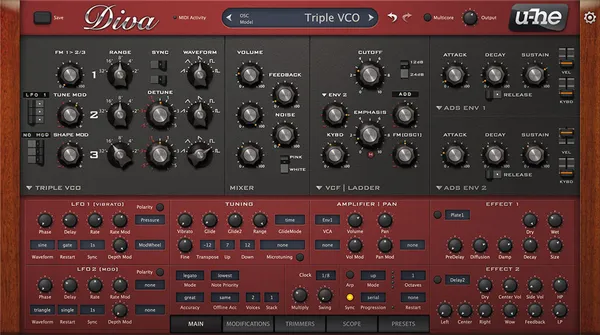
The king of virtual analog. It sounds realer than real.

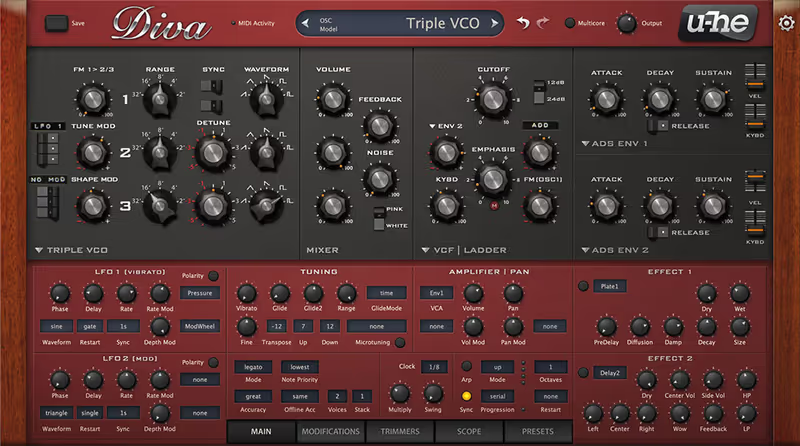
Diva is legendary for a reason. Its "Divine" mode consumes CPU like crazy, but the sound is indistinguishable from hardware. For cinematic bass, the Minimoog filter model (Ladder) hits hard. It has a creaminess and weight that other plugins miss. When you close the filter, the bass doesn't disappear. It becomes this massive, subterranean pressure that shakes the room.

It is incredibly versatile because you can swap oscillator and filter modules. You can put a Roland Juno oscillator through a MS-20 filter for a unique, screaming bass tone. For "Blade Runner" style sweeping bass pads, it is the industry standard. It takes processing well and sits in an orchestral mix with the authority of a real instrument.

Diva

Our Verdict

Why we love it

Composers who want the best possible analog sound in the box, regardless of CPU.

Who should skip

You have an old computer. Diva is hungry.

The Good
  • + Best sound quality
  • + Modular design
  • + Incredible filters
× The Bad
  • - CPU hog
  • - Complex
  • - Expensive
Famous Uses:
Hans Zimmer Junkie XL Every Composer
Sugar Bytes

Cyclop

Best For: Wobble Bass
Engine VST/AU/AAX
Type Wobble Synth
Size 100 MB
Price $99

The dubstep monster. It growls, screams, and bites.

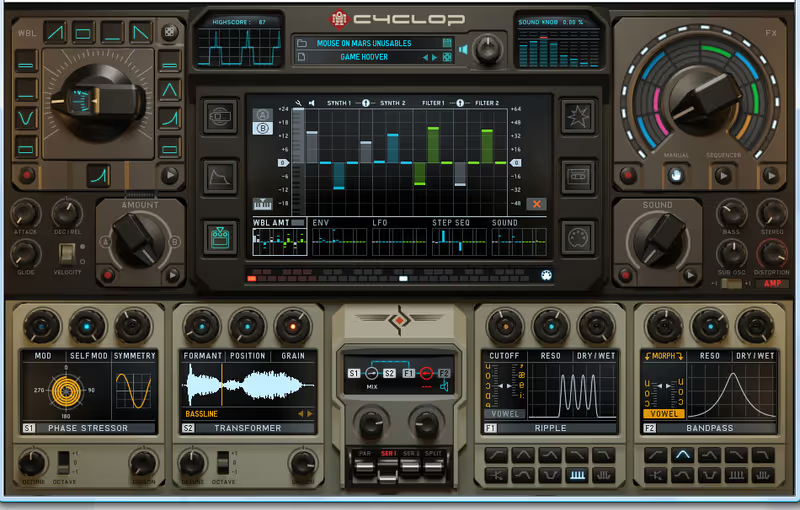
Cyclop is built for aggression. It is monophonic (one note at a time), which is perfect for bass. The "Wobble" knob is the centerpiece-it syncs LFO speed to the tempo and allows for complex rhythmic modulation of the filter. This creates that "talking bass" or "yoy-yoy" sound made famous by Skrillex. In a cinematic context, it translates to incredible textured impacts that cut through any mix.

The "Transformer" vowel filter is particularly cool for robotic, sci-fi voices. It sounds mechanical and precise. I use it for "Cyberpunk" chases where the bass needs to sound like a revving engine. It cuts through the densest mixes because of its rich harmonic content. It is barely a musical instrument. It is a weapon.

Cyclop

Our Verdict

Why we love it

Electronic action scoring and Dubstep-influenced trailer tracks.

Who should skip

You want a warm, vintage Moog sound. This is digital, sharp, and cold.

The Good
  • + Insane modulation
  • + Unique filters
  • + Aggressive
× The Bad
  • - Monophonic only
  • - Very digital
  • - Busy UI
Famous Uses:
Dubstep Action Scenes Sci-Fi
Keepforest

Braams

Best For: Trailer Hits
Engine Kontakt
Type Hybrid Braam
Size 5 GB
Price Check Site

BWAAAM. You know the sound. This library owns it.

Let's be honest: sometimes you just need that sound. The "Braam" is a mixture of low brass and synth bass, processed with heavy distortion. Keepforest are the kings of this style. This library gives you ready-made, mix-perfect Braams that hit 0dB and scare the cat. You don't need to layer horns and synths yourself. They've done the sound design work for you, delivering professional impact instantly.

It includes a rhythm engine that allows you to chop these long sustain hits into rhythmic pulses. This is incredibly useful for driving action cues where you need the weight of a Braam but the momentum of a sequencer. The "suckback" reverse samples are also essential for leading into the big hits, creating that suction effect that makes the drop feel even harder and more dramatic.

Braams

Our Verdict

Why we love it

Trailer composers who need instant, competitive loudness.

Who should skip

You want subtle. This is the loudest thing in your template.

The Good
  • + Instantly massive
  • + Great rhythmic engine
  • + Mix ready
× The Bad
  • - One specific sound
  • - Already compressed
  • - Can be cliché
Famous Uses:
Inception Style Marvel Trailers Horror Stingers
Auddict

Hexeract

Best For: Horror Drones
Engine VST/AU
Type Dark Drone Synth
Size 5 GB
Price Check Site

The sound of nightmares. Dark, twisted, and deep.

Hexeract is not for pop music. It is designed for horror and dark cinematic scores. It excels at creating "drones" that are more than just static notes. The un-tuned and harmonically complex oscillators create a sense of unease and dread. The sub-bass here is often layered with metallic scrapes or organic noise, creating a texture that feels "cursed" and utterly terrifying.

The interface is strange but effective, encouraging you to create sounds that are non-musical but highly effective for picture. If you are scoring a scene where the monster is lurking in the shadows, holding down one key on Hexeract does 90% of the job for you. It fills the low-end spectrum with terrifying detail that standard subtractive synths struggle to produce.

Hexeract

Our Verdict

Why we love it

Horror and Thriller composers needing scary low-end textures.

Who should skip

You want a funky slap bass. This is for drones and terror.

The Good
  • + Unique dark tone
  • + Great for drones
  • + Atmospheric
× The Bad
  • - Niche
  • - Weird UI
  • - Not versatile
Famous Uses:
Horror Films Dark Ambient Game Design
Written By

Ewan Clarke

Ewan is a sound designer whose patches have appeared in major wavetable synths and cinematic scoring libraries. A self-confessed modular addict, he bridges the gap between West Coast experimentation and pop-ready polish. He believes every preset should tell a story.