

Head to head

XO vs Atlas 2

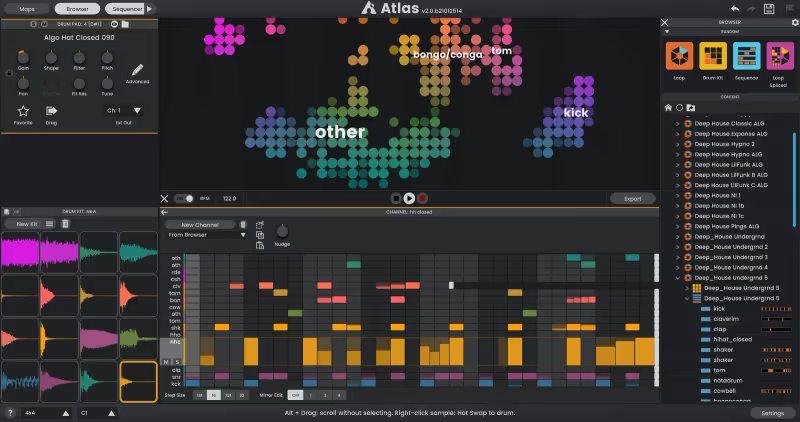
XLN Audio XO and Algonaut Atlas 2 both map your drum samples into a space you can browse. Compared on sequencing, workflow and which one suits how you build a beat.

The short answer

XO if browsing is the point and you want to audition a hundred kicks by moving a cursor. Atlas 2 if the sequencer is the point, because its polyrhythmic programming and kit randomiser go further. Neither synthesises anything, so both are only as good as the samples you already own.

ModWheel is reader-supported. When you buy through links on this page we may earn an affiliate commission, at no extra cost to you. This never influences which products we recommend, read our testing methodology.

Compare all 2

XO
1. XO XLN Audio
7.5
$89 $149 View price

These two do the same unusual thing: they analyse your own drum samples, place them in a two-dimensional space by timbre, and let you browse that space instead of scrolling folders. If you have ever lost twenty minutes looking for a snare, that is the pitch, and both deliver on it.

The differences are in what happens after you have found the sounds.

The browser

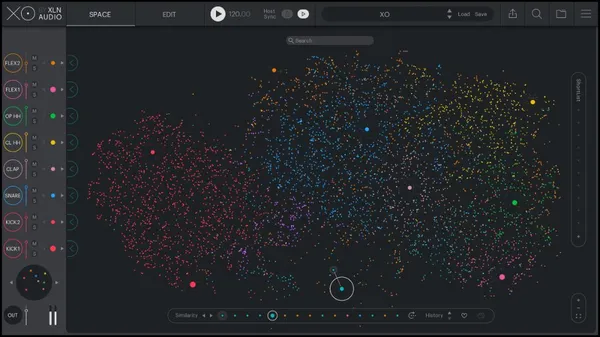
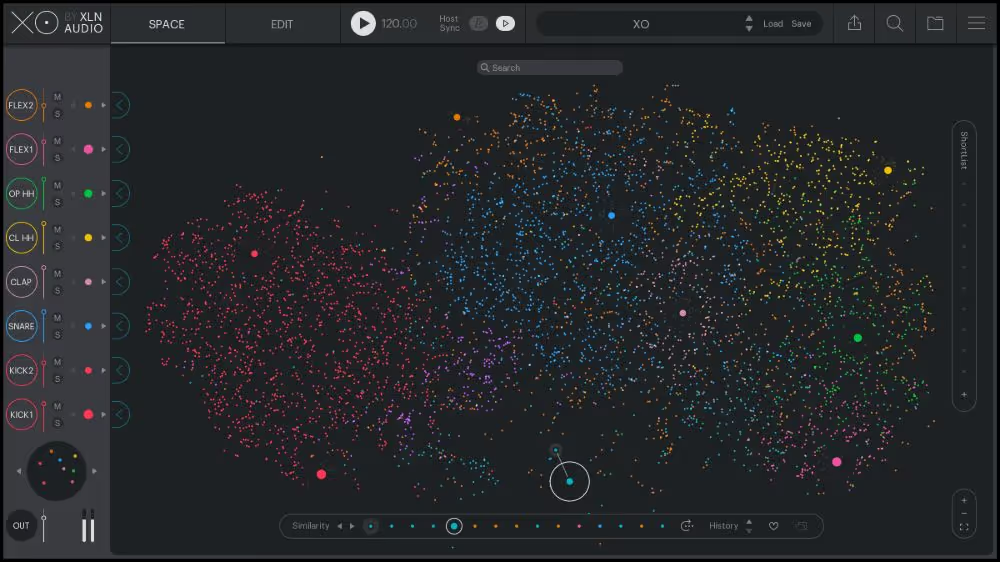
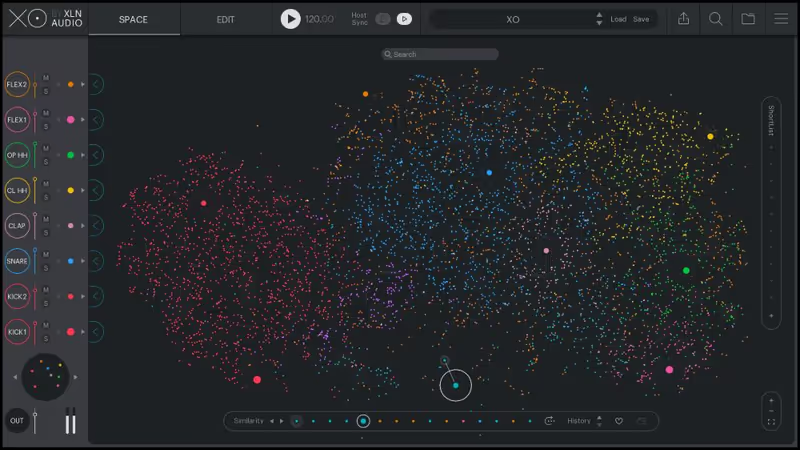
XO’s map is the more immediately compelling of the two, and the reason most people try it. Similar sounds cluster, so moving across the space moves through timbre rather than through filenames, and swapping one element of a kit while the loop plays is close to instant.

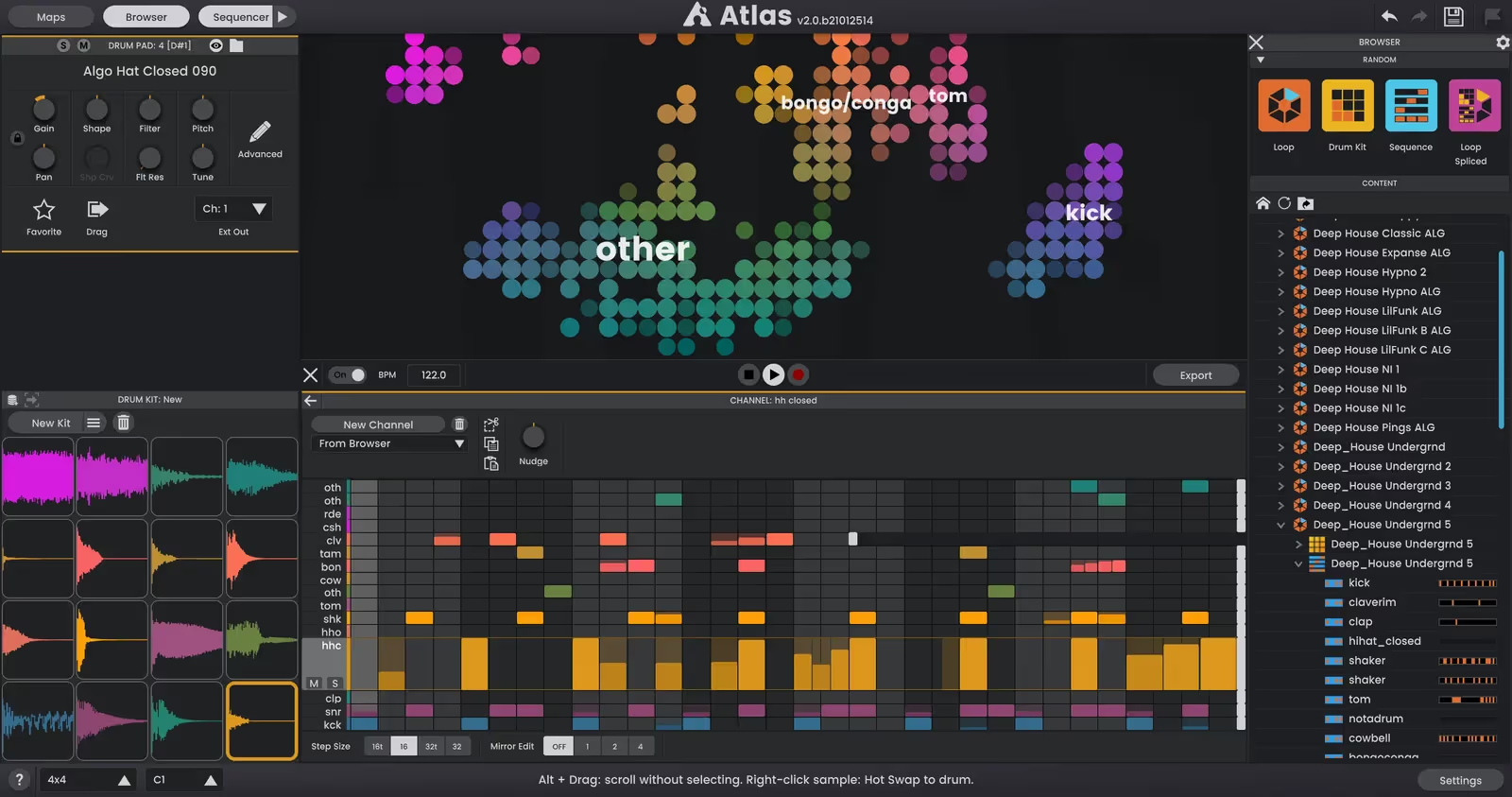
Atlas 2 does the same analysis with a more conventional presentation. Less arresting on first use, and for some people less distracting on the hundredth.

Both depend entirely on what you feed them. A tidy 2 GB library produces a useful map; a folder of forty-seven copies of the same pack produces forty-seven copies of the same cluster.

The sequencer

This is the real separation. Atlas 2 goes further, particularly on polyrhythms — different step counts per track, so a hat pattern in seven can run against a kick in four without manual bar-length arithmetic. For anything past a straight sixteen-step grid that is a material difference.

XO’s sequencer is good and more conventional. It will build most patterns most people write, and it will not build the awkward ones without work.

Kit-level moves

Atlas 2’s randomiser swaps timbres across a whole kit while keeping the balance sensible, which turns “find me a different feel” into one action rather than eight. XO approaches the same problem through its browser, one element at a time.

Neither is better; they suit different tempos of working. One is exploratory, the other is decisive.

What neither one is

Neither synthesises drums. There is no oscillator, no noise generator, no way to build a kick from scratch — both are sorters and sequencers for audio you already have. If what you actually want is to design the sounds rather than find them, both are the wrong purchase and an analogue drum machine emulation is the right one.

Side by side

XOAtlas 2
BrowserGalaxy map, best in classConventional, less distracting
SequencerSolid, conventionalDeeper, true polyrhythms
Kit-level changeOne sound at a timeRandomiser keeps the balance
InterfaceVisual and exploratoryMPC-style grid
SynthesisNoneNone
Library requiredYesYes

Which one

If your problem is that you own too many samples and use twelve of them, XO. The browser is genuinely the product and it will make an old library feel new.

If your problem is that your patterns all sound like a grid, Atlas 2. The sequencer is where the extra capability sits.

If you do not have a large sample library yet, buy neither — both amplify a collection rather than replace one, and the money is better spent on the drum machine roundup’s synthesis-based entries first.

01 XLN Audio

XO

Best for Beat Discovery

A sample management revolution that makes 500 GB of forgotten WAV files usable again, though it relies entirely on your existing library and cannot synthesize a single sound.

Score
7.5
out of 10

How it scored

  • Sample Quality 7.0

    Depends on your library. XO organizes but does not generate.

  • Mixing Flexibility 7.5

    Good per-channel processing and stem export.

  • Sequencer Depth 8.0

    Groove templates, randomization, and genre-based patterns.

  • Footprint 7.5

    500 MB install, but the scanning phase hits the CPU hard.

Why we picked it

Best for producers with massive sample libraries who need a fast, inspiring workflow.

Who should skip it

Skip this if you want to synthesize drums from scratch, XO uses samples.

The good

  • Revolutionary workflow
  • Makes old samples fresh
  • Great sequencer

The bad

  • Not a synth
  • Can be CPU heavy while scanning
  • Visualizer is distracting to some
Engine
VST/AU/AAX
Type
Sample Sorter
Size
500 MB
Price
$89
Why it scored that way

The smartest way to organize your drum samples.

My Experience: XO isn't just a drum machine. It is essentially a cure for sample hoarding. It scans every WAV file on your hard drive and organizes them visually by color and timbral similarity in a beautiful "Space" view. I can find the perfect snare in seconds just by dragging my mouse across a cloud of dots, "auditioning" hundreds of sounds instantly. The built-in sequencer is also deceptively powerful, with great groove templates that add human feel to otherwise static patterns.

Deeper Look: The "Playground" area is perfect for generating ideas when you are stuck. You can randomize patterns based on genre templates (like "Dilla-style Hip Hop" or "Techno Rumble") with a single click. It exports stems seamlessly to your DAW. If you have 500GB of samples you never use because they are buried in folders, XO makes them accessible instantly, breathing new life into your existing library without needing to buy new packs.
Playing connects you to YouTube, which may set cookies.

Heard on
Modern Hip Hop House Production Daily Sketching
Check price $89 (was $149)
02 Algonaut

Atlas 2

Best for Kit Building

XO's closest competitor with better polyrhythmic sequencing and a Kit Randomizer that swaps timbres without losing mix balance, though the core concept is very similar.

Score
7.5
out of 10

How it scored

  • Sample Quality 7.0

    Like XO, depends on your library. The AI sorting is the value.

  • Mixing Flexibility 7.0

    Good per-channel processing. The Kit Randomizer preserves mix balance.

  • Sequencer Depth 8.5

    Polyrhythmic patterns and hardware integration. Stronger than XO here.

  • Footprint 7.5

    500 MB install. CPU heavy during AI scanning.

Why we picked it

Best for users who want the AI sorting of XO but prefer a more traditional MPC-style interface.

Who should skip it

Skip this if you prefer synthesis over samples.

The good

  • Incredible sample sorting
  • Great sequencer
  • Fast workflow

The bad

  • Similar to XO
  • CPU heavy
  • Requires good sample library
Engine
VST/AU/AAX
Type
AI Sampler
Size
500 MB
Price
Check site
Why it scored that way

Artificial Intelligence for your rhythm section.

My Experience: Atlas 2 works similarly to XO with its AI-powered "Map" of samples, but its sequencer is where it significantly differs. It creates polyrhythmic patterns effortlessly, allowing for more experimental grooves. The "Kit Randomizer" is genuinely useful: it swaps out samples that are timbrally similar, so you can change the "flavor" of a kit (e.g., from clean to distorted) without losing the balance of the mix or the vibe.

Deeper Look: It integrates perfectly with hardware like the Launchpad, making it a performance tool as well as a studio utility. I use it to find samples that I forgot I had in my massive library. The "Galaxy" map allows you to find a kick that matches the key of your song visually by color coding. It’s a powerhouse for modern production that solves the "too many samples" problem elegantly.

Playing connects you to YouTube, which may set cookies.

Heard on
Electronic Music Sample Management Beat Making
Check price

Pick XO if

You have a large, disorganised sample library and the problem you are solving is finding things. The visual browser is the reason to buy it.

Pick Atlas 2 if

You build rhythmically complex parts, want per-track polyrhythms, and would rather have an MPC-style grid than a galaxy of dots.

Written By

Tobias Reed

Tobias is a classically trained percussionist who transitioned into trailer music composition. He has an encyclopedic knowledge of world rhythm instruments and has recorded samples for several boutique libraries. He judges VSTs by their dynamic layers and round-robin authenticity.

Related Guides

All Guides →

New reviews, no noise

Occasional email when we publish something worth your time. No daily digest, no vendor press releases.

We store only your address, never sell it, and delete it as soon as you unsubscribe. See our privacy policy.