
Last Updated: September 2026
Best Mastering Plugins (2026)
Mastering a cue is not the same job as mastering a record. A film or trailer mix has to hold its dynamic range, survive a dialogue stem sitting on top of it, and still translate on a laptop when the director watches the cut at home. The tools here are judged on that basis: how transparently they hold level, how they behave on a wide orchestral mixdown, and whether their metering tells you the truth about the deliverable spec you have been given.
Mastering deals
01 / LIVECurrent discounts on products we have reviewed. Prices come from the store feed, not from us.
Mastering
•
By Henry Foster
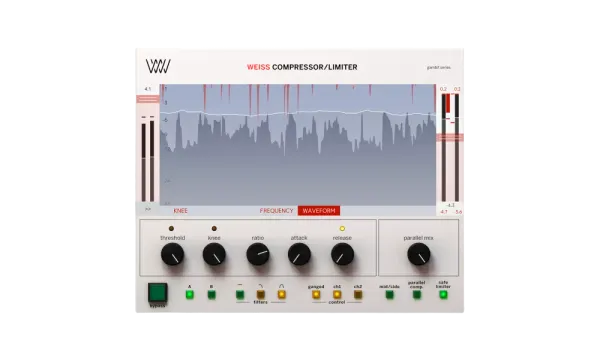
4 Best Transparent Mastering Compressors (2026)
Discover the best transparent mastering compressors for ultimate dynamic control without unwanted analog coloration or pumping artifacts.
Read Review →
Mastering
•
By Henry Foster
3 Best Mastering Plugin Bundles (2026)
Three mastering suites compared for composers: FabFilter's precision tools, the Weiss collection ported from hardware, and Lurssen's fixed console chain.
Read Review →
Mastering
•
By Henry Foster
The 6 Best Mastering Plugins, Stage by Stage (2026)
Six mastering plugins scored on sound, speed, CPU and metering: FabFilter's Mastering Bundle, Elevate, Shadow Hills, the M5133 EQ and two more.
Read Review →
Mastering
•
By Louis Raveton
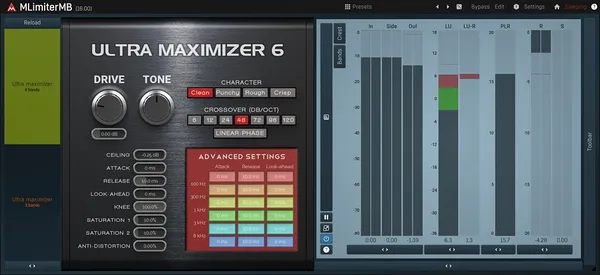
7 Best Limiter Plugins for Mastering and Stem Delivery
The best limiter plugins compared on transparency, control, speed and CPU, from Weiss, Sonnox, TDR and IK true peak limiters to a budget brickwall.
Read Review →
Frequently Asked Questions
Mastering vs. mixing?
Mixing balances the individual stems (strings, brass, percussion, synths). Mastering is the final pass over the stereo mixdown, setting level, tone and translation across playback systems.
What loudness should I deliver at?
It depends on the deliverable. Streaming targets around -14 LUFS integrated. Broadcast in Europe is -23 LUFS to EBU R128, and US broadcast is -24 LKFS to ATSC A/85. Trailer houses usually specify their own spec, so ask before you master.
How much headroom should I leave before mastering?
Peak around -6 dBFS on the master bus. That leaves the limiter something to work with and keeps intersample peaks from clipping on lossy encoding.
Do I need a separate mastering chain for orchestral material?
Usually a gentler one. Wide dynamic range is the point of an orchestral cue, so aggressive limiting flattens exactly what you spent the session capturing. Reach for slower, more transparent tools first.