
5 Best Cinematic Percussion Libraries

A cue lives or dies on whether the drums sound like a room full of players or like one sample repeated. That is decided by round robins, microphone positions and ensemble recordings, and it is decided before you write a note.

Tobias Reed
By Tobias Reed Percussionist & Composer

ModWheel is reader-supported. When you buy through links on this page we may earn an affiliate commission, at no extra cost to you. This never influences which products we recommend, read our testing methodology.

Prices come from the store's own feed and were last checked 27 October 2026. We don't issue discount codes — the price you see is the store's own.

Pick one in 10 seconds

Short version

Compare all 5

Stormdrum 3 8.7
Engine
Opus
Install
Around 86GB
$69 $149 View price
Damage 2
2. Damage 2 Heavyocity
8.0
Engine
Kontakt 6.2.2
Install
60GB uncompressed
Engine
Kontakt 6.0.2
Install
Around 5GB
Engine
Kontakt 5.6.6
Install
4.9GB
$74 $99 View price
Engine
Kontakt 6.7.1
Install
Under 1GB

Cinematic percussion is two different purchases wearing one name. One is recordings of real ensembles hitting real drums in a real room. The other is designed hits, loops and sequencers built to produce a rhythm nobody played.

So the axes score realism separately from how much of the cue a library can carry. A designed hybrid library will beat a sampled ensemble on speed and lose on an exposed taiko hit, and which of those matters depends on whether your cue is a trailer or a film.

Nothing here was tested in a studio and every card says so. The scores come from published specification and documented behaviour, and the verdicts agree with what this site has already published about these libraries elsewhere.

Best Drum Libraries Under $70 (2026): Cheap Beats covers the cheaper end of the same shelf.

Top Picks

01 EastWest Sounds Best Overall

Stormdrum 3

Best for Acoustic Percussion

Not tested by us, assessed from specs and documented behaviour

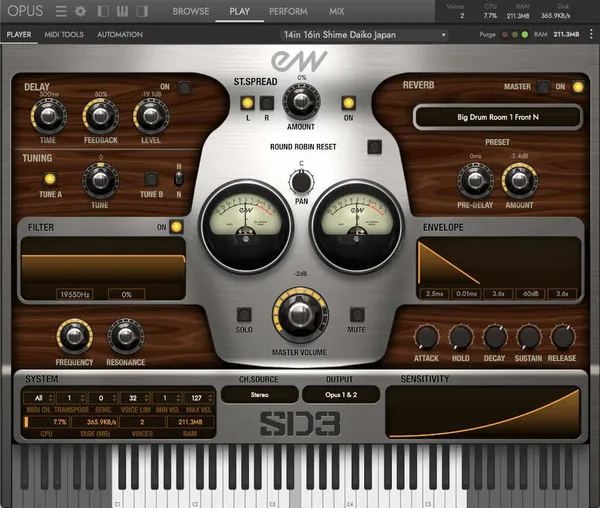
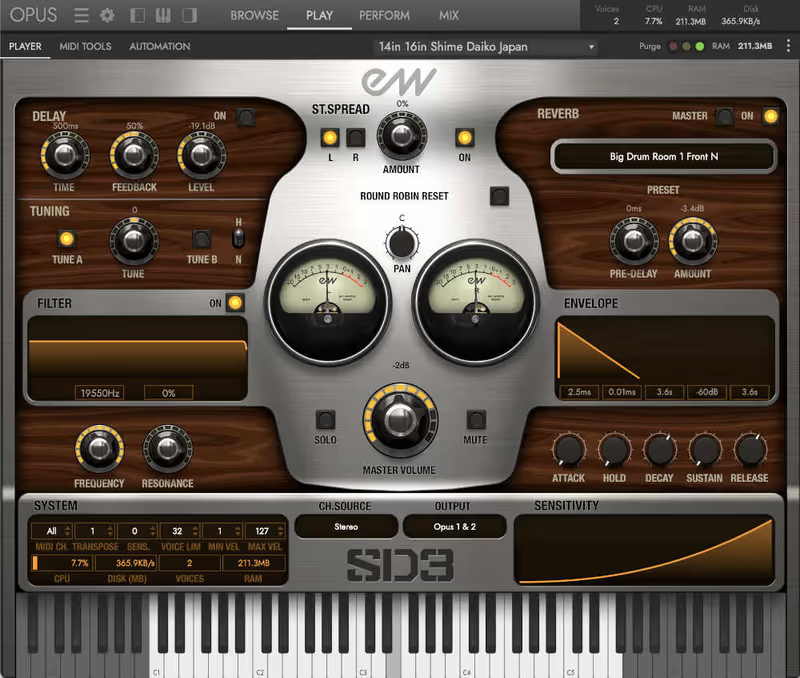
The most recorded percussion per euro available anywhere, with five microphone positions on every instrument. It asks for around 86GB and a second sample player in return, and both of those are real costs.

Assessed score
8.7
out of 10

How it scored

  • Realism 9.3

    Performances by working percussionists, not assembled single hits.

  • Coverage 9.5

    Taiko through to shakers and woods, in one library.

  • Speed to Part 6.5

    No sequencer. You programme it, and the install is slow to load.

  • Value 9.5

    Around 86GB and five mic positions at the lowest price of the five.

Why we picked it

Best for composers who need the widest range of real acoustic percussion and have the disk space to hold it.

Who should skip it

Skip it if disk space is tight, or if adding another sample player to your system is something you refuse on principle.

The good

  • Five microphone positions per instrument
  • Widest acoustic range on the page
  • Lowest price of the five

The bad

  • Around 86GB of disk needed
  • Opus rather than Kontakt
  • No sequencer or pattern engine
Engine
Opus
Install
Around 86GB
Price
$69
Why it scored that way

The widest acoustic range on this page by a distance. The disk cost is the reason to think twice.

The content is drawn from the private percussion collections of Mickey Hart and Remo, recorded as performances by working percussionists rather than assembled from isolated hits. That distinction is the reason the library holds up when a part is exposed and a listener can hear each strike, because what is being triggered was played by somebody rather than constructed afterwards from a grid.

Five microphone positions is the specification that separates it from everything else here. Close, mid, a clean modern position, a Decca tree main and a vintage ribbon set means a hit that sits too far forward can be pulled back by rebalancing toward the tree. Reaching for reverb instead is what makes most home-made percussion sound wrong, and this library removes the need.

Two costs are documented rather than incidental. The install is around 86GB with a fast drive recommended, which on a mechanical disk makes a large template unpleasant to work in. Opus is EastWest's own player rather than Kontakt, so it brings a separate installer, a separate library manager and articulation handling that will not match maps already in use.

There is also no sequencer of any kind, and no pattern engine hiding behind the instrument list. Every rhythm here is one you programme yourself, which is the correct choice for a cue that has to hit a picture at a specific frame and the wrong one for anybody hoping the library will propose something when the writing has stalled.
Heard on
Film Scoring Trailer Music Game Audio

Price history and lowest recorded price

Check price $69 (was $149)
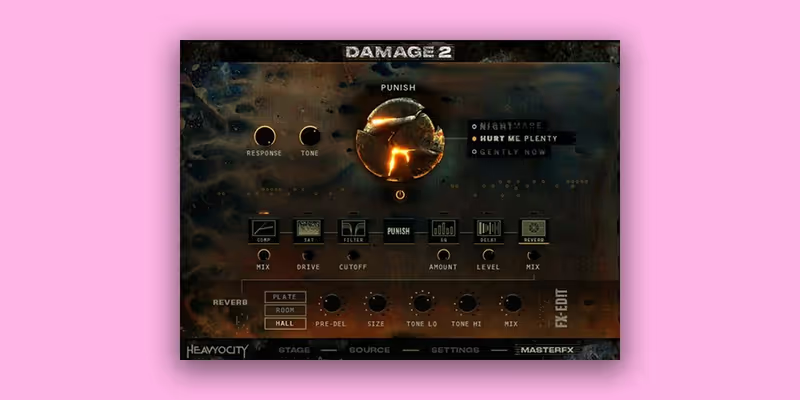
Damage 2

Best for Hybrid Percussion

Not tested by us, assessed from specs and documented behaviour

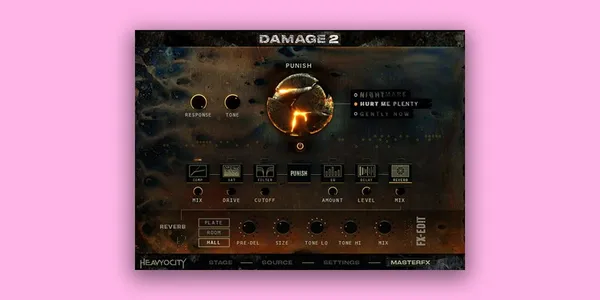
The choice when the percussion is meant to be designed rather than recorded. Three separate engines, five mic positions including a dedicated LFE and a distorted one, and enough source material to build a kit nobody else has.

Assessed score
8.0
out of 10

How it scored

  • Realism 7.5

    Convincing, and it is a designed sound rather than a documentary one.

  • Coverage 9.0

    Ensembles, kits and loops, with 864 loops delivered in stems.

  • Speed to Part 8.5

    208 snapshots and a MIDI performance tool for rolls and crescendos.

  • Value 7.0

    The most expensive here, and it replaces several purchases.

Why we picked it

Best for composers building hybrid and trailer percussion who want to design the kit rather than choose a preset.

Who should skip it

Skip it if you need naturalistic acoustic percussion, because everything here is a produced sound.

The good

  • Loops delivered as four stems
  • Dedicated LFE and distortion mics
  • Three engines in one instrument

The bad

  • Highest price on the page
  • Produced rather than naturalistic
  • A lot of engine to learn
Engine
Kontakt 6.2.2
Install
60GB uncompressed
Price
$399
Why it scored that way

The deepest engine here, and the one that expects you to build rather than browse.

Three engines rather than one instrument is the shape of this, and it explains both the price and the learning curve. There is an ensemble designer for stacked hits, a kit designer for building a playable set from 1,596 separate sources, and a loop designer working across 864 loops, of which 216 arrive as four separate stems each rather than as finished stereo files.

The stems are the part worth understanding before buying. A loop you can pull apart into four layers is a loop you can fit to a cue, muting the element that fights the orchestra and keeping the one that drives it. A stereo loop is a decision somebody else made and you cannot undo.

Five microphone positions include two that no acoustic library offers. An LFE channel for the sub weight a trailer mix expects, and an analogue distortion position that produces aggression without adding a saturation plugin afterwards. Both are design tools rather than documentary ones, and that is the honest framing of the whole library.

What it is not is a recording of an ensemble in a hall. Pushed toward an exposed, naturalistic taiko part it will sound produced, because it was. The install runs to 60GB uncompressed and it needs Kontakt 6.2.2 or later, and the price is the highest of the five by a wide margin.

Playing connects you to YouTube, which may set cookies.

Heard on
Trailer Music Game Audio Action Scoring

Price history and lowest recorded price

Check price $399
03 Keepforest

Ferrum - Modern Trailer Percussion

Best for Trailer Percussion

Not tested by us, assessed from specs and documented behaviour

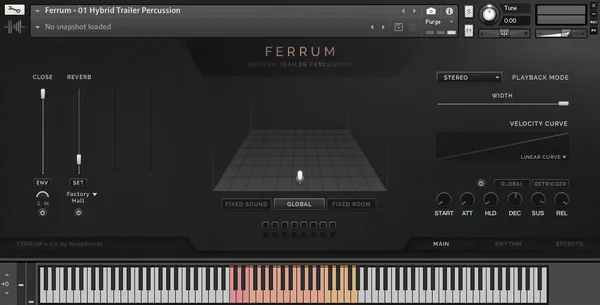
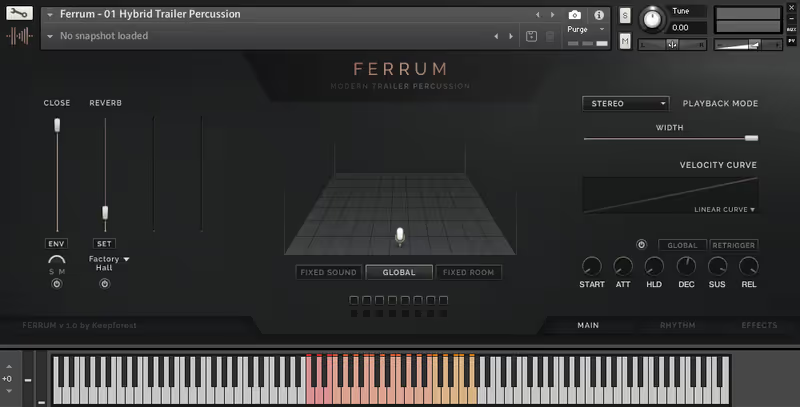
The library aimed squarely at trailer work, where the percussion, the whooshes and the sub booms are the same job. It is small, it is fast, and outside that brief it has much less to offer than the price suggests.

Assessed score
7.3
out of 10

How it scored

  • Realism 6.5

    Designed trailer material. Naturalism is not what it is for.

  • Coverage 7.0

    Hits, booms, whooshes and loops. No orchestral percussion.

  • Speed to Part 9.3

    Step sequencer, snapshots and per-note stage placement.

  • Value 6.5

    Expensive for around 5GB, and it is aimed at paid trailer work.

Why we picked it

Best for composers taking paid trailer and teaser work, where hits, risers and sub weight are the deliverable.

Who should skip it

Skip it if you write film and television underscore, because almost none of this belongs in that music.

The good

  • Hits, risers and subs together
  • Up to sixteen round robins
  • Runs in free Kontakt Player

The bad

  • Only twenty three patches
  • No orchestral percussion at all
  • Narrow outside trailer work
Engine
Kontakt 6.0.2
Install
Around 5GB
Price
$299
Why it scored that way

Built for one brief and unusually honest about it. The step sequencer is why it earns a slot.

Trailer percussion is not really a percussion problem, which is why general libraries handle it badly. A trailer cue needs the hit, the riser leading into it and the sub that lands underneath, all arriving at the same frame. Treating those as three separate purchases is how most composers end up with a folder of samples and no coherent sound.

This puts them in one instrument, with a step sequencer for the rhythm and a stage placement module that works per note, so a hit can sit at the back while the metallic detail sits close. Up to sixteen round robins per note is the specification that stops a fast pattern turning into one repeated sample.

The install is modest at around 5GB for the Kontakt library, with a separate WAV folder alongside it for anyone who would rather drop the raw files into a sampler of their own. It runs in the free Kontakt Player, which removes the full Kontakt requirement that catches people out on several of the world percussion libraries this site covers.

The limits are the flip side of the focus. Twenty three patches is not a lot to work through, there is no orchestral percussion in it at all, and outside trailer and action work a great deal of the content will never be opened. Judged as a general cinematic percussion library it is poor value, and judged as a set of trailer tools it is not.

Playing connects you to YouTube, which may set cookies.

Heard on
Trailer Music Teasers Advertising
Check price $299
04 Vir2 Instruments Best Value

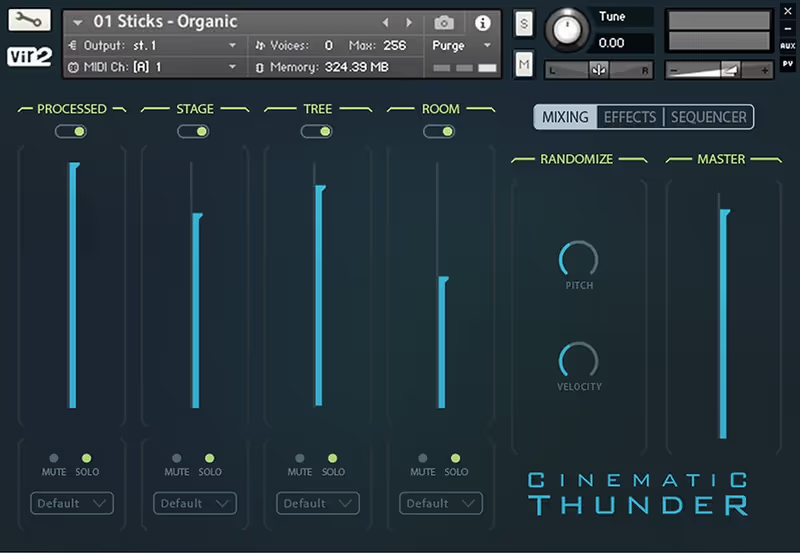
Cinematic Thunder: Epic Orchestral Toms

Best for Ensemble Toms

Not tested by us, assessed from specs and documented behaviour

The narrowest library here and the one most likely to end up on every cue. Six drums with up to fourteen velocity layers each, in under five gigabytes, which is the ensemble tom sound most trailer and action writing is actually built on.

Assessed score
7.5
out of 10

How it scored

  • Realism 8.8

    Fourteen velocity layers is deep sampling by any standard.

  • Coverage 4.5

    Six drums. There is nothing else in it.

  • Speed to Part 8.0

    Four master patches and mod wheel control over multi-stick hits.

  • Value 8.8

    Under five gigabytes for the sound most cues need first.

Why we picked it

Best for composers who want the ensemble tom sound done properly and already own something broader for everything else.

Who should skip it

Skip it as a first percussion purchase, because six drums cannot carry a cue on their own.

The good

  • Up to fourteen velocity layers
  • Three mic positions plus mix
  • Under five gigabytes installed

The bad

  • Six drums and nothing else
  • No metals, cymbals or shakers
  • Cannot carry a cue alone
Engine
Kontakt 5.6.6
Install
4.9GB
Price
$74
Why it scored that way

Six drums and nothing else. The depth per drum is the entire argument.

Most cinematic percussion writing rests on a small number of low toms hit hard by several players at once, and a great deal of money gets spent on broad libraries whose tom section turns out to be the part that disappoints. This library does that one thing and puts its entire sampling budget into it, which is an unfashionable decision and the reason it earns a slot here.

Six drums, a surdo plus toms at eighteen, sixteen, fourteen, twelve and ten inches, with up to fourteen velocity layers and three round robins each. Fourteen velocity layers means the difference between a soft ostinato and a full hit is recorded rather than a volume change, which is the single thing that makes programmed toms sound like a player.

Three microphone positions plus a processed mix cover the placement question without requiring a reverb decision, and the articulation set separates right and left hand strikes, doubles, rolls and multi-stick hits under mod wheel control. That is enough detail to write a part a percussionist could read, rather than a sequence of identical hits at the same dynamic.

The obvious limit is that it is six drums. There are no cymbals, no metals, no shakers and no gongs, so it cannot carry a cue on its own and was never meant to. At under five gigabytes it is a specialist that sits alongside a broad library rather than replacing one.

Heard on
Trailer Music Action Scoring Game Audio

Lowest price we've recorded since 23 August 2026 Price history

Check price $74 (was $99)
05 Sonuscore

Fragments - Modern Percussion

Best for Generated Rhythm

Not tested by us, assessed from specs and documented behaviour

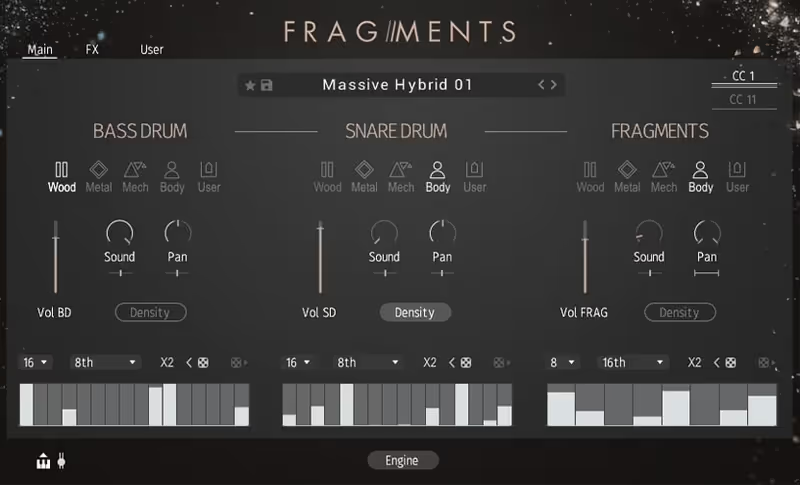
A rhythm generator rather than a percussion library, and the right purchase for anybody whose patterns all sound like a grid. Three linked sequencers and a density control produce parts you would not have programmed, at the lowest price on this page.

Assessed score
8.0
out of 10

How it scored

  • Realism 7.0

    Organic sources, up to five velocity layers and twelve round robins.

  • Coverage 6.5

    Bass, snare and texture slots. Not a full percussion section.

  • Speed to Part 9.5

    Three sequencers and 100 presets. Nothing here is faster.

  • Value 9.0

    The lowest price of the five, for a capability the others lack.

Why we picked it

Best for composers whose percussion parts all sound like a grid and who want the instrument to suggest something.

Who should skip it

Skip it if you need orchestral percussion, because there are no timpani, gongs or ensemble toms in it.

The good

  • Three linked sequencers
  • Density control fills gaps
  • Lowest price on the page

The bad

  • No orchestral percussion
  • Modern and textural only
  • Wants an i7 for complex presets
Engine
Kontakt 6.7.1
Install
Under 1GB
Price
$99
Why it scored that way

The one that writes the rhythm with you. Cheapest here, and the least like the others.

Everything else on this page sits waiting for you to programme it, which is what a sample library normally does. This one proposes something instead, and that is a genuinely different purchase rather than a cheaper version of the same one. It earns its place on a cue that has stalled at the rhythm stage, which happens more often than most composers admit.

Three independent sequencers drive three sound slots, a bass slot and a snare slot with three sounds each, and a fragments slot carrying seventeen. A density control fills the gaps with randomised velocities, and the mod wheel moves the whole thing from a sparse pulse toward something considerably more chaotic.

The source material is organised by what made the sound rather than by instrument name, across wood, metal, mechanical and body categories, with user samples loadable by drag and drop. Everything is recorded with up to five velocity layers and twelve round robins, which is why fast randomised patterns do not turn into one repeated hit.

What it will not do is play an orchestral percussion section. There are no timpani, no gongs and no ensemble toms, and the sounds it does carry are textural and modern rather than symphonic. It also needs an i7 or better for the more complex presets, which is worth knowing before adding it to a template that is already struggling.

Heard on
Underscore Hybrid Scoring Game Audio

Price history and lowest recorded price

Check price $99

What didn’t make the list

2 cut
  • Apocalypse Percussion Elements Soundiron

    A strong ensemble library that sits closer to the epic-trailer end than the general cinematic brief this page covers. It leads the Hans Zimmer Percussion alternatives page instead.

  • CinePerc Cinesamples

    Concert orchestral percussion, meaning timpani, snares and mallets rather than the ensemble drums this page is about. A different and much larger purchase.

Read more →

Methodology

Who is this for

Working composers and producers who need reliability, speed, and character for professional scoring tasks.

Our testing process

Where we have tested a product, we do it in actual production scenarios, ranging from rapid sketches to commercial pitches, and we evaluate it in a dense template rather than in isolation. Where we have not, the product card says so and the assessment is drawn from specifications and documented behaviour instead.

Why you should trust us

We buy most reviewed plugins ourselves. Occasionally we receive NFRs for evaluation, but this never guarantees a review or positive verdict. We may earn commissions from links, but our editorial choices are never for sale.

Also considered

For every category, we audition the top 8 to 15 standard options, discarding any that suffer from poor scripting, slow load times, or uninspiring sampling.

Frequently Asked Questions

What is the best cinematic percussion library?

Stormdrum 3 covers the widest range of real acoustic percussion at the lowest price here, with five microphone positions on every instrument, which is unusual at any price. What it asks in return is around 86GB of disk and a willingness to add EastWest's Opus player to your system, and for a composer who refuses either, Damage 2 is the deeper alternative in Kontakt.

Do I need a percussion library if I own a full orchestra?

Usually yes, and the gap is specific. A complete orchestra covers concert percussion, meaning timpani, snares, cymbals and mallets, and almost none of them cover ensemble taiko, low toms hit by several players, or the metal and gong material that cinematic writing leans on. Those are the sounds people mean when they say a cue sounds cinematic.

What are round robins and why do they matter for percussion?

A round robin is an alternative recording of the same hit, played in turn so that repeated notes are not identical. It matters more on percussion than on anything else, because a fast ostinato triggering one sample repeatedly produces the machine-gun sound that identifies programmed drums instantly. Ferrum offers up to sixteen per note and Fragments up to twelve.

How much disk space should I budget for percussion?

It varies by two orders of magnitude on this page alone, from under a gigabyte for Fragments to around 86GB for Stormdrum 3. Deeply sampled acoustic percussion is large because velocity layers and round robins multiply, so a library that sounds convincing on an exposed hit will always cost disk. Designed hybrid libraries are smaller because the variation is generated rather than recorded.

Written By

Tobias Reed

Tobias is a classically trained percussionist who transitioned into trailer music composition. He has an encyclopedic knowledge of world rhythm instruments and has recorded samples for several boutique libraries. He judges VSTs by their dynamic layers and round-robin authenticity.

Related Guides

All Guides →

New reviews, no noise

Occasional email when we publish something worth your time. No daily digest, no vendor press releases.

We store only your address, never sell it, and delete it as soon as you unsubscribe. See our privacy policy.