
Do This Now
- 1 Align the attacks before you judge the layer. Two libraries with 40ms of difference in speak time cancel rather than combine.
- 2 Layer for a missing quality, not for volume. If you want louder, raise the fader, because two libraries at the same level is 3dB and a phase problem.
- 3 Pick libraries recorded in different rooms only if you commit both to one reverb. Two halls at once is the most common layering failure.
- 4 Split the frequency range instead of overlapping it. Dry close library for the attack, wet hall library for the body, with a crossover around 400Hz.
- 5 Check in mono. Layers that sound wide and rich in stereo often cancel to something thinner than either library alone.
Playing connects you to YouTube, which may set cookies.
Layering is the first thing people try when a line does not sound big enough, and it is usually the wrong tool. Two string libraries on one part more often produce something thinner and stranger than either library alone.
The mechanism is not mysterious, and once you know it the cases where layering genuinely helps become obvious.
What Goes Wrong
Two libraries playing the same note are two recordings of similar instruments, arriving at slightly different times, tuned slightly differently, in different rooms.
Where their waveforms agree they add. Where they disagree they subtract. Across the frequency range that produces a series of reinforcements and cancellations, which is comb filtering, and it sounds hollow and slightly metallic rather than obviously broken.
On top of that you have two recorded halls decaying at different rates on one line. That is the most audible tell of a stacked mockup, more than any question of sample quality.
So the default outcome of stacking is a thinner, phasier, spatially confused version of what you had. Everything below is about avoiding that.
Align the Attacks First
Nothing else matters until this is done, and almost nobody does it.
Bounce one sustained note from each library, starting on the same bar line, and look at the two waveforms. Measure how much later one speaks than the other. Differences of 20 to 60 milliseconds between libraries are completely normal.
Then set negative track delay on the later one so both arrive together. Now judge the layer.
- Typical library-to-library offset
- 20 to 60ms
- Layer gain
- 3dB from two equal sources
- Crossover for split layering
- Around 400Hz
- Mono check
- Mandatory
The friction is that the offset is not constant across the range or across articulations, so an alignment that works on sustains will be wrong on shorts. Align for the articulation the layer is actually for, and do not expect one number to cover a whole library.
Playing connects you to YouTube, which may set cookies.
Layer for a Missing Quality, Not for Level
If the honest answer to why you are layering is that you want it louder, stop and use the fader.
Two sources at the same level give you about 3dB. You can have that for free, without phase problems, without doubling your RAM, and without a second hall.
Layer when one library has something the other does not. A library with a sharp, defined attack under one with a beautiful body. A dry close section under a wet one for definition. A library whose quiet dynamics are strong under one whose loud dynamics are strong, crossfaded rather than stacked.
State the missing quality out loud before you load the second instance. If you cannot, you are stacking rather than layering.
Split the Range Rather Than Overlapping It
The most reliable layering technique is not to have both libraries doing the same job at the same frequencies.
Put a dry, close-miked library on the top of the range with a high-pass around 400Hz, carrying attack and definition. Put the roomy, lush library underneath with a matching low-pass, carrying body and space. Each occupies a region and they meet rather than fight.
This removes most comb filtering by construction, because the two sources are no longer sharing much frequency content, and it gives each library the job it is actually good at.
The crossover point is a real decision rather than a default. Around 400Hz works for strings, and brass often wants it higher, around 700Hz, because the definition you are borrowing lives further up.
Commit Both to One Room
Two recorded halls is the failure that survives every other fix, so deal with it explicitly.
Where the libraries expose microphone positions, use the closest ones on both and pull the built-in room back as far as it goes. Then send both to a single shared reverb and let that define the space.
Where a library gives you no choice and ships wet, either accept its room as the room and make the other library match it, or do not layer that one. Those are the two honest options.
The cost is that you lose part of what you paid for, since the recorded hall is often the reason a library sounds good. That is the trade layering asks for, and it is why layering should be a decision for specific lines rather than a default across a template.

Then Check It in Mono
Last, and it takes ten seconds.
Sum to mono and compare the layer against each library alone. Cancellation that was masked by stereo width becomes obvious immediately, and a layer that gets thinner in mono is a layer that is fighting itself.
If it survives mono, it will survive anything downstream. If it does not, go back to the alignment step, because timing is the cause far more often than anything else.
And if it still does not work after that, the honest conclusion is available: use one library. A single well-chosen section that sounds like a section beats two stacked ones that sound like a mockup, every time.
Related Articles
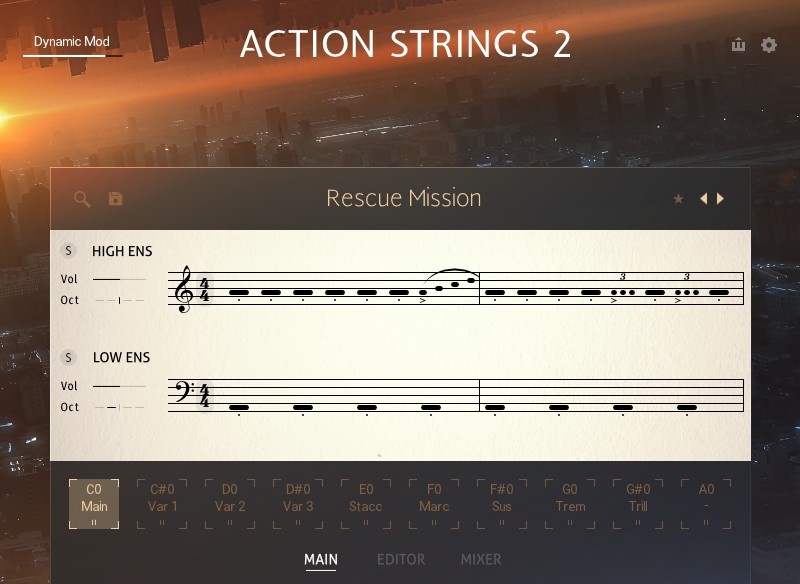
The Best Cinematic String Libraries for 2026
We tested the top string libraries for film scoring. From the lush legatos of CSS to the intimacy of Spitfire, find the best VSTs for emotional writing.

Best Epic Brass VSTs (2026): Trailer & Action
Looking for the Hans Zimmer sound? We review the loudest, brashest brass libraries (CineBrass, Forzo, Metropolis Ark) for trailer production.
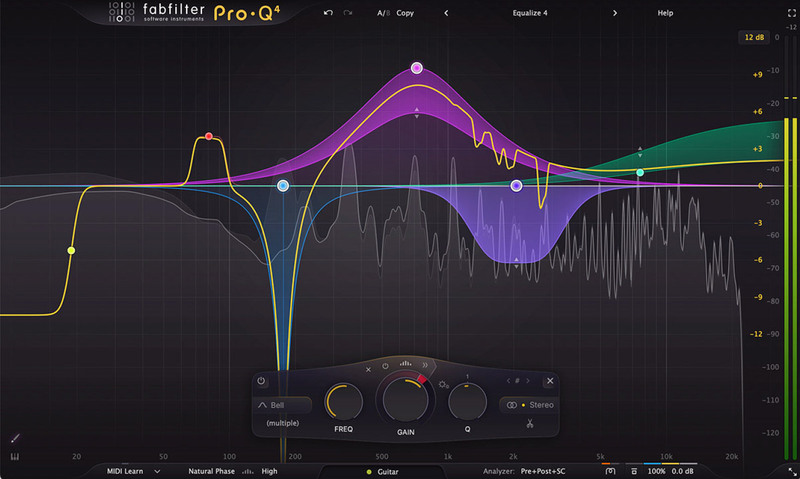
Best Orchestral EQs (2026): Clean & Surgical
Don't color the sound. We look at the most transparent EQs (Pro-Q 4, Oxford EQ) for carving out space in dense orchestral templates.
Frequently Asked Questions
Why does layering two string libraries sound worse than one?
Usually comb filtering. Two recordings of similar instruments playing the same note arrive at slightly different times and with slightly different tuning, and where their waveforms disagree they cancel, producing a hollow, phasey quality. Adding a second library also adds a second recorded room, so you get two different reverb tails on one line, which reads as confusion rather than as size.
How do I align two sample libraries for layering?
Bounce one note from each to audio, look at the waveforms, and measure the difference between when each one actually speaks. Then set track delay on the earlier one so both arrive together. The offset is often 20 to 60 milliseconds between libraries with different attack characteristics, which is far more than enough to cause cancellation if left uncorrected.
Should I layer for a bigger sound?
Rarely, because layering is a poor volume tool. Two identical-level sources give you about 3dB, which you could get from the fader without the phase problems. Layer when one library has something the other lacks, such as attack definition, a particular room, or a dynamic layer that sounds better, and let each one contribute the thing it is good at.
Can I layer libraries recorded in different halls?
Yes, but only if you take control of the space. Pull back each library's own room where the library allows it, or choose the closest microphone positions, and then send both to a single shared reverb. Left alone, two recorded halls produce two different decay times on the same note, and that is the single clearest tell that a mockup is stacked rather than played.
Is layering different for brass and percussion?
It is easier, because both have sharper transients that make alignment straightforward and because their tails are shorter, so competing room sounds matter less. Percussion in particular layers well, since a dry close hit under a roomy one is a standard and effective move. Sustained strings are the hardest case, which is why they are the example throughout this guide.
More Guides
All Guides →Divisi Strings Explained, and Why Your Chords Sound Like a Wall
Sixteen violins playing one line is a section. Sixteen violins split four ways is four thin sections. When divisi helps, when it costs you, and how to fake it in samples.
A Complete Masterclass on Orchestral Mockups: Programming Realism
Advanced techniques for programming hyper-realistic orchestral mockups using MIDI continuous controllers, precise layering, and strict velocity mapping.
The Spotting Session Is Where the Score Is Actually Written
Every real decision about a score gets made before a note exists. What a spotting session is, what to bring, and the three questions that save weeks of rewrites.
New reviews, no noise
Occasional email when we publish something worth your time. No daily digest, no vendor press releases.
We store only your address, never sell it, and delete it as soon as you unsubscribe. See our privacy policy.

Henry Foster
Henry is a mixing engineer with a background in broadcast and post-production. He obsesses over signal flow, gain staging, and the subtle coloration of analog-modeled plugins. His reviews focus on technical precision, CPU efficiency, and UI workflow.