
Not tested by us, assessed from specs and documented behaviour
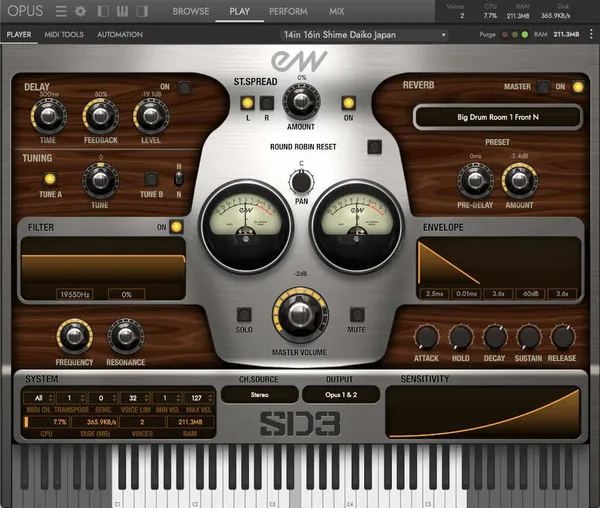
The nearest replacement, and the only one here that answers the room question properly. Five microphone positions from close to a vintage ribbon set twenty five feet back means the hall is a choice rather than something baked into the samples.
How it scored
- Ensemble Scale 8.8
Real ensembles, recorded together, across the whole instrument list.
- Room Control 9.5
Five positions including a Decca tree and vintage ribbons.
- Breadth 9.5
Taiko through metals, gongs, shakers and woods.
- Value 9.5
A fraction of the anchor's price, for more instruments.
Why we picked it
Best for composers who want the anchor's sense of scale and a real choice about how much room ends up in the cue.
Who should skip it
Skip it if disk space is tight, or if you will not install another sample player alongside Kontakt.
The good
- Five microphone positions per instrument
- Widest instrument list here
- Fraction of the anchor's price
The bad
- Around 86GB of disk needed
- Opus rather than Kontakt
- No sequencer or pattern engine
- Engine
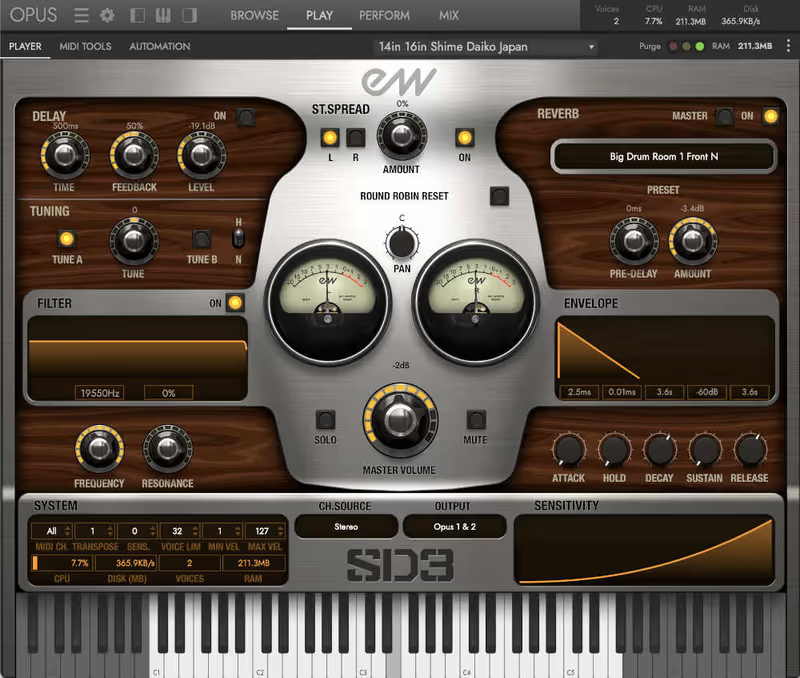
- Opus
- Install
- Around 86GB
- Price
- $69
Why it scored that way
The closest thing to the anchor in kind rather than in degree. Five mic positions is the reason.
The anchor's reputation rests on the room as much as on the drums, and this is the only library on the page that hands you the same decision. Close microphones, a mid pair, a clean modern position, a Decca tree main and a vintage ribbon set twenty five feet back, all available per instrument rather than as a pre-mixed compromise somebody else settled on.
That matters in a way feature lists do not convey. A taiko hit that sits too far forward in an arrangement can be pulled back by rebalancing toward the tree, and the same hit can be brought right into the listener's face by favouring the close pair. Doing either with reverb instead produces the washed, distant sound that identifies home-made percussion immediately.
The breadth is also wider than the anchor in several directions. A taiko family, a big drums section, gongs, clocks and a waterphone, metals, shakers, small drums and woods, drawn from the private collections of Mickey Hart and Remo. For a composer building a percussion template from nothing, that is one purchase rather than four.
The costs are the install and the player. Around 86GB with a fast drive recommended is a serious commitment on a laptop, and Opus means a separate installer and library manager rather than the Kontakt setup most templates already run. Neither is a reason to avoid it and both are worth knowing first.
Price history and lowest recorded price
Check price $69 (was $149)