How Acoustic Guitar VSTs Actually Work
Almost everything on this page is a sampled instrument: somebody recorded a real guitar note by note, at several volumes, on every string and fret worth capturing, and the plugin plays those recordings back. Tone is therefore not really in question. A good sampled acoustic sounds like an acoustic because it is one.
The interesting engineering is in everything around the samples. Six strings behave as one connected object: notes ring into each other, an open string keeps sounding after you have moved on, and the same chord is fingered differently depending on what came before it. A library that ignores all that plays six correct notes that still sound like a keyboard.
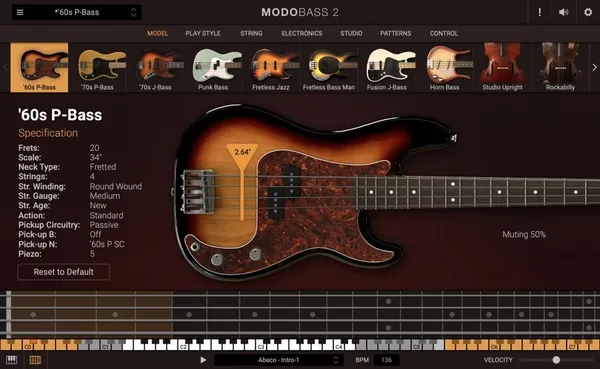
A smaller group of instruments is physically modelled, generating the string mathematically rather than replaying a recording. Modelling responds more fluidly to continuous control and takes almost no disk space, and it is generally still a step behind sampling on raw believability for a naked, exposed line.
Strumming Engines and Note-by-Note Libraries
This is the split that decides which instrument you should buy, and it matters far more than the brand.
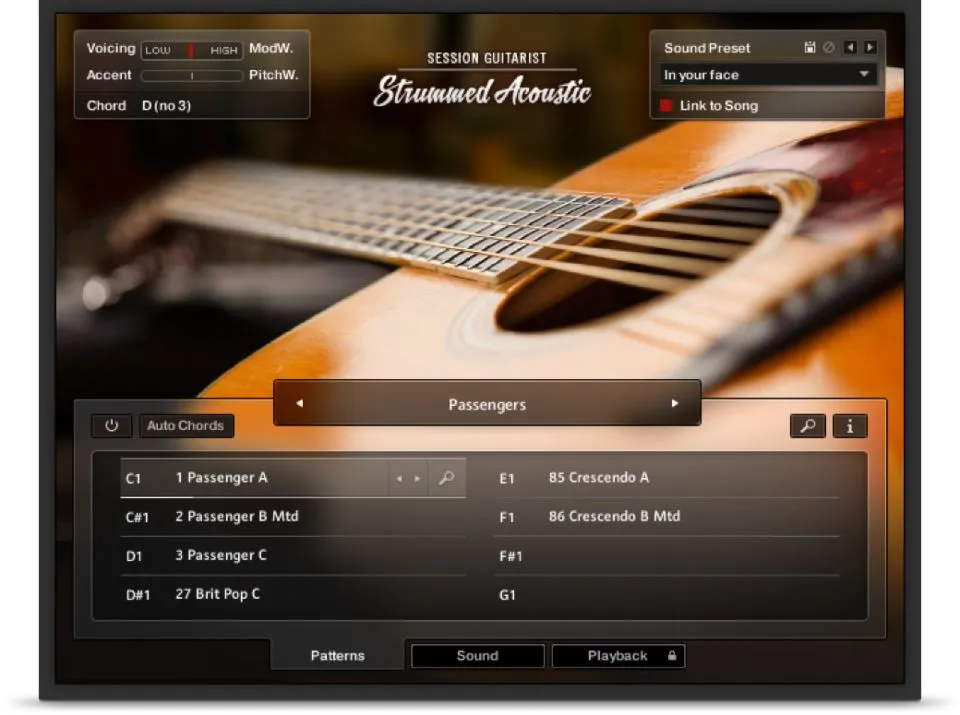
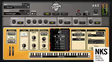
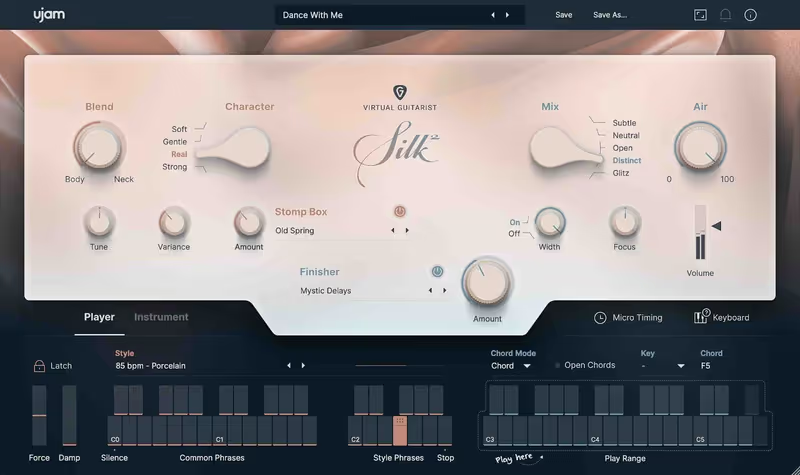
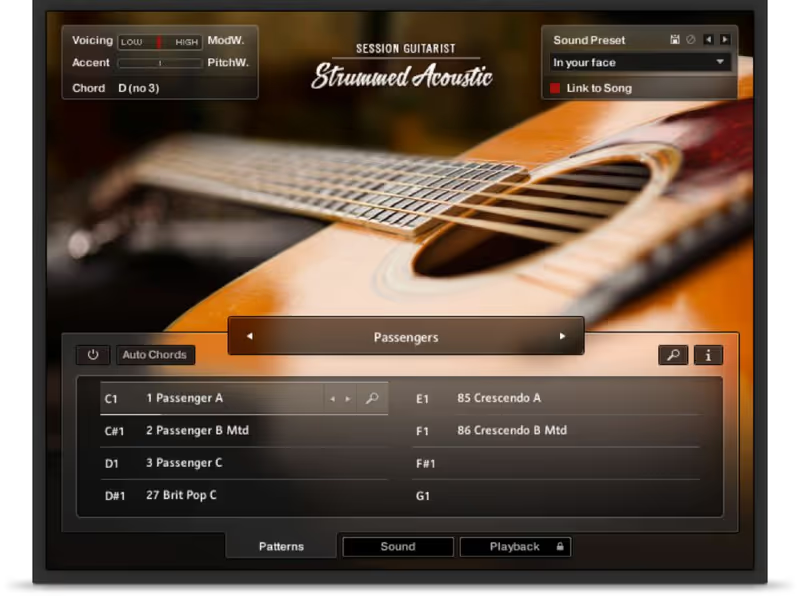
A strumming engine: patterns sit on keys, and the chord you hold decides the notes. Image: Native Instruments.
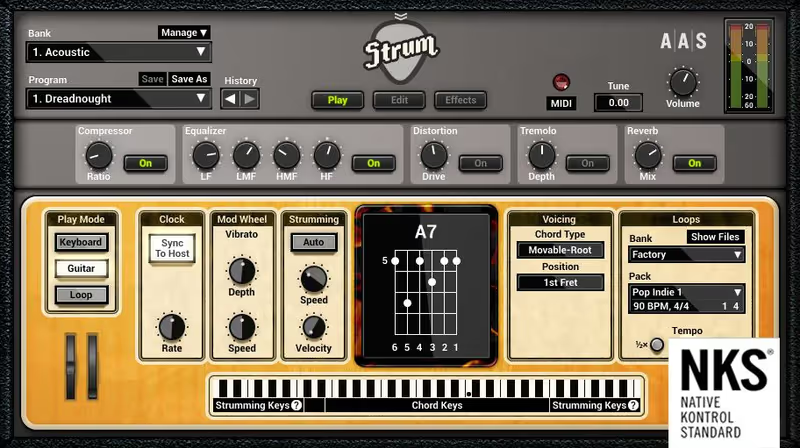
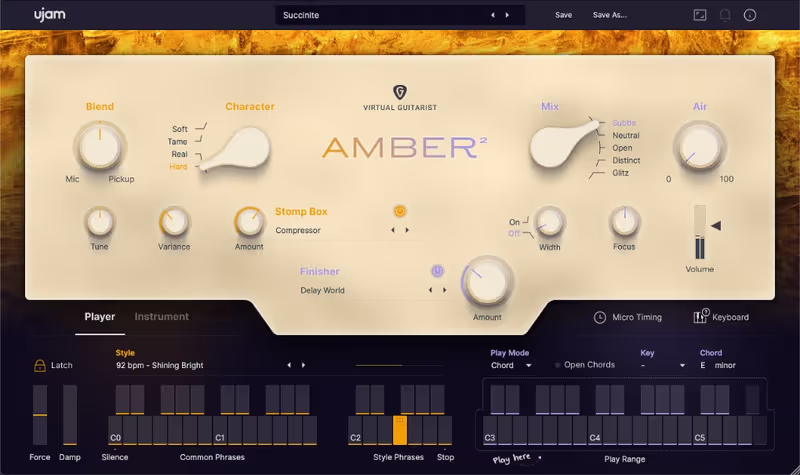
A strumming engine takes chords you hold and plays a pattern. It handles the fret positions, the voice leading between chords, the millisecond spread across the strings and the direction of each stroke. You get a credible rhythm part in minutes. The limit is that you are choosing from patterns the developer built: the moment the arrangement needs a specific rhythmic figure, you are fighting it.
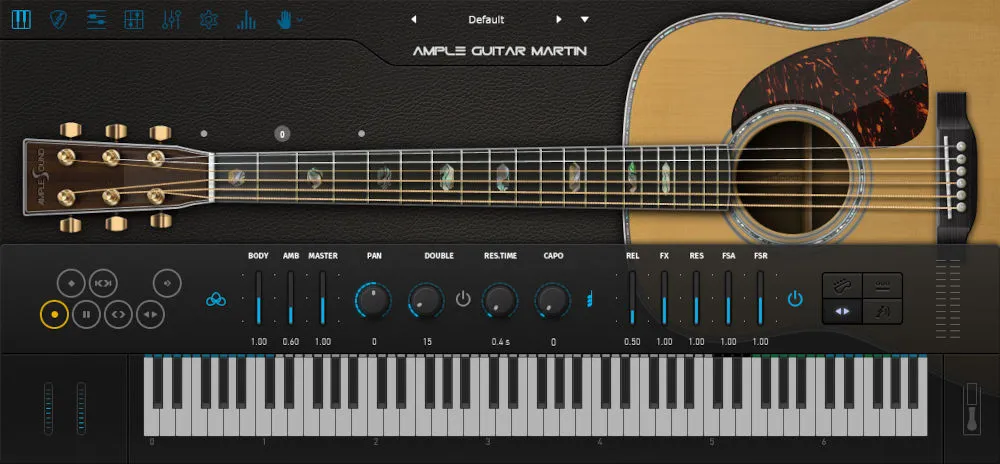
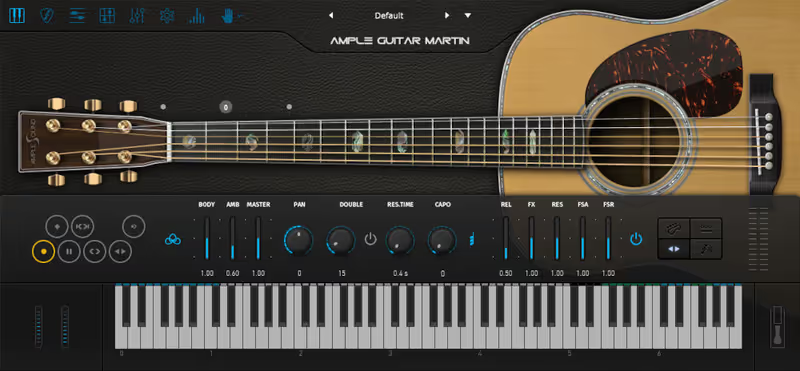
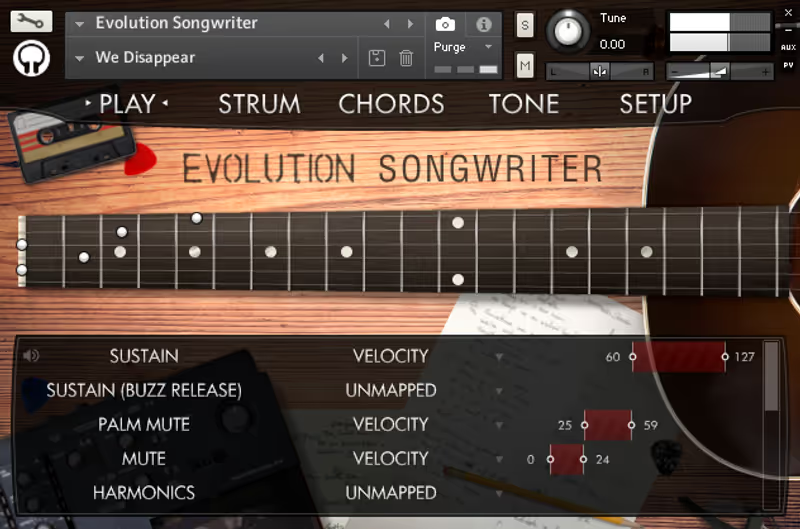
A note-by-note library: every note is played from the keyboard, with capo, release and doubling settings on the panel. Image: Ample Sound.
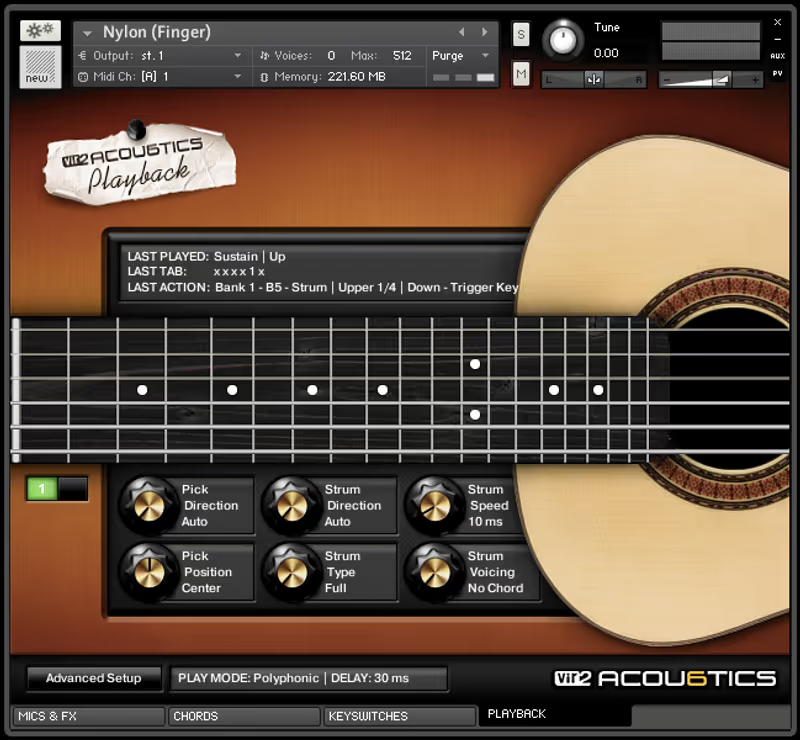
A note-by-note library hands you the fretboard and no opinions. Everything a strumming engine did automatically is now yours to program, which is slow, and it is the only way to get a part that does exactly what you wrote. Exposed fingerpicking and solo lines need this.
Most people writing regularly end up owning one of each, because they fail at opposite things.
Nylon or Steel
These are separate instruments, not settings. Steel-string is the sound of pop, folk, rock and country: bright, loud, with a hard pick attack. Nylon is the sound of classical, bossa nova and flamenco: warmer, rounder, quicker to decay.
Neither substitutes for the other. EQ can dull a steel-string but it cannot give it a nylon string’s attack or its decay, and the mismatch is obvious the moment the part is exposed. Buy for the genre you write in.
Searches for an acoustic guitar plugin and an acoustic guitar VST are after the same thing. VST is one plugin format among several, alongside AU on macOS and AAX in Pro Tools, and effectively everything here ships in all three. The format only constrains you if your DAW is limited to one.
Free instruments are worth trying before you spend anything. Several developers ship cut-down versions of their commercial libraries, and there are free library projects with usable acoustic guitars in them. What you give up is depth rather than tone: fewer velocity layers, fewer articulations, and usually no strumming engine at all. That makes a free instrument fine for a part sitting well back in an arrangement, and limiting the moment it has to carry anything.
Can This Replace a Guitarist?
For accompaniment inside a busy arrangement, frequently, and that is a real change from ten years ago. For an exposed part carrying the track, still not reliably.
The remaining gap is not tone. It is decision-making. A player varies attack, voicing, timing and damping continuously, mostly without thinking about it, and every one of those variations has to be programmed by hand in a MIDI part. The more exposed the guitar, the more of that absence a listener hears, even when they could not tell you what is wrong.
What Makes a Part Sound Programmed
Four things give away a MIDI guitar, roughly in the order a listener notices them.
Simultaneous notes. A real strum spreads over about 10 to 30 milliseconds, and reverses on the upstroke. Block chords are the loudest tell there is.
Impossible voicings. A hand reaches six strings across four frets. Piano voicings with a wide low interval and a tight top are physically unplayable, and low stacked thirds are the usual offender where a guitar would voice a fourth or a fifth.
Uniform dynamics. Every note at velocity 100 is a machine. Real playing has an accented downbeat and ghosted notes in between.
No noise. Fret squeak, the body knock, the breath before the first chord. Libraries include these because their absence is what makes a recording sound sterile, and the instinct to gate them out is usually wrong.
What to Check Before Buying
The engine it runs in. Some libraries need the full paid version of Kontakt rather than the free Player, which can cost more than the library. Others ship a standalone engine and the question does not arise.
Disk and memory. A deeply sampled guitar runs to several gigabytes, and multiple mic positions multiply that. Sample streaming wants an SSD.
Whether you can hear it solo. Every demo on every product page is mixed into a full arrangement, where a mediocre guitar sounds fine. Find a demo of the instrument alone, or of the exact articulation you plan to use most.
Making It Sit in a Mix
A virtual acoustic is usually recorded close and dry, which is why it can sound both realistic and wrong in a track.
Double-tracking is the biggest single improvement: two takes panned wide, ideally at different fret positions rather than the same performance duplicated, since a copied part just gets louder. A short room reverb puts the instrument somewhere. And a high-pass filter around 80 to 100 Hz clears the low end a real guitar never had much of anyway, which is usually what is fighting the bass.