Tested in our studio
The most programmable acoustic guitar here, capable of frighteningly real solos and picking, but it demands real MIDI effort to get there.
How it scored
- Realism 9.0
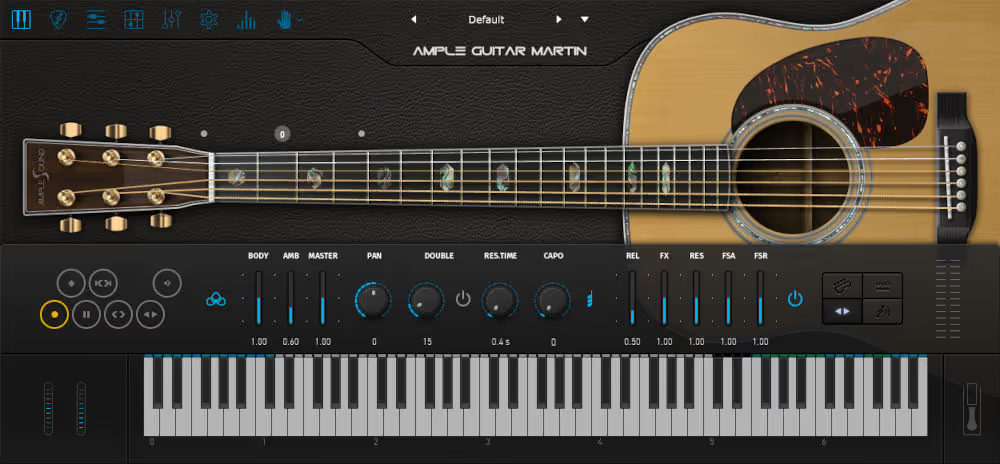
String squeaks, fret noise, and capo logic all contribute to a convincing sound.
- Playability 6.0
Deep but dense. You are programming a guitar, not playing one.
- Articulation Range 9.5
Slides, hammer-ons, harmonics, tab player. The widest set here.
- Footprint 8.0
5 GB is modest for this depth of sampling.
Why we picked it
Best for detail-oriented producers who want total control over the performance, including solo lines and intricate picking patterns.
Who should skip it
Avoid if you just want to hold a key and hear a song. This tool requires programming effort to sound its best.
The good
- Extreme flexibility
- Great built-in effects
- Tab player included
The bad
- Steeper learning curve
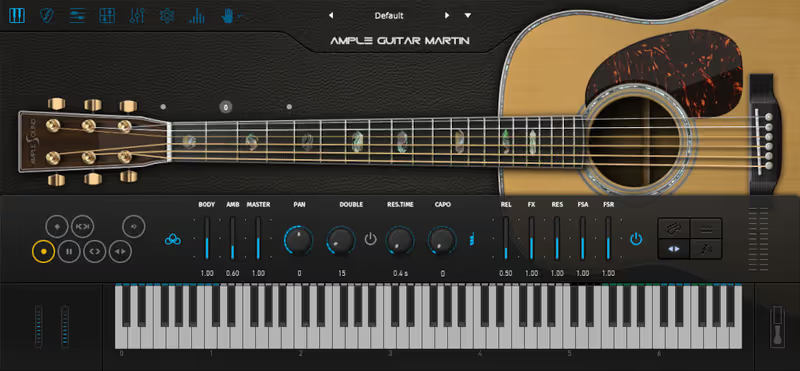
- UI is dense
- Requires MIDI skills
- Engine
- VST/AU/AAX
- Type
- Sampled Martin D-28
- Size
- 5 GB
- Price
- $169
Why it scored that way
Ample Guitar M puts the control back in your hands.
Unlike the pattern-based libraries I often use for quick backings, Ample Guitar M allows me to program every single note, slide, and hammer-on manually. I turn to this instrument whenever I need a featured acoustic solo or a very specific intricate folk picking pattern that pre-recorded loops simply can't cover. I used it to program a complex acoustic intro for a rock song, and the level of control over the string squeaks and release noises made it sound frighteningly real and detailed.
The depth of sampling here is astounding. I spent hours tweaking the 'Capo' logic to ensure the virtual guitarist was playing in the correct position on the neck, which completely changed the timbre of the chords. It requires more effort than a strumming engine, but for a detailed production where the guitar is front and center-like a 'singer-songwriter' demo-Ample Guitar M puts the control back in my hands entirely. Where it sits against the rest of this list: Ample Guitar M is the only entry here built primarily for note-level programming rather than pattern playback, and that single distinction should decide whether it belongs in your template. The library is sampled from a Martin dreadnought, so its natural voice is the big, low-mid-forward steel string that suits folk and singer-songwriter arrangements rather than the tight, percussive strumming that AMBER 2 and Strummed Acoustic are optimised for. It does include a strummer, but treating that as the main event misreads the instrument. The cost of the control is time. Every slide, hammer-on and release noise you want has to be placed, which is why it rewards a featured part and punishes a background bed you needed finished an hour ago.
Price history and lowest recorded price
Check price $169