4 Best Solo String Libraries (2026)

A section hides its samples behind sixteen players. A soloist hides nothing, so every modelled vibrato and every phase-aligned transition is audible. These four are the ones composers actually argue about, and the arguments are the useful part.

Louis Raveton
By Louis Raveton Composer & Lead Editor at MODWHEEL

ModWheel is reader-supported. When you buy through links on this page we may earn an affiliate commission, at no extra cost to you. This never influences which products we recommend, read our testing methodology.

Prices come from the store's own feed and were last checked 27 September 2026. We don't issue discount codes — the price you see is the store's own.

Pick one in 10 seconds

Short version

Compare all 4

Engine
Kontakt
Instrument
Solo cello
Vibrato
Recorded
Stradivari Violin
2. Stradivari Violin Native Instruments
7.3
Engine
Kontakt
Instrument
Solo violin
Vibrato
Modelled
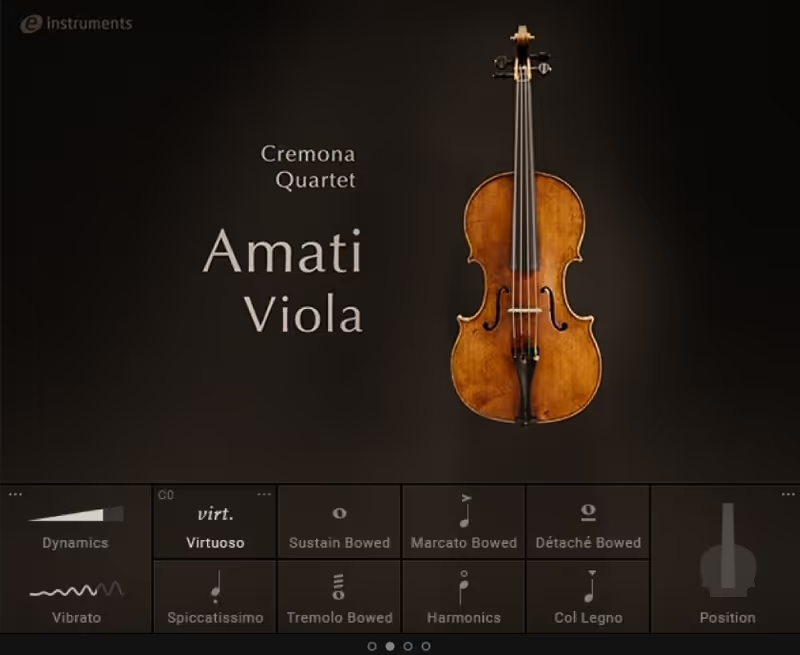
Cremona Quartet Solo
3. Cremona Quartet Solo Native Instruments
6.5
Engine
Kontakt
Instrument
Solo quartet
Vibrato
Modelled
Engine
Kontakt
Instrument
Solo violins
Vibrato
Recorded

Solo strings are the hardest thing sample libraries do, because the averaging that makes a section convincing is exactly what a soloist does not have. Nothing here is unanimously liked, and that is normal for the category.

Buy on the register and the phrase you actually write. A library praised for slow lyrical legato will fight a fast passage, and one built for flexibility usually pays for it in tone. Neither is a defect, they are different bets.

These scores are synthesised from composer reports on VI-Control and Gearspace rather than from sessions in our studio, and every card names the threads behind it. We may earn a commission on links, which never decides the order or the verdicts.

Top Picks

01 Cinesamples Best Overall

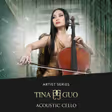
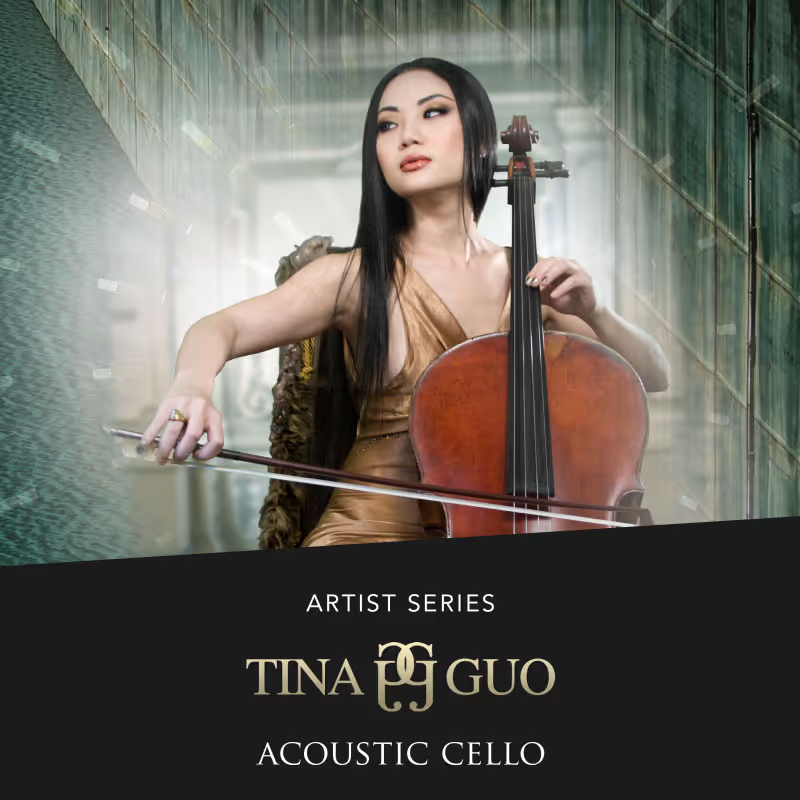
Artist Series - Tina Guo Acoustic Cello Legato

Best for Lyrical Cello

Scored from 8 user reports, not tested by us

How this score was reached

What users agree on. Repeatedly called the best solo cello legato available, praised for sounding finished without programming work and for carrying genuine emotional weight on slow lyrical lines.

The recurring complaint. Consistent reports that it has no fast legato, a restricted key range and struggles on quick passages, with several composers describing it as extremely limited outside the one thing it does.

Synthesised from 8 user reports (VI-Control and Gearspace threads spanning release to recent buying questions). Nobody here ran this product.

The best sounding solo cello legato in this list, provided your line is slow and exposed.

Community score
7.8
out of 10

How it scored

  • Tone before processing 9.5

    Almost nobody in these threads argues against the sound.

  • Vibrato realism 9.0

    Recorded rather than modelled, which is the reason it wins here.

  • Legato through a phrase 7.0

    Beautiful when slow, reported to break down when fast.

  • Flexibility 5.5

    Limited range and articulation set, by consistent report.

Why we picked it

Composers who need one emotive cello line to carry a cue and are writing slowly enough to let it breathe.

Who should skip it

You need a cello that can handle virtuosic or fast writing, where reports are unanimous that it cannot.

The good

  • Widely called the best cello legato
  • Sounds finished out of the box
  • Needs almost no programming
  • Genuine emotional character

The bad

  • No fast legato
  • Restricted key range
  • Very limited articulation set
  • One job only
Engine
Kontakt
Instrument
Solo cello
Vibrato
Recorded
Price
$149
Why it scored that way

One cellist, one job, done better than anything else here. Ask it to move quickly and it falls apart.

Few libraries in this category attract as little argument about sound. Across years of threads, composers describe Tina Guo's legato as polished and ready to use without endless tweaking, and more than one calls it the best solo cello legato available and a classic of the format. The common phrasing is that it delivers soul rather than merely accuracy.

The limitations are stated just as plainly by the same people. There is no fast legato, the key range is described as less than ideal, and reports agree that quick passages are close to more than it can handle even though the tone stays attractive. One recurring summary is that it is extremely limited, said by composers who nonetheless recommend it.

That combination makes the buying decision unusually clean. If your cue needs a long expressive line and few other instruments are competing, this is a first choice and requires almost no work. If the part has to move, reports point elsewhere, and buying it for that will disappoint you in a way no amount of programming fixes.
Check price $149
02 Native Instruments

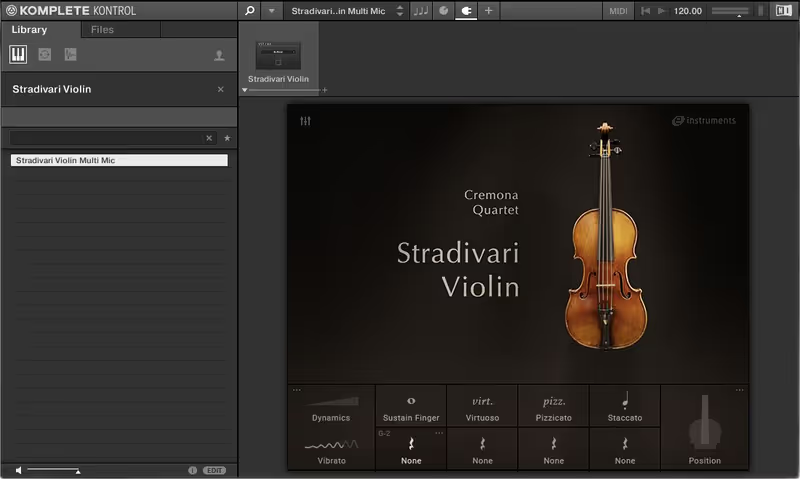
Stradivari Violin

Best for Exposed Violin

Scored from 9 user reports, not tested by us

How this score was reached

What users agree on. Described as unusually up-front and convincing for a solo violin, with the phase-aligned engine giving expressive flexibility that recorded-vibrato libraries cannot offer.

The recurring complaint. The same phase alignment is repeatedly blamed for a cost to tone, the simulated vibrato is called artificial by several composers, and multiple reports rate the shorts well while remaining unconvinced by the legato and longs.

Synthesised from 9 user reports (VI-Control and Gearspace threads from release through later comparisons). Nobody here ran this product.

Buy it for expressive control over an exposed line, and audition the vibrato before you commit.

Community score
7.3
out of 10

How it scored

  • Tone before processing 7.0

    Praised for presence, criticised for the cost of phase alignment.

  • Vibrato realism 6.0

    Simulated, and called artificial in several reports.

  • Legato through a phrase 7.0

    Shorts rated higher than longs and legato by multiple composers.

  • Flexibility 9.0

    The continuous control is the reason people choose it.

Why we picked it

Composers who want to perform a violin line with continuous control rather than switch between recorded articulations.

Who should skip it

Tone matters more to you than control, where reports consistently point at recorded-vibrato rivals instead.

The good

  • Unusually up-front and present
  • Continuous expressive control
  • Shorts widely rated well
  • Strong articulation coverage

The bad

  • Phase alignment costs tone
  • Simulated vibrato called artificial
  • Longs and legato less convincing
  • Divisive reputation
Engine
Kontakt
Instrument
Solo violin
Vibrato
Modelled
Price
$199
Why it scored that way

The most controllable solo violin here and the most argued about. What you gain in flexibility you pay for in tone.

This is the most divided entry on the list, and the division is technical rather than a matter of taste. Composers who like it describe it as the most up-front and convincing solo violin they have used, and the reason given is almost always the same: phase alignment lets the engine crossfade and modulate continuously, so the player performs the line rather than assembling it.

The counter-argument comes from the same mechanism. Reports repeatedly state that phase alignment costs tone, and the direct comparisons with Embertone's Joshua Bell Violin usually land on the same summary, that Bell has the better sound because its vibrato is recorded while the Stradivari trades tone for flexibility. Several composers describe the simulated vibrato as sounding artificial once it is pushed.

The more specific and more useful criticism concerns register. Multiple reports rate the shorts highly while remaining unconvinced by the longs and the legato, which matters because exposed solo violin writing is mostly longs and legato. Audition those before buying rather than the demos, which naturally lead with the material that flatters it.

Check price $199
03 Native Instruments

Cremona Quartet Solo

Best for Solo Quartet

Scored from 9 user reports, not tested by us

How this score was reached

What users agree on. Owners describe the individual instruments as very well made, expressive and easy to play, with strong control and a complete quartet in one purchase.

The recurring complaint. Two complaints recur relentlessly: the vibrato is modelled and becomes obvious when pushed, and the recording is very wet with noticeable hall even on the close microphone, which several composers call harsh, metallic and thin.

Synthesised from 9 user reports (VI-Control and Gearspace threads from release through the Ensemble edition). Nobody here ran this product.

The efficient way to own four solo instruments, if you can live with a wet recording and modelled vibrato.

Community score
6.5
out of 10

How it scored

  • Tone before processing 6.5

    Described as harsh, metallic and thin by a substantial minority.

  • Vibrato realism 6.0

    Modelled, and reported to become obvious at higher intensities.

  • Legato through a phrase 7.5

    Playability and expression are the most praised aspects.

  • Flexibility 6.0

    The wet recording limits where you can place it.

Why we picked it

Composers writing chamber textures who need four solo instruments and value one consistent set over four separate purchases.

Who should skip it

You need a dry soloist to sit inside your own reverb, where reports say the baked-in hall will fight you.

The good

  • Four instruments in one purchase
  • Expressive and easy to play
  • Consistent set for chamber writing
  • Strong performance control

The bad

  • Very wet, even close mic
  • Modelled vibrato is audible
  • Called harsh and metallic by many
  • The most expensive here
Engine
Kontakt
Instrument
Solo quartet
Vibrato
Modelled
Price
$399
Why it scored that way

A whole quartet in one purchase, recorded in a room you cannot get rid of. The complaints are as consistent as the praise.

There is a thread titled asking why people hate the Cremona Quartet, which is a fair summary of its reputation and also unfair to what owners actually say. Composers who use it describe the instruments as very well made, expressive and easy to play, and several report reaching for the violin and cello regularly and enjoying them.

The objections are specific and they repeat. The vibrato is modelled rather than recorded and reports say it gives itself away once pushed, which is the same criticism levelled at the Stradivari and from the same engine family. The second objection is the room: the recording is described as very wet, with substantial hall present even on the close microphone, and the resulting tone called harsh, metallic, thin and piercing by a significant number of people.

Worth knowing before you judge it on old threads: composers discussing the newer Ensemble edition report that its performed vibrato addresses the largest of these complaints. That does not change the solo package being reviewed here, and it does suggest the developer heard the same feedback everybody else did. Treat the older threads as evidence about this package rather than about the range, and audition the close microphone specifically, because the room is the complaint you cannot process away later.

Check price $399
04 Soundiron Best Value

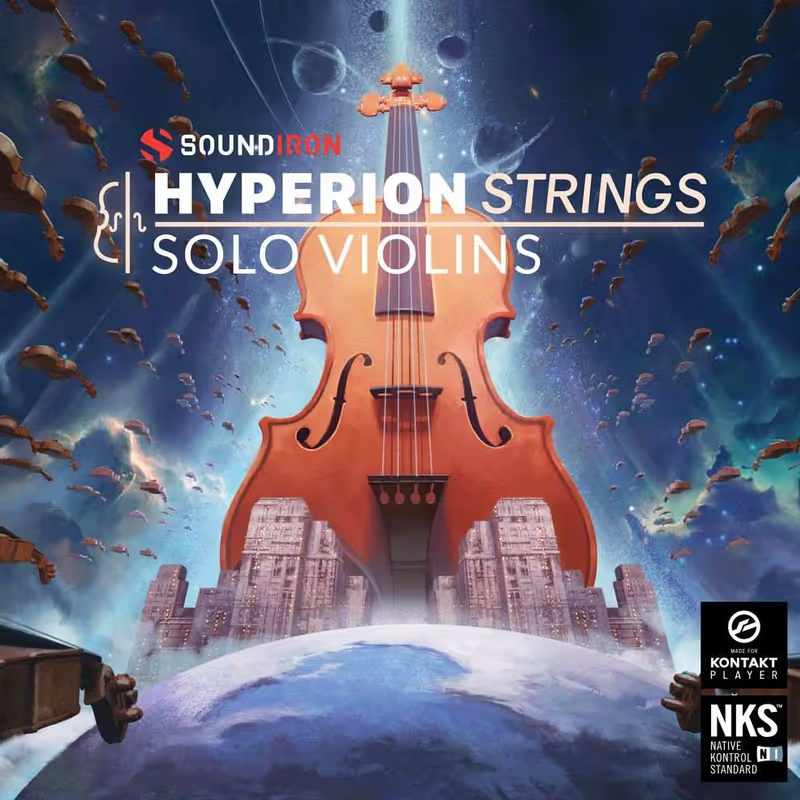
Hyperion Strings Solo Violins

Best for String Layer

Scored from 7 user reports, not tested by us

How this score was reached

What users agree on. The interface and articulation set are widely liked, and the library is repeatedly recommended as a cheap layering tool that adds presence and cut over an existing string section.

The recurring complaint. Opinion on tone is sharply negative in places, with composers describing it as metallic, grating and synthy, the sustains as scratchy, and the recording as so dry that several ask openly how to make it sit in a mix.

Synthesised from 7 user reports (VI-Control and Gearspace threads from the Hyperion Solo Violins release). Nobody here ran this product.

A useful layering tool at this price, and not a library to expose on its own.

Community score
6.1
out of 10

How it scored

  • Tone before processing 5.0

    Called metallic, grating and synthy by multiple composers.

  • Vibrato realism 6.0

    Rarely the focus of praise or complaint.

  • Legato through a phrase 5.5

    Sustains described as scratchy, which shows most on long notes.

  • Flexibility 8.0

    The interface and articulation list are the consistent strengths.

Why we picked it

Composers who want a cheap solo layer that cuts through an ensemble and are prepared to place it in their own reverb.

Who should skip it

The violin has to be heard alone, where reports agree the tone will not survive the exposure.

The good

  • Interface widely praised
  • Broad articulation list
  • Cheapest entry here
  • Cuts through an ensemble

The bad

  • Tone called metallic and synthy
  • Sustains described as scratchy
  • Very dry, needs work to place
  • Weak under exposure
Engine
Kontakt
Instrument
Solo violins
Vibrato
Recorded
Price
$99
Why it scored that way

The cheapest way to put an audible soloist over your section. Solo it and the reason it is cheap becomes clear.

Reports on this library split cleanly by what people wanted from it, which makes it easy to place. Composers using it as a layer are positive: the modular interface is described as one of their favourites, easy to use and flexible, the articulation list is called robust, and the value at the price is repeatedly noted.

Composers who auditioned it as a primary solo violin are blunt in the other direction. The tone is described as metallic, grating and synthy, the sustains as scratchy, and the argument made against it is direct: a violin sample that cannot deliver convincing long sustains will not work in an exposed passage, which limits it to intermittent overdubs.

The dryness is the other thing to plan for. The samples are described as masterfully dry and very dry, with composers asking in the same threads how to make them sit in a mix. That is a genuine strength if you want to place a soloist inside your own hall alongside your section, and it is the reason first impressions of this library run so cold.

Check price $99

What didn’t make the list

2 cut
  • Joshua Bell Violin Embertone

    The library the Stradivari gets compared against in almost every thread, and the one several composers prefer for tone because its vibrato is recorded rather than modelled. Sold direct rather than through the store we link to.

  • Solo Strings Spitfire Audio

    Comes up constantly in the same discussions as the Cremona Quartet and runs in Spitfire's own player, so it falls outside a Kontakt-linked list rather than losing on merit.

How to choose a solo string library

The question that decides this purchase is not which library sounds best, it is whether your line is exposed.

A soloist doubling a section, or sitting inside a busy texture, forgives almost everything. Tone problems get masked, modelled vibrato stops being audible, and a cheap dry library becomes the sensible buy because you can place it where you want. That is the case Hyperion is built for.

An exposed line forgives nothing, and the two things composers complain about most in these threads, vibrato realism and baked-in room, are exactly the two that become audible when nothing else is playing. For that situation the reports point consistently at recorded vibrato and a recording you can place, which is why Tina Guo’s cello keeps winning its category despite doing only one thing.

Read more →

Methodology

Who is this for

Working composers and producers who need reliability, speed, and character for professional scoring tasks.

Our testing process

Where we have tested a product, we do it in actual production scenarios, ranging from rapid sketches to commercial pitches, and we evaluate it in a dense template rather than in isolation. Where we have not, the product card says so and the assessment is drawn from specifications and documented behaviour instead.

Why you should trust us

We buy most reviewed plugins ourselves. Occasionally we receive NFRs for evaluation, but this never guarantees a review or positive verdict. We may earn commissions from links, but our editorial choices are never for sale.

Also considered

For every category, we audition the top 8 to 15 standard options, discarding any that suffer from poor scripting, slow load times, or uninspiring sampling.

Frequently Asked Questions

Why do solo string libraries sound faker than sections?

Because a section averages sixteen imperfect players, and that averaging hides the repetition, the identical attacks and the fixed vibrato that expose a sample. A soloist offers no cover, so every recurrence of the same recording is audible as a recurrence. The samples are not worse, the hiding place is gone.

Is modelled vibrato a problem?

It is the single most common complaint in these threads. Modelling vibrato rather than recording it buys you continuous control over depth and speed, which is genuinely useful, and composers repeatedly report that it becomes obvious at higher intensities. Libraries with recorded vibrato tend to win on tone and lose on flexibility, and which trade you want depends on whether the line is exposed.

Should I buy a solo violin or a full solo quartet?

A quartet if you write chamber textures, a single instrument if one line matters more than the others. Bundles look like better value per instrument and that only holds if you use more than one, because most composers find they reach for a particular violin or cello and leave the rest loaded but unused.

Do dry solo string libraries need reverb?

Yes, and that is usually the reason to buy one. A dry recording lets you place the soloist in the same space as your section rather than in the room it was recorded in, which is the harder problem to fix. The cost is that it will sound thin and unconvincing until you have done that work, which is why dry libraries get the harshest first impressions in these threads.

How were these scores worked out if you did not test the libraries?

They are synthesised from threads on VI-Control and Gearspace, read for four recurring questions, and every product card lists the threads and the number of separate discussions behind its score. The card also states plainly that nobody here ran the product. It is a different kind of evidence from a studio test and it is labelled as one.

Written By

Louis Raveton

Louis works across immersive scores (Venice Biennale, LVMH) and animation (Canal+), while producing Downtempo and Electro-Dub as Monsieur Shwill and Flagada. He treats his sample drive like a record collection, constantly hunting for the perfect 'imperfect' texture

Related Guides

All Guides →

New reviews, no noise

Occasional email when we publish something worth your time. No daily digest, no vendor press releases.

We store only your address, never sell it, and delete it as soon as you unsubscribe. See our privacy policy.