
Best BBC Symphony Orchestra Alternatives

The reason to own BBCSO is not that any one section is the best available. It is that every section was recorded in the same hall by the same team, so the balance is already done.

The ModWheel Team
By The ModWheel Team Editorial Staff

ModWheel is reader-supported. When you buy through links on this page we may earn an affiliate commission, at no extra cost to you. This never influences which products we recommend, read our testing methodology.

Prices come from the store's own feed and were last checked 17 October 2026. We don't issue discount codes — the price you see is the store's own.

Pick one in 10 seconds

Short version

Compare all 5

Covers
Full orchestra
Player
Opus
$209 $399 View price
Covers
Full orchestra
Player
Opus
$104 $199 View price
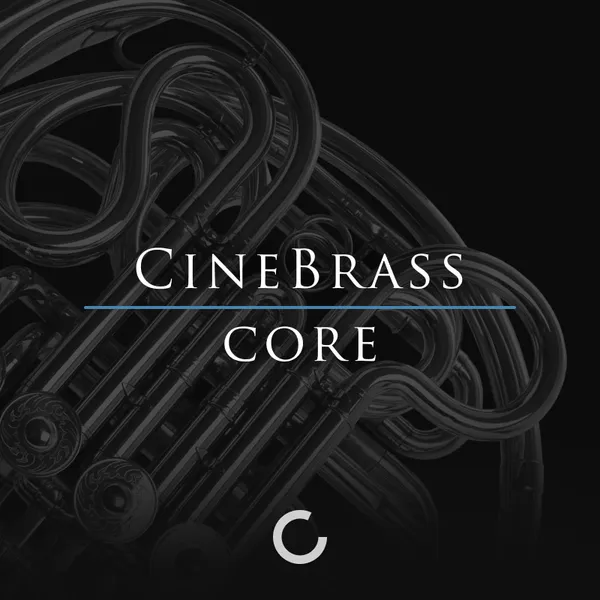
CineStrings Core 6.6
Covers
Strings
Player
Kontakt
Ensemblia 2: Orchestral Longs
4. Ensemblia 2: Orchestral Longs Cinematique Instruments
8.0
Covers
Orchestral ensembles
Player
Kontakt
Covers
Orchestral performances
Player
Own engine

A complete orchestra bought as one library solves a problem that assembling five specialist libraries does not. The sections were recorded in the same room with the same microphones, so a brass entry under a string bed sits where it should without an afternoon of matching reverb and equalisation.

So the axes score coherence separately from completeness. A collection of excellent individual libraries can beat a single orchestra on any one section and lose badly on the thing you actually bought, which is a template you can write in on the first day.

Nothing here was tested in a studio and every card says so. The scores come from published specification and documented behaviour, and the verdicts agree with what this site has already published about these libraries elsewhere.

Best Cinematic String Libraries for 2026 covers the string section on its own terms.

Top Picks

01 EastWest Sounds Best Overall

Hollywood Orchestra Opus Edition Diamond

Best for Complete Orchestra

Not tested by us, assessed from specs and documented behaviour

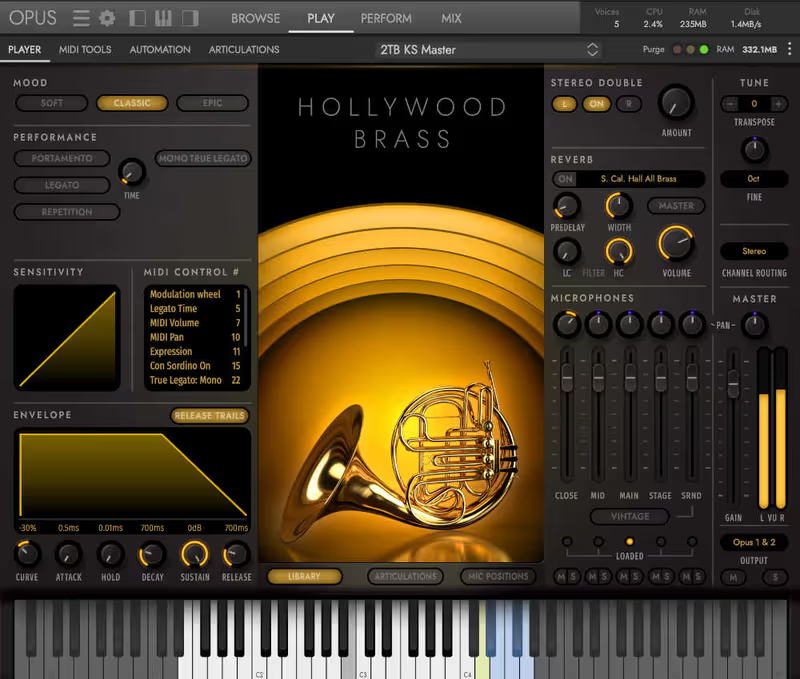
The direct replacement. One orchestra, one hall, one player, and in the Diamond tier every microphone position rather than a pre-mixed stereo image. It asks for around 500GB and a fast drive in return.

Assessed score
8.5
out of 10

How it scored

  • Completeness 9.5

    All five sections, in one purchase.

  • Coherence 9.0

    One room and one team, which is the whole argument.

  • Time to Cue 7.0

    Fast once installed. The install itself is the slow part.

  • Value 8.5

    Strong per section, and the disk is a real hidden cost.

Why we picked it

Best for composers who want a complete orchestra with full microphone control and have the disk space to hold it.

Who should skip it

Skip it if you are short on drive space or unwilling to add another player and library manager to your system.

The good

  • Every microphone position
  • All five sections, one room
  • Strong price per section

The bad

  • Around 500GB installed
  • Opus rather than Kontakt
  • Own library manager to learn
Covers
Full orchestra
Player
Opus
Price
$209
Why it scored that way

The one that answers the same question.

If the appeal of BBCSO is that somebody already balanced the orchestra for you, this is the library that offers the same thing at the same scale. Strings, brass, woodwinds and percussion were recorded in one room by one team, so the sections relate to each other before you touch a fader, and the Diamond tier ships every microphone position that was recorded rather than a mix decided in advance.

That last point is the real difference between the tiers, and it matters in one specific way. Having close, mid, main and surround available lets you place a section rather than accept where it was placed for you, so an intimate violin line with the main microphones pulled back is a sound you can build. A pre-mixed stereo library cannot produce it at all, and for writing to picture that flexibility comes up constantly.

The cost is friction. Opus is EastWest's own engine rather than Kontakt, which means a separate installer, a separate library manager and articulation handling that will not match the maps you already have. The install is around 500GB, and on a mechanical drive a large template becomes unpleasant to work in. Budget an SSD alongside the purchase if the room is not already there.

Playing connects you to YouTube, which may set cookies.
Heard on
Film Scoring Trailer Music Game Audio
Check price $209 (was $399)
02 EastWest Sounds Best Value

Symphonic Orchestra Platinum

Best for Budget Orchestra

Not tested by us, assessed from specs and documented behaviour

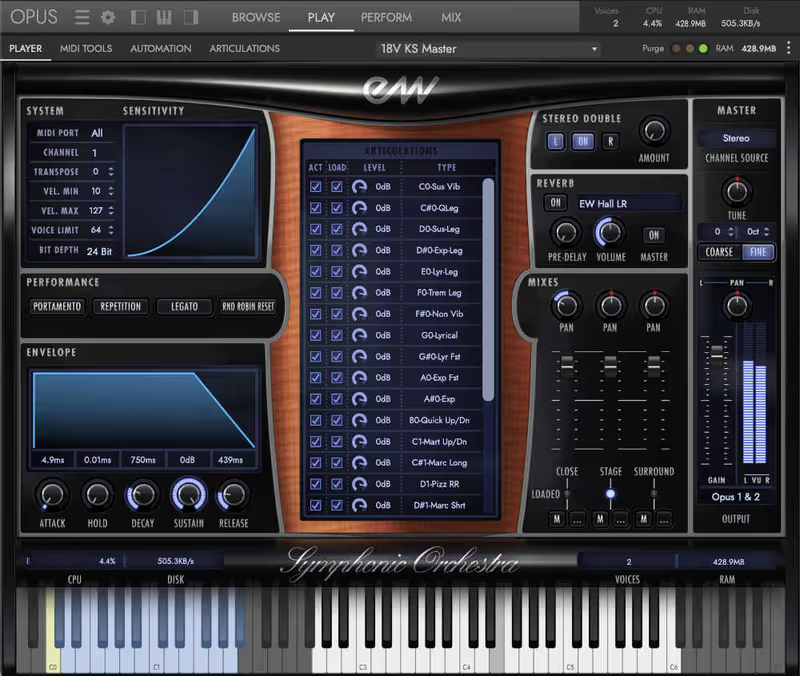
The budget answer, and a serious one. The recordings are older and drier in character than modern libraries, and it is still a complete orchestra with multiple microphone positions for roughly the price of one specialist string patch.

Assessed score
8.6
out of 10

How it scored

  • Completeness 9.0

    The full orchestra, in one purchase.

  • Coherence 8.5

    One hall throughout, which is the point of buying it.

  • Time to Cue 7.5

    Fewer articulations to navigate than a modern library.

  • Value 9.5

    Nothing else here covers an orchestra at this price.

Why we picked it

Best for composers who need a complete orchestra now and cannot justify a four figure purchase.

Who should skip it

Skip it if your writing lives on exposed solo lines and fast legato passages.

The good

  • Complete orchestra, low price
  • Multiple microphone positions
  • Dry enough to place yourself

The bad

  • Older sounding recordings
  • Weaker legato and fast runs
  • Fewer articulations
Covers
Full orchestra
Player
Opus
Price
$104
Why it scored that way

The whole orchestra for about a hundred euros.

This library predates the current generation and it shows in the way people talk about it, usually unfairly. What is actually on offer is a complete symphonic orchestra recorded in a real hall with more than one microphone position, at a price that most composers spend on a single section library without thinking about it.

The character is the thing to understand before buying. These recordings are drier and more forward than the modern fashion, which is a disadvantage if you want a cue to sound finished the moment you press play, and an advantage if you intend to place the orchestra in your own reverb. For a composer who already has a hall they like, starting from a drier source is easier than fighting a baked in one.

Where it loses to the newer libraries is articulation depth and legato quality. The fast passages and exposed solo lines that a modern library handles cleanly will need more editing here, and on a naked string line the age is audible. Inside a full arrangement, under percussion and brass, most of that difference stops mattering.

Heard on
Library Music Student Scoring Game Audio
Check price $104 (was $199)
03 Cinesamples

CineStrings Core

Best for Symphonic Strings

Not tested by us, assessed from specs and documented behaviour

The choice if you would rather have one excellent section than five adequate ones. It buys you strings that stand up exposed, and it hands back the matching problem that a complete orchestra was solving for you.

Assessed score
6.6
out of 10

How it scored

  • Completeness 4.0

    Strings only. The other four sections are not here.

  • Coherence 7.0

    Internally coherent, and it has to be matched to everything else.

  • Time to Cue 8.0

    Kontakt, familiar layout, quick to work in.

  • Value 7.5

    Reasonable for a section, expensive as a route to an orchestra.

Why we picked it

Best for composers whose writing is string led and who are prepared to assemble the rest of the orchestra over time.

Who should skip it

Skip it if you want a complete orchestra now, because this is one section of five.

The good

  • Section quality over breadth
  • Runs in Kontakt
  • Several microphone positions

The bad

  • Strings only
  • Matching other sections is on you
  • Costly route to a full orchestra
Covers
Strings
Player
Kontakt
Price
$399
Why it scored that way

One section, done properly, and the rest is your problem.

This is the entry that argues against the premise of the page, and for some readers it is correct. A complete orchestra is a compromise on every section by definition, because no team records five sections equally well, and the string section is where that compromise is heard first because strings carry most of the exposed writing.

What you get here is a full symphonic string section recorded on a scoring stage with several microphone positions, in Kontakt, which means it drops into a template you already understand without a new player or library manager. For a composer whose cues live on string lines, one section at this level does more for the finished music than five sections at a lower one.

The cost is the work a complete orchestra was doing invisibly. Brass bought elsewhere will have been recorded in a different room, so matching the reverb, the microphone distance and the overall brightness becomes a task you now own, and it never fully finishes. Going this route means accepting that you are building a template over years rather than buying one.

Playing connects you to YouTube, which may set cookies.
Heard on
Film Scoring Television Concert Work
Check price $399
04 Cinematique Instruments

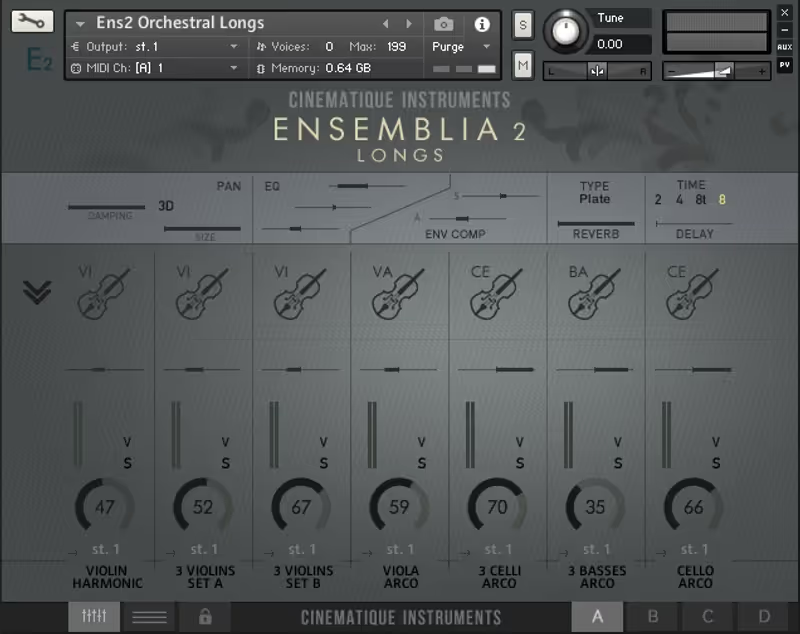
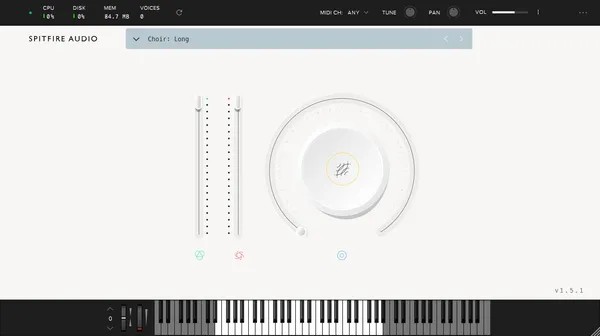
Ensemblia 2: Orchestral Longs

Best for Orchestral Sketching

Not tested by us, assessed from specs and documented behaviour

A different way to work rather than a cheaper orchestra. Combined ensemble patches let you write the shape of a cue before deciding the orchestration, which is faster than a full template and gives you less to correct later.

Assessed score
8.0
out of 10

How it scored

  • Completeness 5.5

    Ensembles across the orchestra rather than full sections.

  • Coherence 9.0

    Very high, because the balance is baked into each patch.

  • Time to Cue 9.5

    Nothing here is faster to a convincing sketch.

  • Value 8.0

    Modest price for a genuine change in how you start a cue.

Why we picked it

Best for composers who sketch fast and want the orchestration suggested rather than specified.

Who should skip it

Skip it if you deliver detailed mockups, because the articulation depth is not there.

The good

  • Fastest route to a sketch
  • Balance already decided
  • Modest price and install

The bad

  • No articulation depth
  • Cannot build a detailed mockup
  • Little control per instrument
Covers
Orchestral ensembles
Player
Kontakt
Price
$149
Why it scored that way

For sketching, where an orchestra is too many decisions.

There is a stage of writing where a full orchestral template actively slows you down. Choosing between eighteen articulations across five sections is the wrong task when the question is still whether the harmony works, and a lot of composers lose an hour a day to it without ever noticing that the hour went. This library is built for that stage rather than for the one after it.

Ensemble patches answer that by combining instruments into a single playable sound, so a line played once arrives already orchestrated in a plausible way. The sustained material here is aimed squarely at that stage, and for underscore and texture work a surprising amount of it survives into the final cue rather than being replaced.

What it will not do is deliver a detailed orchestral mockup. There is no articulation depth to speak of, no control over individual desks, and anything that needs a specific instrument doing a specific thing has to be built elsewhere. Bought as a replacement for an orchestra it disappoints, and bought as the thing you open first it changes how quickly the work moves.

Heard on
Underscore Library Music Sketching
Check price $149
05 UJAM

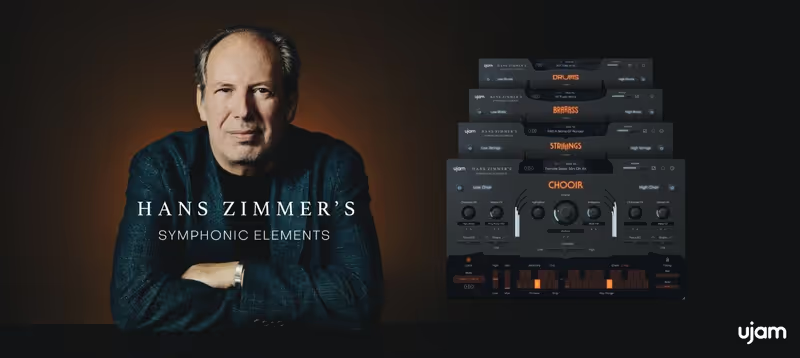
Symphonic Elements Bundle

Best for Performance Orchestra

Not tested by us, assessed from specs and documented behaviour

Not an orchestra in the sense the rest of this page means. It plays convincing orchestral parts from held chords, which is a shortcut worth having and is not the same as owning the sections.

Assessed score
7.8
out of 10

How it scored

  • Completeness 7.0

    All the sections are represented, as performances rather than instruments.

  • Coherence 8.0

    Consistent by design, because the same engine drives all of it.

  • Time to Cue 9.5

    Hold a chord, choose a pattern. Nothing here is faster.

  • Value 6.5

    The most expensive entry, and it is buying time rather than sound.

Why we picked it

Best for library and production music composers who need finished orchestral parts fast.

Who should skip it

Skip it if you write your own orchestral lines, because the performance engine is most of what you are paying for.

The good

  • Finished parts in minutes
  • Covers every section
  • Consistent across the bundle

The bad

  • Patterns rather than lines
  • Recognisable to those who know it
  • The priciest entry here
Covers
Orchestral performances
Player
Own engine
Price
$699
Why it scored that way

The odd one out, and the right answer for some readers.

Include this only if it describes you, and for a working library composer it often does. Some readers searching for a BBCSO alternative do not need a controllable orchestra at all. They need convincing orchestral parts by Thursday, and the programming is the part of the job that eats the week.

What this offers is a performance engine per section. Hold a chord, choose a pattern, and a plausible orchestral part appears with the phrasing and articulation a player would use, across strings, brass, woodwinds, percussion and choir. For production music and for demos that is a substantial difference in how long a cue takes to reach a deliverable state.

The cost is authorship. You are choosing between somebody else's patterns rather than writing lines, the instruments are stylised enough that a listener who knows them will recognise the sound, and anything outside what the engine expects falls apart quickly. It is on this page as a corrective to the idea that everyone shopping for an orchestra wants to programme one, and it is entirely the wrong purchase if you do.

Heard on
Library Music Demos Advertising
Check price $699

What didn’t make the list

2 cut
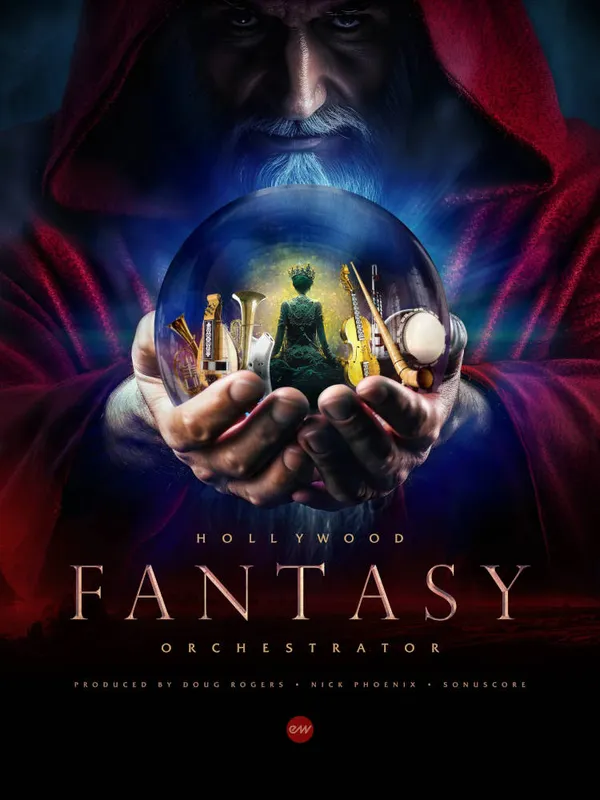
  • Hollywood Fantasy Orchestrator EastWest Sounds

    Built around a specific stylised sound rather than a neutral orchestra, so it answers a different question than the one BBCSO answers.

  • Session Strings 2 Native Instruments

    A small pop and media string section rather than a symphonic one. Useful, and not a replacement for an orchestra.

Read more →

Methodology

Who is this for

Working composers and producers who need reliability, speed, and character for professional scoring tasks.

Our testing process

Where we have tested a product, we do it in actual production scenarios, ranging from rapid sketches to commercial pitches, and we evaluate it in a dense template rather than in isolation. Where we have not, the product card says so and the assessment is drawn from specifications and documented behaviour instead.

Why you should trust us

We buy most reviewed plugins ourselves. Occasionally we receive NFRs for evaluation, but this never guarantees a review or positive verdict. We may earn commissions from links, but our editorial choices are never for sale.

Also considered

For every category, we audition the top 8 to 15 standard options, discarding any that suffer from poor scripting, slow load times, or uninspiring sampling.

Frequently Asked Questions

What is the closest alternative to BBC Symphony Orchestra?

Hollywood Orchestra Opus Edition Diamond, because it is the only library here offering the same thing in kind. A complete orchestra recorded in one hall by one team, through one player, with every microphone position rather than a pre-mixed image. What it asks in return is around 500GB of fast disk and a willingness to add another player to your system.

Is a complete orchestra better than buying separate section libraries?

It is better on the first day and worse in year three. A complete orchestra means the sections already relate to each other, so you can write immediately rather than spending an afternoon matching reverb and brightness. Specialist libraries beat it on any individual section, at the cost of a matching problem you own permanently.

Do I need every microphone position?

Only if you intend to place sections yourself. Having close, mid, main and surround available lets you build an intimate line by pulling the main microphones back, which a pre-mixed stereo library cannot produce at all. If you never touch mic positions you are paying for disk space and load time you will not use.

Can I write a professional cue with a budget orchestra?

Yes, and the limit shows up in specific places rather than everywhere. Older or cheaper libraries hold up under a full arrangement and struggle on exposed solo lines and fast legato passages, which is where articulation depth and recording quality become audible. Write around that and the difference is much smaller than the price gap suggests.

Written By

The ModWheel Team

The ModWheel editorial team is a collective of composers, producers, and sound designers. We collaborate to bring you comprehensive guides, industry news, and curated lists that represent our shared expertise and passion for music technology.

Related Guides

All Guides →

New reviews, no noise

Occasional email when we publish something worth your time. No daily digest, no vendor press releases.

We store only your address, never sell it, and delete it as soon as you unsubscribe. See our privacy policy.