Head to head

Arturia CS-80 V4 vs Cherry Audio GX-80

Two Yamaha CS-80 emulations compared on expression, CPU cost and what you give up for the price difference, with a straight answer on which to buy.

The short answer

Buy the Arturia if you play with polyphonic aftertouch and want the instrument's expression, not just its sound. Buy the Cherry Audio if you are writing pads and leads from a normal keyboard, where the expression depth is theoretical and the CPU saving is not.

ModWheel is reader-supported. When you buy through links on this page we may earn an affiliate commission, at no extra cost to you. This never influences which products we recommend, read our testing methodology.

Compare all 2

The Yamaha CS-80 is famous for two separate things and most comparisons only address one of them. It has a distinctive sound — thick, slightly unstable, two independent layers per voice — and it has a control system that almost nothing else has ever had. Which of those two you are buying decides this entirely.

Expression

The CS-80 sensed pressure on every key independently. Lean into one note in a held chord and only that note responds. That is polyphonic aftertouch, and it is the reason the instrument’s famous film work sounds like a performance rather than a patch.

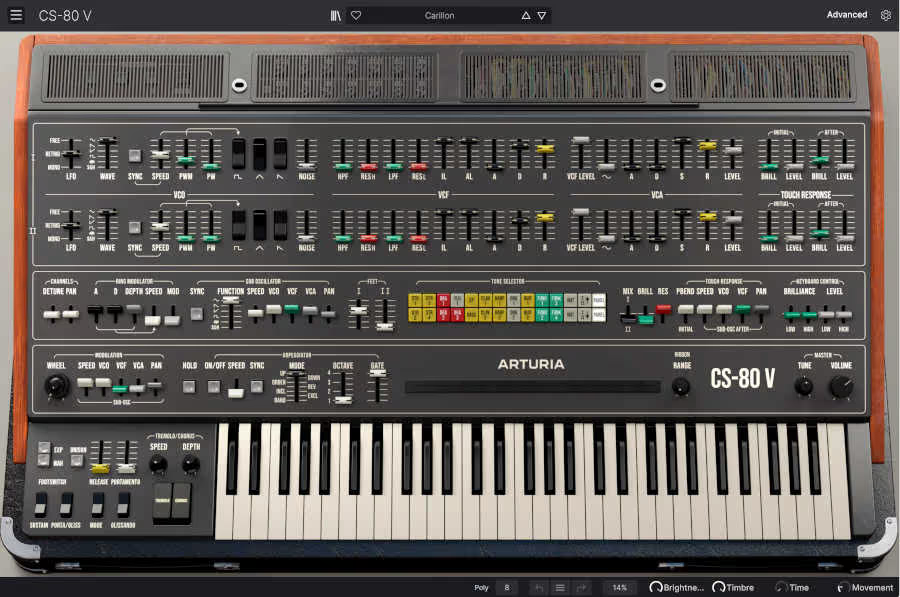
Arturia model this and support MPE, so on the right controller the emulation behaves like the instrument. Cherry Audio’s does not go as deep here, and that is the single honest difference in what you are paying for.

If your keyboard sends channel aftertouch or none at all, that difference costs you nothing today. If you own a Roli, an Osmose or a poly-AT controller, it is most of the reason to choose one over the other.

Sound and range

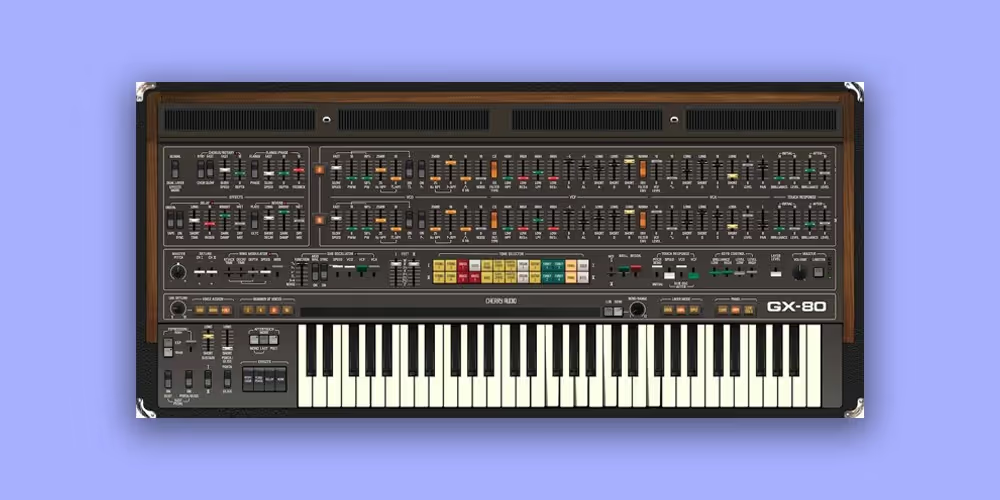
Both cover the ground. Cherry Audio’s is arguably the broader instrument, because it also models the GX-1 — the enormous organ-console predecessor the CS-80 was derived from — so the waveform palette extends past what a CS-80 alone offers.

Arturia’s has more weight to it, and component-level modelling of the drift and dispersion that stop a chord sounding like eight identical copies of one oscillator. On sustained pads that is audible; on a busy arrangement it is subtle.

CPU

Physical modelling at this depth is expensive, and the Arturia is one of the heavier soft synths in a template. Cherry Audio’s hybrid approach is markedly lighter, and on a laptop running a full session that is a practical argument rather than a benchmark one.

Presets and effects

Arturia ships the deeper preset library and the better effects section. Cherry Audio’s presets are fewer and its effects are adequate rather than a reason to buy. For a programmer this is close to irrelevant; for someone who wants a sound in thirty seconds it is not.

Side by side

CS-80 V4GX-80
Poly aftertouch / MPEYes, modelled in depthLimited
Extra instrumentGX-1 waveforms included
CPUHeavyLight
PresetsDeep librarySmaller
EffectsStrongAdequate
PriceFullSubstantially less

Which one

If you have the controller for it, the Arturia, and the expression is the whole reason.

If you do not, the Cherry Audio gets you the sound for less money and less CPU, and the capability you are giving up is one you currently cannot use. Buying the expensive one first and the controller later is a defensible plan; buying it and never touching pressure is paying for the part you do not play.

Both are covered alongside the rest of the field in the CS-80 roundup.

01 Arturia

CS-80 V4

Best for Vangelis Brass

The closest thing to the real instrument, and the aftertouch response is what separates it from every cheaper option here.

Score
7.9
out of 10

How it scored

  • Sound Design Range 8.5

    Component modelling gives it behaviour a sample cannot fake.

  • Preset Quality 8.5

    The Vangelis brass patch lands, which is the whole test.

  • CPU Footprint 5.5

    The deep modelling is expensive on an older machine.

  • Modulation Depth 9.0

    MPE support and component dispersion. Best in this roundup.

Why we picked it

Purists who demand absolute authenticity. The component modeling and MPE support make it feel alive under your fingers.

Who should skip it

You have a slow computer. The deep physical modeling eats CPU cycles for breakfast.

The good

  • Incredible filter sound
  • MPE support is crucial
  • Component dispersion

The bad

  • Pricey
  • GUI can be fiddly
  • Large CPU footprint
Engine
VST/AU/AAX
Type
Physical Modeling
Size
200 MB
Price
$149
Why it scored that way

The closest you will get to the real thing without a structural engineer report for your floor.

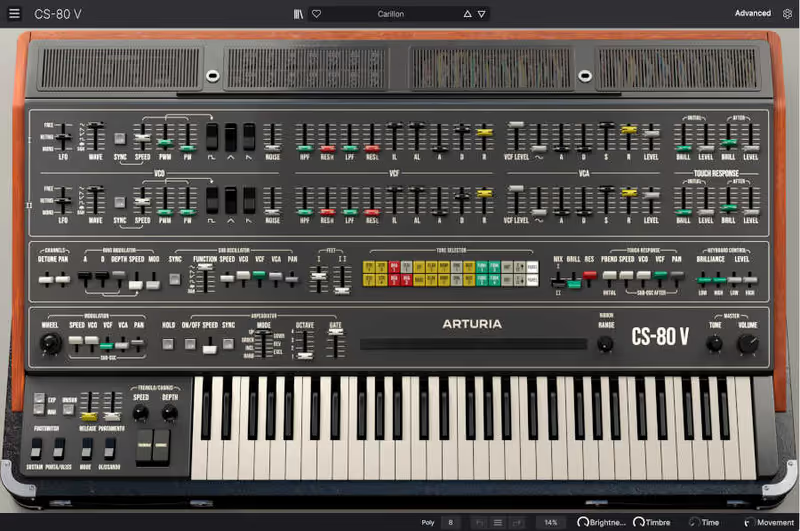
Arturia has been iterating on this emulation for years, and V4 is the version where they finally cracked the code. The old versions sounded thin and digital, but this one has genuine weight and heft. The new "Dispersion" settings-which model the aging of individual electronic components-allow me to dial in the oscillator drift until it sounds like a unit that has been left in a damp basement since 1982. On a recent retro-score, pushing this drift knob transformed a sterile pad into a wobbly, living texture that filled the entire stereo field.

The Modulation Matrix kicks it into the modern era, allowing you to route anything to anything, which solves the frustrating limitations of the original hardware. It is undeniably CPU hungry, and the interface is still a bit "mouse-heavy" for such a tactile synth, but the sound makes up for it. The famous "Blade Runner" brass patches alone are worth the entry price. I played a single chord, opened the filter with aftertouch, and it was instant Vangelis.
Playing connects you to YouTube, which may set cookies.

Heard on
Blade Runner 2049 Stranger Things Synthwave
Check price $149
02 Cherry Audio

GX-80 Synthesizer

Best for Hybrid Textures

Two legendary instruments for the price of neither, and the only thing it really gives up is expression depth.

Score
8.0
out of 10

How it scored

  • Sound Design Range 8.8

    CS-80 and GX-1 waveforms in one instrument is unusual value.

  • Preset Quality 7.2

    A smaller bank, and the effects are merely adequate.

  • CPU Footprint 8.8

    100 MB and light enough to stack.

  • Modulation Depth 7.0

    No MPE, and less weight under the hand than the Arturia.

Why we picked it

Producers who want bang for their buck. You get two legendary synths (CS-80 and GX-1) for less than the price of a dinner.

Who should skip it

You need MPE expression. It lacks the deep polyphonic aftertouch expression of the Arturia.

The good

  • Insane value
  • GX-1 waveforms included
  • Light on CPU

The bad

  • Less 'weight' than Arturia
  • Effects are just okay
  • Smaller preset library
Engine
VST/AU/AAX
Type
Hybrid Modeling
Size
100 MB
Price
$35
Why it scored that way

The bargain of the century. 90% of the sound for 20% of the price.

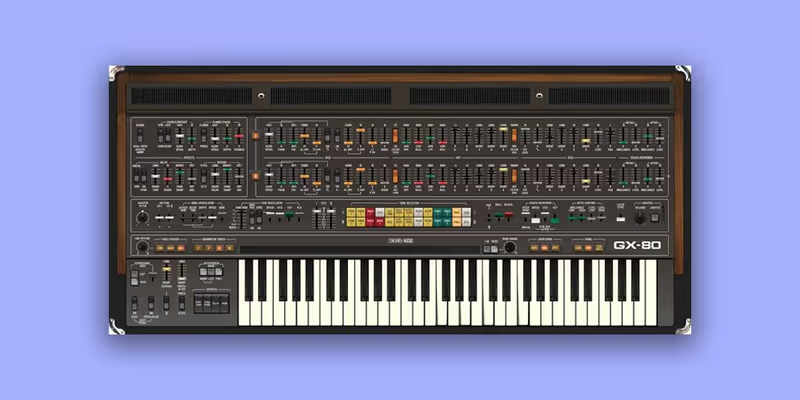
Cherry Audio has disrupted the market by selling incredible synths for the price of a takeout dinner, and the GX-80 is their absolute masterpiece. Not content with just emulating the CS-80, they decided to model the ultra-rare GX-1 (the massive organ precursor used by Stevie Wonder) and mash them together. I layered a CS-80 saw wave with a GX-1 pulse wave on a recent track, and the result was a bass tone so thick it rattled my subwoofer without any EQ, shaking the entire room with analog weight.

It sounds slightly brighter and "buzzier" than the Arturia version, but in a dense mix, that actually helps it cut through without needing high-shelf boosting. The dual-layer architecture means you can stack voices in ways that were physically impossible on the original hardware. I frequently use it for huge, detuned leads where I need that classic 70s progression rock sound but with modern stability. It is the best value synth on the market, period. It brings the dual-layer magic of the GX-1 to everyone.

Playing connects you to YouTube, which may set cookies.

Heard on
Modern Synthpop Indie Games Electro Pop
Check price $35 (was $69)

Pick CS-80 V4 if

You own a keyboard with polyphonic aftertouch or MPE, and the reason you want a CS-80 is the way it responds under the fingers rather than the way it sounds under a mouse.

Pick GX-80 Synthesizer if

You want the sound on a laptop, at a fraction of the price and a fraction of the CPU, and you will be programming with a mouse and a standard controller.

Written By

Ewan Clarke

Ewan is a sound designer whose patches have appeared in major wavetable synths and cinematic scoring libraries. A self-confessed modular addict, he bridges the gap between West Coast experimentation and pop-ready polish. He believes every preset should tell a story.

Related Guides

All Guides →

New reviews, no noise

Occasional email when we publish something worth your time. No daily digest, no vendor press releases.

We store only your address, never sell it, and delete it as soon as you unsubscribe. See our privacy policy.