
5 Best Additive Synth VSTs for Complex Sound Design (2026)

If you are strictly relying on simple sawtooth oscillators, you are missing an entire universe of complex harmonic manipulation.

Ewan Clarke
By Ewan Clarke Synth Specialist & Sound Designer

ModWheel is reader-supported. When you buy through links on this page we may earn an affiliate commission, at no extra cost to you. This never influences which products we recommend, read our testing methodology.

Prices come from the store's own feed and were last checked 27 September 2026. We don't issue discount codes — the price you see is the store's own.

Pick one in 10 seconds

Short version
  • You want additive results without an additive learning curve Razor
  • You want to address partials individually and build the chain yourself Loom II
  • Additive is one colour in a patch rather than the whole patch Pigments 7
  • The cue needs an evolving drone rather than a note Aparillo
  • The point is to break the waveform rather than tune it MOK Waverazor

Compare all 5

Pigments 7 7.7
Format
VST/AU/AAX
Protection
Arturia Software Center
Loom II
2. Loom II AIR Music Technology
7.6
Format
VST/AU/AAX
Protection
iLok
Aparillo
3. Aparillo Sugar Bytes
7.1
Format
VST/AU/AAX
Protection
Serial Key
$49 $99 View price
MOK Waverazor 7.0
Format
VST/AU/AAX
Protection
Tracktion Manager
5. Razor Native Instruments
8.5
Format
Reaktor Player
Protection
Native Access

Finding the best additive synth VSTs is absolutely mandatory for producers who want to synthesize incredibly complex, evolving digital textures that traditional analog gear simply cannot generate. Traditional subtractive synthesizers excel at providing massive, warm basslines by filtering down harmonically rich waveforms, but they completely fail at building entirely new timbres from individual sine wave harmonics. The top digital synthesis tools allow you to mathematically manipulate hundreds of individual partials simultaneously to create highly intricate, crystalline tones.

You need a dedicated digital workstation that handles incredibly complex harmonic manipulation intuitively so you can focus entirely on creative sound design. A fantastic additive synthesizer completely replaces the endless frustration of trying to blindly program an old hardware unit using a tiny LCD screen. The right plugin depends heavily on your specific workflow, such as preferring incredibly deep spectral morphing or massive, highly modern hybrid engines.

Top Picks

01 Arturia

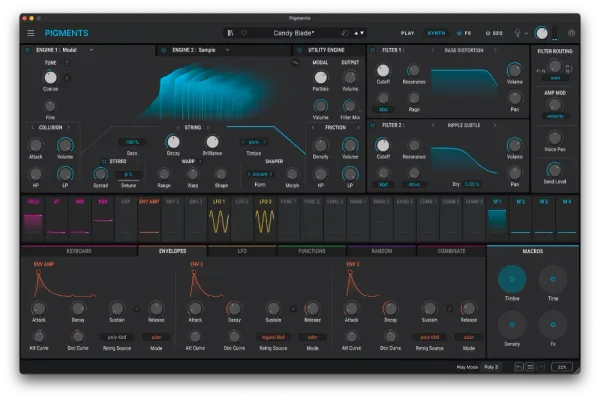
Pigments 7

Best for Hybrid Engine

Additive as one engine among four, which is the practical way to own it and the least dedicated option here.

Score
7.7
out of 10

How it scored

  • Partial Control 7.5

    Harmonic parameters are modulatable, and not addressable one partial at a time.

  • Sound Character 8.8

    The hybrid path, where additive meets an analog filter, is where it earns its place.

  • Workflow Speed 8.5

    Visual routing, as everywhere else in this synth. Best here.

  • CPU Footprint 6.0

    Dense patches are expensive, and the interface adds to it.

Why we picked it

Best for unlimited modern sound design because the incredibly open hybrid architecture perfectly captures the complex, highly colored harmonic reflections of advanced additive synthesis.

Who should skip it

Avoid if you absolutely demand highly simple, perfectly straightforward vintage analog layouts for your delicate classical pop scoring.

The good

  • Incredibly deep, unlimited hybrid routing architecture
  • Fantastic integrated visual modulation feedback
  • Excellent dedicated harmonic oscillator engine

The bad

  • Lacks a straightforward, simple vintage interface
  • Completely open architecture can induce decision paralysis
  • Relatively high computer processing footprint on dense patches
Format
VST/AU/AAX
Protection
Arturia Software Center
Price
$199
Why it scored that way

This plugin provides the absolute best, most immediate visual feedback available for creating massive, highly complex digital textures.

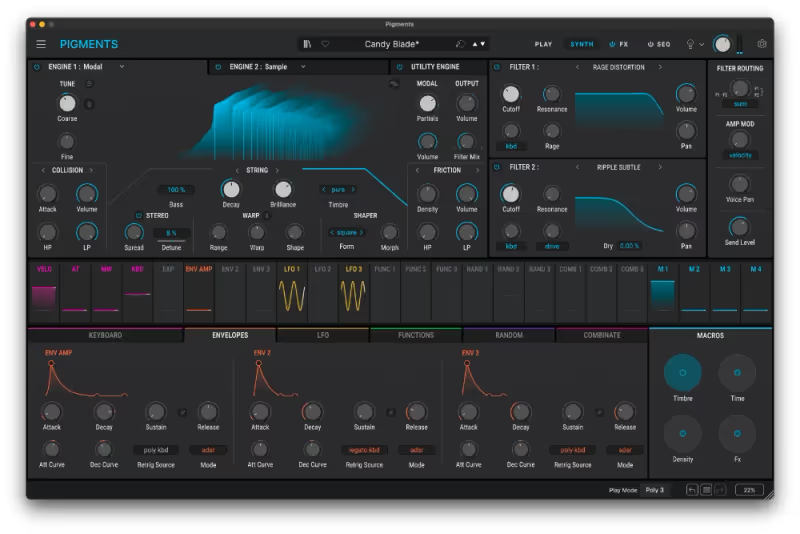
Arturia Pigments 7 utilizes an incredibly clever multi-engine architecture that allows you to instantly combine a deeply complex additive harmonic oscillator directly with a warm analog filter perfectly. The dedicated modulation routing lane is absolutely fantastic, instantly allowing you to visually connect complex LFOs to literally any harmonic parameter imaginable, watching the partials animate in real-time. I constantly rely on this plugin when processing sterile cinematic drones because the incredibly dense harmonic routing adds massive evolving character without ever sounding artificially constrained.

Because it focuses entirely on incredibly complex, open-ended hybrid sound design, it completely lacks the perfectly straightforward, instantly recognizable layout of a classic single-engine subtractive synthesizer. Regardless of this intentional lack of simplicity, it is the best alternative available when you need completely unlimited, undeniable modern digital coloration. The included dedicated utility engine allows you to easily layer massive sub-bass oscillators directly underneath the delicate additive partials.

Playing connects you to YouTube, which may set cookies.
Heard on
Electronic Mixers Sound Designers Cinematic Composers
Check price $199
02 AIR Music Technology

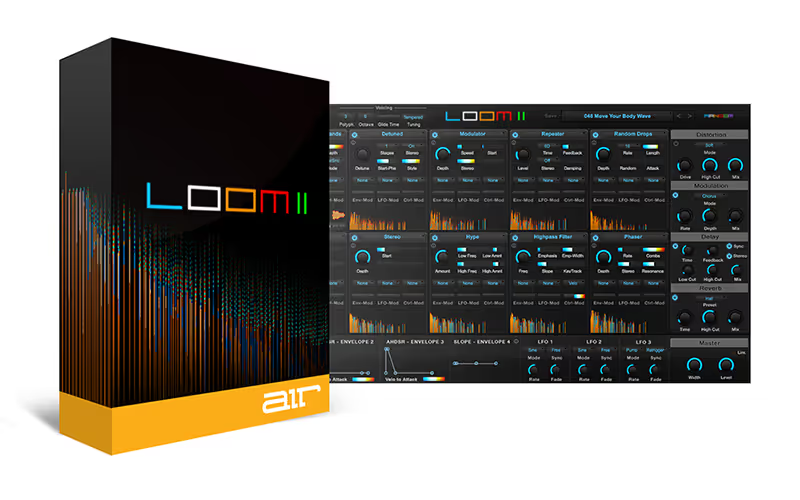
Loom II

Best for Modular Additive

The only dedicated additive rack here, and the one that expects you to already know what a partial is.

Score
7.6
out of 10

How it scored

  • Partial Control 9.6

    Modular harmonic processing, addressed directly. Best on the page.

  • Sound Character 8.8

    Digital chimes and spectral noise, which is what the format is for.

  • Workflow Speed 5.0

    A rack to assemble before anything sounds. Lowest here.

  • CPU Footprint 7.0

    Additive synthesis with a full module chain is not light.

Why we picked it

Best for dedicated additive modularity because the specific visual rack perfectly delivers the massive, recognizable digital chimes required for complex cinematic sound design.

Who should skip it

Avoid if you strictly want a highly simple, one-knob analog subtractive synthesizer that instantly imparts warmth without any deep menu diving.

The good

  • Incredibly precise authentic modular harmonic manipulation
  • Fantastic proprietary spectral noise features
  • Excellent independent visual morph pad capabilities

The bad

  • Highly intimidating interface for complete beginners
  • Can induce decision paralysis during fast tracking
  • Requires iLok account authorization
Format
VST/AU/AAX
Protection
iLok
Price
$99
Why it scored that way

This highly flexible processor remains the absolute best dedicated tool available for surgically tweaking specific harmonic partials for cinematic sound design.

AIR Music Technology Loom II utilizes a highly refined component modeling architecture that allows you to independently connect completely different harmonic manipulation modules in a highly intuitive visual rack. The proprietary spectral noise feature is absolutely fantastic, instantly allowing you to tightly control the chaotic high-frequency metallic ring that often ruins dense acoustic mixes via complex modulation envelopes. I heavily rely on this processor during synthwave sessions because the advanced morph pad instantly creates a massively wide, immersive retro space by interpolating between four completely different harmonic states smoothly.

The sheer density of modular modules and complex algorithmic routing options can easily intimidate beginners who just want a simple one-knob analog lead synth. Despite the steep initial learning curve, it is unquestionably the best surgical additive alternative for engineers who demand absolute tonal control over complex digital sounds. The incredibly transparent routing design ensures your audio remains completely free of unwanted artificial phase issues.

Heard on
Cinematic Producers Various Sound Designers Electronic Artists
Check price $99
03 Sugar Bytes

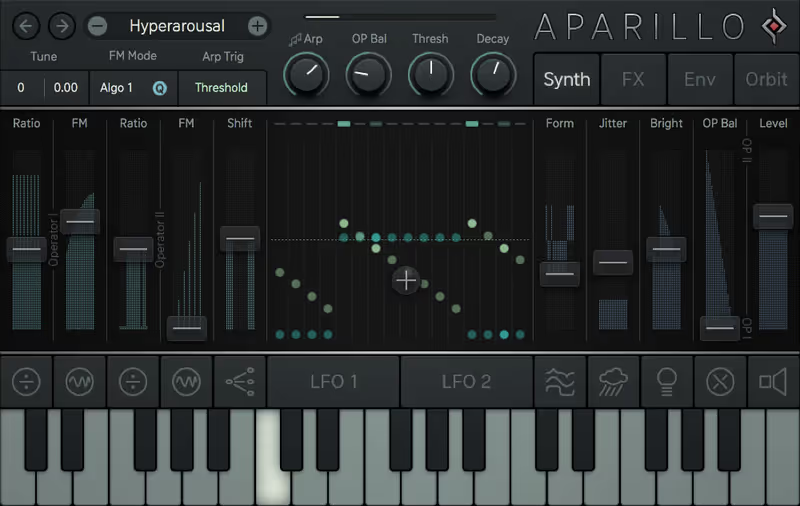
Aparillo

Best for Cinematic Textures

A drone machine wearing an additive engine, which makes it the wrong tool for a riser and the right one for the ten bars underneath it.

Score
7.1
out of 10

How it scored

  • Partial Control 7.0

    The Orbit system modulates in gestures rather than per partial. Lowest here.

  • Sound Character 9.2

    The most cinematic sound on the page. Best here.

  • Workflow Speed 5.5

    Unorthodox enough that presets are the honest starting point.

  • CPU Footprint 6.5

    Sixteen voices of modulated FM, priced accordingly.

Why we picked it

Best for complex cinematic textures because the incredible advanced orbit modulation matrix perfectly provides highly idiosyncratic, evolving drones.

Who should skip it

Avoid if you strictly require highly standard, instantly recognizable analog subtractive interfaces for a completely traditional vintage mix.

The good

  • Incredibly powerful advanced orbit modulation matrix
  • Fantastic integrated cinematic effect section
  • Excellent highly intuitive visual parameter morphing

The bad

  • Highly unconventional obscure visual routing workflow
  • User interface feels incredibly unorthodox
  • Can easily sound overly chaotic on fast melodies
Format
VST/AU/AAX
Protection
Serial Key
Price
$49
Why it scored that way

This multi-operator processor perfectly captures the highly complex, idiosyncratic ambient resonances of classic futuristic electronic music production.

Sugar Bytes Aparillo meticulously models massive internal digital matrices and complex routing circuitry but expands it with a massive, highly intuitive graphical orbit display. The unique ability to simultaneously apply incredibly complex algorithmic modulation directly to the pitch of any voice is absolutely fantastic, instantly carving out aggressive cinematic drones while preserving the bright metallic high-end. I regularly place this directly on my ambient bus because simply running MIDI through the virtual orbits makes the entire mix sound beautifully complex immediately.

The highly eccentric collection of obscure visual parameters can be incredibly confusing for producers who simply want a standard analog subtractive workflow. Regardless of the unconventional workflow, it is the absolute best cinematic alternative for producers needing undeniably massive, unique digital textures quickly. The modeled output effects stage correctly introduces highly desirable modulation even when the synthesis engine is incredibly complex.

Heard on
Cinematic Composers Ambient Mixers Electronic Sound Designers
Check price $49 (was $99)
04 Tracktion

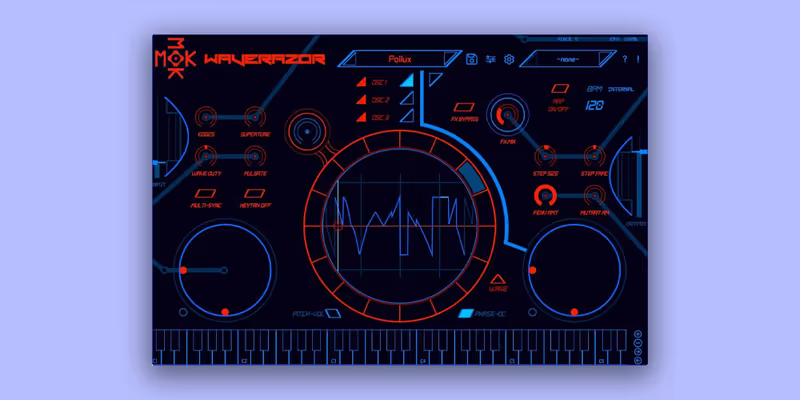
MOK Waverazor

Best for Aggressive Slicing

Wave-slicing rather than additive in any classical sense, which is either a bonus or a category error depending on why you came.

Score
7.0
out of 10

How it scored

  • Partial Control 8.0

    Harmonic content is cut and reassembled rather than dialled in.

  • Sound Character 8.8

    Brutal and metallic, with very little middle ground.

  • Workflow Speed 4.5

    The most unconventional workflow on the page. Lowest here.

  • CPU Footprint 6.5

    Multi-segment oscillators with algorithmic modulation running.

Why we picked it

Best for aggressive wave-slicing because the incredibly complex harmonic modulation perfectly enhances sustained drones into chaotic, brutal textures.

Who should skip it

Avoid if you specifically want highly realistic, completely warm analog subtractive bassline modeling and absolutely despise creative, unnatural digital distortion.

The good

  • Incredibly unique and deeply aggressive wave-slicing modulation system
  • Fantastic integrated algorithmic multi-stage envelope section
  • Excellent expressive visual harmonic morphing

The bad

  • Incapable of standard, straightforward warm analog subtractive bassline modeling
  • Highly modulated effect may completely destroy lead melodies
  • Extremely unconventional workflow requires significant practice
Format
VST/AU/AAX
Protection
Tracktion Manager
Price
$159
Why it scored that way

This collection provides the absolute best, most brutal digital coloration available for sophisticated, highly immersive aggressive electronic mixing tasks.

Tracktion MOK Waverazor perfectly captures the incredibly aggressive, mastering-grade resonance of advanced digital synthesis but expands the harmonic manipulation far beyond traditional additive limitations via its unique wave-slicing system. The integrated algorithmic modulation section is absolutely fantastic, allowing you to instantly create massive, undulating rhythmic beds from a simple sustained MIDI chord by literally splicing completely different waveforms together in a single cycle. I heavily rely on the slice controller feature when mixing delicate ambient drones because it allows for incredibly expressive, smooth harsh parameter morphing during live playback.

Because it focuses entirely on highly extended, deeply aggressive wave-slicing modulation, it is completely incapable of achieving tight, dry, realistic warm analog bassline modeling. Even with this strict limitation, it remains the absolute best creative alternative to standard, boring analog subtractive synthesizers. The incredibly futuristic interface flawlessly visualizes the complex chaotic splices, making it a complete joy to operate during long electronic scoring sessions.

Heard on
Electronic Bass Composers Industrial Sound Designers Psychedelic Producers
Check price $159
05 Native Instruments

Razor

Best for Visual Additive

Additive synthesis with the theory hidden behind a picture, which is why it is the one people actually use.

Score
8.5
out of 10

How it scored

  • Partial Control 8.5

    The 3D display makes partial-level filtering something you aim rather than program.

  • Sound Character 9.0

    Punchy and modern, and it cuts without help.

  • Workflow Speed 8.8

    You can hear what a control does immediately.

  • CPU Footprint 7.5

    Reasonable, and it needs the Reaktor Player runtime.

Why we picked it

Best for modernized visual additive synthesis because the specific 3D display perfectly delivers the massive, aggressive digital punch required for contemporary bass music.

Who should skip it

Avoid if you demand incredibly deep, surgical control over every single physical micro-envelope characteristic of individual sine wave partials.

The good

  • Incredibly punchy and highly accessible 3D visual display
  • Fantastic integrated dynamic additive filter modes
  • Excellent highly intelligible vocoder capabilities

The bad

  • Lacks deep surgical academic micro-envelope parameter controls
  • Requires proprietary Reaktor Player installation
  • Visual interface feels slightly dated by modern 4K standards
Format
Reaktor Player
Protection
Native Access
Price
Check site
Why it scored that way

This highly focused tool provides the absolute best, punchiest modern digital leads available for adding instant cutting edge vibe to massive electronic tracks.

Native Instruments Razor provides an incredibly streamlined interface that focuses entirely on an exceptionally broad, musical 3D spectral display to dramatically simplify additive synthesis. The built-in dynamic filter modes are absolutely fantastic, allowing you to aggressively push individual partials into massive, thunderous digital collisions simply by manipulating the graphical interface. I frequently use the integrated vocoder circuit on sterile vocal leads because it instantly imparts a beautifully rich, highly intelligible robotic saturation character alongside the digital high frequencies.

The intentionally simplistic nature of the spectral display means you have slightly less control over highly specific, surgical micro-envelopes compared to deeply academic modular systems. Even with this extreme lack of surgical individual partial control, it remains an excellent choice for producers who want immediate, modern digital character without needing a mathematics degree. The incredibly massive native preset library allows you to comfortably jump straight into production in a dense session.

Heard on
Electronic Bass Producers Various Dubstep Artists Sound Designers
Read more →

Methodology

Who is this for

Working composers and producers who need reliability, speed, and character for professional scoring tasks.

Our testing process

Where we have tested a product, we do it in actual production scenarios, ranging from rapid sketches to commercial pitches, and we evaluate it in a dense template rather than in isolation. Where we have not, the product card says so and the assessment is drawn from specifications and documented behaviour instead.

Why you should trust us

We buy most reviewed plugins ourselves. Occasionally we receive NFRs for evaluation, but this never guarantees a review or positive verdict. We may earn commissions from links, but our editorial choices are never for sale.

Also considered

For every category, we audition the top 8 to 15 standard options, discarding any that suffer from poor scripting, slow load times, or uninspiring sampling.

Frequently Asked Questions

What is additive synthesis and how does it differ from subtractive?

Additive synthesis builds a sound upward by stacking sine waves, where subtractive starts with a harmonically rich waveform and filters material away. That is why additive is slow to reach a familiar analog tone and unmatched for sounds that have no analog equivalent, such as bells, glass and evolving metallic textures.

Why is additive synthesis so good for risers?

Because you can move each harmonic independently instead of sweeping one filter across all of them. A filter sweep raises everything together and always sounds like a filter, while an additive riser can bring partials in one at a time and change the harmonic content as it climbs, which is what makes a build feel like it is accelerating.

Is additive synthesis heavy on CPU?

It can be, since a patch may run hundreds of oscillators at once. Modern additive plugins mitigate this with spectral processing rather than literal oscillator banks, so the load is more like a good reverb than a hundred synths. Print or freeze the track if you are stacking several instances in a template.

Can an additive synth do warm analog sounds?

Technically yes and rarely well. You can specify a sawtooth exactly by stacking the right partials, and what you cannot easily specify is the drift, filter nonlinearity and saturation that make an analog emulation sound alive. Buy an additive synth for what only it can do and keep a virtual analog for the rest.

Written By

Ewan Clarke

Ewan is a sound designer whose patches have appeared in major wavetable synths and cinematic scoring libraries. A self-confessed modular addict, he bridges the gap between West Coast experimentation and pop-ready polish. He believes every preset should tell a story.

Related Guides

All Guides →

New reviews, no noise

Occasional email when we publish something worth your time. No daily digest, no vendor press releases.

We store only your address, never sell it, and delete it as soon as you unsubscribe. See our privacy policy.