
Best Free Synth VSTs

Free synths stopped being a compromise some years ago. Two of these are genuinely competitive with instruments costing two hundred pounds, and the interesting question is no longer whether they are good enough but which one fits the gap in your template.

The ModWheel Team
By The ModWheel Team Editorial Staff

ModWheel is reader-supported. When you buy through links on this page we may earn an affiliate commission, at no extra cost to you. This never influences which products we recommend, read our testing methodology.

Prices come from the store's own feed and were last checked 8 September 2026. We don't issue discount codes — the price you see is the store's own.

Pick one in 10 seconds

Short version
  • You own no synth at all and want one that covers everything Twelve oscillator algorithms and no paid tier. Nothing here covers more ground. Surge XT
  • You want modern wavetable sound with the shortest learning curve The visual modulation makes it the easiest of these to actually learn. Vital
  • You need a synth that loads instantly on an old laptop Two decades old, tiny, and still the fastest route to a usable patch. TAL-NoiseMaker
  • You want authentic 80s FM and are willing to work for it A DX7 that loads real DX7 cartridges. Nothing else here goes near this sound. Dexed
  • You want u-he build quality without paying u-he prices The same filter engineering as their paid synths, in a smaller instrument. Tyrell N6
  • You want classic analogue filter models and a deep mod matrix Moog Ladder and Korg 35 emulations, 24 voices, fully open source. Odin 2

Compare all 6

Synthesis
Wavetable, spectral warping
Licence
Free tier of a paid product
Formats
VST3, AU, LV2
2. Surge XT Best Value Surge Synth Team
8.5
Synthesis
Hybrid: subtractive, FM, wavetable
Licence
Open source, GPL-3.0
Formats
VST3, AU, CLAP, LV2
3. TAL-NoiseMaker Togu Audio Line
8.0
Synthesis
Virtual analogue, subtractive
Licence
Free release from a paid developer
Formats
VST, VST3, AU, AAX, CLAP
Synthesis
Virtual analogue, subtractive
Licence
Free release from a paid developer
Formats
VST3, CLAP
5. Odin 2 TheWaveWarden
7.5
Synthesis
Virtual analogue, subtractive
Licence
Open source
Formats
VST3, AU, CLAP, LV2
6. Dexed Digital Suburban
6.4
Synthesis
Six-operator FM
Licence
Open source
Formats
VST3, AU

"Free" covers three arrangements here. Open source, under a licence nobody can revoke. A free tier of a commercial product, where the engine is whole but the content library is not. And a free release from a paid developer, permanent but maintained around their commercial work.

None of the three expires or nags, so the distinction looks academic until a cue has to be reopened in three years. That is why maintenance is scored on this page alongside sound, and why the licence sits in the comparison table rather than in a footnote.

Nothing here pays us. A free plugin carries no affiliate link, so every button below points at the developer's own download page. All six were assessed from published specifications and documentation rather than from studio testing, and every card says so.

5 Best Wavetable Synths for Bass Music (2026) covers the paid instruments these are measured against.

Top Picks

01 Matt Tytel Best Overall

Vital

Best for Modern Wavetable

Not tested by us, assessed from specs and documented behaviour

The complete engine is free and only the content library is held back, which makes it the rare free tier that is not a demo. The visual modulation is the reason to start here.

Assessed score
8.4
out of 10

How it scored

  • Sound Quality 9.0

    Spectral warping puts it in the same conversation as instruments costing eighty pounds.

  • Range 8.5

    Three oscillators, two filters and a full modulation matrix, none of it paywalled.

  • Workflow 9.0

    Drag a source onto a control and the connection is drawn. Nothing else here is this legible.

  • Upkeep 7.0

    One developer, and release intervals have been long. Nothing has broken, and nothing moves quickly either.

Why we picked it

Best for anyone learning synthesis, and for modern electronic production where the wavetable sound is the point.

Who should skip it

Skip it if you work from presets rather than building patches, because the free content library is where the tier limit actually bites.

The good

  • Full engine, no feature paywall
  • Clearest modulation display anywhere
  • Excellent modern sound

The bad

  • Free content library is thin
  • Slow release cadence
  • One-developer project
Synthesis
Wavetable, spectral warping
Licence
Free tier of a paid product
Formats
VST3, AU, LV2
Price
Check site
Why it scored that way

The one to install first if you have never used a wavetable synth.

The important thing about Vital's free tier is what it does not remove. All three oscillators, both filters, every effect and the entire modulation matrix are present in the free version. What the paid tiers add is content, meaning more presets, more wavetables, and on the top tier the ability to turn an audio file into a wavetable. The engine is the same instrument at every price.

That distinction decides who should care about the upgrade. A producer who builds patches from scratch is not being restricted by seventy-five presets and twenty-five wavetables, because they were going to replace them anyway. A producer who works from presets will run out quickly, and for them the free tier really is a sampler of a larger product.

What makes it the recommended starting point is not the sound, though the sound is excellent. It is that the modulation is visible: drag a source onto a destination and the routing is drawn on screen, with the amount moving as the sound moves. Modulation is the concept that stops most people learning synthesis, and this is the clearest presentation of it in any instrument at any price.

Playing connects you to YouTube, which may set cookies.

Heard on
Bass Music Pop Production Sound Design
Check price
02 Surge Synth Team Best Value

Surge XT

Best for Everything

Not tested by us, assessed from specs and documented behaviour

Twelve oscillator algorithms, eight filter configurations and nearly three thousand patches, under a licence nobody can revoke. It covers more ground than most paid synths and asks more of you than any of them.

Assessed score
8.5
out of 10

How it scored

  • Sound Quality 8.5

    Strong across every algorithm rather than exceptional at one.

  • Range 9.5

    Subtractive, FM, wavetable, granular-adjacent and physical-modelling oscillators in one instrument.

  • Workflow 6.5

    The depth is the cost. Nothing is hidden, which means nothing is simplified either.

  • Upkeep 9.5

    An active team, frequent releases, and CLAP and Linux support that commercial developers still skip.

Why we picked it

Best for anyone who owns no synth yet and wants one instrument covering every kind of synthesis, MPE and microtuning included.

Who should skip it

Skip it as a first synth if you have never programmed one, because its depth is also what makes it slow to learn.

The good

  • Enormous synthesis range
  • Genuinely no paid tier
  • Actively maintained, CLAP and Linux

The bad

  • Steep learning curve
  • Interface is dense
  • No single signature sound
Synthesis
Hybrid: subtractive, FM, wavetable
Licence
Open source, GPL-3.0
Formats
VST3, AU, CLAP, LV2
Price
Check site
Why it scored that way

The most instrument you can get for nothing.

Surge began as a commercial instrument from Vember Audio and was released as open source when that company stopped selling it. That history explains what it is: not a small free project that grew, but a full commercial synth that a team has been extending for years without needing it to sell.

The specification is the argument. Three oscillators per scene drawing on twelve algorithms (including a plucked-and-bowed string model and a port of a well-known Eurorack macro oscillator) feeding two filter units in eight routing configurations, most of them with feedback. It ships with over two thousand eight hundred patches and seven hundred wavetables, and supports MPE and microtuning, neither of which is common at any price.

The cost is that it simplifies nothing for you. Vital shows you one modulation routing clearly, where Surge gives you more routings and expects you to know which one you want. For someone who already understands synthesis that is the correct trade and the reason this is the most capable instrument on the page. For a beginner it is a great deal of instrument arriving at once, and starting elsewhere is not a mistake.

Playing connects you to YouTube, which may set cookies.
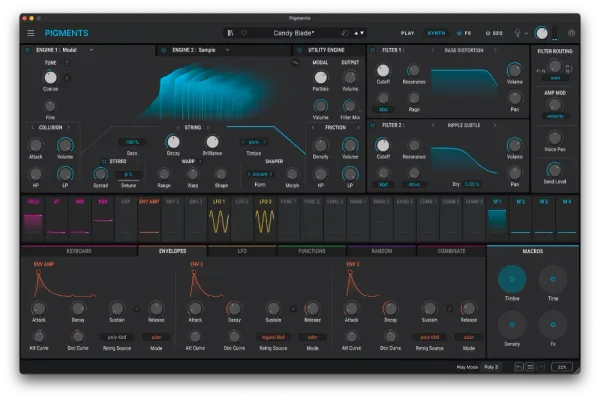
Heard on
Electronic Production Sound Design Linux Studios
Check price
03 Togu Audio Line

TAL-NoiseMaker

Best for Fast Subtractive

Not tested by us, assessed from specs and documented behaviour

Not the most capable synth here and comfortably the fastest to a usable sound. On an old machine or a crowded template it is the one that never becomes the problem.

Assessed score
8.0
out of 10

How it scored

  • Sound Quality 8.0

    Clean virtual analogue with a filter that holds up under resonance.

  • Range 6.0

    Subtractive only. It does one thing and does not pretend otherwise.

  • Workflow 9.5

    One panel, no menus, nothing to discover. Fastest route to a patch on this page.

  • Upkeep 8.5

    Still shipping current formats, and the only synth here with an AAX build.

Why we picked it

Best for older machines, for large templates, and for anyone who wants a dependable subtractive synth without a learning curve.

Who should skip it

Skip it if you want modern wavetable or FM sounds, because it makes no attempt at either.

The good

  • Instant to learn
  • Very light on CPU
  • The only AAX build here

The bad

  • Subtractive only
  • Dated interface
  • No modern synthesis types
Synthesis
Virtual analogue, subtractive
Licence
Free release from a paid developer
Formats
VST, VST3, AU, AAX, CLAP
Price
Check site
Why it scored that way

The one that loads instantly and always works.

NoiseMaker is the oldest instrument here and the one most likely to still be installed on a working machine in ten years. It is a straightforward virtual-analogue synth: oscillators, a filter, envelopes, an arpeggiator and a small effects section, all visible on a single panel with nothing buried behind a menu.

That simplicity is the entire proposition. Every other synth on this page rewards time spent learning it. This one rewards no time at all, because the controls are where a synth's controls have always been, and a usable patch is thirty seconds away whether or not you have used it before.

It matters most in three situations. On an older or lower-powered machine it loads and runs when heavier instruments stutter. On a session that already has a dozen synths open, it is the one you add without thinking about the CPU cost. And it is the only synth on this page with an AAX build, which makes it the single free option here that a Pro Tools room can actually load. None of that is glamorous and all of it comes up constantly.

Playing connects you to YouTube, which may set cookies.
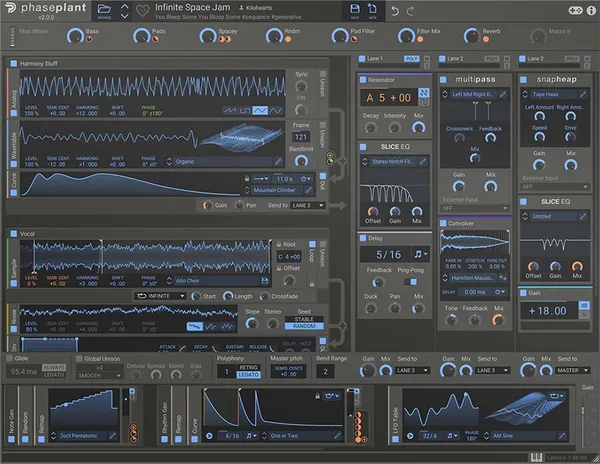
Heard on
Chiptune-Adjacent House Sketching
Check price
04 u-he

Tyrell N6

Best for Analogue Pads

Not tested by us, assessed from specs and documented behaviour

The twin filter is related to an early version of Diva, and that lineage is the reason to install it. After fourteen years at its original home, u-he now hosts it themselves and is actively working on it again.

Assessed score
7.9
out of 10

How it scored

  • Sound Quality 8.5

    The filter behaviour is the reason to install it, and it is better than the price suggests.

  • Range 6.5

    Two oscillators and a sub, aimed squarely at analogue territory.

  • Workflow 8.5

    Conventional analogue layout, so anyone who has used a subtractive synth is already fluent.

  • Upkeep 8.0

    A 2025 beta added CLAP and rebuilt VST3, with MPE named as the next step.

Why we picked it

Best for classic analogue sounds (pads, basses and leads with an audible filter) from the developer whose filters set the reference.

Who should skip it

Skip it if you need MPE today, or if you want anything outside classic subtractive synthesis.

The good

  • u-he filter quality
  • Familiar analogue layout
  • Genuinely free, no tier

The bad

  • Currently a beta release
  • Subtractive only
  • No MPE until the next version
Synthesis
Virtual analogue, subtractive
Licence
Free release from a paid developer
Formats
VST3, CLAP
Price
Check site
Why it scored that way

u-he filter engineering, at no cost.

Tyrell N6 exists because the German magazine Amazona designed a hardware synth that was never built, and u-he offered to make a software version of it on the grounds that most of the proposed features already existed in an early build of Diva. The agreement was that u-he would supply the engine and Amazona would handle everything else, distributing it as freeware, which is what happened for the next fourteen years.

That history is audible in one specific place. The twin filter is described by u-he as related to that early Diva model, and analogue emulation lives or dies on how a filter behaves at high resonance and under fast modulation. This one holds together where cheaper models stair-step or thin out, which is why it sounds more expensive than a free synth has any need to.

The architecture is deliberately narrow: two oscillators, noise, a ring modulator, two host-syncable LFOs and loopable analogue-style envelopes, with no panel switching or menu diving anywhere. u-he now host it directly and shipped a 2025 beta that added CLAP, rebuilt the VST3 implementation and tidied the 580-odd factory presets, with a visual overhaul and MPE named as what comes next.

Playing connects you to YouTube, which may set cookies.
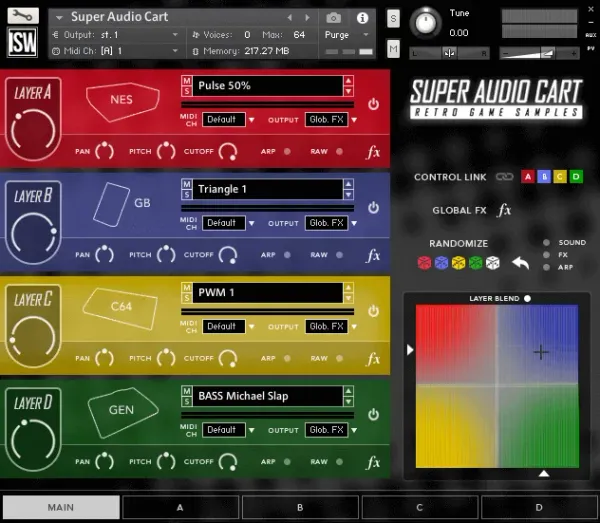
Heard on
Synthwave Ambient Classic Electronic
Check price
05 TheWaveWarden

Odin 2

Best for Analogue Subtractive

Not tested by us, assessed from specs and documented behaviour

The filter section is the reason to install it, because named Moog Ladder and Korg 35 models are usually something you pay for. Twenty-four voices and five effects around them, under a licence nobody can withdraw.

Assessed score
7.5
out of 10

How it scored

  • Sound Quality 7.5

    The filters carry it. The oscillators are competent rather than distinctive.

  • Range 8.0

    Three oscillators with several modes, a deep mod matrix and five effects.

  • Workflow 7.0

    A conventional layout with more routing than the panel comfortably shows.

  • Upkeep 7.5

    Open source with builds for Windows, macOS and two Linux packagings, currently at 2.4.

Why we picked it

Best for producers who want named analogue filter models and a deep modulation matrix without paying for them.

Who should skip it

Skip it if Surge XT already covers what you need, because the two overlap heavily and Surge covers more ground.

The good

  • Named analogue filter emulations
  • Deep modulation matrix
  • Fully open source

The bad

  • Oscillators are unremarkable
  • Overlaps heavily with Surge XT
  • Small team, uncertain roadmap
Synthesis
Virtual analogue, subtractive
Licence
Open source
Formats
VST3, AU, CLAP, LV2
Price
Check site
Why it scored that way

Classic filter models, open source.

Odin 2's pitch is the filter section. Rather than one general-purpose filter it offers emulations of specific circuits (a Moog-style ladder and a Korg 35 among them), which is the sort of thing usually found in paid instruments where the modelling is the product. Twenty-four voices, three oscillators with several mode options each, a substantial modulation matrix and five built-in effects sit around them.

On paper that is close to Surge XT's territory, and in practice the two differ in emphasis rather than in size. Surge covers more kinds of synthesis and presents its filters as algorithms with slopes and variations. Odin concentrates on doing analogue-style subtractive well, and names the circuits it models so the choice is made by reputation rather than by reading a specification sheet.

The caveat is the one that applies to any small open-source project, which is that the release pace depends entirely on the people doing it. Being open source means the code cannot be withdrawn and somebody can always pick it up, and that is a real protection rather than a guarantee of new features. Install it for the filter models it has today, which are the part that would cost money anywhere else.

Playing connects you to YouTube, which may set cookies.

Heard on
Electronic Production Sound Design Linux Studios
Check price
06 Digital Suburban

Dexed

Best for Eighties FM

Not tested by us, assessed from specs and documented behaviour

The narrowest instrument here and the only one that reaches a sound nothing else on this page can. If you want authentic eighties FM, this is not a compromise version of it.

Assessed score
6.4
out of 10

How it scored

  • Sound Quality 8.0

    Faithful to the original, including the parts of it that sound harsh.

  • Range 5.5

    Six-operator FM and nothing else, by design.

  • Workflow 5.0

    FM programming is genuinely difficult, and the interface reproduces the original's logic rather than improving it.

  • Upkeep 7.0

    Open source and stable. The instrument it models has not changed since 1983 either.

Why we picked it

Best for authentic eighties FM sounds, and for anyone who wants to learn FM from the instrument that defined it.

Who should skip it

Skip it as a general-purpose synth, and skip it if you want FM made easy, because it reproduces the original's difficulty along with its sound.

The good

  • Loads original DX7 cartridges
  • Genuinely authentic FM
  • Open source and stable

The bad

  • FM is hard to programme
  • Single synthesis type
  • Interface is unhelpful by design
Synthesis
Six-operator FM
Licence
Open source
Formats
VST3, AU
Price
Check site
Why it scored that way

A DX7 that reads real DX7 cartridges.

Dexed is a close reproduction of the Yamaha DX7, the instrument responsible for a decade of electric pianos, bells and bass sounds on records. Its most useful property is compatibility: it loads original DX7 SysEx cartridges, of which thousands circulate freely, so the entire preset history of the hardware is available to it.

That matters because FM synthesis is hard to programme from scratch. The relationship between an operator's frequency ratio and the resulting timbre is not intuitive in the way that opening a filter is, and a small change to one operator can transform the whole sound rather than adjust it. Starting from a cartridge patch and modifying it is how most people actually get results here.

Everything else about it is narrow on purpose. It does not attempt subtractive or wavetable synthesis, the interface reproduces the original's parameter logic rather than simplifying it, and the sound is faithful enough to include the brittleness people either want specifically or do not want at all. It is the wrong first synth and the right one to have installed.

Playing connects you to YouTube, which may set cookies.

Heard on
Eighties Pop Electric Pianos Retro Bass
Check price
Read more →

Methodology

Who is this for

Working composers and producers who need reliability, speed, and character for professional scoring tasks.

Our testing process

Where we have tested a product, we do it in actual production scenarios, ranging from rapid sketches to commercial pitches, and we evaluate it in a dense template rather than in isolation. Where we have not, the product card says so and the assessment is drawn from specifications and documented behaviour instead.

Why you should trust us

We buy most reviewed plugins ourselves. Occasionally we receive NFRs for evaluation, but this never guarantees a review or positive verdict. We may earn commissions from links, but our editorial choices are never for sale.

Also considered

For every category, we audition the top 8 to 15 standard options, discarding any that suffer from poor scripting, slow load times, or uninspiring sampling.

Frequently Asked Questions

Are free synth VSTs actually good enough for professional work?

Several are. Surge XT was a commercial product before it was released as open source, and Vital's free tier contains the complete engine rather than a reduced one. The gap between the best free synths and mid-priced paid ones is now largely about preset libraries and support rather than sound quality.

What is the catch with a free synth?

It depends which kind of free it is. Open-source instruments have no catch and cannot be withdrawn. A free tier withholds content, so you may run out of presets. A free release from a commercial developer is maintained at whatever pace their paid products allow, which usually means slowly. None of the plugins here expire, nag or require an account to keep working.

Which free synth should I install first?

Vital if you are new to synthesis, because its modulation display is the clearest explanation of the concept in any instrument at any price. Surge XT if you already understand synthesis and want the instrument that covers the most ground.

Do free synths work in every DAW?

All six ship VST3, and every one except Dexed also ships CLAP. macOS builds are AU where the developer provides one. Pro Tools is the awkward case, because it loads AAX only, and an AAX build requires a developer agreement with Avid that most open-source projects have no route to. TAL-NoiseMaker is the one here that ships AAX, which makes it the default free synth for a Pro Tools room.

Will a free synth stop working after an OS update?

This is the real risk and it varies by licence. Open-source projects with an active team, like Surge XT, tend to be quick to rebuild for new systems. A free release from a commercial developer is rebuilt when that developer gets to it. An abandoned project may simply stop loading, which is why maintenance is scored on this page alongside sound.

Written By

The ModWheel Team

The ModWheel editorial team is a collective of composers, producers, and sound designers. We collaborate to bring you comprehensive guides, industry news, and curated lists that represent our shared expertise and passion for music technology.

Related Guides

All Guides →

New reviews, no noise

Occasional email when we publish something worth your time. No daily digest, no vendor press releases.

We store only your address, never sell it, and delete it as soon as you unsubscribe. See our privacy policy.