IK Multimedia · Review

IK Multimedia Lurssen Mastering Console Review

A model of one mastering room's chain, with the decisions already made. What the Chain view actually lets you reach, and why a composer might want a plugin they cannot rebuild.

Verdict

Worth it if mastering is a task you resent rather than a craft you are building. It reaches a released-sounding result faster than anything else in the category and the shape of its chain is not yours to change. For a composer sending cues to a director, that constraint is the feature.

Playing connects you to YouTube, which may set cookies.

Audiofanzine's tour of the console's presets, processing chain and EQ, with before-and-after demos on EDM, rock and acoustic material. “Lurssen Mastering Console Tour” by Audiofanzine in English, on YouTube. Playing it loads the video from Google.

ModWheel is reader-supported. When you buy through links on this page we may earn an affiliate commission, at no extra cost to you. This never influences which products we recommend, read our testing methodology.

01 IK Multimedia Best Value

Lurssen Mastering Console

Best for Quick Mastering

Not tested by us, assessed from specs and documented behaviour

A finished-sounding master in thirty seconds, and a chain you can look inside but not rebuild.

Assessed score
6.5
out of 10

How it scored

  • Transparency 6.0

    Colour is the product. It sounds like a chain, not like nothing.

  • Loudness Control 7.5

    Competitive level, arrived at by Style rather than by decision.

  • Workflow Speed 9.6

    Style, input drive, one macro EQ. Best here by a distance.

  • Flexibility 3.0

    Chain view reaches some parameters. Nothing can be reordered or swapped.

Why we picked it

Best for composers who master their own cues, resent doing it, and are judged on the music rather than the master.

Who should skip it

Skip it if you want to build mastering as a skill, because the ceiling here is fixed at the level of somebody else's chain.

The good

  • Released sound in under a minute
  • Chain view opens the hood
  • Cheapest bundle on this page

The bad

  • Chain order cannot be changed
  • Modules cannot be swapped out
  • Voiced for records, not cues
Format
VST/AU/AAX
Protection
IK Product Manager
Chain
Fixed order, settings editable
Price
$99
Why it scored that way

One room's chain, in the order that room uses it. The controls you get are three, and that is the product.

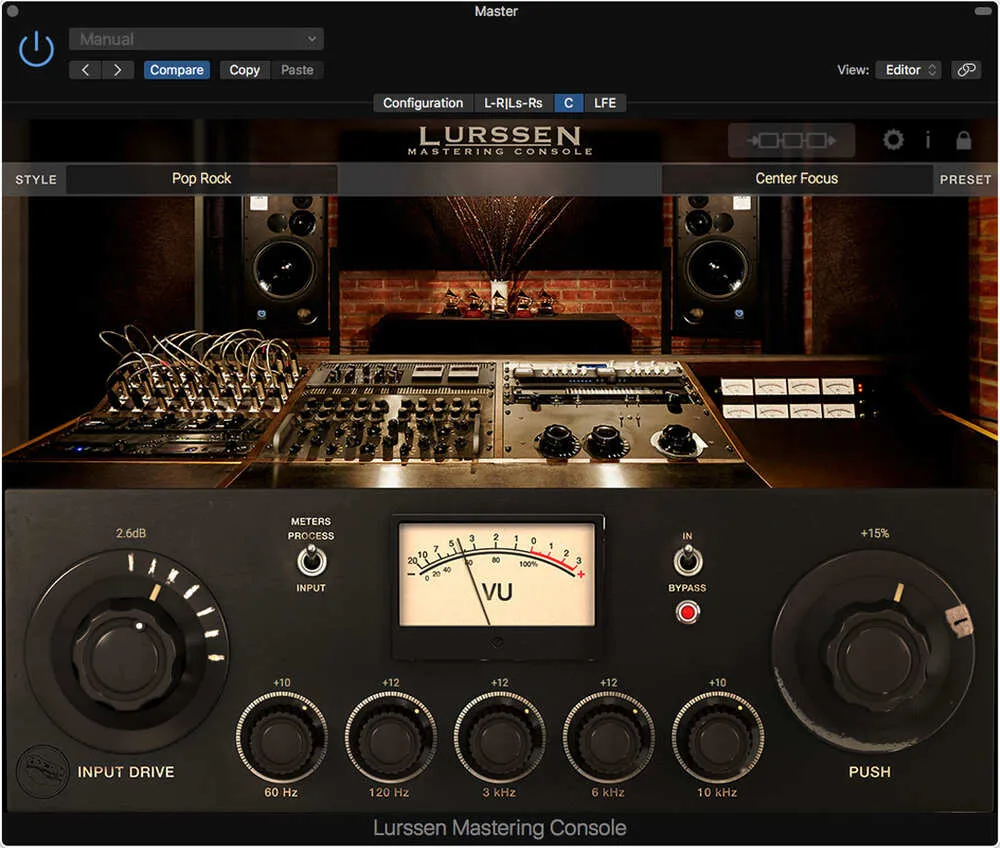
This models the chain used by Gavin Lurssen and Reuben Cohen at their mastering room in Los Angeles. The modelled units are a tube equaliser, a solid state equaliser, two tube limiters, a solid state de-esser and a solid state compressor, running in the order that room runs them. Three controls reach them: an input drive, a five band equaliser on fixed frequencies, and a Push control that nudges those bands together.

The order is the product rather than the processors. Six units of this kind are available from any developer, and what is being sold here is which one comes first and roughly where each sits, which is the part that takes a career to learn rather than an afternoon. Forty Styles configure the whole chain for different kinds of material, and choosing between them is most of the work.

The chain is not the sealed box it is often described as. A Chain view shows the individual modelled units and lets some of their settings be altered and saved back as a custom Style. What it will not do is let you reorder them, remove one, or put a plugin of your own in the middle.

Two things go wrong on orchestral material specifically. The chain was voiced for records, so on a dense cue with low brass it can add mid range weight that was not needed, and the Styles built for rock are actively unhelpful there. It also produces something that sounds released before you have checked whether it is correct, which is a real hazard on a cue that has to serve a picture rather than a playlist.

Heard on
Client Demos Library Music Songwriting

Price history and lowest recorded price

Check price $99

Most mastering software sells you control. This sells you the absence of it, which sounds like a joke until you have spent an evening moving a multiband threshold back and forth and delivered something worse than where you started.

What it actually models

The plugin recreates the chain used by Gavin Lurssen and Reuben Cohen at their mastering room in Los Angeles. The modelled units are a tube equaliser, a solid state equaliser, two tube limiters, a solid state de-esser and a solid state compressor, in the order that room uses them.

That last part is the product. Anyone can sell you six processors. What is being sold here is the order and the settings, which is the part that takes twenty years to learn.

The controls you get

Three things in the main view. An input drive, a five band equaliser with fixed frequencies, and a Push control that nudges those bands together rather than individually. Forty Styles set the chain up for different kinds of material.

That is genuinely all of it, and the constraint is deliberate. There is no threshold to get wrong because you are not shown one.

What Chain view reaches

The chain is not the sealed box it is often described as. A Chain view shows the individual modelled units and lets some of their settings be altered, with the result saved back as a custom Style, so a composer who finds the compressor working too hard on sustained brass has somewhere to go.

What it will not do is let you reorder the units, remove one, or put a plugin of your own in the middle. The shape stays somebody else’s, and that is the honest limit rather than the marketing one.

Where it goes wrong

The chain was voiced for records. On dense orchestral material it can add mid range weight that a cue with a full string section and low brass did not need, and the Styles that suit a rock mix are actively unhelpful there. Working through the classical and jazz Styles first saves a lot of confusion.

It also produces a result that sounds finished before you have checked whether it is correct, which is a real hazard. Something that sounds released is not the same as something that serves the picture, and this plugin is very good at the first.

Specs

TypeModelled fixed-order mastering chain
Modelled unitsTwo EQs, two tube limiters, de-esser, compressor
Styles40, editable and saveable
FormatsVST2, VST3, AU, AAX, plus standalone
Internal processing88.2 and 96kHz

Who should buy it

Composers who master their own cues, do not enjoy it, and are judged on the music rather than on the master. This does the job in under a minute and removes an evening of second-guessing from every delivery.

Anyone building mastering as a skill should buy tools instead. The ceiling here is fixed at the level of the chain, which is a high ceiling and not one you will ever raise, and the mastering bundle roundup covers the options that let you go further at the cost of learning how.

Written By

Louis Raveton

Louis works across immersive scores (Venice Biennale, LVMH) and animation (Canal+), while producing Downtempo and Electro-Dub as Monsieur Shwill and Flagada. He treats his sample drive like a record collection, constantly hunting for the perfect 'imperfect' texture

Related Guides

All Guides →

New reviews, no noise

Occasional email when we publish something worth your time. No daily digest, no vendor press releases.

We store only your address, never sell it, and delete it as soon as you unsubscribe. See our privacy policy.