

4 Best Transparent Mastering Compressors (2026)

If your mastering compressor adds thick, gooey distortion to a pristine classical recording, it has completely failed.

Henry Foster
By Henry Foster Mixing Engineer & Studio Tech

ModWheel is reader-supported. When you buy through links on this page we may earn an affiliate commission, at no extra cost to you. This never influences which products we recommend, read our testing methodology.

Prices come from the store's own feed and were last checked 8 September 2026. We don't issue discount codes — the price you see is the store's own.

Pick one in 10 seconds

Short version

Compare all 4

Protection
iLok
Pro-C 3
2. Pro-C 3 FabFilter
9.1
Protection
Serial Key
Protection
iLok
Weiss DS1-MK3 8.0
Protection
iLok

Finding the best transparent mastering compressors is a critical task for engineers who need absolute dynamic control without altering a mix's fundamental tone. Vintage analog emulations often impart heavy harmonic distortion and aggressive pumping, which can entirely ruin an already perfectly balanced acoustic recording. The top digital mastering compressors utilize advanced, surgical algorithms to gently tame rogue peaks while remaining completely invisible to the listener.

You need a highly precise tool capable of executing complex dynamic adjustments without smearing the delicate transient details of a high-resolution mix. A transparent digital processor replaces the need for massive racks of expensive, inherently noisy outboard hardware. The right tool depends heavily on your workflow, such as requiring advanced mid-side routing options or perfectly modeled, artifact-free gain reduction circuits.

Mastering compression and mix-bus compression ask different things of the same circuit. Our Best Bus Compressors (2026): The 'Glue' roundup covers the mix-bus job.

Top Picks

01 Softube

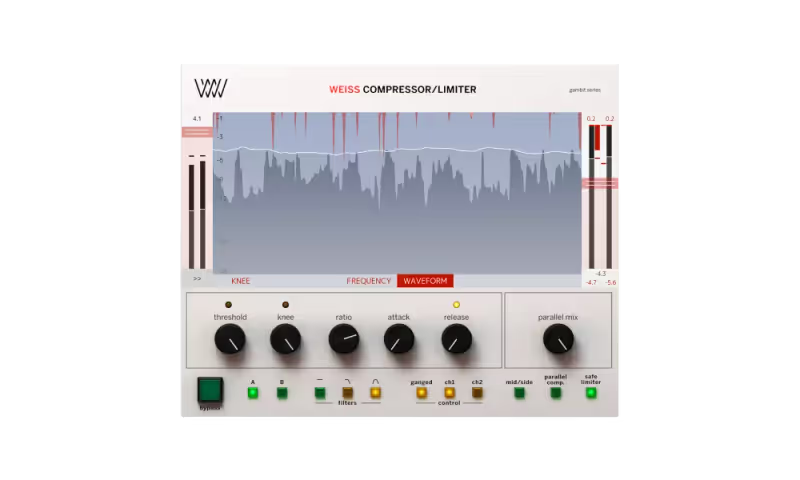
Weiss Compressor/Limiter

Best for Elite Mastering

Invisible leveling at a price that assumes you bill for this, which is exactly who it is for.

Score
8.3
out of 10

How it scored

  • Transparency 9.5

    Audible only as the absence of the problem you loaded it for.

  • Leveling Accuracy 9.0

    Holds a dynamic orchestral take without breathing on the tails.

  • Workflow Speed 7.5

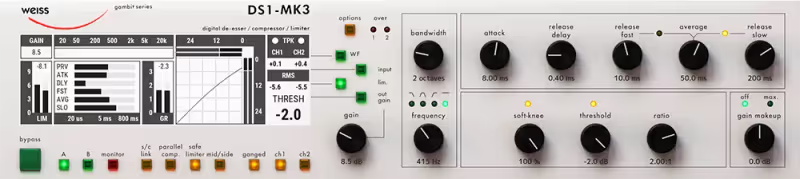
    A focused control set, laid out at original hardware scale.

  • Metering & Control 7.0

    Functional readouts rather than the analysis a modern plugin gives you.

Why we picked it

Best for professional mastering engineers because it utilizes the exact digital code ported directly from legendary hardware units.

Who should skip it

Avoid if you are a casual hobbyist who cannot justify spending nearly three hundred dollars on a single digital compressor.

The good

  • Exact 1:1 code port of legendary hardware
  • Unmatched transparent dynamic processing
  • Incredibly surgical parameter controls

The bad

  • Extremely expensive premium price tag
  • Interface screens feel slightly cramped
  • Requires iLok account authorization
Format
VST/AU/AAX
Protection
iLok
Price
$299
Why it scored that way

Softube literally ported the exact source code from the transparent digital hardware used in world-class mastering facilities.

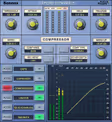
The Weiss Compressor/Limiter provides the absolute pinnacle of transparent digital dynamic processing, utilizing the exact algorithms found in the legendary hardware counterpart. The incredibly surgical parameters allow you to smoothly tame harsh vocal sibilance and aggressive cymbals without dulling the entire master bus whatsoever. I constantly rely on this plugin when mastering pristine acoustic pop tracks because it provides massive dynamic control while remaining entirely invisible.

The premium price tag makes this processor entirely inaccessible for casual bedroom producers and hobbyists on a tight budget. Despite the massive financial barrier, it is the absolute best FabFilter alternative if you demand the exact tools used by elite professional mastering engineers. The interface is visually identical to the original hardware screens, which provides a highly focused, distraction-free workflow.
Heard on
Bob Katz Bernie Grundman Sterling Sound
Check price $299
02 FabFilter

Pro-C 3

Best for Transparent Dynamics

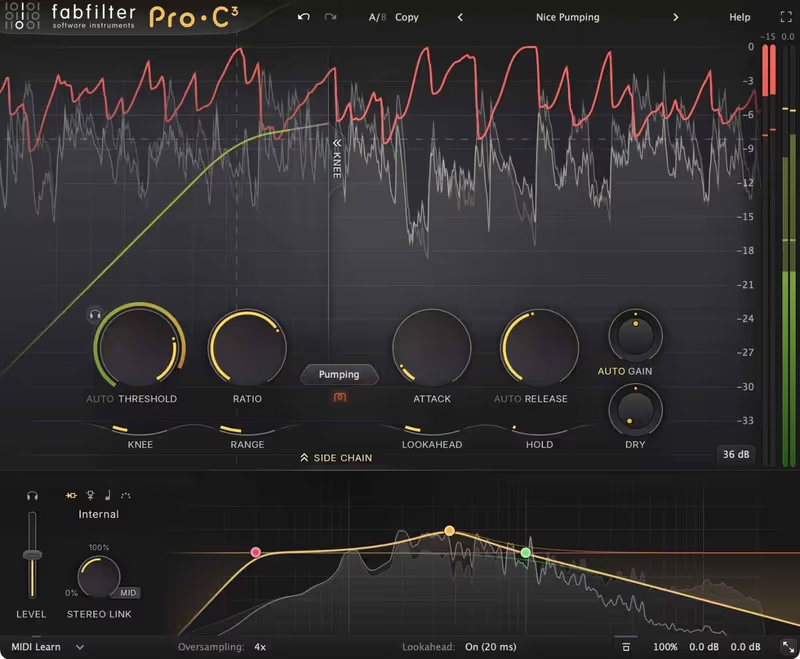
The most legible compressor here and the one that shows its working, which matters more than the last half decibel of transparency.

Score
9.1
out of 10

How it scored

  • Transparency 9.2

    The Mastering style levels without pumping on dense material.

  • Leveling Accuracy 8.8

    Eight styles covering everything from gentle riding to hard control.

  • Workflow Speed 9.0

    Vector interface, resizable, with the sidechain section a click away. Best here.

  • Metering & Control 9.5

    You watch the reduction against the waveform. Nothing else here does that.

Why we picked it

Best for transparent dynamic leveling because the incredibly clean algorithms allow you to control peaks without introducing analog coloration.

Who should skip it

Avoid if your primary goal is adding heavy vintage saturation, tube warmth, or tape compression to a sterile digital mix.

The good

  • Eight highly distinct compression styles
  • Incredibly transparent processing algorithms
  • Brilliant, resizable vector user interface

The bad

  • Provides zero analog warmth or color
  • Can feel slightly clinical or sterile
  • Sidechain EQ can be overly complex
Format
VST/AU/AAX
Protection
Serial Key
Price
$199
Why it scored that way

FabFilter provides the absolute benchmark for surgical, transparent digital dynamic processing.

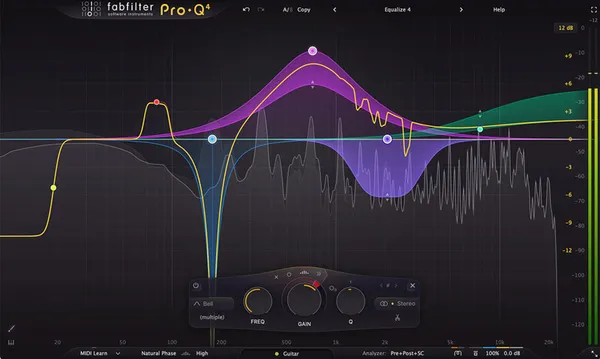
Our testing here was done on Pro-C 2, which FabFilter has since replaced with Pro-C 3, and the new version has not been through the same work. What follows is an assessment of the line rather than of the update. It focuses entirely on transparent, artifact-free gain reduction. The dedicated Mastering compression style is absolutely phenomenal, gently riding the dynamics of a dense mix without introducing any aggressive pumping or unnatural breathing artifacts. I use this plugin almost exclusively when I need to delicately level a highly dynamic orchestral recording without coloring the pristine acoustic environment.

Because it is so relentlessly transparent, it is completely useless if you want to add thick, gooey analog warmth to a sterile electronic mix. Despite this intentional lack of color, it remains the absolute best modern alternative to bloated analog emulation plugins. The intuitive, resizable vector interface makes incredibly precise knee and sidechain adjustments absolutely effortless.

Heard on
Dave Pensado Skrillex Ian Kirkpatrick
Check price $199
03 Sonnox

Oxford Dynamics

Best for Surgical Dynamics

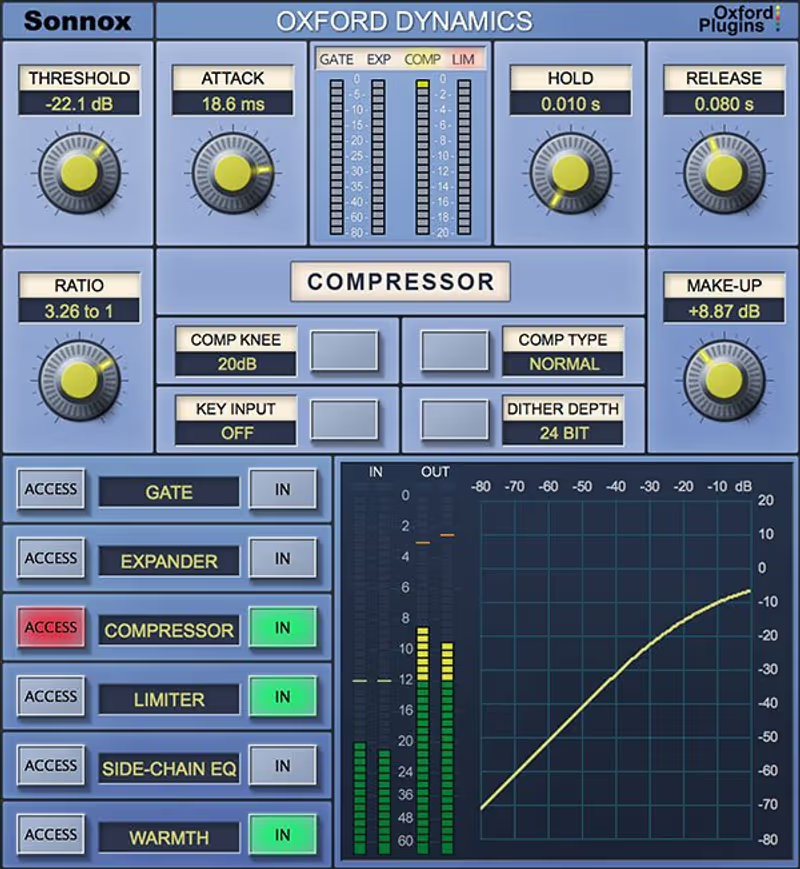
Four processors in one window, aimed by an interface that has not been redrawn since the console it came from.

Score
7.5
out of 10

How it scored

  • Transparency 9.0

    Sonnox algorithms, with a warmth circuit you can leave off.

  • Leveling Accuracy 8.8

    Sidechain EQ restricts the processing to the band causing the problem.

  • Workflow Speed 6.5

    Utilitarian and dated, which slows down every pass.

  • Metering & Control 5.5

    No modern feedback graphs at all. Lowest on the page.

Why we picked it

Best for surgical digital precision because the algorithms were ported directly from elite, million-dollar hardware mixing consoles.

Who should skip it

Avoid if you demand highly animated, photorealistic vector interfaces with constantly moving visual feedback graphs.

The good

  • Uncompromising digital precision
  • Includes gate, expander, and limiter
  • Excellent subtle harmonic warmth circuit

The bad

  • Interface looks incredibly dated
  • Lacks modern visual feedback graphs
  • Requires iLok account authorization
Format
VST/AU/AAX
Protection
iLok
Price
$270
Why it scored that way

Oxford Dynamics is the absolute definition of surgical, high-end digital precision.

The Sonnox Oxford Dynamics plugin provides the exact, ultra-precise dynamic control algorithms found in the legendary million-dollar Sony Oxford digital consoles. The plugin features an incredibly transparent compressor, gate, expander, and a highly musical warmth circuit that adds subtle harmonic excitement without obvious distortion. I constantly use this tool when mastering overly dynamic acoustic tracks because it controls the peaks flawlessly without smearing the delicate reverb tails.

The user interface is completely utilitarian and looks incredibly dated compared to modern, highly animated vector plugins like FabFilter. Despite the archaic visuals, it remains an absolutely essential alternative for engineers who demand uncompromising, surgical digital precision. The ability to completely isolate the dynamic processing to specific frequency bands using the sidechain EQ is exceptionally powerful.

Heard on
Paul Epworth Andy Wallace Peter Gabriel
Check price $270
04 Softube

Weiss DS1-MK3

Best for Surgical De-essing

The best de-esser here that is not sold as a de-esser, and the most expensive way to solve one problem.

Score
8.0
out of 10

How it scored

  • Transparency 9.4

    Band-selective reduction that leaves the rest of the master alone.

  • Leveling Accuracy 9.2

    Catches sibilance and cymbal peaks without dulling the top. Best here.

  • Workflow Speed 7.0

    The same hardware-scale screens, with more parameters behind them.

  • Metering & Control 6.5

    Enough to work from, and no more than that.

Why we picked it

Best for surgical de-essing and transparent mastering because it utilizes the exact digital code ported directly from legendary hardware.

Who should skip it

Avoid if you are a casual hobbyist who cannot justify spending over five hundred dollars on a single plugin.

The good

  • Exact 1:1 code port of legendary hardware
  • Unmatched transparent dynamic processing
  • Incredibly surgical band-selective compression

The bad

  • Extremely expensive premium price tag
  • Interface screens feel slightly cramped
  • Requires iLok account authorization
Format
VST/AU/AAX
Protection
iLok
Price
$549
Why it scored that way

The DS1-MK3 is arguably the most famous and highly respected digital mastering compressor in audio history.

The Softube Weiss DS1-MK3 provides the absolute benchmark for surgical, transparent dynamic processing, utilizing the exact code from the hardware original. The band-selective compression is absolutely phenomenal, allowing you to smoothly tame harsh vocal sibilance and aggressive cymbals without dulling the entire master bus whatsoever. I constantly rely on this plugin when mastering problematic acoustic tracks because it provides massive dynamic control while remaining entirely invisible to the listener.

Similar to the standard Weiss Compressor/Limiter, the extreme premium price tag makes this processor entirely inaccessible for casual bedroom producers. Despite the massive financial barrier, it is the absolute best de-essing alternative if you demand the exact tools used by elite professional mastering engineers. The interface is visually identical to the original hardware screens, providing a highly focused, distraction-free workflow.

Heard on
Bob Katz Bernie Grundman Sterling Sound
Check price $549
Read more →

Methodology

Who is this for

Working composers and producers who need reliability, speed, and character for professional scoring tasks.

Our testing process

Where we have tested a product, we do it in actual production scenarios, ranging from rapid sketches to commercial pitches, and we evaluate it in a dense template rather than in isolation. Where we have not, the product card says so and the assessment is drawn from specifications and documented behaviour instead.

Why you should trust us

We buy most reviewed plugins ourselves. Occasionally we receive NFRs for evaluation, but this never guarantees a review or positive verdict. We may earn commissions from links, but our editorial choices are never for sale.

Also considered

For every category, we audition the top 8 to 15 standard options, discarding any that suffer from poor scripting, slow load times, or uninspiring sampling.

Frequently Asked Questions

How much compression belongs on a master?

One to two decibels of gain reduction at the loudest moments is the usual answer. The job at this stage is cohesion rather than control, so the compressor should be doing something you notice when you bypass it and nothing you notice when it is on. If you need more than three decibels, the mix is asking for the fix instead.

What does transparent actually mean here?

That the compressor changes level without changing tone or character. A coloured compressor adds harmonics and shifts the balance as it works, which is desirable on a drum bus and a liability on a finished master. Transparency is why these units cost what they do, since making a compressor do nothing audible is harder than making it sound like something.

Do I need a compressor and a limiter on the master?

They do different jobs, so usually yes. The compressor works on the overall dynamic shape across seconds, while the limiter catches individual peaks in milliseconds so nothing clips. Trying to make one do both means either the peaks survive or the music gets squashed.

Why does my master sound flat after compression?

You have removed the macro dynamics rather than the peaks. A master compressor with a long attack and a slow release evens out the difference between the quiet section and the loud one, which is exactly the contrast that made the arrangement work. Shorten the release, reduce the amount, and let the chorus be louder than the verse.

Written By

Henry Foster

Henry is a mixing engineer with a background in broadcast and post-production. He obsesses over signal flow, gain staging, and the subtle coloration of analog-modeled plugins. His reviews focus on technical precision, CPU efficiency, and UI workflow.

Related Guides

All Guides →

New reviews, no noise

Occasional email when we publish something worth your time. No daily digest, no vendor press releases.

We store only your address, never sell it, and delete it as soon as you unsubscribe. See our privacy policy.