Head to head

Diva vs MASSIVE X

u-he Diva and Native Instruments MASSIVE X compared on sound, CPU cost and interface clarity, with a straight answer on which belongs in your template.

The short answer

Buy Diva for analog character and anything that needs to sound played rather than programmed. Buy MASSIVE X for heavy modern bass that has to cut through a dense electronic mix. They are not really competitors.

ModWheel is reader-supported. When you buy through links on this page we may earn an affiliate commission, at no extra cost to you. This never influences which products we recommend, read our testing methodology.

Compare all 2

Diva
1. Diva u-he #4 bestseller at Plugin Boutique
7.6
$119 $179 View price
MASSIVE X
2. MASSIVE X Native Instruments
7.2

These two get compared constantly, and mostly by people choosing a first serious synth. The honest answer is that they solve different problems and the comparison only matters if your budget forces a choice.

Sound

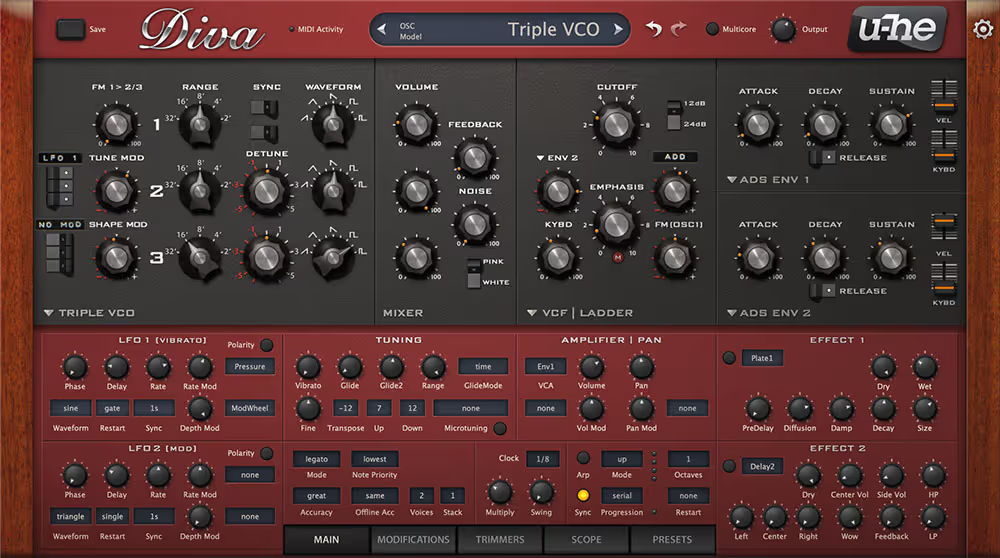
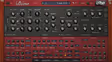
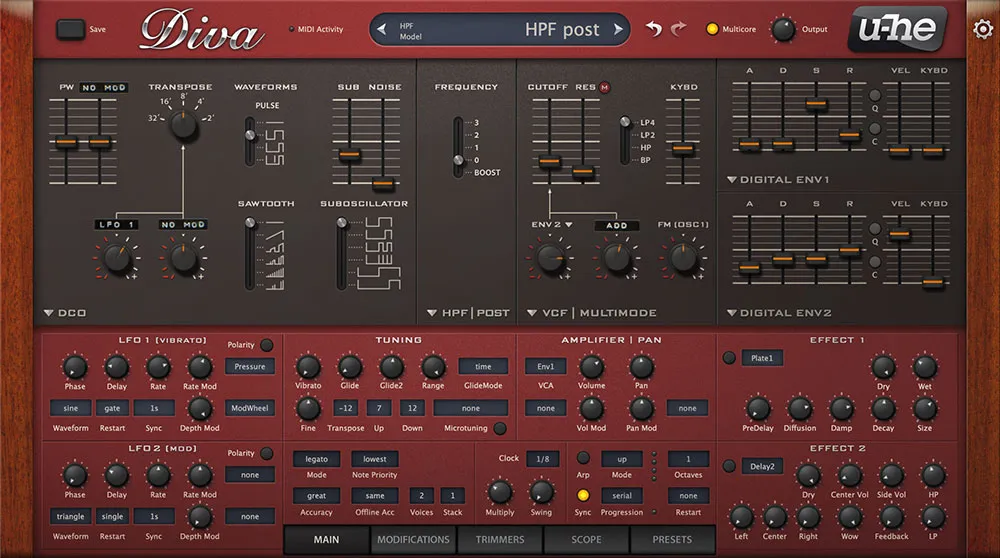
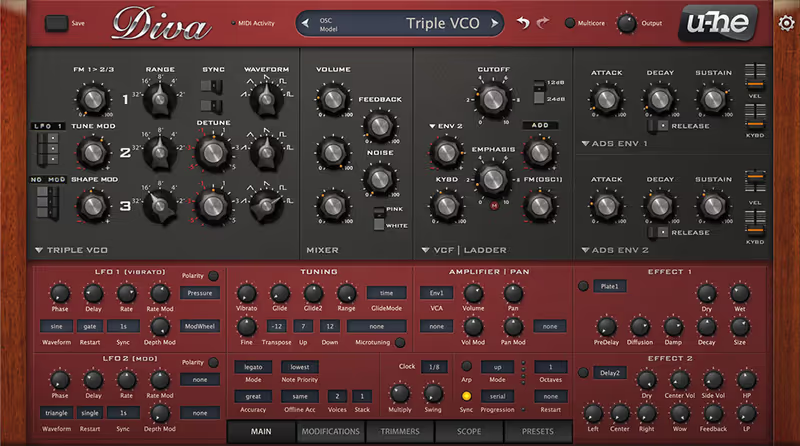
Diva is the best analog emulation available. The zero-delay feedback filters handle rapid modulation without stair-stepping, and the mix-and-match design lets you route a Moog-style oscillator through a Roland Juno filter, which no physical instrument can do because on hardware those parts are soldered together.

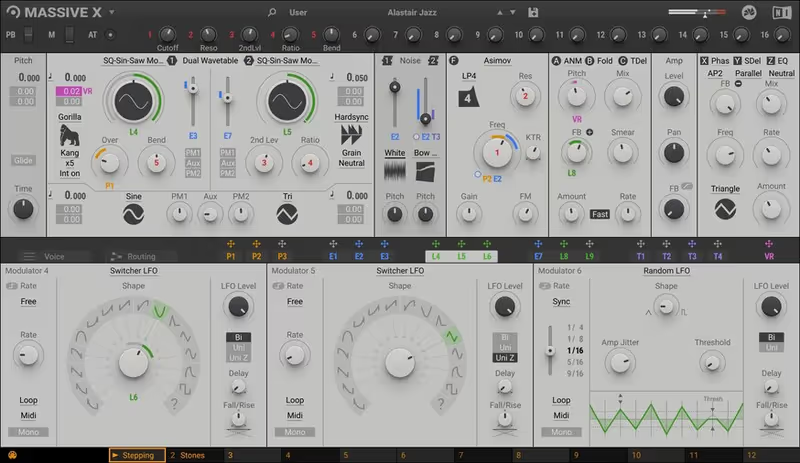
MASSIVE X is not trying to be analog. Its oscillators are noticeably thicker than most competing wavetable synths, and it sits in a dense modern mix without needing help. For mid-bass growls it is the stronger instrument, and that is a real strength rather than a consolation.

Interface

Diva is straightforward, because it models instruments people already understand.

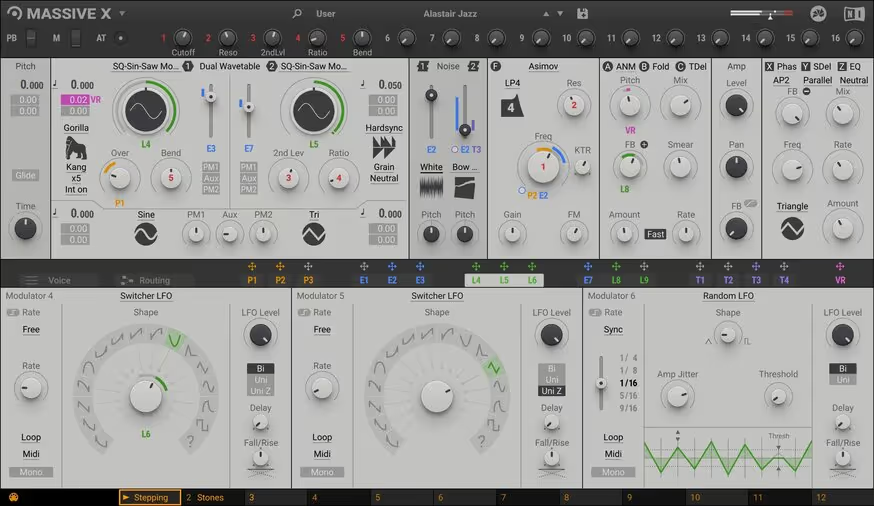
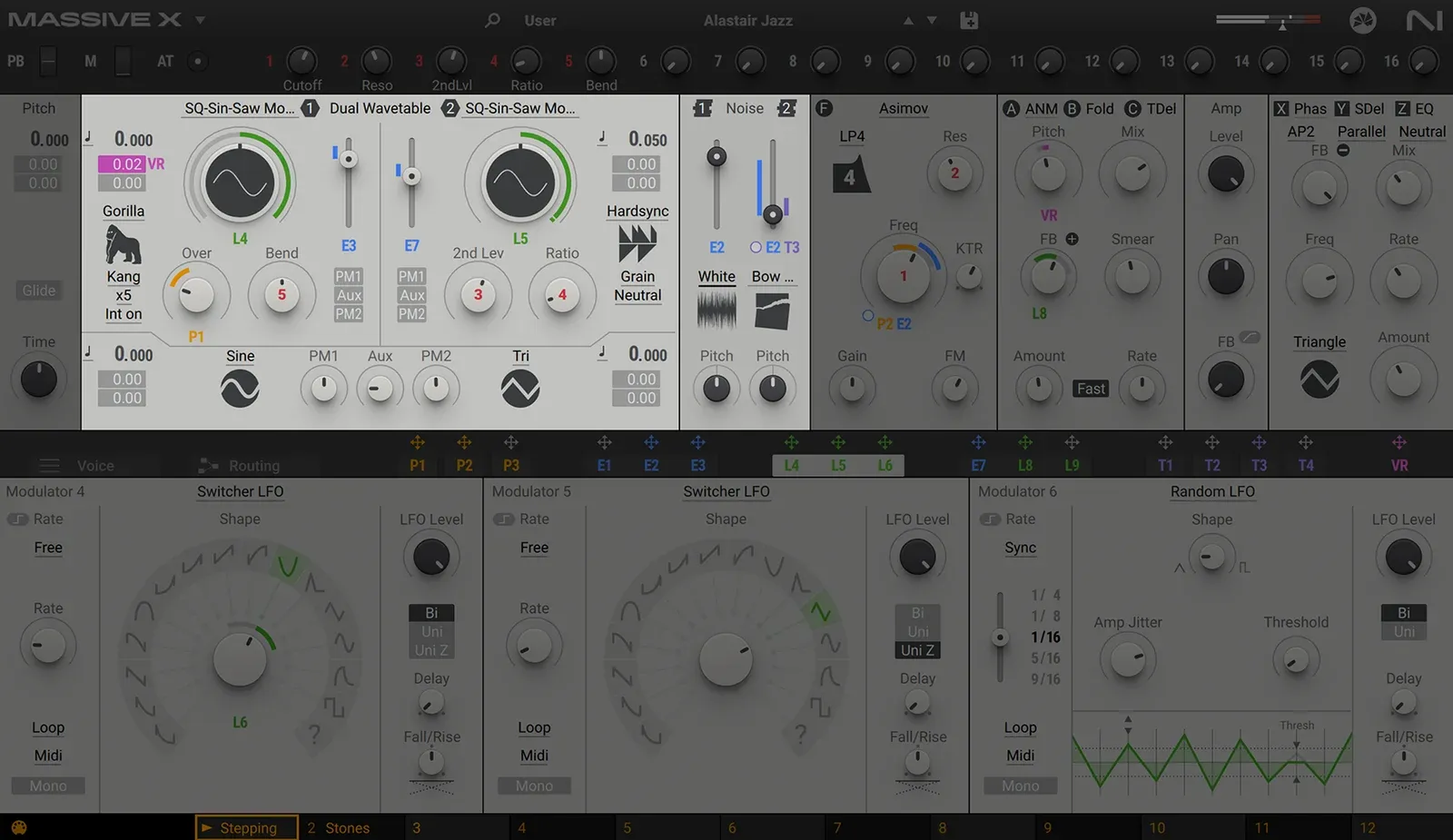
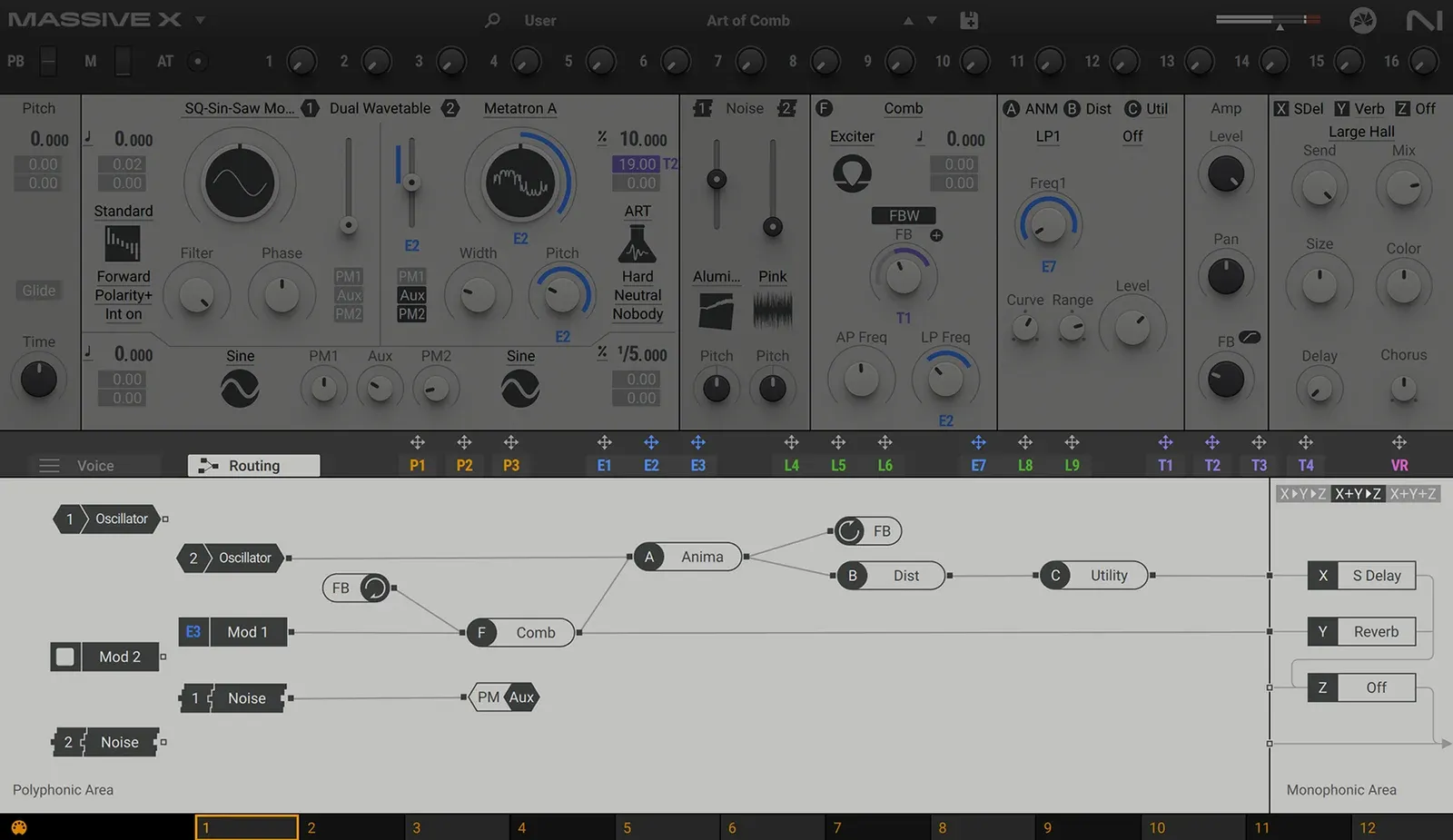
MASSIVE X is the weak point. The visual routing is convoluted and lacks the immediate clarity of its predecessor, and mastering the signal flow takes real time that teaches you nothing transferable. The performer envelopes and voice routing are powerful once you get there. Getting there is the problem.

CPU

This used to be Diva’s defining flaw. On Apple Silicon it largely is not: multiple polyphonic instances at full quality now run on a MacBook Air. On Windows and Intel the old caveat holds, and Divine mode remains expensive.

MASSIVE X is the easier neighbour on a loaded template.

Side by side

DivaMASSIVE X
CharacterAnalog, warmModern, thick, aggressive
Best atPads, leads, anything playedMid-bass, rhythmic basslines
InterfaceFamiliar and clearConvoluted routing
CPUHeavy, except on Apple SiliconManageable
Learning curveShallowSteep, and not transferable

Which one

If you write anything acoustic-adjacent, cinematic or synthwave, Diva. It is also the better long-term purchase because what it teaches you is how analog synthesis behaves.

If you write bass-forward electronic music and need weight in a crowded mix, MASSIVE X.

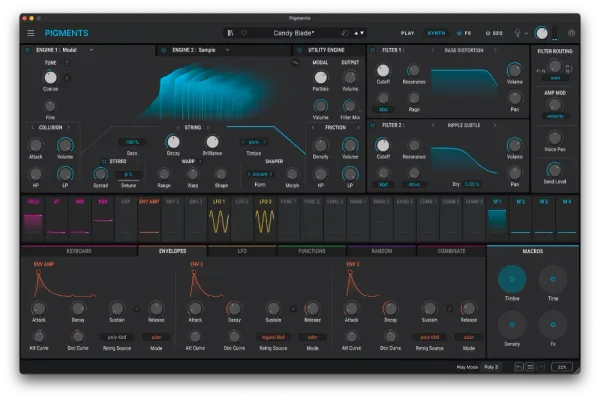
If you are choosing a first synth and neither description fits precisely, look at Pigments instead. It is easier to learn than either and covers more ground.

01 u-he

Diva

Best for Everything

Tested in our studio

#4 bestseller at Plugin Boutique

Still the best-sounding virtual analogue there is, and the CPU bill is the honest price of that filter modelling.

Tested score
7.6
out of 10

How it scored

  • Sound Design Range 9.2

    Mix-and-match modules cover three manufacturers convincingly.

  • Preset Quality 8.5

    Strong factory bank that shows the engine off properly.

  • CPU Footprint 4.5

    Notoriously hungry, and Divine mode is punishing. Worst here.

  • Modulation Depth 8.0

    Deep, though the routing takes a while to internalise.

Why we picked it

The absolute best choice for producers who want one synth to rule them all. It covers Moog, Roland, and Korg styles flawlessly.

Who should skip it

Avoid if you have an older computer. Diva is notoriously hungry for CPU cycles, especially in 'Divine' mode.

The good

  • Unmatched sound quality
  • Mix-and-match modules
  • Beautiful UI

The bad

  • CPU heavy
  • Complex routing
  • Interface is small
Engine
VST/AU/AAX
Type
Virtual Analog
Size
200 MB
Price
$119
Why it scored that way

Diva stands for 'Dinosaur Impersonating Virtual Analogue'.

Diva is widely considered the best sounding analog emulation on the market, and it has replaced almost every hardware synth I own for studio work. Its unique "Mix-and-Match" design allows me to route a Moog oscillator through a Roland Juno filter, creating hybrid textures that simply aren't possible on physical gear. I recently used the "Divine" mode on a film score to create a slowly evolving pad, and the zero-delay feedback filters handled the rapid modulation without a single digital artifact or stair-stepping effect.

It is famously CPU-hungry, but that's the price of perfection. I treat it like a real instrument. I record the audio rather than keeping it live as MIDI. The "Trance" envelope model is particularly snappy-I used it to program a rolling bassline that felt indistinguishable from a Minimoog. If I could only take one plugin to a desert island, it would be Diva, simply because it can be any synth I need it to be.
Playing connects you to YouTube, which may set cookies.

Heard on
Hans Zimmer Techno Production Film Scores
Check price $119 (was $179)
02 Native Instruments

MASSIVE X

Best for Heavy Bass

The thickest oscillators on the page behind the least legible routing, which is a straight trade rather than a flaw.

Score
7.2
out of 10

How it scored

  • Modulation Depth 8.0

    Performer envelopes are genuinely different, with nothing to see while they run.

  • Oscillator Character 9.4

    Noticeably heavier raw than anything else here. Best on the page.

  • CPU Efficiency 7.0

    Middling, and predictable under load.

  • Workflow Speed 4.5

    Routing without visual feedback, and no custom wavetable import. Lowest here.

Why we picked it

Best for thick modern basslines because the raw wavetable oscillators have incredible depth.

Who should skip it

Avoid if you rely heavily on clear, animated visual feedback for your modulation routing.

The good

  • Incredibly thick raw sound quality
  • Unique performer modulation system
  • Excellent sounding analog-style filters

The bad

  • Convoluted visual routing interface
  • No visual feedback for modulation
  • Cannot import custom wavetables
Format
VST/AU/AAX
Protection
Native Access
Price
$199
Why it scored that way

Massive X delivers an incredibly thick, modern sound character despite its controversial user interface.

Massive X provides an undeniably heavy, punchy sound engine that sits perfectly in a dense, modern electronic mix. The specialized performer envelopes and unique voice routing options allow for creating highly complex, evolving rhythmic basslines effortlessly. I still rely on it heavily for mid-bass growls because the raw oscillator quality is noticeably thicker than most competing wavetable synthesizers.

The primary frustration is the convoluted visual routing interface, which lacks the immediate clarity of its famous predecessor. It takes significant time to master the signal flow, but it remains a fantastic Phase Plant alternative for raw audio quality. If you can overcome the steep learning curve the sonic rewards are worth the effort, but you cannot import your own wavetables, which rules out bespoke oscillator work.

Playing connects you to YouTube, which may set cookies.

Heard on
Excision Subtronics Kill The Noise
Check price $199

Pick Diva if

You want analog warmth, you value being able to combine circuits that never shipped together, and you are on Apple Silicon where the CPU objection has largely gone.

Pick MASSIVE X if

You write mid-bass growls and rhythmic basslines for dense electronic productions, and you are willing to spend time learning a routing interface that will not help you.

Written By

Ewan Clarke

Ewan is a sound designer whose patches have appeared in major wavetable synths and cinematic scoring libraries. A self-confessed modular addict, he bridges the gap between West Coast experimentation and pop-ready polish. He believes every preset should tell a story.

Related Guides

All Guides →

New reviews, no noise

Occasional email when we publish something worth your time. No daily digest, no vendor press releases.

We store only your address, never sell it, and delete it as soon as you unsubscribe. See our privacy policy.