
Head to head

ShaperBox 3 vs Effectrix 2

Two ways to make a sound move against the bar. Cableguys draws curves, Sugar Bytes paints steps, and the difference decides which cues each one is useful in.

The short answer

ShaperBox if the movement should feel continuous, because a drawn curve has no grid to fight. Effectrix if the movement is an event, because a step grid arranges abrupt gestures faster than any automation lane. Most composers who write hybrid cues end up wanting both, and the one to buy first is the one matching how you already think.

ModWheel is reader-supported. When you buy through links on this page we may earn an affiliate commission, at no extra cost to you. This never influences which products we recommend, read our testing methodology.

Compare all 2

Both plugins solve the same frustration, which is that making a sound move in time by hand is slow and has to be redone every time the tempo or the arrangement changes. They disagree about what movement is.

Curves against steps

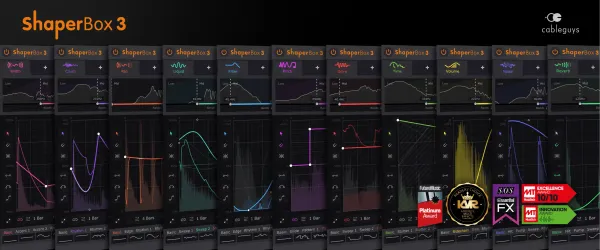
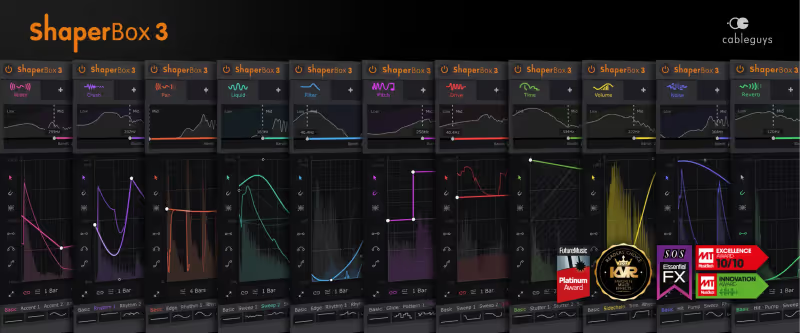
ShaperBox is built on a drawn curve locked to the bar. You place nodes, set the length in beats, and the shape repeats. Because the curve is continuous, so is everything it produces, and a pulse can be as gentle as a slow swell or as hard as a gate depending on how steep you draw the sides.

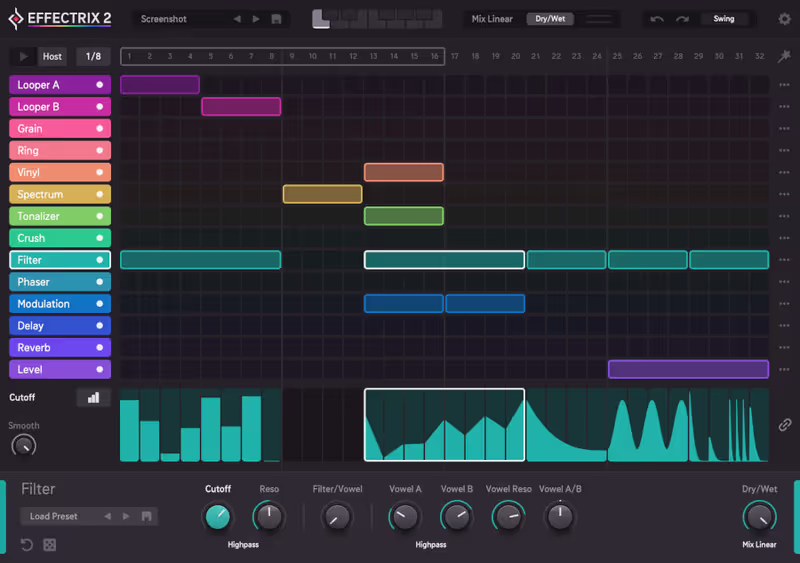
Effectrix is a grid. Columns are steps, rows are processors, and you paint which effect is active where. Nothing sits between steps, because there is no between.

That single difference produces almost every other one on this page.

What each one is actually good at

ShaperBox is the better tool for anything that has to sound like part of the music rather than like an effect. A string bed that pulses under a percussion loop, a pad that opens across four bars, a bass that ducks under a hit without a compressor deciding how much. All of that is a shape, and a shape is what it draws.

Effectrix is the better tool for the eight bars before a drop. Stutter on one step, reverse on the next, a filtered tail after that, arranged in advance and repeatable. Building the same passage in ShaperBox means several instances and a routing decision, and it still will not stutter properly because stuttering is not a curve.

Destinations

ShaperBox applies its shape to volume, filtering, panning, drive, width and time, with several shapers stacked in one instance. That breadth is the reason it replaces a small collection of plugins rather than one.

Effectrix carries a full rack of processors and sequences any of them, which is broader in kind and narrower in control. You choose which effect happens when, not how much of it happens across the bar.

Subtlety

This is where they separate for scoring work specifically. Effectrix announces itself. Everything it does is audible as an effect, which is correct for a transition and wrong for underscore that has to sit behind dialogue for two minutes.

ShaperBox can be set so quietly that a listener registers only that the cue feels alive, which is most of what hybrid underscore needs and is not something a grid can produce.

Side by side

ShaperBox 3 BundleEffectrix 2
MovementContinuous drawn curveQuantised steps
DrivesVolume, filter, pan, drive, width, timeA rack of effects
Best atBeds, pulses, sweepsTransitions, stutters, fills
SubtletyCan be inaudible as an effectAlways announces itself
StackingSeveral shapers per instanceOne grid per instance
LearningDraw and listenPaint and listen

Which one

If most of your work is underscore and hybrid texture, ShaperBox, and it is not close. The ability to make a static bed feel alive without a listener noticing a plugin is the capability that gets used every week.

If most of your work is trailer and action, where the transitions carry the structure and the sound design is the arrangement, Effectrix earns its place first.

If neither description fits and the budget allows only one, buy ShaperBox. It covers more of the year, and the gestures Effectrix specialises in can be faked with automation at a cost in time. The reverse is not true, because no amount of grid painting produces a gentle four bar swell. Both sit alongside the rest of the category in the multi-effects roundup.

01 Cableguys

ShaperBox 3 Bundle

Best for Rhythmic Modulation

The most precise modulation on the page, drawn curve by curve rather than stepped.

Score
8.5
out of 10

How it scored

  • Modulation Flexibility 9.4

    Drawn curves per band, with audio-triggered envelopes. Best here.

  • Glitch Sequencing 8.5

    TimeShaper handles stutters and tape stops without a separate plugin.

  • CPU Footprint 7.5

    Light per module, noticeably less so once the bands split.

Why we picked it

Best for fluid rhythm manipulation because the intuitive curve editor allows you to draw exact modulation shapes instantly.

Who should skip it

Avoid if you strongly prefer traditional step-sequenced blocks rather than drawing continuous mathematical curves.

The good

  • Incredibly intuitive curve editor
  • Fantastic audio-triggered envelopes
  • Light on CPU until you split bands

The bad

  • No step-sequenced workflow, only drawn curves
  • Multiband splitting increases CPU load
  • Interface can feel slightly sterile
Format
VST/AU/AAX
Protection
Serial Key
Price
$99
Why it scored that way

This is the most fluid rhythmic modulation environment I have ever used in a studio setting.

ShaperBox 3 has completely replaced manual volume automation in my daily mixing template for electronic projects. The highly responsive graphical interface allows you to draw precise volume ducks, intricate time stutters, and aggressive filter sweeps instantly. The newly introduced audio-triggered envelopes mean you no longer need complex MIDI routing just to achieve highly responsive, dynamic effects on a static drum bus.

While it is generally a lightweight plugin, stacking multiple frequency bands with complex LFO shapes can eventually tax older processing systems. I appreciate how quickly you can achieve a classic French house pumping effect or unpredictable IDM stutters. It remains a strong choice for any mix engineer looking to save time, though multiband splitting raises the CPU cost noticeably.

Playing connects you to YouTube, which may set cookies.
Heard on
David Guetta Illenium Martin Garrix
Check price $99
02 Sugar Bytes

Effectrix 2

Best for Glitch Sequencing

The fastest glitch sequencer here and the least able to move smoothly between two states.

Score
7.9
out of 10

How it scored

  • Modulation Flexibility 5.5

    Blocks on a grid, with no continuous LFO to speak of. Lowest here.

  • Glitch Sequencing 9.6

    The grid is still the quickest way to place a tape stop. Best on the page.

  • CPU Footprint 8.5

    Comfortable with a full pattern running.

Why we picked it

Best for immediate glitch effects because the step-sequencer grid allows you to paint complex audio manipulations instantly.

Who should skip it

Avoid if you require smooth, continuously evolving LFO curves rather than rigid, block-based sequencing.

The good

  • Incredibly fast grid-based workflow
  • Excellent tape stop and reverse effects
  • Great for live performance

The bad

  • Lacks smooth continuous LFO modulation
  • Interface feels slightly cramped
  • Limited internal routing options
Format
VST/AU/AAX
Protection
Serial Key
Price
$129
Why it scored that way

Effectrix is the undisputed king of immediate, step-sequenced audio destruction.

Effectrix 2 revitalizes the classic grid-based workflow that defined an entire generation of glitch and experimental hip hop. You simply paint blocks across the sequencer to instantly apply heavy tape stops, reverse stutters, and aggressive bitcrushing exactly where you need it. I frequently use this tool on static vocal chops to rapidly generate complex rhythmic movement without needing to physically cut the audio regions.

The strict step-sequencer design is incredibly fast, but it inherently lacks the smooth, continuous modulation found in modern LFO-driven plugins. Despite this rigid structure, it remains an excellent Infiltrator alternative for producers who value immediate, block-based composition. The updated looper and granular modules add a massive amount of modern texture to an already legendary classic toolkit.

Heard on
Skrillex Diplo Flume
Check price $129

Pick ShaperBox 3 Bundle if

Your cues need beds that breathe, pulse and open. You think in curves, and you want the shape to drive filtering and panning as readily as volume.

Pick Effectrix 2 if

Your cues need transitions. You think in steps and bars, and the eight measures before a hit are where the sound design work actually lives.

Written By

Ewan Clarke

Ewan is a sound designer whose patches have appeared in major wavetable synths and cinematic scoring libraries. A self-confessed modular addict, he bridges the gap between West Coast experimentation and pop-ready polish. He believes every preset should tell a story.

Related Guides

All Guides →

New reviews, no noise

Occasional email when we publish something worth your time. No daily digest, no vendor press releases.

We store only your address, never sell it, and delete it as soon as you unsubscribe. See our privacy policy.