
Black Friday 2026260 deals tracked, up to 97% off See the deals →

5 Best Spring Reverb Plugins for Surf Guitars (2026)

If your vintage guitars sound completely flat and lifeless, you are severely lacking classic mechanical spring reflections.

Henry Foster
By Henry Foster Mixing Engineer & Studio Tech

ModWheel is reader-supported. When you buy through links on this page we may earn an affiliate commission, at no extra cost to you. This never influences which products we recommend, read our testing methodology.

Prices come from the store's own feed and were last checked 23 November 2026. We don't issue discount codes — the price you see is the store's own.

Pick one in 10 seconds

Short version

Compare all 5

Spring Reverb
1. Spring Reverb Surf Splash Softube
8.1
Protection
iLok
PSP SpringBox
2. PSP SpringBox Customizable Spring PSP Audioware
7.8
Protection
iLok
Springs
3. Springs Rare Tanks AudioThing
7.7
Protection
Serial Key
$39 $69 View price
Rev SPRING-636
4. Rev SPRING-636 Vintage Dub Arturia
7.3
Protection
Arturia Software Center
Spring
5. Spring Ambient Spring Eventide
6.9
Protection
iLok

Finding the best spring reverb plugins is absolutely mandatory for producers who want to instantly inject classic, metallic character into their recordings. Modern algorithmic reverbs are incredibly pristine and perfect for massive cinematic soundscapes, but they completely fail at replicating the quirky, lo-fi charm of a physical mechanical spring tank. The top analog emulation tools perfectly capture the iconic, boingy reflections that defined the entire sound of classic surf rock and dub reggae.

You need a dedicated spring processor that instantly glues a dry guitar track into a massive, vintage space simply by twisting a single decay knob. A fantastic spring emulation completely replaces the endless frustration of trying to blindly recreate complex mechanical resonances using a standard transparent digital hall reverb. The right plugin depends heavily on your specific workflow, such as preferring a simple, authentic guitar amp tank or a massively complex, multi-spring modular rack unit.

Springs and impulse responses sit at opposite ends of the realism scale, and most sessions need both. Our Best Convolution Reverbs (2026): Real Spaces roundup covers the measured end.

Top Picks

Spring Reverb

8.1 / 10 Score

Best for Surf Splash

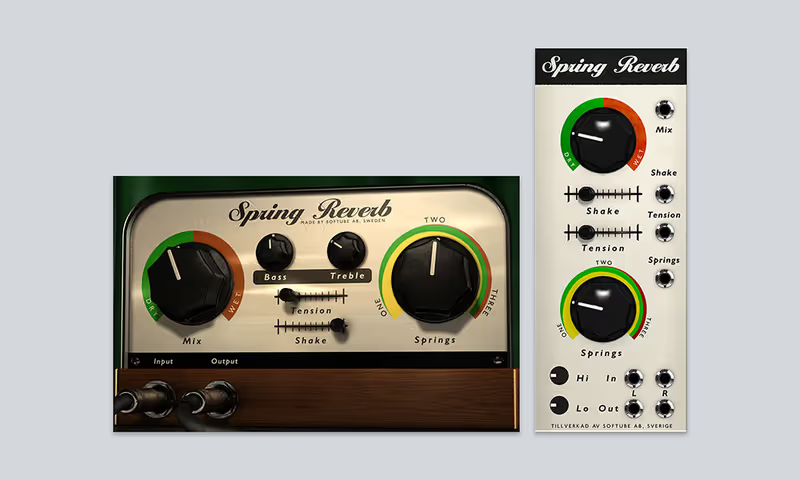
The best splash on the page and the least to think about, which is the correct pairing for this effect.
How it scored

  • Spring Authenticity Best in list 9.4

    The surf sound, including the shake control for kicking the tank. Best here.

  • Tonal Control Lowest in list 4.0

    No early reflections and no room geometry. Lowest on the page.

  • Workflow Speed Best in list 9.4

    Three controls and a drive stage.

  • CPU Footprint Best in list 9.6

    Effectively free across a template. Best here.

Why we picked it

Best for authentic surf rock guitars because the specific spring modeling perfectly delivers the massive, metallic boing required for the genre.

Who should skip it

Avoid if you demand incredibly deep, surgical control over every single physical characteristic of the virtual room acoustic space.

The good

  • Incredibly punchy and authentic surf rock splash
  • Fantastic integrated physical shake simulation
  • Extremely low computer CPU footprint

The bad

  • Lacks deep surgical early reflection parameter controls
  • Fixed spring tension limits extreme flexibility
  • Requires iLok account authorization
Format
VST/AU/AAX
Protection
iLok
Why it scored that way · 1 min read This highly focused tool provides the absolute best, punchiest surf guitar splash available for adding instant retro vibe to any track.

This highly focused tool provides the absolute best, punchiest surf guitar splash available for adding instant retro vibe to any track.

Softube Spring Reverb provides an incredibly streamlined interface that focuses entirely on three exceptionally broad, musical spring tension bands. The built-in shake control is absolutely fantastic, allowing you to aggressively simulate kicking a physical guitar amplifier to generate massive, thunderous spring collisions. I frequently use the integrated analog drive circuit on sterile synthesizer leads because it instantly imparts a beautifully rich, warm saturation character alongside the reverb tail.

The intentionally simplistic nature of the plugin means you have absolutely no control over specific early reflections or incredibly precise room size geometry. Even with this extreme lack of surgical control, it remains an excellent choice for producers who want immediate, authentic 1960s surf rock character. The incredibly low CPU footprint allows you to comfortably place an instance on every single track in a dense session.
Used by
Rock Producers Indie Guitarists Various Producers
List price now · lowest recorded $25Low on 17 Nov · 58 checks since 23 Aug Check price $89
02 PSP Audioware

PSP SpringBox

7.8 / 10 Score

Best for Customizable Spring

The only spring here you can tune rather than just choose, which is what makes it usable on a dense mix.

How it scored

  • Spring Authenticity 8.8

    Physical modelling that behaves like a tank under tension.

  • Tonal Control Best in list 9.4

    Tension, damping and independent pan. Best on the page.

  • Workflow Speed Lowest in list 5.5

    The most controls here, on an effect most people want to load and forget. Lowest here.

  • CPU Footprint 7.5

    Physical modelling, and it costs about what you would expect.

Why we picked it

Best for highly customizable spring modeling because the independent tension and dampening controls provide unmatched surgical precision over the reverb tail.

Who should skip it

Avoid if you strictly want a highly simple, one-knob analog guitar amp reverb that instantly imparts character without any menu diving.

The good

  • Incredibly precise mechanical spring tension controls
  • Fantastic proprietary high-frequency dampening feature
  • Excellent independent stereo pan routing capabilities

The bad

  • Highly intimidating interface for complete beginners
  • Can induce decision paralysis during fast tracking
  • Requires iLok account authorization
Format
VST/AU/AAX
Protection
iLok
Why it scored that way · 1 min read This highly flexible processor remains the absolute best tool available for surgically tweaking the specific boingy characteristics of a vintage spring tank.

This highly flexible processor remains the absolute best tool available for surgically tweaking the specific boingy characteristics of a vintage spring tank.

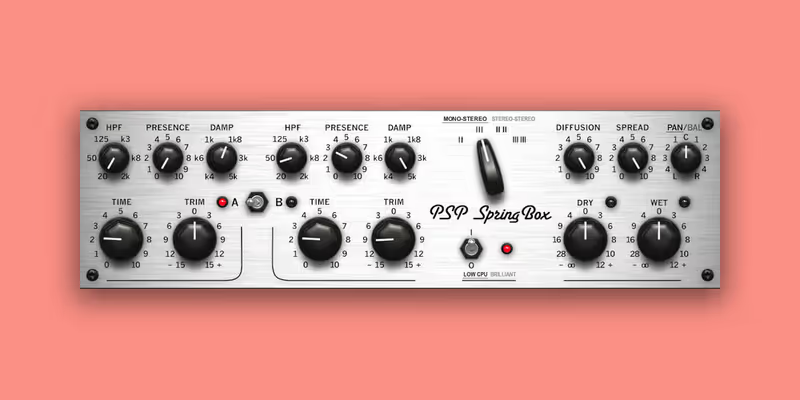
PSP Audioware PSP SpringBox utilizes a highly refined physical modeling architecture that allows you to independently adjust the specific tension and stereo width of the virtual springs perfectly. The proprietary dampening feature is absolutely fantastic, instantly allowing you to tightly control the chaotic high-frequency metallic ring that often ruins dense acoustic guitar mixes. I heavily rely on this processor during indie rock sessions because the pan control instantly creates a massively wide, immersive vintage space.

The sheer density of knobs and complex mechanical routing options can easily intimidate beginners who just want a simple one-knob guitar amp reverb. Despite the steep initial learning curve, it is unquestionably the best surgical spring alternative for engineers who demand absolute tonal control. The incredibly transparent routing design ensures your dry audio remains completely free of unwanted artificial phase issues.

Used by
Indie Mixers Various Record Producers Sound Designers
Check price $99
03 AudioThing

Springs

7.7 / 10 Score

Best for Rare Tanks

A collection of tanks nobody has heard, which is the appeal and the reason it will not give you the obvious sound.

How it scored

  • Spring Authenticity 8.2

    Faithful to obscure units rather than to the one everyone recognises.

  • Tonal Control 8.0

    A Baxandall curve on the wet signal, which most spring plugins lack.

  • Workflow Speed 7.0

    Model selection first, which is a decision before the effect starts.

  • CPU Footprint 7.5

    Tube modelling on top of the tank, and priced accordingly.

Why we picked it

Best for unique lo-fi spaces because the incredible collection of rare vintage models perfectly provides highly idiosyncratic metallic resonances.

Who should skip it

Avoid if you strictly require highly standard, instantly recognizable Fender guitar amplifier spring reverbs for a completely traditional rock mix.

The good

  • Incredibly authentic collection of extremely rare vintage tanks
  • Fantastic integrated musical Baxandall equalization section
  • Excellent subtle harmonic tube distortion modeling

The bad

  • Highly unconventional obscure spring hardware models
  • Lacks standard recognizable Fender amplifier tanks
  • Can easily sound overly metallic on bright sources
Format
VST/AU/AAX
Protection
Serial Key
Why it scored that way · 1 min read This multi-model processor perfectly captures the highly complex, idiosyncratic metallic resonances of incredibly strange, long-forgotten hardware units.

This multi-model processor perfectly captures the highly complex, idiosyncratic metallic resonances of incredibly strange, long-forgotten hardware units.

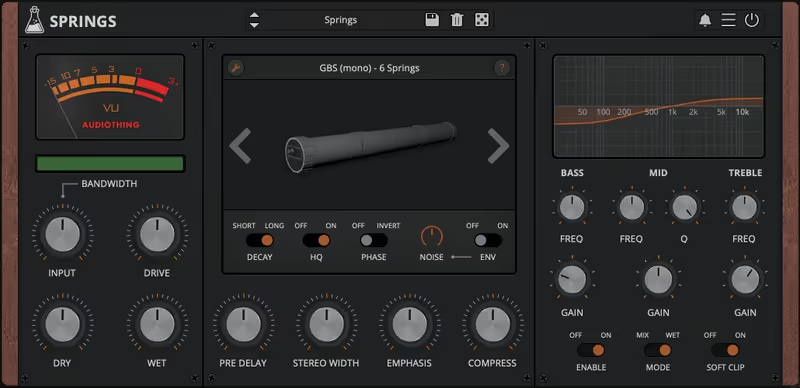
AudioThing Springs meticulously models the massive internal springs and complex tube circuitry of incredibly rare vintage hardware units that are impossible to find today. The unique ability to simultaneously apply an incredibly musical Baxandall equalization curve directly to the wet signal is absolutely fantastic, instantly carving out muddy mid-range while preserving the bright metallic splash. I regularly place this directly on my lo-fi drum bus because simply running audio through the virtual tubes makes the entire mix sound beautifully retro.

The highly eccentric collection of obscure hardware models can be incredibly confusing for producers who simply want a standard Fender guitar amp reverb. Regardless of the unconventional workflow, it is the absolute best premium alternative for producers needing undeniably massive, unique vintage spaces. The modeled output amplifier stage correctly introduces subtle harmonic distortion even when the reverb decay is completely minimized.

Used by
Lofi Producers Underground Mixers Electronic Artists
Lowest price we've recordedSince 12 Nov · 58 checks since 23 Aug Check price $39 (was $69)

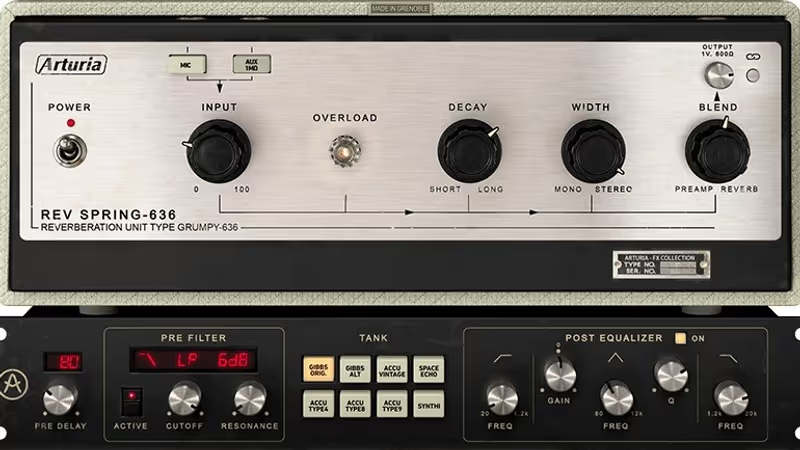
Rev SPRING-636

7.3 / 10 Score

Best for Vintage Dub

The dub end of this page, with a preamp that does as much of the work as the tank does.

How it scored

  • Spring Authenticity 9.0

    Dense, unpredictable reflections rather than a smooth tail.

  • Tonal Control 6.5

    Pre-delay and drive, over fixed spring types.

  • Workflow Speed 8.0

    Hardware layout with few controls to weigh up.

  • CPU Footprint Lowest in list 5.5

    The heaviest option here, which the page notes outright. Lowest on the page.

Why we picked it

Best for authentic vintage dub because the incredibly dense spring modeling perfectly captures the classic, highly colored metallic reflections of the original hardware.

Who should skip it

Avoid if you absolutely demand highly pristine, perfectly transparent digital hall reverbs for your delicate orchestral cinematic scoring.

The good

  • Incredibly authentic vintage spring tank modeling
  • Fantastic integrated germanium preamp saturation drive
  • Excellent metallic resonance and density

The bad

  • Lacks pristine transparent digital decay tails
  • Fixed spring types limit absolute flexibility
  • Relatively high computer processing footprint
Format
VST/AU/AAX
Protection
Arturia Software Center
Why it scored that way · 1 min read This plugin provides the absolute best, most immediate vintage dub character available for totally transforming dry, sterile drum loops.

This plugin provides the absolute best, most immediate vintage dub character available for totally transforming dry, sterile drum loops.

Arturia Rev SPRING-636 perfectly captures the incredibly complex, highly unpredictable metallic resonance associated with the massively heavy original hardware unit. The integrated germanium preamp simulation is absolutely fantastic, instantly introducing highly authentic analog saturation that thickens up thin electric guitars perfectly. I constantly rely on this plugin when processing sterile snare drums because the incredibly dense spring reflections add massive explosive character without ever sounding artificially pristine.

Because it focuses entirely on incredibly authentic, gritty vintage modeling, it completely lacks the perfectly clean, infinite decay tails required for ambient cinematic scoring. Regardless of this intentional lack of transparency, it is the best alternative available when you need immediate, undeniable classic dub coloration. The included pre-delay capabilities allow you to easily push the massive spring splash behind the initial transient of a rhythmic vocal chop.

Used by
Various Dub Producers Indie Rock Mixers Electronic Artists
Check price $99
05 Eventide

Spring

6.9 / 10 Score

Best for Ambient Spring

A spring that stopped being a spring somewhere in the decay, which is the point and disqualifies it from the job the page tests.

How it scored

  • Spring Authenticity Lowest in list 5.5

    Decays run past anything a physical tank does. Lowest here.

  • Tonal Control 8.5

    Tube tremolo and a ribbon controller for morphing between states.

  • Workflow Speed 6.5

    More of a modulation instrument than a reverb to dial in.

  • CPU Footprint 7.0

    Middling, with modulation running alongside the tank.

Why we picked it

Best for hypnotic ambient modulation because the incredibly extended decay times and integrated tremolo perfectly enhance sustained notes without ever sounding harsh.

Who should skip it

Avoid if you specifically want highly realistic, completely dry acoustic small room modeling and absolutely despise creative, unnatural modulation.

The good

  • Incredibly extended, deeply hypnotic decay times
  • Fantastic integrated tube-driven tremolo circuit
  • Excellent expressive ribbon controller morphing

The bad

  • Incapable of massive realistic acoustic room modeling
  • Highly modulated effect may distract from lead vocals
  • Requires iLok account authorization
Format
VST/AU/AAX
Protection
iLok
Why it scored that way · 1 min read This collection provides the absolute best, most hypnotic ambient spring coloration available for sophisticated, highly immersive psychedelic rock mixing tasks.

This collection provides the absolute best, most hypnotic ambient spring coloration available for sophisticated, highly immersive psychedelic rock mixing tasks.

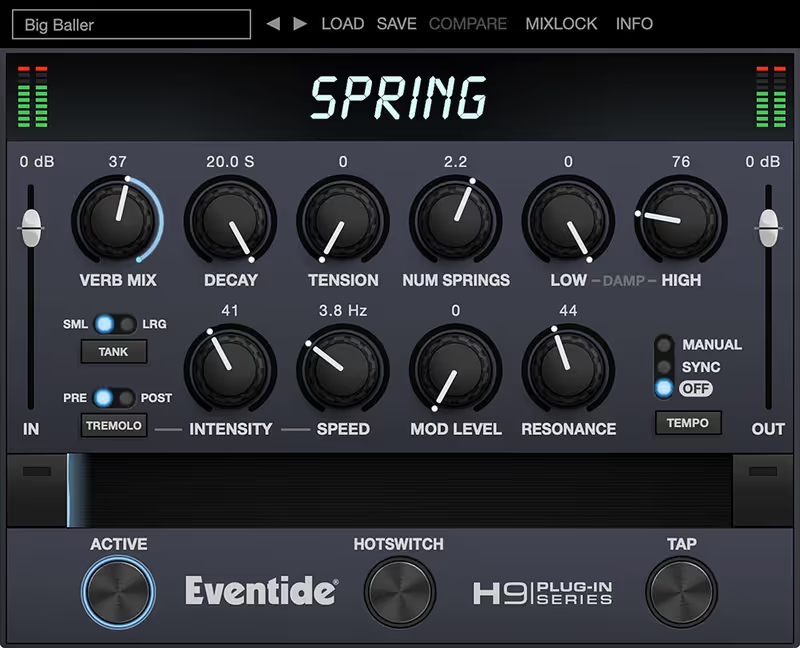
Eventide Spring perfectly captures the incredibly smooth, mastering-grade resonance of legendary studio spring tanks but extends the decay times far beyond physical hardware limitations. The integrated tube-driven tremolo section is absolutely fantastic, allowing you to instantly create massive, undulating rhythmic beds from a simple sustained guitar chord without ever destroying the fundamental presence of the performance. I heavily rely on the ribbon controller feature when mixing delicate ambient synthesizers because it allows for incredibly expressive, smooth parameter morphing during live playback.

Because it focuses entirely on highly extended, deeply hypnotic modulation, it is completely incapable of achieving tight, dry, realistic small room acoustic spaces. Even with this strict limitation, it remains the absolute best creative alternative to standard, boring analog spring equalizers. The incredibly photorealistic interface flawlessly replicates the vibe of vintage boutique hardware, making it a complete joy to operate during long psychedelic mixing sessions.

Used by
Psychedelic Producers Ambient Mixers Sound Designers
List price now · lowest recorded $49Low on 25 Aug · 58 checks since 23 Aug Check price $99
Read more →

Methodology

Who is this for

Working composers and producers who need reliability, speed, and character for professional scoring tasks.

Our testing process

Where we have tested a product, we do it in actual production scenarios, ranging from rapid sketches to commercial pitches, and we evaluate it in a dense template rather than in isolation. Where we have not, the product card says so and the assessment is drawn from specifications and documented behaviour instead.

Why you should trust us

We buy most reviewed plugins ourselves. Occasionally we receive NFRs for evaluation, but this never guarantees a review or positive verdict. We may earn commissions from links, but our editorial choices are never for sale.

Also considered

For every category, we audition the top 8 to 15 standard options, discarding any that suffer from poor scripting, slow load times, or uninspiring sampling.

Frequently Asked Questions

Why does a spring reverb sound boingy?

Because a physical spring transmits high frequencies faster than low ones, so a single impulse arrives smeared across time as a descending chirp. That dispersion is the sound, and it is why a spring never sounds like a room. Software either models the spring or convolves a real tank, and both reproduce the chirp.

Where does spring reverb belong besides guitar?

Anywhere you want an obviously artificial space. Dub production has used it on drums and vocals for decades, it suits analog synths because both are electromechanical in character, and it sits well on percussion where a hall would be too diffuse. It rarely works where the goal is realism.

What does the shake or kick control do?

It models what happens when you physically knock the amplifier and the springs crash against each other. On the hardware it is an accident, on a plugin it is a performance control, and a well timed shake at a transition is a specific and recognisable sound. Nothing else on this page produces it.

Should spring reverb be mono?

The original tanks were mono, so a mono send is the historically accurate option and often the one that sits best. Stereo spring plugins usually model two tanks with slightly different characteristics, which widens convincingly. What does not work is putting a mono spring through a stereo widener, since the artefacts are correlated.

Written By

Henry Foster

Henry is a mixing engineer with a background in broadcast and post-production. He obsesses over signal flow, gain staging, and the subtle coloration of analog-modeled plugins. His reviews focus on technical precision, CPU efficiency, and UI workflow.

Related Guides

All Guides →

New reviews, no noise

Occasional email when we publish something worth your time. No daily digest, no vendor press releases.

We store only your address, never sell it, and delete it as soon as you unsubscribe. See our privacy policy.