



7 Best Tremolo Plugins for Broken Rhythms

When a synth pad sounds lifeless, a harsh tremolo can hack it into beautifully textured rhythmic pieces.

Louis Raveton
By Louis Raveton

What changed: Every pick now carries a verdict line and scores for analog character, rhythmic control, workflow and CPU, and there is a decision router at the top.

Louis works across immersive scores (Venice Biennale, LVMH) and animation (Canal+), while producing Downtempo and Electro-Dub as Monsieur Shwill and Flagada. He treats his sample drive like a record collection, constantly hunting for the perfect 'imperfect' texture

Finding the best tremolo plugins for electronic music is not just about mimicking an old guitar amplifier. The volume modulation effect can completely rewrite the groove of a song when pushed hard. The reality is that simple sine wave tremolos often sound incredibly boring in a dense mix. You need shapes that chop, glitch, and stutter the signal into new rhythms.

I have applied volume modulation to everything from cinematic strings to dirty sub basses. Some plugins just lower the volume predictably. Others inject a dusty, clipping texture at the peaks that sounds completely broken in all the right ways. Let us review the tools that actually survive modern production demands without turning your mix into a rhythmic mess.

ModWheel is reader-supported. When you buy through links on this page we may earn an affiliate commission, at no extra cost to you. This never influences which products we recommend, read our testing methodology.

Pick one in 10 seconds

Short version

Compare all 7

MTremoloMB
1. MTremoloMB MeldaProduction
6.4
Format
VST/AU/AAX
Authorization
Serial
Format
VST/AU/AAX
Authorization
Serial Key
$13 $25 View price
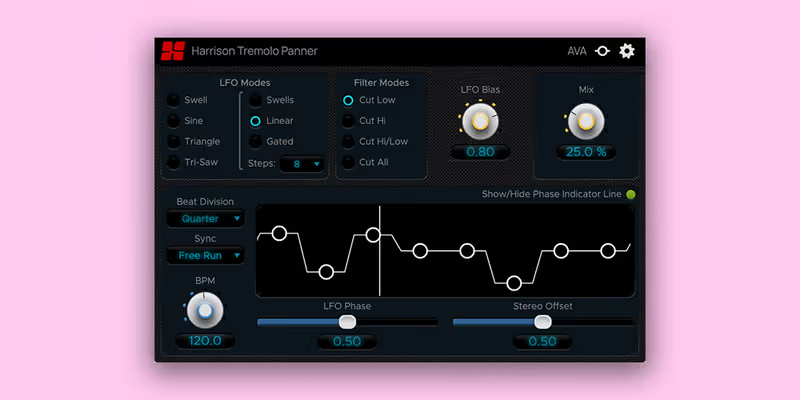
Tremolo Panner
3. Tremolo Panner Harrison Consoles
7.9
Format
VST/AU/AAX
Authorization
iLok Cloud
Tremolo Guitar 7.3
Format
VST/AU
Authorization
Serial Key
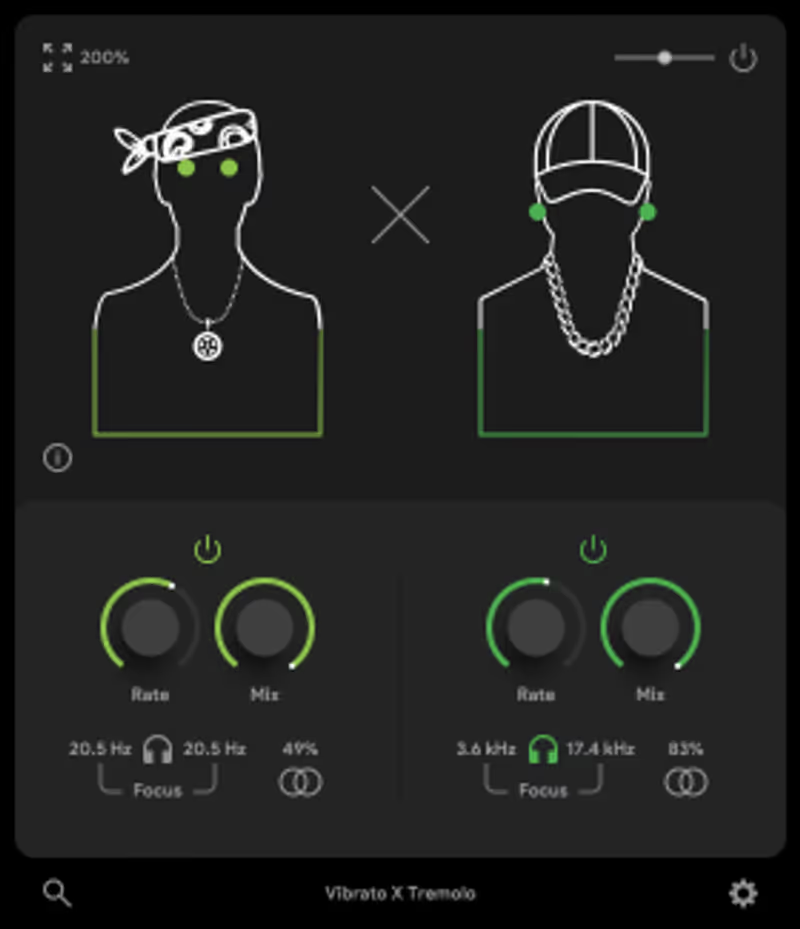
VibratoTremolo
5. VibratoTremolo Thenatan Audio
6.6
Format
VST/AU
Authorization
Serial
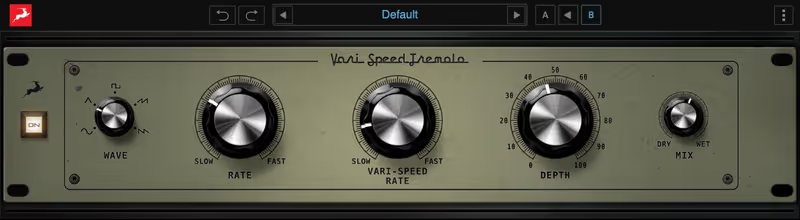
Vari-Speed Tremolo 6.5
Format
AFX/VST
Authorization
Antelope Account
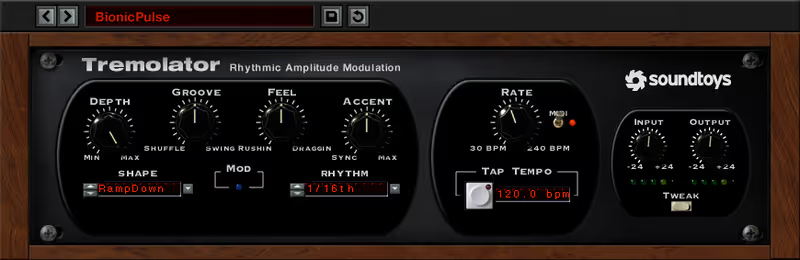
Tremolator
7. Tremolator Soundtoys
8.5
Format
VST/AU/AAX
Authorization
iLok
Read more →

Methodology

Who is this for

Working composers and producers who need reliability, speed, and character for professional scoring tasks.

Our testing process

Where we have tested a product, we do it in actual production scenarios, ranging from rapid sketches to commercial pitches, and we evaluate it in a dense template rather than in isolation. Where we have not, the product card says so and the assessment is drawn from specifications and documented behaviour instead.

Why you should trust us

We buy most reviewed plugins ourselves. Occasionally we receive NFRs for evaluation, but this never guarantees a review or positive verdict. We may earn commissions from links, but our editorial choices are never for sale.

Also considered

For every category, we audition the top 8 to 15 standard options, discarding any that suffer from poor scripting, slow load times, or uninspiring sampling.

Top Picks

01 MeldaProduction

MTremoloMB

Best for Multiband Tremolo

The only tremolo here that can spare the sub, and the one you will resent opening.

Tested score
6.4
out of 10

How it scored

  • Analog Character 5.0

    Clean and clinical. There is no vintage tone in it to find.

  • Rhythmic Control 9.6

    Multiband gating with drawn LFO shapes. Best on the page.

  • Workflow Speed 3.5

    Dated, dense and slow to read. Lowest here.

  • CPU Footprint 7.5

    Band splitting costs, and the bands are the reason to load it.

Why we picked it

Best for complex sound design where rhythmic volume gating must avoid the sub frequencies.

Who should skip it

Avoid if you prefer a classic two-knob pedal workflow or need instant vintage tone.

The good

  • Granular multiband control
  • Fully customizable waveforms
  • Extensive modulation options

The bad

  • Intimidating user interface
  • Steep learning curve
  • Visually very dated
Format
VST/AU/AAX
Authorization
Serial
Price
$43
Why it scored that way

It boasts an overwhelmingly dense interface but offers unmatched multiband rhythm control for advanced sound designers.

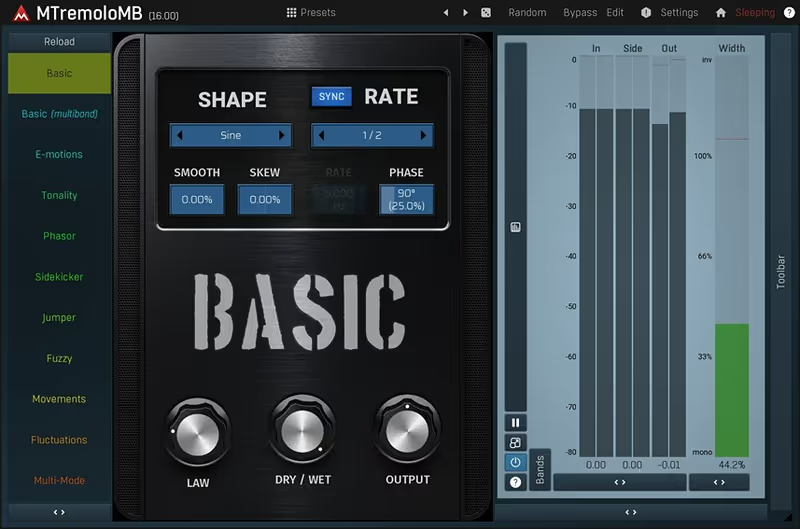
Applying volume modulation across an entire drum bus often ruins the low-end impact. This plugin completely solves that issue by splitting the signal into defined frequency bands. I used this on a deadline last week to save a terrible synth bass track. By applying a fast, choppy square wave exclusively to the high frequencies, I created a metallic rattle that cut through the mix perfectly. The learning curve is steep and the GUI is incredibly ugly.

Despite the daunting visual presentation, this is absolutely one of the best tremolo plugins for surgical rhythm design. You can draw custom LFO shapes that make the volume pump in unpredictable, jagged patterns. In a detailed versus test, standard plugins simply cannot compete with this multiband flexibility. It is not an instant analog vibe machine, but it is an essential forensic audio tool for electronic music producers.
Heard on
Complex synth soundscapes Glitch hop production Surgical drum bus processing
Check price $43
02 Kuassa

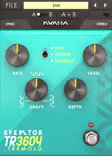
EFEKTOR TR3604 Tremolo

Best for Vintage Vibe

One vintage sound, on the insert in two seconds, with nothing underneath it.

Tested score
7.8
out of 10

How it scored

  • Analog Character 8.5

    Uneven sweep and pedal-style wobble, which is why it works on a Rhodes.

  • Rhythmic Control 3.5

    Basic waveforms and no modern routing. Lowest here.

  • Workflow Speed 9.5

    Rate, depth, done.

  • CPU Footprint 9.5

    Negligible across a whole template.

Why we picked it

Best for adding immediate vintage vibe and analog warmth to dry electric pianos and guitars.

Who should skip it

Avoid if you require surgically precise rhythmic gating or modern electronic stutters.

The good

  • Instant vintage character
  • Very low CPU footprint
  • Extremely simple workflow

The bad

  • Limited feature set
  • No modern routing
  • Only basic waveforms
Format
VST/AU/AAX
Authorization
Serial Key
Price
$13
Why it scored that way

A refreshingly direct pedal emulation that focuses entirely on delivering classic analog warmth and wobble.

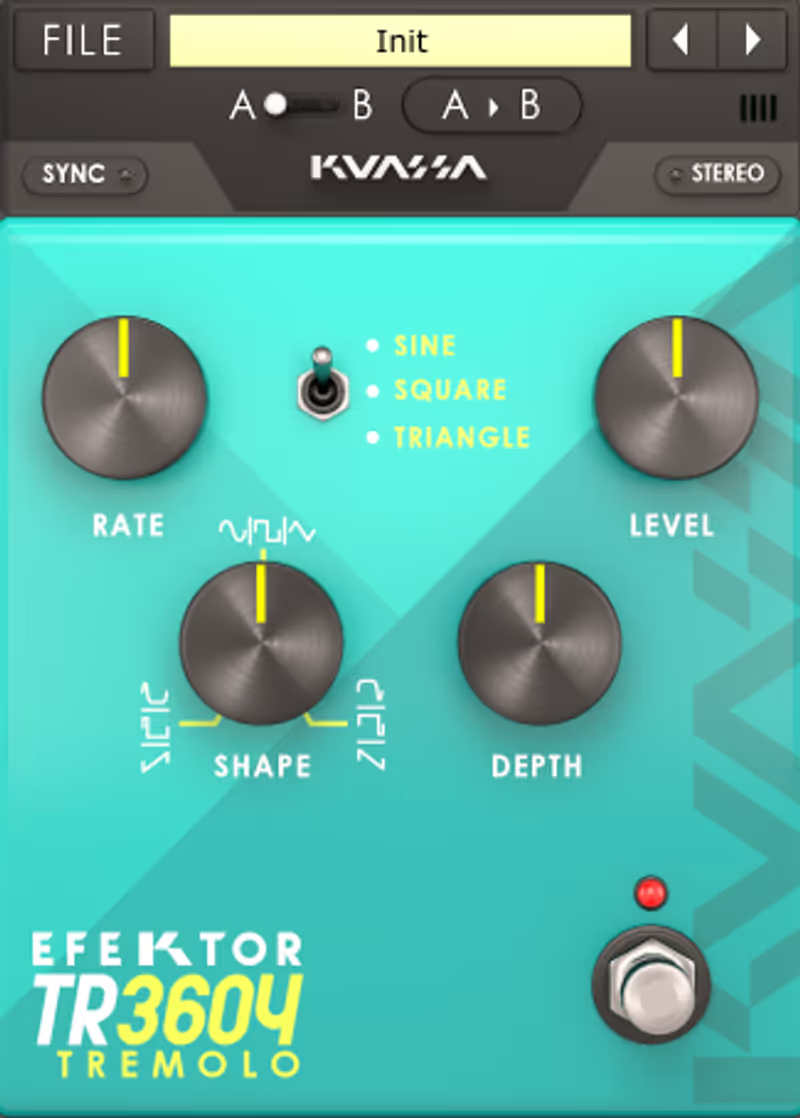
Sometimes you do not need twelve frequency bands and a custom envelope follower. You just need an electric piano to sound like it was recorded in the 1960s. I threw this plugin onto a sterile Rhodes patch that desperately lacked character. It instantly introduced a swaying, dusty wobble that felt entirely authentic and musical. The interface is stripped down to the absolute essentials. It does exactly one job and it does it exceptionally well.

When writing a comprehensive review of modulation tools, it is crucial to recognize the value of simplicity. This plugin will not glitch out your audio or provide surgical precision. The sweep feels slightly uneven, which is exactly why it sounds so good. It lacks modern tempo-sync options and complex routing. It is a one-trick vintage pony that justifies its permanent place on my insert channel strip.

Heard on
Classic retro keyboards Indie rock guitars Lo-fi beatmaking
Check price $13 (was $25)
03 Harrison Consoles

Tremolo Panner

Best for Stereo Panning

The best-sounding modulation here and the only one that also solves width, at a price that reflects both.

Tested score
7.9
out of 10

How it scored

  • Analog Character 9.2

    Smooth, heavy-feeling curves that never read as digital stepping.

  • Rhythmic Control 6.5

    Rate and shape rather than programmable patterns.

  • Workflow Speed 8.5

    Rack-unit layout with nothing hidden.

  • CPU Footprint 7.5

    Fine on a bus, and iLok Cloud wants a connection.

Why we picked it

Best for adding premium stereo width and lush, moving modulation to static synthesizers.

Who should skip it

Avoid if you only need a basic mono effect or are working on a tight budget.

The good

  • Incredible stereo widening
  • Very musical modulation curve
  • Premium analog sound quality

The bad

  • Higher price point
  • Requires iLok account
  • Not for extreme sound destruction
Format
VST/AU/AAX
Authorization
iLok Cloud
Price
$89
Why it scored that way

A premium rack unit emulation that delivers incredibly wide stereo movement and lush analog behavior.

Standard mono tremolo can often make a synthesizer feel claustrophobic and rigid. This tool merges volume modulation with a beautiful, sweeping auto-panner that pushes the sound to the absolute edges of your speakers. I relied heavily on this during a recent film scoring session when a dense string pad felt overwhelmingly static. The modulation curve is exceptionally smooth, adding a lush, three-dimensional decay to the reverb tail that never sounds artificially digital.

This is arguably the best dual-purpose panner for adding cinematic width. The controls feel satisfyingly heavy and responsive. In a direct vs test against cheaper alternatives, the stereo image remains completely intact and phase coherent. It costs significantly more than budget modulation pedals, but the sheer audio quality absolutely justifies the investment. It feels like polishing tarnished silver into a brilliant metallic shine.

Heard on
Cinematic string pads Wide electronic drones Lush background vocals
Check price $89
04 Ueberschall

Tremolo Guitar

Best for Guitar Processing

Tuned for guitar transients and no use anywhere else, which is a narrow reason to buy a tremolo.

Tested score
7.3
out of 10

How it scored

  • Analog Character 6.0

    Clean digital gating, with no modelled degradation anywhere in it.

  • Rhythmic Control 7.0

    Tight sixteenth-note sync with no clicking on sharp transients.

  • Workflow Speed 8.0

    Simple layout with envelopes already tuned for plucked sources.

  • CPU Footprint 8.0

    Light. It is doing one job.

Why we picked it

Best for rhythmically gating electric and acoustic guitar tracks in dense arrangements.

Who should skip it

Avoid if you primarily work with synthesizers and require extreme glitch sound design.

The good

  • Optimized for guitar transients
  • Very clean digital sound
  • Simple interface layout

The bad

  • Highly specialized tool
  • Not ideal for complex synths
  • Lacks analog degradation
Format
VST/AU
Authorization
Serial Key
Price
$64
Why it scored that way

A highly focused processor built specifically to manage guitar dynamics and inject rhythmic life.

While many plugins try to do everything, this one focuses entirely on guitar processing. I loaded this up on a sloppy acoustic guitar track that was completely cluttering the midrange of my mix. By syncing the modulation to sixteenth notes, it chopped the sustained chords into a tight, percussive rhythm that instantly locked with the drum groove. It handled the sharp transients without introducing annoying digital clicks or unwanted artifacts.

This tool is fantastic for what it is, but it is heavily specialized. When evaluating this in a critical review, it falls short on synthesized electronic material because the envelope shapes are optimized for string plucks. It lacks the extreme sonic flexibility of modern alternatives. However, if your production involves recording heavily saturated electric guitars that need rhythmic control, it is an absolute lifesaver.

Heard on
Tight rhythmic guitar parts Funk and disco production Acoustic strumming cleanup
Check price $64
05 Thenatan Audio

VibratoTremolo

Best for Lo-Fi Wobble

Cheap, unstable and harsh, which is either the reason to buy it or the reason not to.

Tested score
6.6
out of 10

How it scored

  • Analog Character 6.5

    Genuine lo-fi instability, undercut by digital clipping when pushed.

  • Rhythmic Control 5.5

    Coarse controls and no fine adjustment worth the name.

  • Workflow Speed 6.0

    The interface is messy enough to slow down a simple job. Lowest here.

  • CPU Footprint 8.5

    Light, as a plugin at this price should be.

Why we picked it

Best for budget-conscious producers seeking unstable, lo-fi pitch and volume modulation.

Who should skip it

Avoid if you need pristine, mastering-grade audio processing without any artifacts.

The good

  • Extremely affordable price
  • Great lo-fi character
  • Combines pitch and volume

The bad

  • Harsh digital clipping
  • Visually messy interface
  • Lacks refined controls
Format
VST/AU
Authorization
Serial
Price
$29
Why it scored that way

A quirky, inexpensive tool that excels at creating woozy, unstable textures and degraded sounds.

Sometimes absolute digital perfection is the enemy of a good track. This plugin is brilliant when you actively want something to sound cheap, broken, and unstable. I placed this on a high-pitched vocal sample that felt too pristine. By blending the pitch vibrato with a heavy square-wave tremolo, the vocal transformed into a haunting, rusted texture. It instantly evoked the degrading sound of a cassette tape left in the sun.

You cannot expect mastering-grade clarity from a plugin in this price tier. In any serious vs comparison with premium options, the interface feels deeply flawed and the digital clipping can sound harsh. Yet, for underground electronic producers, that broken lo-fi aesthetic is exactly the goal. It is an amazing utilitarian tool for destroying perfect recordings and injecting immediate lo-fi character into your productions.

Heard on
Underground hip hop vocals Degraded synth lines Broken tape simulations
Check price $29
06 Antelope Audio

Vari-Speed Tremolo

Best for Authentic Rotary

The only one here that models the motor rather than the waveform, and it charges for the distinction.

Tested score
6.5
out of 10

How it scored

  • Analog Character 9.6

    Speed ramps carry mechanical inertia, with saturation through the mids. Best here.

  • Rhythmic Control 4.5

    No sharp gating and no reliable grid sync. Lowest on the page.

  • Workflow Speed 6.5

    Steeper than a pedal, and the platform is Antelope-specific.

  • CPU Footprint 5.5

    Significant, and it is modelling a motor rather than shaping a level.

Why we picked it

Best for vintage keys and organs requiring authentic, slow-ramping volume modulation.

Who should skip it

Avoid if you need precise, instant tempo-synced gating for modern electronic music.

The good

  • Incredible physical inertia modeling
  • Gorgeous harmonic saturation
  • Premium analog sound

The bad

  • High price tag
  • Significant CPU load
  • Lacks sharp digital gating
Format
AFX/VST
Authorization
Antelope Account
Price
$129
Why it scored that way

A premium plugin that beautifully recreates the physical inertia of speeding up and slowing down.

Most digital tremolos switch speeds instantly. This emulation is special because it models the physical momentum of a mechanical motor. I used this on an electric organ track for a retro soul project. Ramping up the modulation speed created an authentic, swirling tension as the virtual speaker struggled to spin faster. The harmonic saturation it adds to the midrange feels incredibly thick, like warm honey over a harsh digital signal.

This is widely considered one of the best tremolo plugins for organ and vintage key emulation. The attention to dynamic behavior is staggering. It does require significant processing power, and the learning curve is steeper than a simple pedal. However, if your production demands absolute historical authenticity, this plugin justifies the steep price point through sheer sonic realism and modeled inertia.

Heard on
Vintage electric organs Retro soul productions Lush electric guitar solos
Check price $129
07 Soundtoys

Tremolator

Best for Rhythmic Sequencing

The only tremolo here that is also a sequencer, which is why it survives on the template when the others get bypassed.

Tested score
8.5
out of 10

How it scored

  • Analog Character 9.0

    The drive stage adds dusty saturation rather than just gating level.

  • Rhythmic Control 9.4

    Programmable rhythm editor with swing, locked to host tempo.

  • Workflow Speed 7.5

    Fast on presets, slower once the rhythm editor is open.

  • CPU Footprint 8.0

    Light for what it does, and iLok is required.

Why we picked it

Best for complex rhythmic sequencing and adding thick analog saturation to any audio source.

Who should skip it

Avoid if you are easily overwhelmed by deep sequencing options and tweakable menus.

The good

  • Incredible rhythm sequencer
  • Gorgeous analog saturation
  • Extremely versatile workflow

The bad

  • Can be overwhelming initially
  • High overall cost
  • Requires iLok account
Format
VST/AU/AAX
Authorization
iLok
Price
$99
Why it scored that way

The absolute benchmark for combining analog warmth with complex, modern programmable rhythms.

If I had to keep only one volume modulation plugin on my hard drive, it would be this one. The analog drive section adds a beautiful, dusty saturation that instantly warms up any sterile source material. I frequently use the built-in rhythm editor to hack static synth pads into complex, grooving sequences. It completely transformed a boring drone into the rhythmic backbone of a cinematic chase cue I wrote last month.

The true power lies in the custom rhythm editor. In any comprehensive review, this feature completely destroys the competition. You can program exact volume envelopes, creating swinging polyrhythms that lock perfectly to your DAW tempo. It bridges the gap between a vintage stompbox and a modern sequencer. It is an absolute necessity for electronic sound design and complex rhythmic gating.

Heard on
Synthesizer rhythmic gating Electronic drum manipulation Cinematic dynamic motion
Check price $99

Frequently Asked Questions

What is the difference between tremolo and vibrato?

Tremolo modulates amplitude and vibrato modulates pitch. The names are reversed on some vintage guitar hardware, which is why the confusion persists, but in every plugin context tremolo means level.

What shapes does a tremolo LFO offer and when do they matter?

Sine gives a smooth pulse, triangle a more even sweep, and square a hard on-off chop. Square shapes are what turn tremolo into a rhythmic gate rather than a texture, and they need host sync to stay useful.

Does tremolo work in mono?

Yes, and that is the difference between tremolo and its stereo relative. Harmonic and stereo tremolo modes offset the two channels and will partially cancel when summed, so check them in mono.

How do I use tremolo without it sounding dated?

Keep the depth low and sync it to a subdivision that the arrangement already implies. Shallow tremolo reads as movement rather than as an effect, which is how it is generally used on modern cinematic material.

Written By

Louis Raveton

Louis works across immersive scores (Venice Biennale, LVMH) and animation (Canal+), while producing Downtempo and Electro-Dub as Monsieur Shwill and Flagada. He treats his sample drive like a record collection, constantly hunting for the perfect 'imperfect' texture

Related Guides

All Guides →

New reviews, no noise

Occasional email when we publish something worth your time. No daily digest, no vendor press releases.

We never sell your address. Unsubscribe any time, see our privacy policy.