




The fastest dust on the page and the one every other track is already using, which is both the argument and the warning.
How it scored
- Character 8.0
Convincing wobble and noise, and recognisable once you know the sound.
- Control Depth 5.5
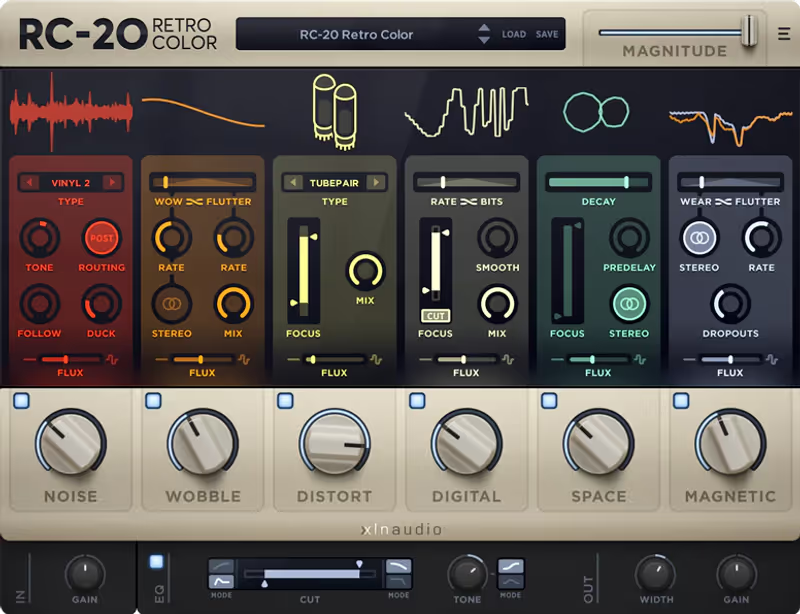
Six modules with one knob each. There is no deeper layer.
- Workflow Speed 9.5
The magnitude slider dials the whole chain back in one move. Best here.
- CPU Footprint 9.0
Light enough for a channel strip slot across a template.
Why we picked it
A highly intuitive alternative to complex modular effects for instant texture.
Who should skip it
You need clinical transparency and subtle harmonic distortion.
The good
- Extremely fast workflow
- Great magnitude slider
- Versatile noise generator
- Low CPU footprint
The bad
- Can sound generic
- Muddy master buss
- Limited deep tweaking
- Modules
- 6 FX Modules
- Format
- VST/AU/AAX
- Price
- $99
Why it scored that way
This is the plugin everyone uses, and frankly, there is a good reason for it.
I resisted RC-20 for years simply because it felt too popular, but putting it on a sterile synth bass forced me to admit my stubbornness. The beauty here is the macro workflow. You are not endlessly tweaking individual tape speed anomalies. You push the 'wobble' and 'magnetic' modules, and suddenly your perfectly quantized piano sounds like a haunted thrift store find. I use it constantly when tracking overly clean virtual instruments. It adds an immediate layer of neon grit and comforting dust without demanding twenty minutes of fine tuning.
However, throwing it on the master bus is a rookie mistake. It gets muddy fast if you are not careful with the built in EQ controls. It is a fantastic blunt instrument for transforming single channels, but it lacks the surgical precision of dedicated saturation units. If a director asks for a worn out aesthetic on a tight deadline, this saves me. It just works. Keep your expectations in check, use the magnitude slider responsibly, and you will save hours of processing time on every session.
Playing connects you to YouTube, which may set cookies.