Best Keyscape Alternatives

Keyscape contains dozens of keyboard instruments and most owners use two or three of them. Working out which two turns an expensive collection into a ninety-nine dollar purchase, and frees up most of a hard drive.

The ModWheel Team
By The ModWheel Team Editorial Staff

ModWheel is reader-supported. When you buy through links on this page we may earn an affiliate commission, at no extra cost to you. This never influences which products we recommend, read our testing methodology.

Prices come from the store's own feed and were last checked 27 September 2026. We don't issue discount codes — the price you see is the store's own.

Pick one in 10 seconds

Short version
  • You mainly play the Rhodes and want effects wrapped around it The best effects rig on any electric piano here, at 99 dollars. Stage-73 V
  • You want the Rhodes with the manufacturer's name on it The official one, and the most authoritative version available. V8 Pro Virtual Instrument
  • You play hard and want the instrument to respond, not play back Modelled rather than sampled, so it reacts instead of crossfading. Lounge Lizard EP-5
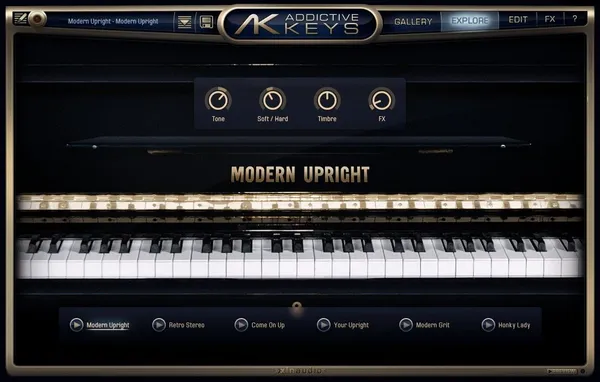
  • You want an acoustic piano that survives a dense mix Built for mixing rather than for solo performance. Addictive Keys: Studio Grand
  • The clavinet is the one you actually reach for Modelled, so you can reach inside the instrument and change it. Clavinet V

Compare all 5

Covers
Rhodes, two eras
Method
Physical modelling
Covers
Rhodes
Method
Sampled and modelled
Lounge Lizard EP-5
3. Lounge Lizard EP-5 Applied Acoustics Systems
7.8
Covers
Electric pianos
Method
Physical modelling
Covers
Acoustic grand
Method
Sampled
Clavinet V 7.7
Covers
Clavinet
Method
Physical modelling

This is a collection rather than an instrument, which changes how you replace it. Nobody needs a cheaper version of thirty-six keyboards. They need the Rhodes, or the Wurlitzer, or the clavinet, done properly and without the other thirty-five attached to it.

So the axes score coverage separately from sound. A dedicated Rhodes will beat Keyscape on that one instrument and lose badly on breadth, and whether that is an upgrade depends entirely on how many of these keyboards ever appear in your writing.

Nothing was tested in a studio and every card says so. The scores come from published specification and documented behaviour, and the verdicts agree with what this site has already said about these instruments elsewhere.

Best Electric Piano VSTs (2026): Rhodes & Wurli covers the electric pianos in full.

Top Picks

01 Arturia Best Overall

Stage-73 V

Best for Electric Piano

Not tested by us, assessed from specs and documented behaviour

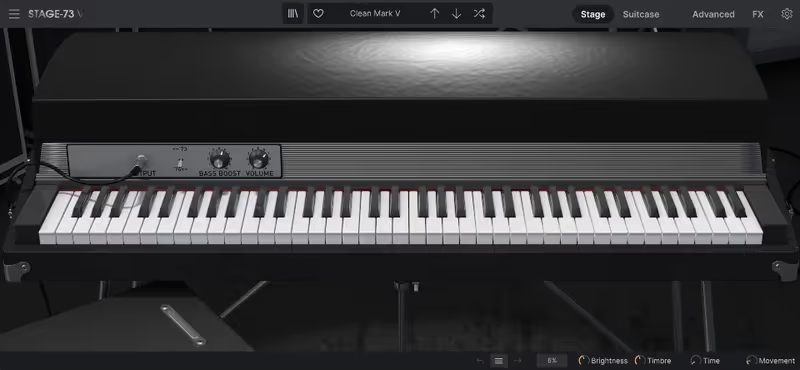
The best single-purchase answer for most Keyscape owners, because the Rhodes is the instrument they open it for. The effects rig around it is better than anything you would assemble yourself, at 99 dollars.

Assessed score
8.0
out of 10

How it scored

  • Sound Match 8.5

    A convincing Rhodes with more tonal range than the sampled options.

  • Coverage 5.0

    Two eras of one instrument. Nothing else in the collection.

  • Footprint 9.5

    Modelled, so megabytes rather than tens of gigabytes.

  • Value 9.0

    Ninety-nine dollars, and frequently bundled with the wider Arturia collection.

Why we picked it

Best for anyone whose Keyscape habit is really a Rhodes habit, and who wants the effects rig included.

Who should skip it

Skip it if you genuinely play several of Keyscape's instruments, because this covers one of them.

The good

  • Best effects rig here
  • Modelled, so tiny on disk
  • Two Rhodes eras covered

The bad

  • One instrument only
  • No acoustic piano
  • Modelling divides opinion
Covers
Rhodes, two eras
Method
Physical modelling
Price
$99
Why it scored that way

The Rhodes with the pedalboard already attached.

Start here if the honest answer to which Keyscape instrument you use is the Rhodes, which it is for a large majority of owners. Stage-73 covers two eras of that instrument through modelling rather than sampling, so the tonal range available is wider than a fixed set of recordings allows and the install is measured in megabytes.

What lifts it above the other Rhodes options here is what surrounds it. The integrated effects chain covers amplifiers, cabinets, phasers and pedals designed for this instrument specifically, and reaching a finished, mixed electric piano sound inside one window is considerably faster than assembling the same chain from separate plugins.

The obvious cost is breadth, and it is the whole point of this page. You are buying one instrument rather than a museum, so if the celeste, the toy piano and the clavinet all appear in your writing then Keyscape is doing a job this cannot. Most people should check their last ten projects before assuming that is them.

Playing connects you to YouTube, which may set cookies.
Heard on
Neo Soul TV Underscore Songwriting
Check price $99
02 Rhodes

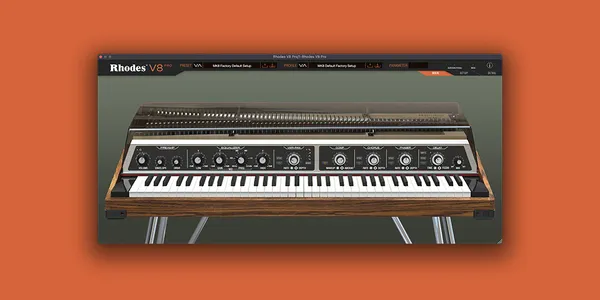
V8 Pro Virtual Instrument

Best for Electric Piano

Not tested by us, assessed from specs and documented behaviour

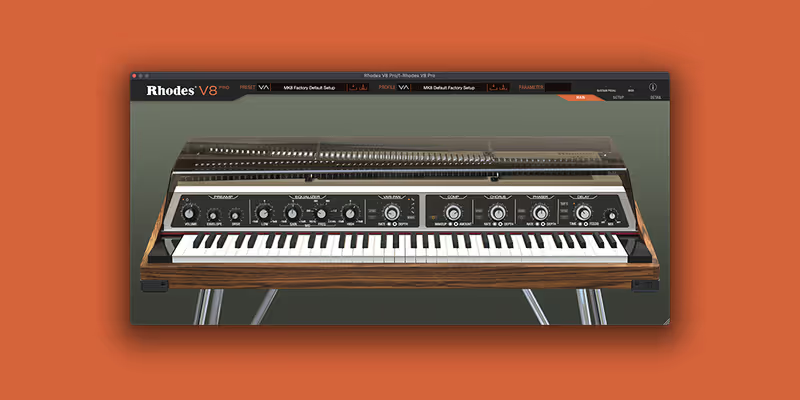
The most authoritative Rhodes available, because it comes from the company that makes them. That matters more for confidence than for sound, and it is twice the price of the Arturia above.

Assessed score
6.8
out of 10

How it scored

  • Sound Match 8.2

    Authoritative rather than dramatically different from the alternatives.

  • Coverage 5.0

    One instrument, done with the manufacturer's authority behind it.

  • Footprint 7.5

    Larger than the modelled options, far smaller than Keyscape.

  • Value 6.5

    Around two hundred dollars for a single instrument.

Why we picked it

Best for players who want the manufacturer's own instrument and value that authority over the price difference.

Who should skip it

Skip it if price matters, because the Arturia covers similar ground for half as much.

The good

  • The official Rhodes instrument
  • Reference-grade accuracy
  • Settles authenticity arguments

The bad

  • Twice the Arturia price
  • One instrument only
  • Larger install than modelled rivals
Covers
Rhodes
Method
Sampled and modelled
Price
$299
Why it scored that way

The one with the manufacturer's name on it.

There is a real argument for buying the official one and it is not purely sentimental. Rhodes have access to reference instruments, to the original specifications and to the people who maintain them, and the result is a version nobody can reasonably dispute the accuracy of. For a session player or anyone delivering to a client who cares, that settles an argument before it starts.

Sonically it sits alongside the Arturia rather than clearly above it, which is worth knowing before paying the difference. Both are convincing, both cover the same ground, and the preference between them comes down to whether you would rather have the integrated effects chain and the flexibility that modelling brings, or the manufacturer's own reading of what the instrument is supposed to sound like.

The deciding factor for most readers will be price. This is roughly twice what Stage-73 costs and covers a similar amount of ground, so it earns its place on authority rather than on value. If that authority matters to you, it is worth the difference, and if it does not then the cheaper option is the better purchase.

Playing connects you to YouTube, which may set cookies.
Heard on
Session Work Neo Soul Jazz Fusion
Check price $299
03 Applied Acoustics Systems

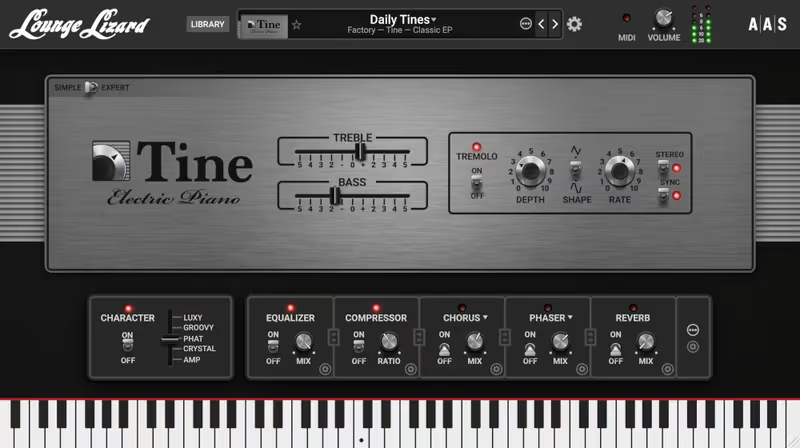
Lounge Lizard EP-5

Best for Electric Piano

Not tested by us, assessed from specs and documented behaviour

The pick for players rather than programmers. Because nothing is sampled there are no velocity layers to cross-fade between, so it responds continuously to how hard you play, which is the part sampling cannot solve.

Assessed score
7.8
out of 10

How it scored

  • Sound Match 7.5

    Slightly less convincing than the best samples, and considerably more responsive.

  • Coverage 5.5

    Electric pianos only, across a wide range of built instruments.

  • Footprint 9.8

    Nothing is sampled, so the install is trivial and load time is instant.

  • Value 8.5

    Ninety-nine dollars, and it will run on anything.

Why we picked it

Best for players on weighted keys who want the instrument to respond continuously rather than crossfade.

Who should skip it

Skip it if you need photorealism on an exposed, static note, because modelling shows there first.

The good

  • Continuous velocity response
  • Reach inside the instrument
  • Trivial install and load time

The bad

  • Slightly synthetic held still
  • Electric pianos only
  • No acoustic or clavinet
Covers
Electric pianos
Method
Physical modelling
Price
$199
Why it scored that way

The one that reacts instead of playing back.

This is the entry for somebody who plays with weighted keys and has noticed that sampled instruments feel like a staircase. A sampled piano crossfades between a finite number of recorded velocities. A modelled one calculates the result from how hard the hammer hit, so the response is continuous and repeated notes do not retrigger the identical recording.

For a performer that difference is immediate and it is the reason this instrument keeps its following. It also means you can reach inside and change things a recording cannot offer, altering the tine position, the pickup distance and the hammer hardness to build electric pianos that were never manufactured.

What it gives up is the last few per cent of realism on a static note. Held still and compared directly against a good sample library, the modelled tone is identifiably synthetic to a careful ear. In a mix, under a band, nobody has ever noticed, and the playing response is worth considerably more than that margin.

Playing connects you to YouTube, which may set cookies.
Heard on
Live Rigs Jazz Fusion Songwriting
Check price $199
04 XLN Audio

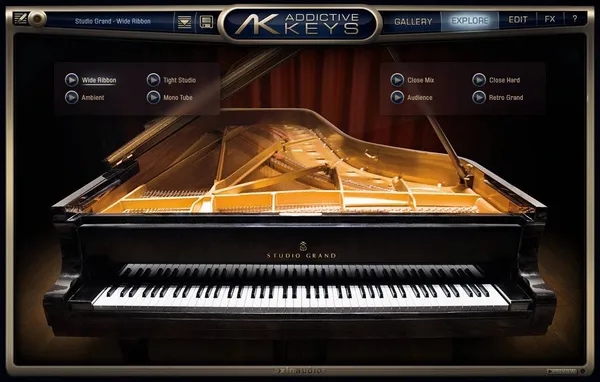
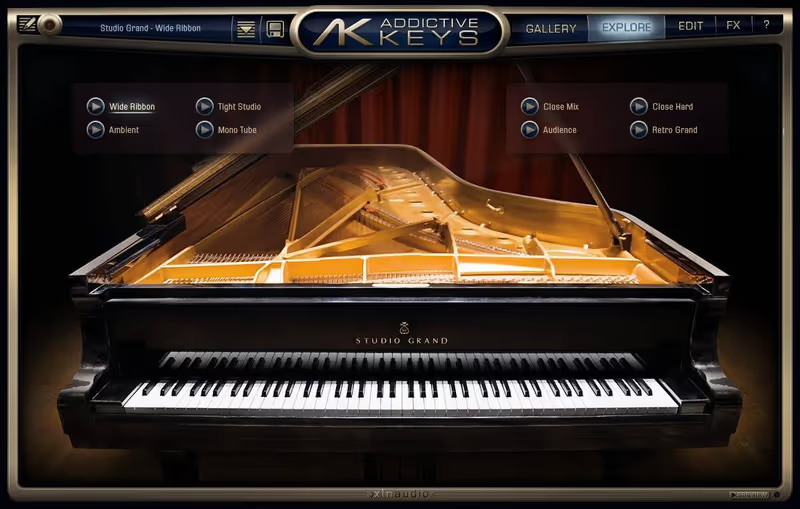
Addictive Keys: Studio Grand

Best for Acoustic Piano

Not tested by us, assessed from specs and documented behaviour

The answer if what you take from Keyscape is the acoustic piano. It is engineered to survive compression and EQ rather than to sound impressive alone, which is the correct priority for a piano inside an arrangement.

Assessed score
7.6
out of 10

How it scored

  • Sound Match 8.0

    Mix-ready rather than romantic, which is a deliberate design choice.

  • Coverage 5.5

    Acoustic grand only, with fast mic blending across it.

  • Footprint 8.0

    Gigabytes rather than tens of gigabytes.

  • Value 9.0

    Ninety-nine dollars, and the mic blending alone justifies it.

Why we picked it

Best for pianos inside dense arrangements, where sitting in the mix matters more than sounding impressive alone.

Who should skip it

Skip it for solo piano writing, because a larger sampled instrument will be more convincing exposed.

The good

  • Built to sit in a mix
  • Fast mic blending
  • Ninety-nine dollars

The bad

  • Less impressive solo
  • Acoustic grand only
  • Not a Keyscape replacement whole
Covers
Acoustic grand
Method
Sampled
Price
$99
Why it scored that way

The acoustic half, built for a mix rather than a recital.

Keyscape's acoustic pianos are widely admired and they are recorded to sound extraordinary on their own. That is a different goal from sounding right underneath a vocal, and it is why so many mixes end up carving the piano to pieces before it sits. Addictive Keys starts from the other end.

The mic-blending interface is the practical part of that design. Rather than picking a fixed preset and then repairing it afterwards with EQ, you move between microphone positions until the balance already occupies the space the arrangement has left for it, which is both faster to do and produces a considerably cleaner result than corrective processing applied after the fact.

Be clear that this is not the more impressive instrument of the two. Solo, exposed and played slowly, a large sampled Steinway recorded with several microphone trees will beat it comfortably and it is not close. Inside a pop or television arrangement where the piano is one of fourteen things happening at once, this is the one that stops causing problems for everything around it.

Playing connects you to YouTube, which may set cookies.
Heard on
Pop Production TV Underscore Songwriting
Check price $99
05 Arturia

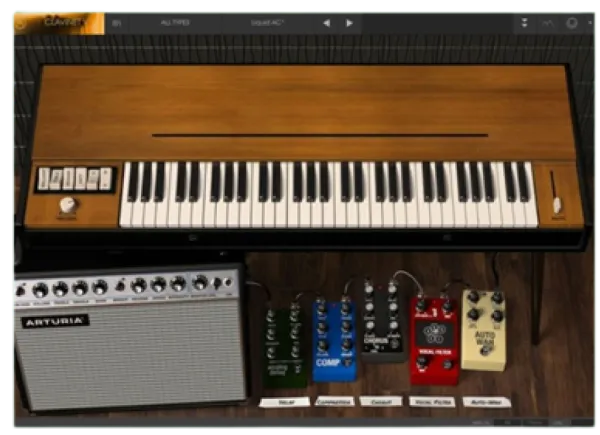
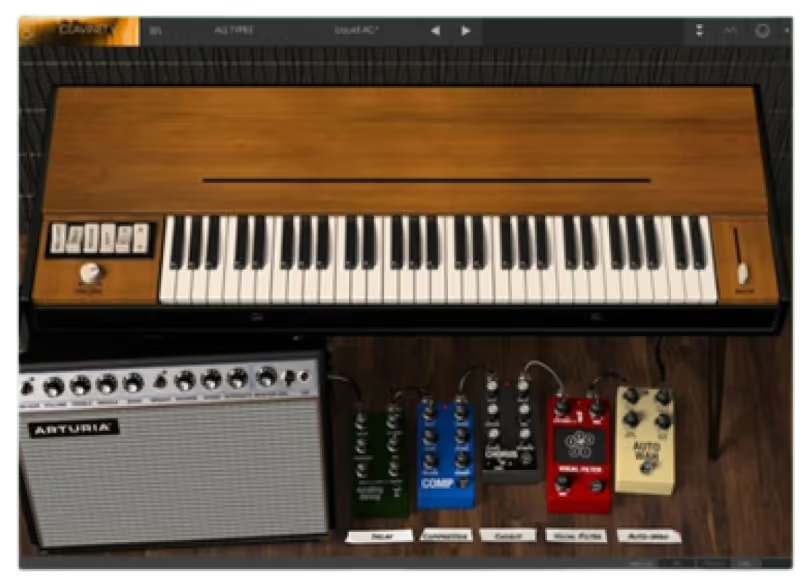
Clavinet V

Best for Clavinet

Not tested by us, assessed from specs and documented behaviour

The specialist pick, and a surprisingly common one. A clavinet is a plucked string instrument wearing a keyboard, and modelling it means you can reach inside the mechanism in ways a recording cannot allow.

Assessed score
7.7
out of 10

How it scored

  • Sound Match 8.2

    Convincing, and more adjustable than any sampled clavinet.

  • Coverage 4.5

    One narrow instrument. The narrowest entry on this page.

  • Footprint 9.5

    Modelled, so megabytes and an instant load.

  • Value 8.5

    Ninety-nine dollars for the instrument done properly.

Why we picked it

Best for funk, seventies rock and library writing, where the clavinet is a real part rather than a novelty.

Who should skip it

Skip it if the clavinet is an occasional curiosity, because this covers that one instrument alone.

The good

  • Adjustable pickup and damper
  • Modelled, so tiny on disk
  • Ninety-nine dollars

The bad

  • Narrowest entry here
  • Covers nothing else
  • Needs pairing with a piano
Covers
Clavinet
Method
Physical modelling
Price
$99
Why it scored that way

For the one keyboard people forget they bought Keyscape for.

The clavinet is the instrument people are quietly surprised to find they use. It turns up in funk, in seventies rock and in a great deal of television library writing, and Keyscape's version of it is one of the things composers use to justify the purchase to themselves. If any of that describes your writing, this covers the instrument on its own for ninety-nine dollars.

Modelling suits this instrument particularly well, better than it suits a grand piano. A clavinet makes its sound by plucking a string with a rubber tip, and modelling that mechanism means the pickup position, the damper behaviour and the string response all become adjustable parameters rather than fixed properties of a recording somebody made once and can never revisit.

The limitation is obvious and worth stating anyway. This is the narrowest entry on the page by some distance, and nobody should buy it expecting to cover anything else. It belongs alongside one of the electric pianos above rather than instead of one, and two ninety-nine dollar specialists still cost a fraction of the collection they are replacing.

Playing connects you to YouTube, which may set cookies.
Heard on
Funk Library Music Seventies Rock
Check price $99
Read more →

Methodology

Who is this for

Working composers and producers who need reliability, speed, and character for professional scoring tasks.

Our testing process

Where we have tested a product, we do it in actual production scenarios, ranging from rapid sketches to commercial pitches, and we evaluate it in a dense template rather than in isolation. Where we have not, the product card says so and the assessment is drawn from specifications and documented behaviour instead.

Why you should trust us

We buy most reviewed plugins ourselves. Occasionally we receive NFRs for evaluation, but this never guarantees a review or positive verdict. We may earn commissions from links, but our editorial choices are never for sale.

Also considered

For every category, we audition the top 8 to 15 standard options, discarding any that suffer from poor scripting, slow load times, or uninspiring sampling.

Frequently Asked Questions

What is the closest alternative to Keyscape?

Nothing replaces it whole, because it is a collection of dozens of keyboard instruments rather than one instrument. The useful question is which two or three you actually play, and then a dedicated version of each will match or beat Keyscape on those while costing a fraction as much.

Is Keyscape worth the install size?

It depends on how many of its instruments reach your projects. At tens of gigabytes it is one of the largest things a keyboard-focused template carries, and if the honest answer is that you open it for the Rhodes and occasionally the clavinet, two dedicated instruments cover that in megabytes.

Are modelled keyboards as good as sampled ones?

They respond better and they hold up slightly less well under a microscope. Modelling calculates the sound from how you played, so velocity response is continuous rather than crossfaded between recorded layers. Held still on an exposed note, a good sample library is still more convincing to a careful ear.

Do I need a separate acoustic piano as well?

Usually yes, and this is the most common gap when people leave Keyscape. Its electric pianos get the attention but its acoustic pianos do real work too, so budget for one of each rather than assuming a Rhodes covers it. Two dedicated instruments still cost far less than the collection.

Written By

The ModWheel Team

The ModWheel editorial team is a collective of composers, producers, and sound designers. We collaborate to bring you comprehensive guides, industry news, and curated lists that represent our shared expertise and passion for music technology.

Read Next

More Keys →

Related Guides

All Guides →

New reviews, no noise

Occasional email when we publish something worth your time. No daily digest, no vendor press releases.

We store only your address, never sell it, and delete it as soon as you unsubscribe. See our privacy policy.