

3 Best Pipe Organ VSTs for Scoring (2026)

Sampled pipe organs divide into two worlds, and most buyers do not know it before they spend. One world scores films inside an orchestration. The other reproduces a specific instrument for solo repertoire, and nothing on this page belongs to it.

Felix Ward
By Felix Ward Songwriter & Multi-Instrumentalist

ModWheel is reader-supported. When you buy through links on this page we may earn an affiliate commission, at no extra cost to you. This never influences which products we recommend, read our testing methodology.

Prices come from the store's own feed and were last checked 17 October 2026. We don't issue discount codes — the price you see is the store's own.

Pick one in 10 seconds

Short version

Compare all 3

Engine
Kontakt
Recorded at
Forbes, with multiple mic positions
Character
Room-forward, chamber scale
Engine
Kontakt
Recorded at
St Paul's Church, San Francisco
Character
Spacious, two contrasting organs
Engine
Kontakt
Recorded at
Lakeside Temple, Oakland
Character
Close, intimate, hybrid pipe and electric

A pipe organ in a cue is usually doing one of three jobs: sacred weight, horror, or sheer size under a tutti. All three sit inside an orchestration, where a sampled organ is convincing and cheap. The moment the organ plays alone, the category changes completely. Composers report that libraries which sound fine buried become obviously fake when exposed, and the reasons are technical rather than a matter of taste. These scores are synthesised from composer reports on VI-Control and Gearspace rather than from sessions in our studio, and every card names the threads behind it. We may earn a commission on links, which never decides the order or the verdicts.

Top Picks

01 Cinesamples Best Overall

O: Forbes Pipe Organ

Best for Sacred Scoring

Scored from 6 user reports, not tested by us

How this score was reached

What users agree on. Praised for its room sound, an intuitive interface and sound design features that take it past a straight organ sample set, and described as matching well against a chamber orchestra of around thirty players.

The recurring complaint. Composers are clear that it is not a symphonic instrument, so anybody expecting it to hold up under a full orchestra or in solo classical repertoire is buying the wrong library.

Synthesised from 6 user reports (VI-Control organ threads from the Forbes release onward). Nobody here ran this product.

The best fit here for organ inside a mid-sized orchestration, and not a solo repertoire instrument.

Community score
7.5
out of 10

How it scored

  • Sound in orchestration 8.5

    The room and the blend are the most praised aspects.

  • Realism when exposed 6.5

    Reports place it below dedicated organ platforms.

  • Interface and control 8.5

    Called intuitive, with usable sound design on top.

  • Value for money 6.5

    The most expensive of the three here.

Why we picked it

Composers scoring sacred or cinematic cues who need an organ that sits with a chamber or mid-sized orchestra.

Who should skip it

You need a symphonic-scale instrument or solo classical repertoire, which reports say it is not built for.

The good

  • Room sound widely praised
  • Intuitive interface
  • Sound design layer included
  • Blends with chamber orchestra

The bad

  • Not a symphonic instrument
  • Most expensive of these three
  • Below platforms like Hauptwerk
  • Limited for solo repertoire
Engine
Kontakt
Recorded at
Forbes, with multiple mic positions
Character
Room-forward, chamber scale
Price
$149
Why it scored that way

The one that behaves like a scoring instrument rather than a museum piece. Its room is the reason to buy it.

Threads weighing organ purchases keep returning to Forbes as the sensible scoring choice, and the reasons given are practical rather than romantic. Composers cite the room sound, an interface they describe as intuitive, and sound design capability that makes it more than a straight sample set, with one noting they were able to build their own preset for the quiet registrations a cue needed.

The scale question is where reports draw the line. It is described as not a symphonic instrument but nicely matched to a well-provisioned chamber orchestra of around thirty players, with a swell division of French character. That is a compliment and a constraint in the same sentence, and it is the single most useful thing to know before buying.

Where composers compare it directly against Spitfire's symphonic organ the discussion is usually about which scale you need rather than which is better made, and Forbes tends to win when the answer is a scoring instrument that blends. If your organ has to sound like a cathedral filling on its own, the threads point somewhere else entirely, and the also-considered list below is where they point.

Check price $149
02 Soundiron Best Value

Alpha Organ v2

Best for Epic Organ

Scored from 5 user reports, not tested by us

How this score was reached

What users agree on. Two organs recorded at St Paul's in San Francisco give it noticeably more range and more presets than its stablemates, with a spacious sound, and the assignable octave control draws specific praise.

The recurring complaint. The depth is also the complaint: composers report that the deep editing behind the wrench panel, including filter types and envelope settings, makes it harder to use than libraries offering readily accessible presets.

Synthesised from 5 user reports (VI-Control organ threads covering the v1 and v2 releases). Nobody here ran this product.

The most organ per euro here, if you are willing to learn where Soundiron hid the controls.

Community score
7.3
out of 10

How it scored

  • Sound in orchestration 8.0

    Spacious and broad, with two contrasting instruments.

  • Realism when exposed 6.0

    Same category limits as the others here.

  • Interface and control 6.5

    Deep, and reported as harder to use because of it.

  • Value for money 8.5

    Two organs and a large preset count at a low price.

Why we picked it

Composers who want breadth and are comfortable digging through menus to shape a registration.

Who should skip it

You want to load a preset and play, where reports say the editing depth gets in the way.

The good

  • Two distinct organs included
  • Large preset count
  • Spacious recorded sound
  • Assignable octave control praised

The bad

  • Deep menus slow you down
  • Presets less immediate than rivals
  • Not for exposed repertoire
  • Interface divides opinion
Engine
Kontakt
Recorded at
St Paul's Church, San Francisco
Character
Spacious, two contrasting organs
Price
$99
Why it scored that way

Two organs for the price of most single ones, wrapped in an interface that rewards patience and punishes hurry.

The pitch is straightforward and reports back it up: two pipe organs recorded in the same church, one described as sweet and silky and the other as thunderous, which gives a composer two quite different registrational characters in one purchase. Alongside its stablemate Lakeside it is consistently described as the more spacious and more featured of the two.

The recurring criticism is about getting at all of it. Composers report that the deep customisation behind the wrench panel, covering filter types and envelope shaping, makes the library harder to use than ones that put usable registrations in front of you, and at least one states plainly that they prefer libraries with readily accessible controls and presets.

One specific piece of praise is worth repeating because it is the kind of thing that only matters once you are working: the octave control being assignable to a MIDI CC drew particular credit, since registration changes during a cue are otherwise awkward. Read that as the shape of the library overall, powerful for somebody who sets it up properly and fiddly for somebody who wanted to play.

Check price $99
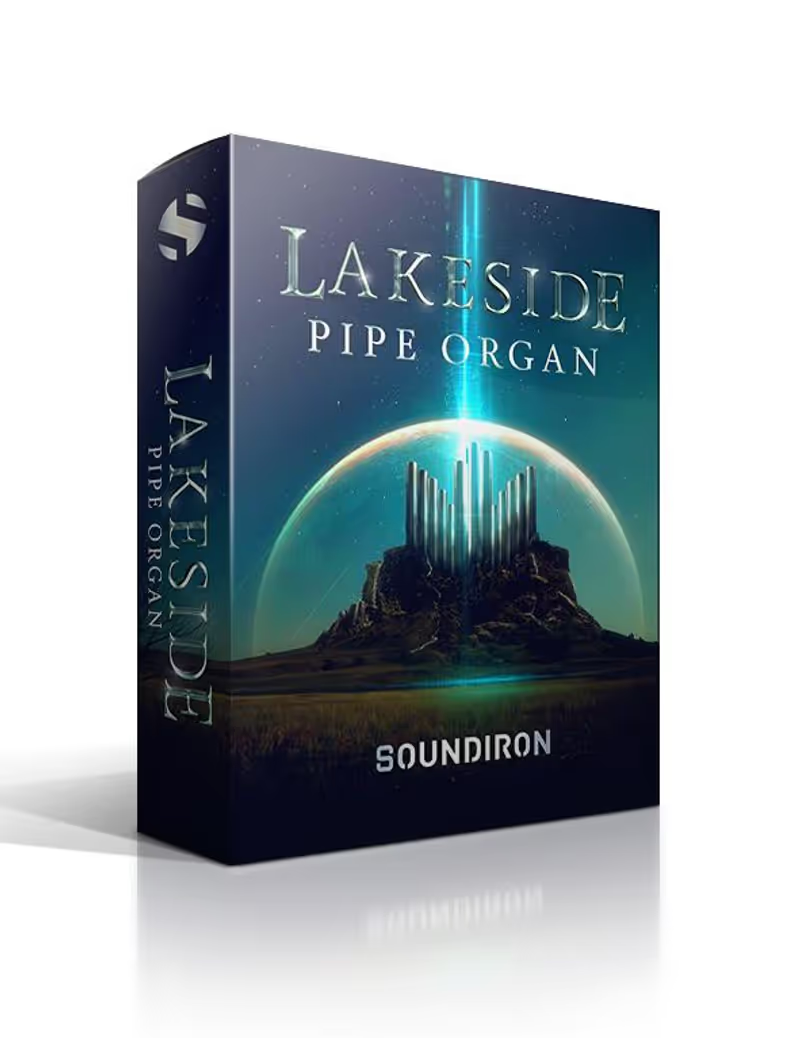
03 Soundiron

Lakeside Pipe Organ

Best for Intimate Organ

Scored from 5 user reports, not tested by us

How this score was reached

What users agree on. A pipe and electric hybrid recorded in a small temple, valued for a close intimate sound and for sound shaping that pushes it from warm and bold into atmospheric territory, at a price nobody argues with.

The recurring complaint. Directly compared with Alpha it is described as the smaller instrument in the smaller room with fewer articulations, so composers wanting scale or registrational variety are pointed elsewhere.

Synthesised from 5 user reports (VI-Control and Gearspace threads across the version 3.0 update). Nobody here ran this product.

The cheapest useful pipe organ here, and the one to skip if you need scale.

Community score
7.1
out of 10

How it scored

  • Sound in orchestration 7.0

    Close and intimate rather than large.

  • Realism when exposed 5.5

    The smallest instrument here, and the most exposed by exposure.

  • Interface and control 7.0

    Sound shaping praised, articulation set limited.

  • Value for money 9.0

    Routinely discounted to a price nobody disputes.

Why we picked it

Composers who need an intimate, close organ colour occasionally and do not want to spend much to get it.

Who should skip it

The cue needs cathedral scale, where reports point at the larger instruments instead.

The good

  • Very cheap, often discounted
  • Close intimate character
  • Atmospheric sound shaping
  • Small install

The bad

  • Fewer articulations than Alpha
  • Small room, small instrument
  • Not for cathedral scale
  • Weakest when exposed
Engine
Kontakt
Recorded at
Lakeside Temple, Oakland
Character
Close, intimate, hybrid pipe and electric
Price
$49
Why it scored that way

A small organ in a small room, sold for less than most expansion packs. It knows exactly what it is.

Lakeside is the entry point of this list and reports treat it as exactly that. The instrument is a Rodgers hybrid driving air through several hundred steel pipes and wooden reeds, recorded in a temple in Oakland, and the character composers describe is close and intimate rather than vast. The sound shaping controls get credit for taking it from warm and bold into more atmospheric territory, which matters for horror and underscore work.

Where it appears next to its own stablemate the comparison is unflattering and honest. Lakeside is described as the smaller church with the closer sound and fewer articulations, while Alpha has far more presets, a more spacious recording and more features. That is a fair summary and it maps directly onto the price difference.

Treat it as a colour rather than as your organ. For a composer who needs a believable organ two or three times a year, at a price that is regularly discounted heavily, it does a job that no amount of orchestral library substitution covers. For anybody whose writing leans on organ regularly, the threads point up the range rather than at this.

Check price $49

What didn’t make the list

3 cut
  • Hauptwerk Milan Digital Audio

    The realism benchmark composers name when the organ has to be exposed, because it samples stops separately and captures the pipe valve release. It is a separate platform rather than a Kontakt library, it is expensive, it is a heavy resource user, and the free version cannot be used commercially.

  • Synchron Great Rieger Organ Vienna Symphonic Library

    Repeatedly named the overall winner in these threads, with the best interface of any organ library, and it runs in VSL's own player rather than Kontakt so it sits outside this list.

  • Organteq Modartt

    A modelled rather than sampled organ, called the most versatile option available. Price and CPU load are the two things composers raise against it.

How to choose a pipe organ library

The first decision is not which library. It is whether the organ will ever be heard on its own.

Inside an orchestration, all three of these work, and the differences that dominate the threads above become close to inaudible. The organ is supplying weight, sacred colour or menace under everything else, and a sampled instrument does that convincingly for the price of a plugin.

Exposed, the category changes and the honest answer is that none of these is the right tool. Composers describe the technical reason repeatedly: many producers trim samples in a way that damages the start and the release of each note, removing the air entering the pipe and the valve closing after it. Those two moments are what the ear uses to decide whether an organ is real, which is why libraries that sit convincingly inside a cue can sound obviously fake alone.

If your writing needs that, the platform composers name is Hauptwerk, and the costs are real: the software, a sample set on top, a machine that can carry it, and a free version that is not licensed for commercial work. Knowing that before you spend on a scoring organ is worth more than any ranking on this page.

One last trap worth naming. Searching for organ plugins returns tonewheel instruments like the Hammond B3 alongside pipe organs, and they are unrelated instruments that happen to share a word. Everything here is a pipe organ, for sacred, classical and cinematic writing.

Read more →

Methodology

Who is this for

Working composers and producers who need reliability, speed, and character for professional scoring tasks.

Our testing process

Where we have tested a product, we do it in actual production scenarios, ranging from rapid sketches to commercial pitches, and we evaluate it in a dense template rather than in isolation. Where we have not, the product card says so and the assessment is drawn from specifications and documented behaviour instead.

Why you should trust us

We buy most reviewed plugins ourselves. Occasionally we receive NFRs for evaluation, but this never guarantees a review or positive verdict. We may earn commissions from links, but our editorial choices are never for sale.

Also considered

For every category, we audition the top 8 to 15 standard options, discarding any that suffer from poor scripting, slow load times, or uninspiring sampling.

Frequently Asked Questions

Why do sampled pipe organs sound fake when played on their own?

The most cited technical reason is sample trimming. Composers report that many producers cut the start and finish of notes incorrectly, which removes the attack of air entering the pipe and the sound of the valve closing on release. Buried in an orchestration nobody notices, and exposed those two moments are exactly what the ear uses to identify a real organ.

Is Hauptwerk worth it instead of a Kontakt organ?

If you are recording solo organ repertoire, composers in these threads are close to unanimous that nothing else comes near it, because it samples each stop separately and reproduces the release behaviour of real pipes. For scoring work inside an orchestration it is usually overkill, and the costs are real: the software is expensive, sample sets are a further purchase, it is demanding on your machine, and the free version is not licensed for commercial use.

Do sampled organs capture the very low pipes?

Not well, by consistent report. The biggest pipes reach down towards 16Hz, below what most monitoring reproduces and below what many recordings captured usefully, and composers describe sampled organs as thin at the very bottom while being too bright at the top. In practice you often add the sub weight from another source rather than expecting the organ to deliver it.

What is the difference between a pipe organ and a tonewheel organ library?

They are unrelated instruments that share a word. A pipe organ drives air through physical pipes and belongs to sacred, classical and cinematic writing. A tonewheel organ such as a Hammond B3 is an electric instrument for jazz, rock and soul. Searching for organ plugins returns both, and buying the wrong one is a common and expensive mistake.

How were these scores worked out if you did not test the libraries?

They are synthesised from threads on VI-Control and Gearspace, read for four recurring questions, and every product card lists the threads and the number of separate discussions behind its score. The card also states plainly that nobody here ran the product. It is a different kind of evidence from a studio test and it is labelled as one.

Written By

Felix Ward

Felix is an indie-folk songwriter and session guitarist who values vibe over perfection. He looks for tools that potentialize 'happy accidents' and offer immediate inspiration. If a plugin requires reading a 100-page manual, he's probably already moved on.

Read Next

More Keys →

Related Guides

All Guides →

New reviews, no noise

Occasional email when we publish something worth your time. No daily digest, no vendor press releases.

We store only your address, never sell it, and delete it as soon as you unsubscribe. See our privacy policy.