
Black Friday 2026260 deals tracked, up to 97% off See the deals →

5 Best Multiband Compressors for Surgical Control (2026)

If you are trying to fix a muddy bassline using a standard broadband compressor, you are completely destroying your high frequencies.

Henry Foster
By Henry Foster Mixing Engineer & Studio Tech

ModWheel is reader-supported. When you buy through links on this page we may earn an affiliate commission, at no extra cost to you. This never influences which products we recommend, read our testing methodology.

Prices come from the store's own feed and were last checked 23 November 2026. We don't issue discount codes — the price you see is the store's own.

Pick one in 10 seconds

Short version

Compare all 5

Pro-MB
1. Pro-MB Transparent Multiband FabFilter
8.6
Protection
Serial Key
$149 $199 View price
C6 Multiband Compressor
2. C6 Multiband Compressor Workhorse Multiband Waves
8.2
Protection
Waves Central
$29 $149 View price
C4 Multiband Compressor
3. C4 Multiband Compressor Broadcast Multiband Waves
7.9
Protection
Waves Central
$29 $99 View price
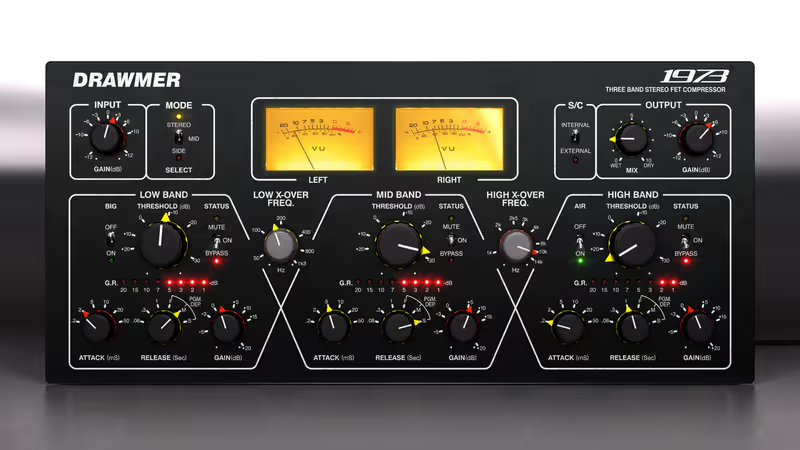
Drawmer 1973 Multi-Band Compressor 7.8
Protection
iLok
Multipass
5. Multipass Modular Multiband Kilohearts
7.4
Protection
Kilohearts Installer

Finding the best multiband compressors is absolutely mandatory for mix engineers who need to surgically control specific frequency ranges without affecting the entire track. Standard compressors blindly react to the loudest transient in the signal, often causing massive, unwanted pumping artifacts across the entire frequency spectrum. The top multi-band dynamics tools allow you to split your audio into entirely independent frequency zones, providing absolute control over incredibly complex sound sources.

You need a dedicated dynamic processor that handles aggressive crossover phase shifts invisibly so you can focus entirely on mix translation. A fantastic multiband compressor completely replaces the endless frustration of trying to manually automate equalizer bands just to tame a wildly unpredictable vocalist. The right plugin depends heavily on your specific workflow, such as preferring incredibly transparent digital processing or aggressive, colorful analog emulation.

When the whole mix needs one gesture rather than one band of it, our Best Bus Compressors (2026): The 'Glue' roundup is the place to start.

Top Picks

Pro-MB

8.6 / 10 Score

Best for Transparent Multiband

The cleanest multiband here and the one that leaves nothing behind it, which is either invisible or characterless depending on the day.
How it scored

  • Crossover Transparency Best in list 9.6

    Dynamic Phase keeps the crossover out of the transient. Best here.

  • Dynamic Control Best in list 9.2

    Free-floating bands placed where the problem is rather than on a grid.

  • Workflow Speed 8.5

    Drag a band onto the resonance the analyser is already showing you.

  • CPU Footprint 7.0

    Not the lightest, and the interface is doing a lot of drawing.

Why we picked it

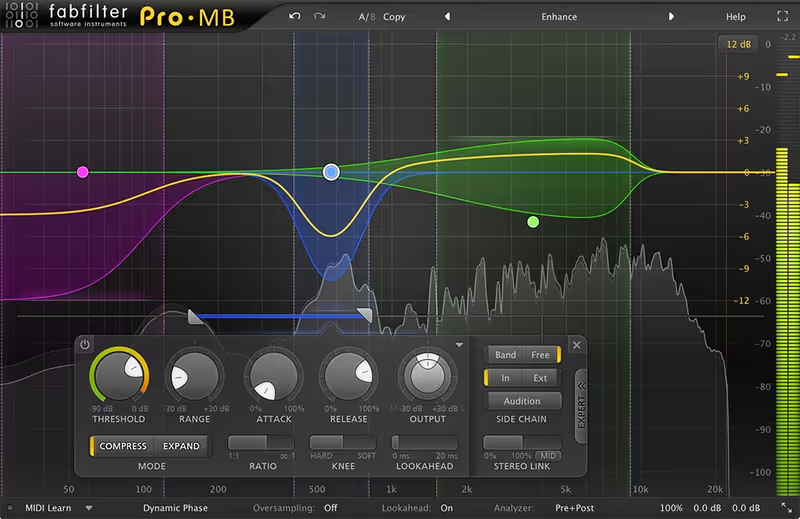
Best for surgical digital transparency because the free-floating bands and Dynamic Phase mode perfectly preserve the original transient response.

Who should skip it

Avoid if you absolutely demand highly colorful, aggressively saturated analog tube modeling for your vintage acoustic mixes.

The good

  • Incredibly intuitive free-floating band architecture
  • Fantastic proprietary Dynamic Phase crossover mode
  • Excellent high-resolution visual feedback interface

The bad

  • Provides absolutely zero vintage analog coloration
  • Premium price point
  • Density of visual feedback can easily overwhelm beginners
Format
VST/AU/AAX
Protection
Serial Key
Why it scored that way · 1 min read This processor remains the absolute best, most transparent tool available for surgically correcting complex frequency imbalances in dense mixes.

This processor remains the absolute best, most transparent tool available for surgically correcting complex frequency imbalances in dense mixes.

FabFilter Pro-MB completely revolutionizes multiband processing by allowing you to create completely independent, free-floating compression bands exactly where you need them. The proprietary Dynamic Phase processing mode is absolutely fantastic, ensuring your crossover frequencies remain completely free from the destructive phase artifacts associated with traditional multiband units. I constantly rely on this plugin when processing poorly recorded drum buses because the incredible visual interface instantly highlights problematic resonance buildups.

Because it focuses entirely on incredibly clean, perfectly transparent digital processing, it completely lacks the massive harmonic saturation found in vintage hardware emulations. Regardless of this intentional lack of analog grit, it is the best alternative available when you need completely reliable, invisible dynamic control. The included external sidechain routing options allow you to instantly duck a massive bassline only when the kick drum fundamental hits.
Used by
Top Tier Mastering Engineers Electronic Producers Mixers
Lowest price we've recordedSince 17 Nov · 58 checks since 23 Aug Check price $149 (was $199)

C6 Multiband Compressor

8.2 / 10 Score

Best for Workhorse Multiband

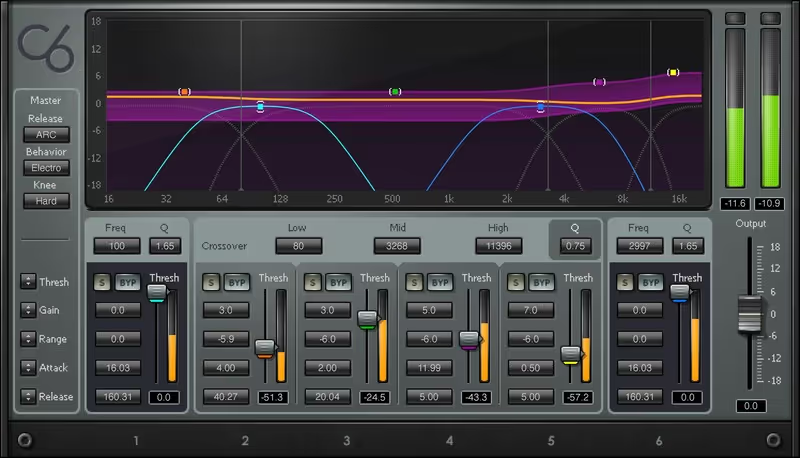
Two floating bands on top of four fixed ones, which is still the fastest way to catch a resonance that moves.

How it scored

  • Crossover Transparency 7.0

    Older crossover design, audible on material with sharp transients.

  • Dynamic Control 9.0

    The floating bands catch what a fixed grid misses.

  • Workflow Speed 7.5

    Dated interface, and everything is where it has always been.

  • CPU Footprint 9.2

    Very light, which is why it survives on large sessions. Joint best here.

Why we picked it

Best for surgical vocal taming because the two additional floating bands perfectly attenuate highly specific harsh resonances dynamically.

Who should skip it

Avoid if you strictly require highly modern, high-resolution visual frequency histograms to guide your compression decisions.

The good

  • Incredibly surgical floating resonance bands
  • Fantastic internal sidechain routing capabilities
  • Extremely low computer CPU footprint

The bad

  • User interface feels incredibly dated
  • Completely lacks modern visual frequency histograms
  • Requires dedicated installation manager application
Format
VST/AU/AAX
Protection
Waves Central
Why it scored that way · 1 min read This classic processor remains the absolute best, most reliable workhorse available for surgically taming incredibly harsh vocal performances.

This classic processor remains the absolute best, most reliable workhorse available for surgically taming incredibly harsh vocal performances.

Waves C6 Multiband Compressor perfectly provides four standard crossover bands alongside two additional floating bands dedicated to highly surgical resonance attenuation. The internal sidechain capabilities are absolutely fantastic, instantly allowing you to completely de-ess a vocal or tame harsh cymbal bleed with incredible precision. I regularly place this directly on aggressive electric guitar buses because simply pulling down the harsh 2kHz region dynamically makes the entire mix sound massively smoother.

The user interface feels incredibly dated by modern standards and completely lacks the massive, high-resolution frequency histograms found on newer plugins. Regardless of the old-school aesthetic, it is the absolute best legacy alternative for producers needing an undeniably reliable, completely proven dynamic processor. The extremely low computer processing footprint allows you to comfortably place an instance on every single track in a massive session.

Used by
Various Mix Engineers Live Sound Engineers Producers
Lowest price we've recordedSince 3 Nov · 58 checks since 23 Aug Check price $29 (was $149)

C4 Multiband Compressor

7.9 / 10 Score

Best for Broadcast Multiband

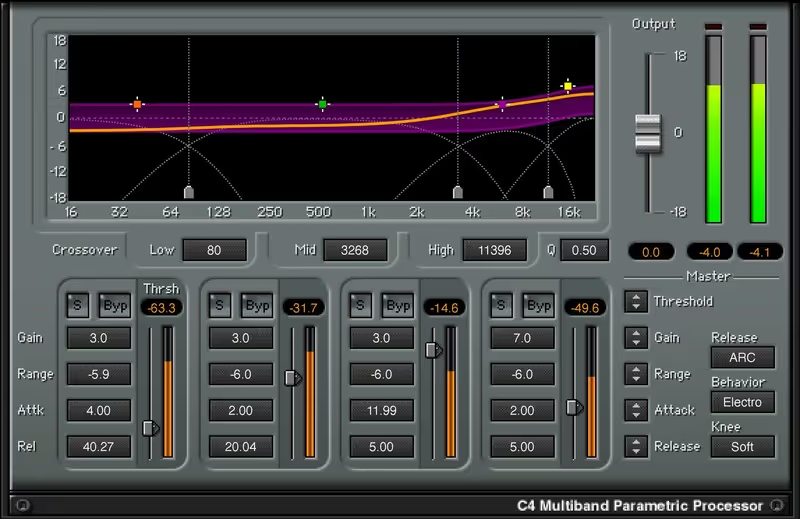
The oldest tool on the page and the quickest to a broadcast-safe result, which is the only job it is still the right answer for.

How it scored

  • Crossover Transparency Lowest in list 6.0

    No transparent crossover mode at all. Lowest here.

  • Dynamic Control 7.5

    Four fixed bands with automatic makeup gain.

  • Workflow Speed 8.8

    A preset and two moves. Nothing to learn.

  • CPU Footprint 9.2

    As light as the C6, on the same generation of code.

Why we picked it

Best for rapid broadcast mixing because the incredibly straightforward four-band layout perfectly provides immediate, reliable dynamic control.

Who should skip it

Avoid if you specifically want highly modern, completely transparent crossover filters and deeply surgical floating resonance bands.

The good

  • Incredibly fast and straightforward interface
  • Fantastic automatic gain makeup feature
  • Excellent reliable legacy preset library

The bad

  • Lacks transparent modern crossover filter modes
  • Restricted to exactly four frequency bands
  • Requires dedicated installation manager application
Format
VST/AU/AAX
Protection
Waves Central
Why it scored that way · 1 min read This collection provides the absolute best, most immediate multiband control available for incredibly fast-paced broadcast and podcast mixing tasks.

This collection provides the absolute best, most immediate multiband control available for incredibly fast-paced broadcast and podcast mixing tasks.

Waves C4 Multiband Compressor perfectly provides a highly streamlined interface that focuses entirely on quickly balancing four core frequency regions. The automatic gain makeup feature is absolutely fantastic, allowing you to instantly crush dynamic inconsistencies without wildly altering the overall perceived volume of the track. I heavily rely on this processor when mixing fast-turnaround voiceovers because it instantly solidifies the low-mid warmth while simultaneously controlling aggressive high-frequency sibilance.

Because it focuses entirely on highly streamlined, older algorithms, it lacks the completely transparent Dynamic Phase crossover modes found on highly modern digital units. Even with this strict limitation, it remains the absolute best budget-friendly alternative to heavy, highly complex modern multiband processors. The included preset library perfectly covers almost any standard mixing scenario, providing an incredibly fast starting point for beginners.

Used by
Podcast Mixers Broadcast Engineers Various Producers
Lowest price we've recordedSince 3 Nov, the 2nd time this low · 58 checks since 23 Aug Check price $29 (was $99)

Drawmer 1973 Multi-Band Compressor

7.8 / 10 Score

Best for Analog Multiband

Three bands, one attitude, and no way to get surgical, which is exactly what a bus usually needs.

How it scored

  • Crossover Transparency 6.5

    Analog-style crossovers that colour rather than disappear.

  • Dynamic Control 8.5

    FET behaviour with Big and Air circuits doing tone as well as dynamics.

  • Workflow Speed Best in list 9.0

    Three bands on a hardware face. Nothing to configure. Best here.

  • CPU Footprint 7.0

    Ordinary for a modelled unit.

Why we picked it

Best for aggressive analog glue because the authentic FET modeling perfectly delivers massive, punchy dynamics and beautiful vintage harmonic distortion.

Who should skip it

Avoid if you strictly want a highly surgical, completely transparent digital processor with six independent frequency bands for classical music mastering.

The good

  • Incredibly authentic and punchy analog FET modeling
  • Fantastic integrated Big and Air EQ circuits
  • Excellent aggressive vintage harmonic distortion

The bad

  • Rigid three-band limitation restricts surgical control
  • Lacks pristine transparent digital decay times
  • Requires iLok account authorization
Format
VST/AU/AAX
Protection
iLok
Why it scored that way · 1 min read This plugin provides the absolute best, punchiest analog attitude available for aggressively gluing rock and electronic instrument buses together.

This plugin provides the absolute best, punchiest analog attitude available for aggressively gluing rock and electronic instrument buses together.

Softube Drawmer 1973 perfectly captures the highly unpredictable, incredibly punchy FET compression associated with the massively heavy original hardware unit. The integrated Big and Air switches are absolutely fantastic, instantly allowing you to retain massive sub-bass weight and pristine high-frequency sheen even under extreme gain reduction. I heavily rely on this tool for massive synth bass buses because the analog circuitry instantly adds an incredibly desirable, gritty harmonic distortion.

The intentionally rigid three-band crossover design means you have absolutely no ability to add additional surgical bands for highly complex frequency carving. Despite this intentional limitation, it is unquestionably the best analog alternative for producers who demand immediate, undeniable vintage coloration. The interface faithfully replicates the original physical hardware, making it incredibly fun and intuitive to push aggressively during a fast mix session.

Used by
Rock Mix Engineers Various Record Producers Broadcast Engineers
List price now · lowest recorded $55Low on 17 Nov · 58 checks since 23 Aug Check price $159
05 Kilohearts

Multipass

7.4 / 10 Assessed score

Best for Modular Multiband

Not tested by us, assessed from specs and documented behaviour

A multiband frame rather than a multiband compressor, which makes it the most capable option here and the slowest to a result.

How it scored

  • Crossover Transparency 8.0

    Linkwitz-Riley splits that sum flat, on a display that is functional rather than precise.

  • Dynamic Control Lowest in list 7.0

    Depends on the snapins in each lane, though the free Compressor and Dynamics cover the basics.

  • Workflow Speed Lowest in list 6.0

    You are building the plugin before you use it. Lowest here.

  • CPU Footprint 8.5

    Individual snapins are cheap, so a simple chain stays light.

Why we picked it

Best for sound designers who want each band processed differently, such as compressing the lows while a bitcrusher hits only the highs.

Who should skip it

Avoid if you need a fast corrective tool for vocals or mix buses, where a dedicated multiband like C6 gets there much sooner.

The good

  • Any snapin chain on each band
  • Free Compressor and Dynamics snapins included
  • Modulators reach every snapin parameter

The bad

  • No ready-made multiband compressor layout
  • Every band starts empty, slow setup
  • Snapins beyond Essentials cost extra
Format
VST/AU/AAX
Protection
Kilohearts Installer
Bands
Up to 5
Why it scored that way · 1 min read Multipass does multiband compression by having you build it. Load a Compressor or Dynamics snapin into each band, then add whatever else that band needs.

Multipass does multiband compression by having you build it. Load a Compressor or Dynamics snapin into each band, then add whatever else that band needs.

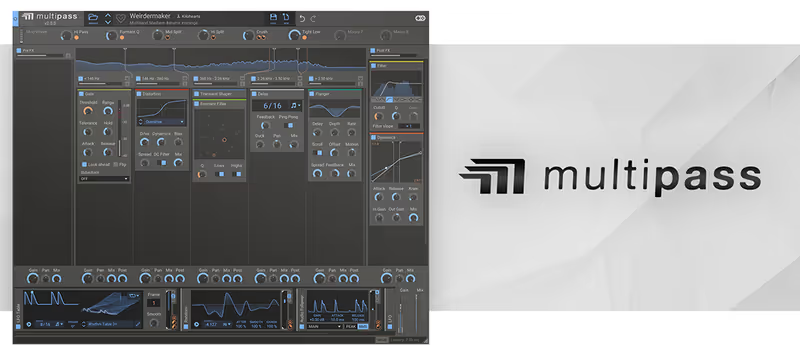
Multipass splits the signal into up to five bands with Linkwitz-Riley crossovers, so the bands recombine with a flat frequency response before anything is loaded. Each band then takes its own chain of snapins. For multiband compression that means a Compressor or Dynamics snapin per band, both included in the free Kilohearts Essentials pack, with room after them for saturation or transient shaping. On a drum bus, the lows can sit under slow compression while a bitcrusher roughs up only the cymbals. The built-in modulators can drive any snapin parameter as well as band gain and pan, and the crossover points are set by dragging them on a spectrum display.

The friction is time. There is no ready-made multiband compressor layout and every band starts empty, so a basic four-band compressor has to be assembled snapin by snapin before any adjusting can begin. That open design is what makes it the most capable option here and also the slowest. For corrective work, such as taming a harsh 3kHz on a vocal, C6 gets there in a fraction of the time. Where each band should do something different, Multipass is the only pick on this page that can put a different effect on each band.

Used by
Sound Designers Dubstep Producers Electronic Artists
Check price $99
Read more →

Methodology

Who is this for

Working composers and producers who need reliability, speed, and character for professional scoring tasks.

Our testing process

Where we have tested a product, we do it in actual production scenarios, ranging from rapid sketches to commercial pitches, and we evaluate it in a dense template rather than in isolation. Where we have not, the product card says so and the assessment is drawn from specifications and documented behaviour instead.

Why you should trust us

We buy most reviewed plugins ourselves. Occasionally we receive NFRs for evaluation, but this never guarantees a review or positive verdict. We may earn commissions from links, but our editorial choices are never for sale.

Also considered

For every category, we audition the top 8 to 15 standard options, discarding any that suffer from poor scripting, slow load times, or uninspiring sampling.

Frequently Asked Questions

When should I reach for multiband instead of a normal compressor?

When one part of the spectrum is triggering everything. If a kick drum makes the whole mix duck, or a bright vocal syllable pulls the level down across the board, splitting the signal lets you control the offender without the rest following. If the whole track simply needs to be more even, a single band compressor is the right answer.

How many bands do I actually need?

Two or three, in most real cases. Every crossover is another place for phase problems and another set of controls to get wrong, and problems that genuinely need five bands are usually arrangement problems. Start with one split at the frequency causing trouble and add a second only if you need it.

Why does multiband compression make things sound lifeless?

Because it removes the relationship between frequency ranges. A real instrument gets brighter as it gets louder, and compressing the highs independently flattens that link, so the result is even and inert. Keep the reduction small in each band and let the loud moments still be brighter than the quiet ones.

Do the crossovers cause phase problems?

Standard crossovers do shift phase around the split point, which is audible as a hollow quality when bands are set to unity. Plugins offering linear phase or a dynamic phase mode avoid it at the cost of latency or CPU. On a mix bus it is worth engaging, and on a single track it rarely matters.

Written By

Henry Foster

Henry is a mixing engineer with a background in broadcast and post-production. He obsesses over signal flow, gain staging, and the subtle coloration of analog-modeled plugins. His reviews focus on technical precision, CPU efficiency, and UI workflow.

Related Guides

All Guides →

New reviews, no noise

Occasional email when we publish something worth your time. No daily digest, no vendor press releases.

We store only your address, never sell it, and delete it as soon as you unsubscribe. See our privacy policy.