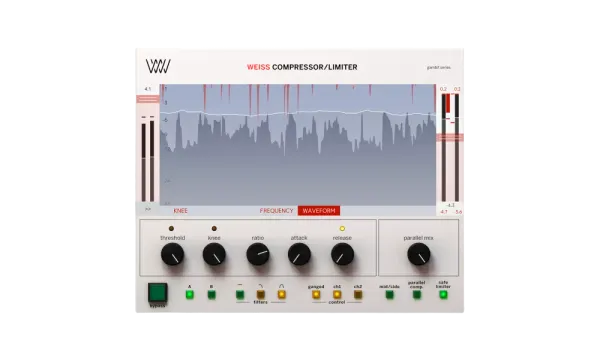



The default mix bus compressor for good reason, and the colour it adds is not something you can dial back out.
How it scored
- Sound Quality 8.8
The original glue. It makes a mix sound like a record.
- Workflow Speed 9.0
Auto release means you are done in three moves.
- CPU Footprint 8.5
200 MB and light enough to leave on every bus.
- Metering & Control 5.5
No sidechain EQ and basic visuals. Its real weakness.
Why we picked it
Producers who want the authentic "record" sound. It works on basically everything except intimate jazz.
Who should skip it
You want transparent leveling. The SSL adds color and aggression that you cannot turn off.
The good
- The original sound
- Auto release
- Easy to use
The bad
- Can be aggressive
- No sidechain EQ
- Visuals are basic
- Engine
- VST/AU/AAX
- Type
- VCA Bus Comp
- Size
- 200 MB
- Price
- $19
Why it scored that way
The sound of rock and roll. Punchy, aggressive, and undeniably classic.
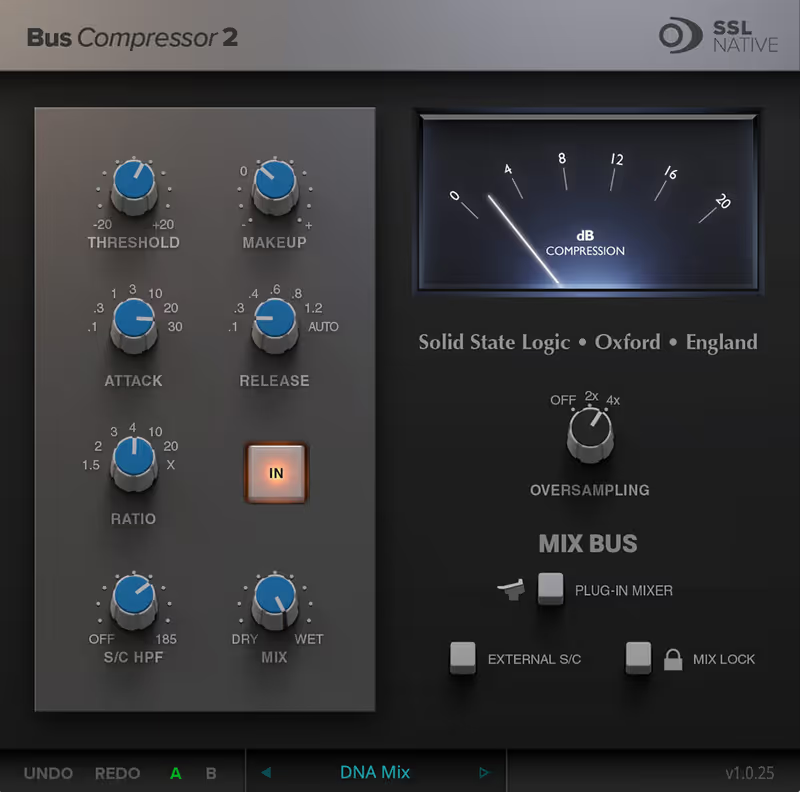
This is the sound everyone else is trying to emulate. SSL made the original hardware, and their Native plugin is remarkably close. It doesn't just compress. It adds a mid-range "smack" that brings drums forward instantly. I set the attack to 30ms, release to Auto, and aim for 4dB of reduction. Suddenly, the track sounds finished, cohesive, and ready for radio. The "Auto" release setting is particularly musical, adapting to the density of the track in a way that feels like a human engineer riding the fader.
Unlike some third-party copies, the official SSL plugin retains the low-end perfectly. It doesn't thin out the kick drum even when you are hitting it hard. It is the definitive tool for rock, pop, and modern orchestral mixes where you need the drums to punch through a dense wall of sound. The oversampling options ensure that even at extreme settings, the high frequencies remain smooth and free of the harsh digital grit often found in cheaper emulations. Where it sits against the rest of this list: This is the reference point the rest of the page is measured against. The SSL bus compressor topology is what most engineers mean by "glue", and its behaviour is so widely known that it functions as a shared vocabulary: 4:1, slowest attack, auto release, two or three decibels of reduction is a starting point almost anyone in the field will recognise. That familiarity is a genuine argument for it over technically more capable alternatives. Where it loses is transparency. It has a character, that character is on every record you have heard, and there are mixes where you want the dynamics controlled without the listener being told a bus compressor did it. That is when the FabFilter further down this page earns its place.
Playing connects you to YouTube, which may set cookies.
Lowest price we've recorded since 23 August 2026 Price history
Check price $19 (was $149)