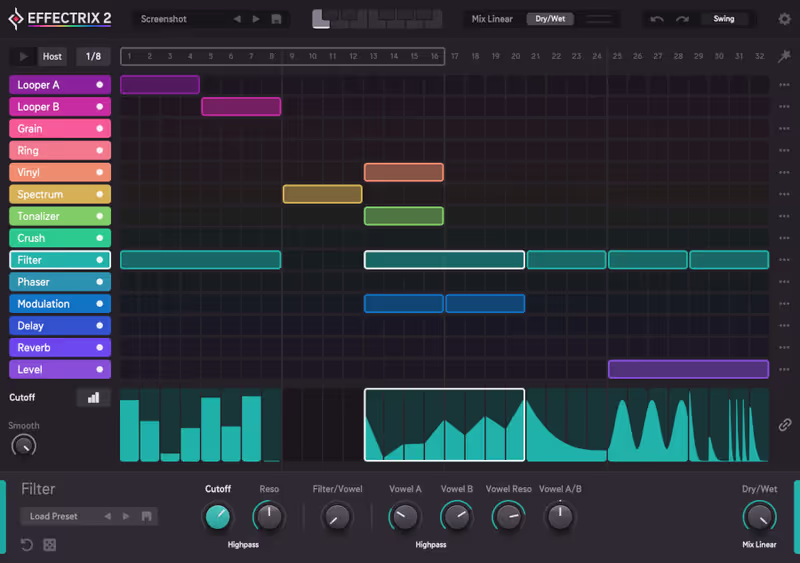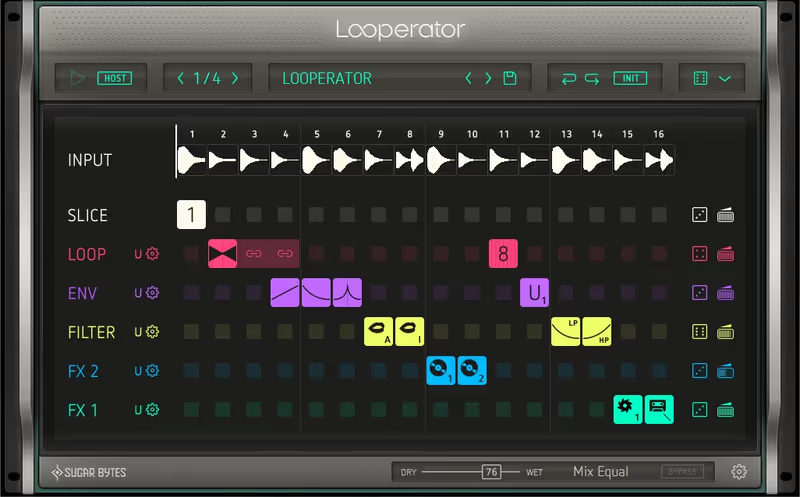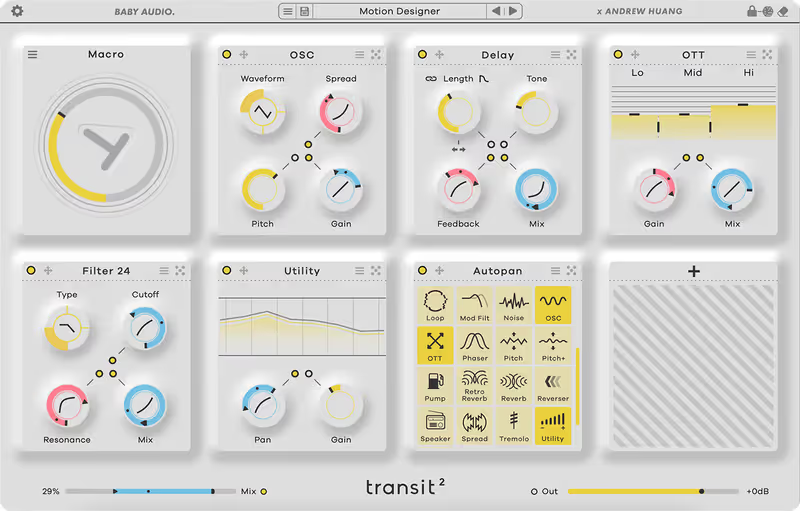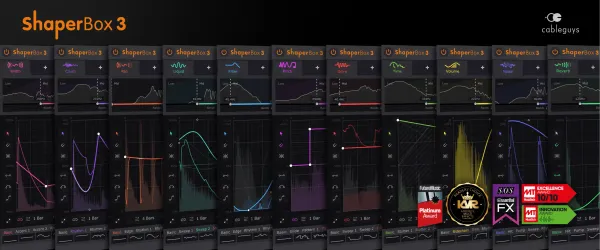
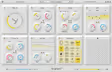
The most precise rhythmic tool here and the least surprising, which is the trade when you draw everything yourself.
How it scored
- Rhythm Randomization 6.0
Nothing happens that you did not draw.
- Workflow Speed 8.5
Fluid to draw, slowed by the preset browser.
- CPU Footprint 7.5
Light until the bands stack up.
Why we picked it
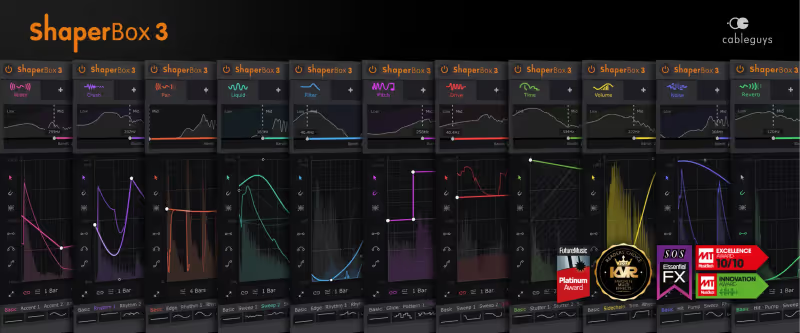
Best for precise modulation control because of its incredibly detailed drawable LFOs.
Who should skip it
Avoid if you prefer randomized algorithmic results over manually drawn curves.
The good
- Incredibly precise LFO drawing tools
- Highly responsive audio triggered envelopes
- Multiband processing available per effect
The bad
- Steep learning curve for complex sidechain routing
- Can be overwhelming for simple volume ducking tasks
- Preset browser feels slightly clunky to navigate
- Format
- VST/AU/AAX
- Protection
- Serial Key
- Price
- $99
Why it scored that way
This is the most fluid rhythmic modulation environment I have ever used in a studio setting.
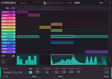
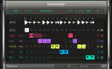
ShaperBox 3 has completely replaced manual volume automation in my daily mixing template for electronic projects. The highly responsive graphical interface allows you to draw precise volume ducks, intricate time stutters, and aggressive filter sweeps instantly. The newly introduced audio-triggered envelopes mean you no longer need complex MIDI routing just to achieve highly responsive, dynamic effects on a static drum bus.
While it is generally a lightweight plugin, stacking multiple frequency bands with complex LFO shapes can eventually tax older processing systems. I appreciate how quickly you can achieve a classic French house pumping effect or unpredictable IDM stutters. It remains a strong choice for any mix engineer looking to save time, even though the preset browser is the clunkiest part of the package.
Playing connects you to YouTube, which may set cookies.