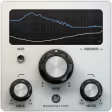
Not tested by us, assessed from specs and documented behaviour
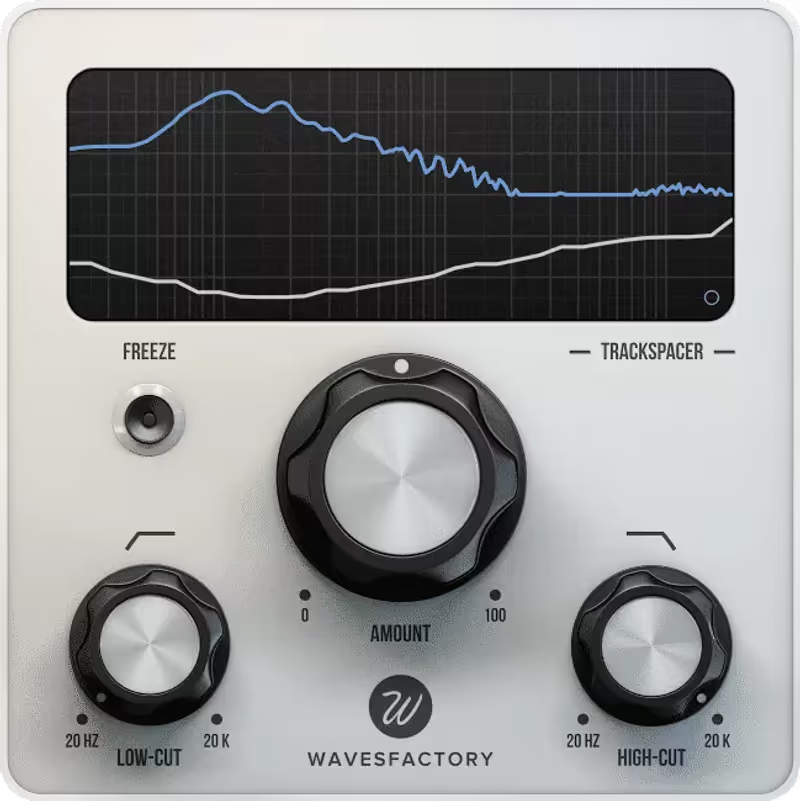
The nearest replacement in kind rather than in degree. It works spectrally on the whole signal instead of asking you to place bands, which is the specific thing you are buying soothe2 for, and it costs well under half as much.
How it scored
- Finds It For You 8.5
Spectral analysis across the range, not bands you position.
- Control 6.5
Few controls by design. Fast to set, hard to steer.
- CPU 7.0
Spectral processing is not free, and this is lighter than soothe2.
- Value 9.0
The automatic behaviour at roughly a third of the anchor's price.
Why we picked it
Best for composers who want the harshness gone without first identifying which frequency is causing it.
Who should skip it
Skip it if you want to make surgical decisions yourself, because there are no bands to place.
The good
- Automatic across the spectrum
- Set in seconds
- Well under half the anchor price
The bad
- Very little steering
- Thins the top when pushed
- No per band control
- Finds It
- Automatically, whole spectrum
- Method
- Spectral
- Price
- $129
Why it scored that way
The closest thing to soothe2's actual behaviour.
This is on the page first because it answers the same question rather than a neighbouring one. Where a dynamic equaliser waits for you to decide which frequency is wrong, this looks at the whole spectrum and redistributes energy away from wherever it has piled up, which is what a composer reaching for soothe2 on a harsh string patch actually wants.
The control set is deliberately small. There is a focus control for where in the spectrum it concentrates, an amount, and a character choice, and that is close to the whole instrument. For a mixer who wants to nudge one resonance and leave everything else alone, that is frustrating. For a composer who has a cue to deliver and a brass bus that sounds like a kazoo, it is the point.
Where it falls short of the anchor is precision under heavy processing. soothe2 can be pushed hard on a single narrow ring and stay invisible, and this becomes audible sooner, thinning the top of the signal in a way a listener notices on an exposed line. Inside an arrangement that difference closes considerably.