
Head to head

Cinematic Studio Strings vs Berlin Strings

Two of the most recommended string libraries compared on legato, detail, disk cost and how much programming each one demands before it sits in a cue.

The short answer

Buy CSS if you write emotional legato lines and want the library to meet you halfway. Buy Berlin Strings if you write detailed divisi counterpoint and have the patience to program it. Most composers should start with CSS.

ModWheel is reader-supported. When you buy through links on this page we may earn an affiliate commission, at no extra cost to you. This never influences which products we recommend, read our testing methodology.

Compare all 2

Cinematic Studio Strings
1. Cinematic Studio Strings Cinematic Studio Series
8.2
2. Berlin Strings Orchestral Tools
7.7

Both of these turn up on professional templates, and composers rarely own just one. They solve different problems. This is a comparison of where each one wins, drawn from our reviews of both in the cinematic strings roundup.

The short version

Cinematic Studio Strings is an automatic transmission. Berlin Strings is a manual. That is not a knock on either one: it is the whole distinction. CSS makes musical decisions for you and is very good at guessing right. Berlin Strings makes almost none, and hands you the control instead.

If you are choosing your first serious string library, that difference matters more than any spec on the page.

Legato and phrasing

CSS is built around its legato engine, and it is the reason people keep recommending it. The transitions are dark and forgiving, and it interprets mod-wheel movement musically rather than literally. You do not have to ride the wheel aggressively to get a phrase that sounds intentional.

The cost is baked-in latency. CSS needs roughly 60ms before a note speaks, so you nudge the MIDI behind the grid and adjust. It becomes second nature quickly, but it makes live playing frustrating, and that is a genuine reason some composers bounce off it.

Berlin Strings asks for more. You ride dynamics and match vibrato yourself. Get it right and it is more expressive than CSS can be, but “get it right” is doing real work in that sentence.

Detail and divisi

This is where Berlin Strings pulls clearly ahead. It ships separate sections for divisi writing, which lets counterpoint stay legible where other libraries turn to mud. It also includes specific bowing and blurring articulations that CSS simply does not have.

CSS has a deliberately limited articulation set. That is part of why it is fast to work with, and part of why it runs out of road on intricate writing.

Tone and room

Berlin Strings was recorded at Teldex, and the room is the selling point. It adds a consistent warmth that needs very little help to sit in a mix.

CSS was recorded in Sydney and is noticeably darker. Plenty of people love that immediately. Plenty of others reach for an EQ before anything else. Neither reaction is wrong, but it is worth knowing before you buy.

What it costs to keep installed

Cinematic Studio StringsBerlin Strings
Disk35 GB140 GB
EngineKontakt Player 5.8+SINE / Kontakt
CharacterDark, lush, forgivingDetailed, warm, demanding
DivisiNoYes
Learning curveShallowSteep

The four-times disk difference is not a footnote. Berlin Strings is resource-heavy in RAM as well, and on a large template that is a real constraint rather than a preference.

Which one first

If you own neither: CSS. It gets you to a usable emotional string sound faster, costs less to keep installed, and the things it does badly are things you can work around.

If you own CSS and are hitting its ceiling on detailed writing: Berlin Strings is the upgrade, and the two coexist well on one template. That is how most composers we know ended up owning both.

If you are on a deadline and do not already know the SINE engine, do not make Berlin Strings your first purchase.

01 Cinematic Studio Series

Cinematic Studio Strings

Best for Emotional Scoring

Tested in our studio

The default professional choice for emotional writing, provided you can live with the legato delay it needs to sound that good.

Tested score
8.2
out of 10

How it scored

  • Realism 9.2

    The legato transitions read as a performance rather than a crossfade.

  • Legato & Playability 9.4

    Forgiving enough that you stop riding the mod wheel like a maniac.

  • Mic Options 6.5

    A largely fixed mix. Fine out of the box, but little room to re-balance.

  • CPU & RAM Footprint 7.5

    35 GB and well behaved in a large template.

Why we picked it

The undisputed king of emotional legatos. The transition logic is so musical that it feels like the software is reading your mind.

Who should skip it

You cannot handle legato latency. The 60ms delay required for realism makes live performance frustrating.

The good

  • Unbeatable legato
  • Consistent short notes
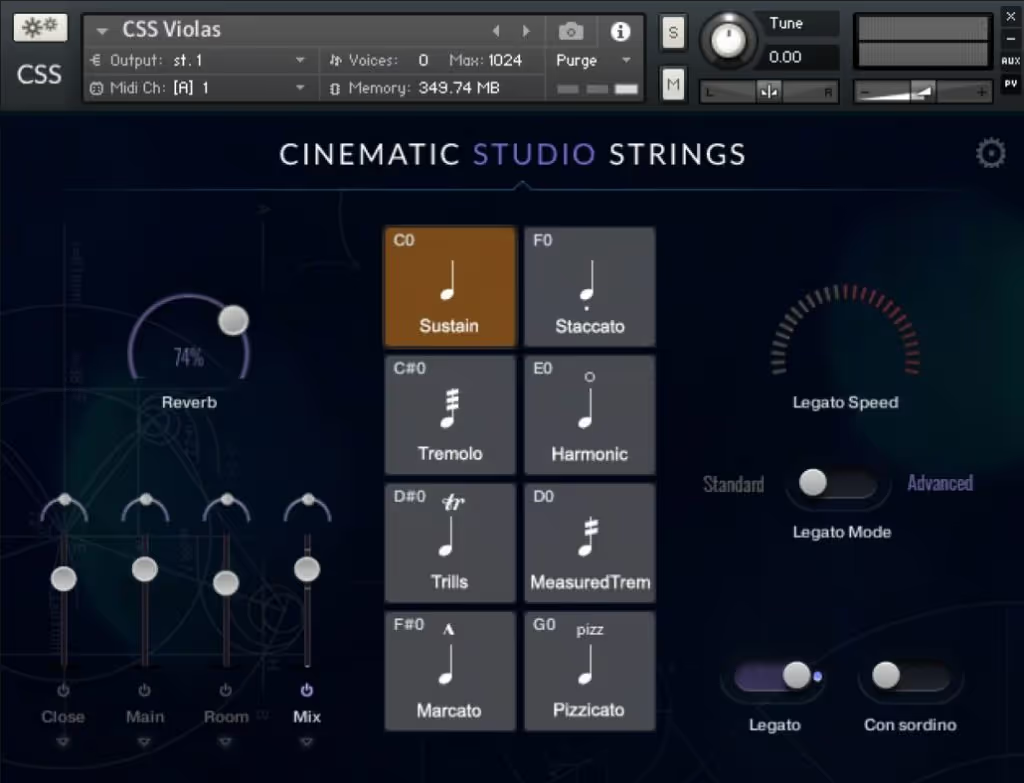
  • Simple interface

The bad

  • Significant legato latency
  • Dark tone (needs EQ)
  • Limited articulations
Size
35 GB
Engine
Kontakt Player 5.8+
Type
Symphonic Strings
Price
Check site
Why it scored that way

If you only buy one string library in your career, this should probably be it.

There is a reason Cinematic Studio Strings (CSS) is on every professional template I know: it just works. The legato engine is dark, lush, and incredibly forgiving. Unlike older libraries where you have to ride the modulation wheel like a maniac to get a musical phrase, CSS instinctively understands your intent. It smooths out the transitions with a "chocolatey" richness that instantly feels expensive. I used it for the main theme of a romantic drama, and the cellos sang with a human quality that brought the director to tears. It captures the emotional weight of a performance in a way that feels organic and connected, rather than just a series of samples.

The only catch is the baked-in latency, which drives some people crazy. The samples need around 60ms to "breathe" before the note speaks, meaning you have to nudge your MIDI track backwards for it to be on the grid. Once you get used to this workflow, it becomes second nature. It is not the most detailed library for incredibly fast runs, but for pure, slow-burning emotion, it is currently unbeaten in the industry. The trade-off for the latency is a realism that other libraries sacrifice for playability.
Playing connects you to YouTube, which may set cookies.

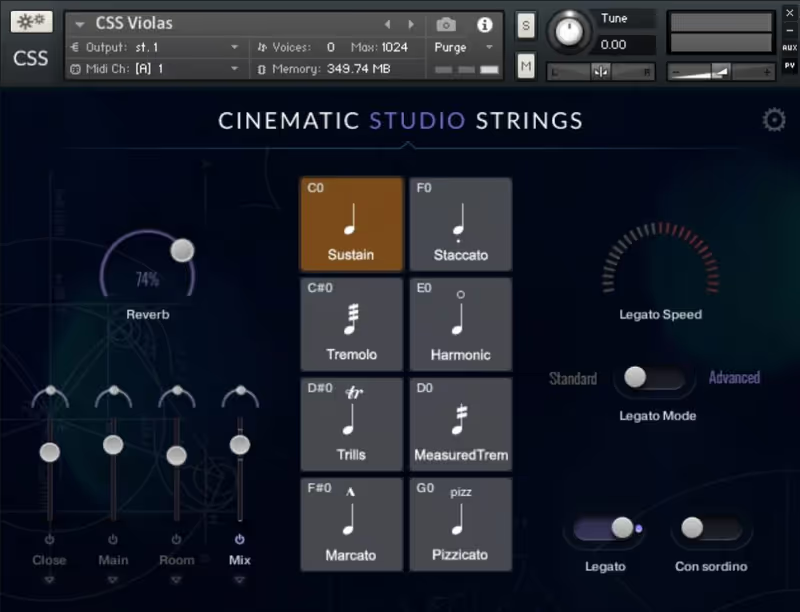
Interface of Cinematic Studio Strings by Cinematic Studio Series
Heard on
Hollywood Blockbusters AAA Game Scores Trailer Music
02 Orchestral Tools

Berlin Strings

Best for Symphonic Works

The library you graduate to once mud in your counterpoint is the problem you are trying to solve, and you have time to program it.

Score
7.7
out of 10

How it scored

  • Realism 9.0

    Teldex room tone plus blurring articulations that few libraries attempt.

  • Legato & Playability 7.5

    Rewards patience. The engine is not something you learn on a deadline.

  • Mic Options 8.8

    Deep mic control through SINE, with real divisi separation.

  • CPU & RAM Footprint 5.5

    140 GB and heavy once divisi sections are live.

Why we picked it

Detailed, intricate orchestrations. The divisi sections allow for complex counterpoint that would turn other libraries into mud.

Who should skip it

You are on a tight deadline. The complexity of the engine requires time and patience to program correctly.

The good

  • Exceptional recorded detail
  • Teldex room acoustics
  • Divisi options

The bad

  • Very expensive
  • Steep learning curve
  • Resource heavy
Size
140 GB
Engine
SINE / Kontakt
Type
Divisi Strings
Price
Check site
Why it scored that way

The connoisseur's choice. Complex, difficult, and utterly beautiful.

Berlin Strings is the library you graduate to when you are bored of the "easy" options. It offers insane detail, including specific blurring articulations and separate sections for intricate divisi writing, which allows for complex counterpoint that would turn other libraries into mud. The Teldex Studio room tone is legendary. It adds a natural, warm "sheen" of class to everything. I use the "Spiccato Exposed" patch for fast, aggressive passages where I need to hear every single bow stroke clearly, capturing the frenetic energy of a chase scene with absolute precision.

However, this is not a library for beginners. The Capsule (and now SINE) engine can be finicky, requiring a lot of system resources and meticulous programming to sound right. If CSS is an automatic transmission, Berlin Strings is a manual stick shift. You have to drive it-riding the dynamics, matching the vibrato-but when you do, you have total control over the road. It rewards patience with the most realistic resulting sound on the market, allowing for a level of expressiveness that automatic libraries simply cannot reach.

Playing connects you to YouTube, which may set cookies.

Heard on
Film Scores Classical Mockups Detailed Animation

Pick Cinematic Studio Strings if

You write slow, exposed melodic lines, you want a library that reads your intent from the mod wheel, and you would rather spend your time writing than programming.

Pick Berlin Strings if

You write intricate inner parts that need real divisi, you want the Teldex room on everything, and you have the RAM and the patience the SINE engine asks for.

Written By

Louis Raveton

Louis works across immersive scores (Venice Biennale, LVMH) and animation (Canal+), while producing Downtempo and Electro-Dub as Monsieur Shwill and Flagada. He treats his sample drive like a record collection, constantly hunting for the perfect 'imperfect' texture

Related Guides

All Guides →

New reviews, no noise

Occasional email when we publish something worth your time. No daily digest, no vendor press releases.

We store only your address, never sell it, and delete it as soon as you unsubscribe. See our privacy policy.