



Not tested by us, assessed from specs and documented behaviour
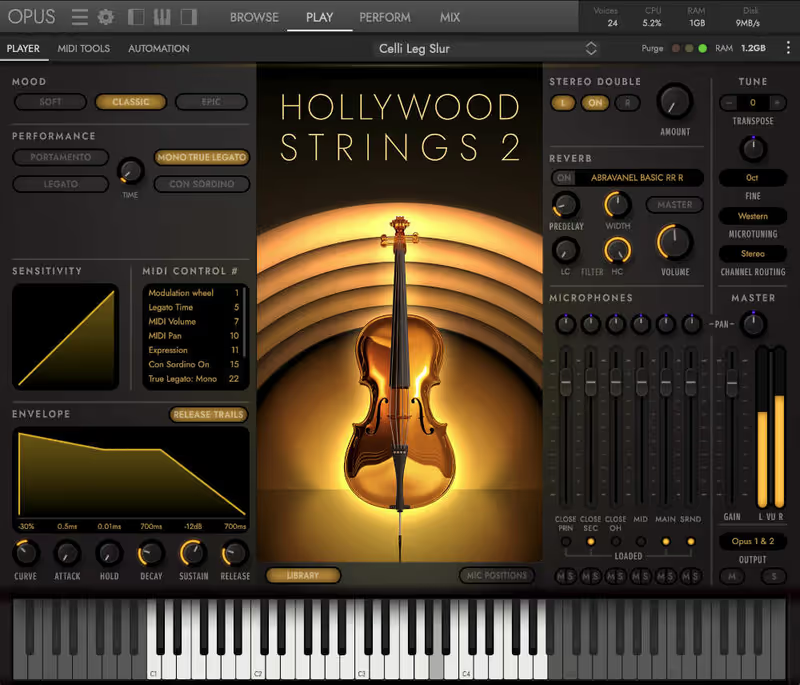
The closest thing to a like-for-like replacement, and it sounds nothing like CSS. Where CSS is intimate and restrained, this is the big California scoring stage, and at 199 dollars it is the cheapest complete library here.
How it scored
- Legato 8.0
Strong, and less famously musical on a slow exposed line than CSS.
- Writing Speed 7.0
Deep and slow. Multiple mics mean decisions before you write.
- Coverage 9.2
A complete library including shorts, runs and effects.
- Value 9.0
199 dollars for a full professional library is the outlier here.
Why we picked it
Best for composers wanting one complete professional library with the large Hollywood scoring-stage sound.
Who should skip it
Skip it if you want intimacy and restraint, because this library is built to sound large.
The good
- Complete library, no gaps
- Large scoring-stage sound
- Cheapest full library here
The bad
- Large on disk
- Mic decisions before writing
- Less intimate than CSS
- Strength
- Scale and coverage
- Room
- Los Angeles stage
- Price
- $174
Why it scored that way
The other professional default, and a different room.
This is the alternative most people are looking for without knowing its name. Where CSS is a restrained, close, emotionally intimate library recorded to sit under dialogue, Hollywood Strings is the opposite tradition, a large section in a large Los Angeles room with the scale of a studio picture built into the recordings themselves rather than added afterwards with reverb.
Coverage is where it clearly beats CSS. This is a complete library rather than a specialist, so shorts, runs, trills and effects are all present at a standard that does not require a second purchase to fill gaps. For a composer building one string template rather than assembling several, that completeness matters more than any single articulation does.
The costs are real and mostly about time. Multiple microphone positions mean decisions before you write a note, the library is large on disk, and the OPUS engine takes learning. The legato is very good and does not have the specific reputation CSS has for slow exposed lines, which is precisely the thing CSS owners bought it for.
Playing connects you to YouTube, which may set cookies.
Lowest price we've recorded since 23 August 2026 Price history
Check price $174 (was $299)