Distortion with actual space around it thanks to the convolution engine, which is overkill the moment you just want grit.
How it scored
- Sound Quality 8.8
The convolution stage gives the distortion dimension.
- Workflow Speed 6.8
A tablet-style interface that slows precise work.
- CPU Footprint 6.0
400 MB and heavy once multiband is engaged.
- Metering & Control 8.8
Full multiband control with clear metering.
Why we picked it
Modern sound design where you need distortion to have space and dimension.
Who should skip it
You just want a simple SP-1200 button. Trash is a complex multi-band beast.
The good
- Convolution engine
- Multiband power
- Modern UI
The bad
- CPU heavy
- Overkill for simple tasks
- iPad style UI
- Engine
- VST/AU/AAX
- Type
- Multi-band Distortion
- Size
- 400 MB
- Price
- $99
Why it scored that way
The legend returns. The 'Convolve' module is a game changer.
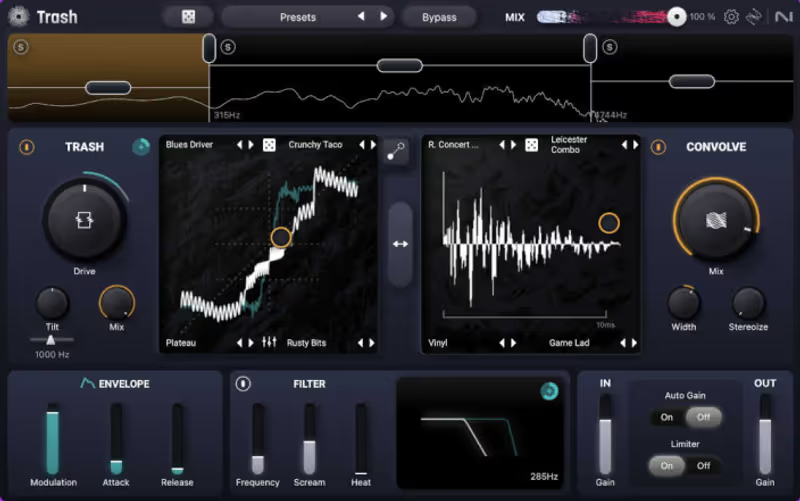
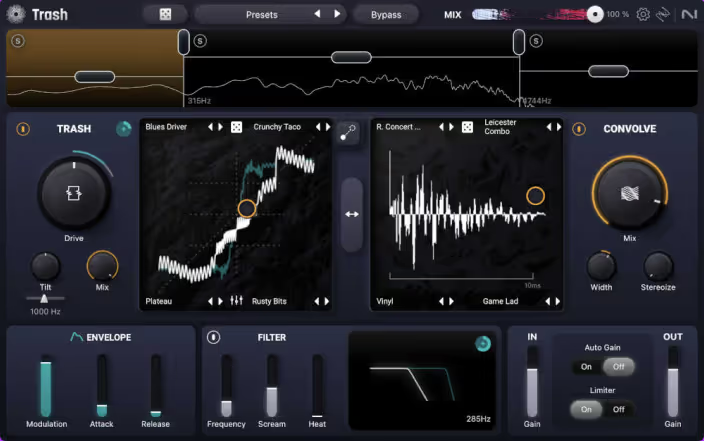
The original Trash 2 was a staple for years, and the new Trash keeps the spirit but modernizes the workflow for a new generation. The bitcrushing here is handled within the distortion modules, allowing you to "waveshape" your audio into digital squares. But the real power is blending that lo-fi crunch with the innovative 'Convolve' module, which places your crushed sound into weird, metallic spaces (or even inside other samples) for unique spatial textures that no other plugin can create.
It creates "Space Trash"-distorted textures that still have depth, room information, and a sense of place. It’s less of a vintage emulator and more of a futuristic texture generator for high-tech genres. The XY pad allows you to morph between different distortion types in real-time, making it an expressive tool for evolving basslines or transitioning leads during a live performance or intense automation pass, adding significant movement to the sound.