Tested in our studio
Buy it for the sound design engine, not for the strings, and it will save you hours of synth programming on a tension cue.
How it scored
- Realism 6.8
Aggressive and dry. The traditional sections are competent but limited.
- Legato & Playability 6.5
The interface takes real time before it plays back what you intended.
- CPU & RAM Footprint 6.2
38 GB, and the loop engine is not cheap once layered.
Why we picked it
Hybrid tension and horror scores. The sound design engine allows you to create terrifying swarms and drones that standard orchestras cannot match.
Who should skip it
You require a traditional, lush Hollywood string sound. The acoustic samples are aggressive and sharp, lacking the warmth needed for romance.
The good
- Deep sound design engine
- Massive loop library
- Aggressive tone
The bad
- Complex interface
- Traditional strings are limited
- Expensive
- Size
- 38 GB
- Engine
- Kontakt Player 5.8+
- Type
- Hybrid String Engine
- Price
- $199
Why it scored that way
Strictly for the composers who want to sound like Hans Zimmer on a bad acid trip.
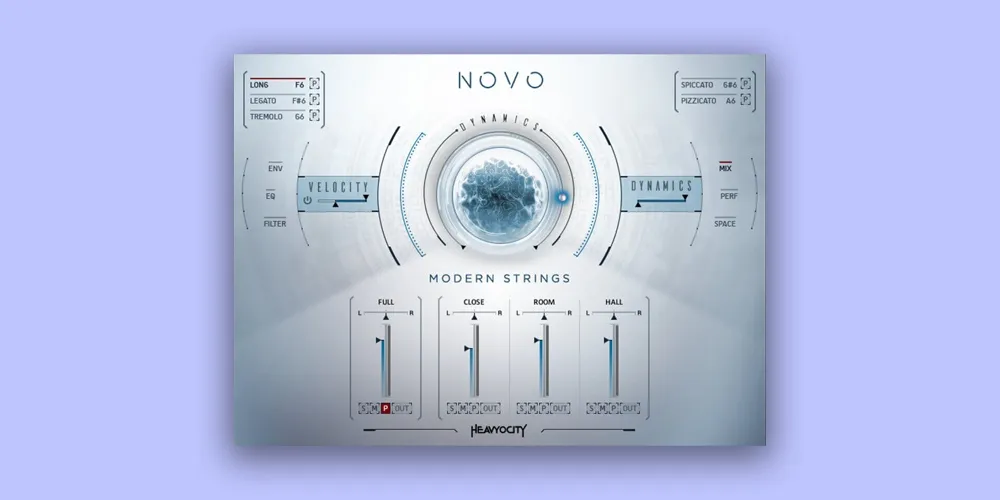
Heavyocity does not care about your Mozart mockups. NOVO is an instrument built for punishment and modern sound design. The traditional string sections are surprisingly competent-aggressive, biting, and dry-but the real value lies in the loop engine. You can mangle, filter, and gate these orchestral samples until they sound like a swarm of bees or a dying engine. I used the "String Designer" on a recent sci-fi thriller to create a bed of tension that sat under dialogue for three minutes, saving me hours of synth programming. It gives the orchestra a mechanical, industrial quality that suits modern, dystopian storytelling where beauty is secondary to impact.
It is undeniably heavy on the CPU, and the interface, which looks like a spaceship, can be a bit distracting when you just want to find a sound. However, for horror, suspense, or trailer music where "impact" is more important than "realism," it is a cheat code. I often layer the "Loop Designer" pulses under a real string section to give the orchestra a rhythmic, synthetic backbone that drives the track forward. It adds a momentum that static string samples often lack, pushing the cue with relentless energy.