




Black Friday 2026260 deals tracked, up to 97% off See the deals →

6 Best Kontakt Libraries for Cinematic Scoring (2026)

Kontakt is where most cinematic templates still live, and the libraries worth buying are not the ones with the loudest demos. These six come up constantly in composer threads, and each one has a documented weakness people mention as often as the strengths.

Louis Raveton
By Louis Raveton Composer & Lead Editor at MODWHEEL

ModWheel is reader-supported. When you buy through links on this page we may earn an affiliate commission, at no extra cost to you. This never influences which products we recommend, read our testing methodology.

Prices come from the store's own feed and were last checked 23 November 2026. We don't issue discount codes — the price you see is the store's own.

Pick one in 10 seconds

Short version

Compare all 6

Gravity 2
1. Gravity 2 Best Overall Hybrid Texture Heavyocity
8.1
Type
Hybrid sound design suite
Sound design tools
Extensive
Engine
Kontakt
$249 $449 View price
CinePerc
2. CinePerc Best Percussion Orchestral Percussion Cinesamples
8.1
Type
Orchestral percussion
Sound design tools
Limited
Engine
Kontakt
Action Strings 2
3. Action Strings 2 Action Ostinatos Native Instruments
7.8
Type
Phrase-based strings
Sound design tools
None
Engine
Kontakt
$149 $299 View price
FORZO Modern Brass
4. FORZO Modern Brass Trailer Brass Heavyocity
7.3
Type
Hybrid brass
Sound design tools
Extensive
Engine
Kontakt
$199 $549 View price
NOVO Modern Strings
5. NOVO Modern Strings Hybrid Strings Heavyocity
7.1
Type
Hybrid strings
Sound design tools
Extensive
Engine
Kontakt
$179 $549 View price
Voxos Epic Choirs
6. Voxos Epic Choirs Choral Pads Cinesamples
6.9
Type
Choir
Sound design tools
None
Engine
Kontakt

Kontakt remains the host most cinematic templates are built around, which makes the question less about the engine and more about which libraries earn a slot in a session you open every day.

Buy on the gap in your template, not on the demo. Sound design suites overlap heavily with each other, and a second hybrid suite adds far less than a first percussion or choir library does. Price and sale timing matter more here than in most categories.

These scores are synthesised from what composers report on VI-Control and Gearspace, not from sessions in our studio, and every card says so along with the threads behind it. We may earn a commission on links, which never decides the order or the verdicts.

Top Picks

01 Heavyocity Best Overall

Gravity 2

8.1 / 10 Community score

Best for Hybrid Texture

Scored from 8 user reports, not tested by us

How this score was reached

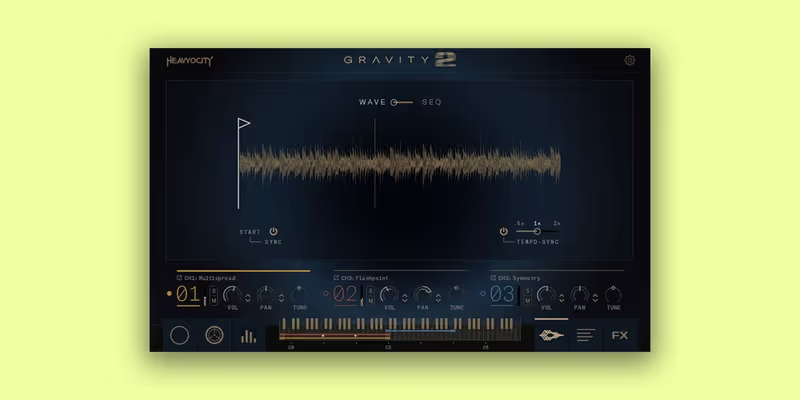
What users agree on. Widely described as a deep sound design engine that gets a usable professional result quickly, across tonal and atonal material.

The recurring complaint. Owners of the original Gravity repeatedly call the upgrade pricing too steep, and several note it overlaps heavily with Keepforest and Audio Imperia suites they already own.

Synthesised from 8 user reports (VI-Control threads from the Gravity 2 release onward). Nobody here ran this product.

The broadest single hybrid suite here, and the one to buy if you own no sound design library at all.
How it scored

  • Sound out of the box 9.0

    Reports consistently describe presets as usable without further processing.

  • Control and depth 9.0

    The modulation and FX chain is the most praised element across threads.

  • Fits a real cue 7.5

    Texture-first, so it supports a cue rather than carrying the line.

  • CPU and load 7.0

    Heavy, though less often complained about than NOVO.

Why we picked it

Composers with no hybrid suite who want the widest coverage of cinematic texture in one purchase.

Who should skip it

You already own Keepforest or Audio Imperia sound design libraries, where reports say the overlap is large.

The good

  • Deep modulation and FX engine
  • Tonal and atonal source material
  • Fast from preset to finished sound
  • Strong reputation across years

The bad

  • Upgrade pricing widely criticised
  • Overlaps rival hybrid suites
  • Texture rather than melodic writing
  • Full price is steep
Engine
Kontakt
Type
Hybrid sound design suite
Sound design tools
Extensive
Why it scored that way · 1 min read The one that turns a held note into a moving texture without you learning a modular synth. Its engine is the product, not the samples.

The one that turns a held note into a moving texture without you learning a modular synth. Its engine is the product, not the samples.

Composers describing Gravity 2 in long-running threads keep landing on the same point: the value is the engine, not the raw material. Several report reaching a finished, personal-sounding texture in minutes from a preset, which is the specific thing hybrid suites are bought for. The source content spans tonal, atonal and modal material, and the reports that praise it tend to praise the range rather than any individual patch.

The recurring complaint is not about sound at all, it is about money and overlap. Owners of the original Gravity and its expansion packs describe the upgrade price as poor value given what they already bought, and more than one thread points out that anybody holding Keepforest or Audio Imperia suites is largely covered already.

The other qualification worth carrying into a purchase decision is what it is for. Reports position it as a support layer rather than something that plays a line, so a composer whose template is missing conventional sections will get more from filling those first. As a first sound design suite it is the broadest of the six here, which is why it takes the award.

Playing connects you to YouTube, which may set cookies.
Lowest price we've recordedSince 5 Nov, the 2nd time this low · 58 checks since 23 Aug Check price $249 (was $449)
02 Cinesamples Best Percussion

CinePerc

8.1 / 10 Community score

Best for Orchestral Percussion

Scored from 7 user reports, not tested by us

How this score was reached

What users agree on. Repeatedly called the strongest conventional orchestral percussion recording available, with users who own rivals reporting they reach for it most of the time.

The recurring complaint. A persistent thread of complaint that the drums are boomy and the melodic percussion sounds boxed in, and that it arrives loud enough to need EQ and level reduction in a mix.

Synthesised from 7 user reports (VI-Control and Gearspace threads comparing orchestral percussion libraries). Nobody here ran this product.

Buy it for orchestral percussion that records well, and expect to spend time taming it in the mix.

How it scored

  • Sound out of the box 8.5

    Praised for the recording, criticised for being forward and boomy.

  • Control and depth 9.0

    Mic positions are the most cited strength.

  • Fits a real cue 8.0

    Reports say it sits with other libraries better than rivals do.

  • CPU and load 7.0

    Large, and mic positions multiply the memory cost.

Why we picked it

Composers who need one comprehensive orchestral percussion library and are comfortable mixing it into place.

Who should skip it

You want percussion that sits back politely without EQ, which is the opposite of what reports describe.

The good

  • Widely rated best-recorded of its type
  • Flexible microphone positions
  • Comprehensive instrument coverage
  • Chosen over rivals by owners of both

The bad

  • Drums described as boomy
  • Melodic percussion criticised
  • Loud and forward by default
  • Expensive at full price
Engine
Kontakt
Type
Orchestral percussion
Sound design tools
Limited
Why it scored that way · 1 min read The conventional orchestral percussion library other libraries get compared against. It arrives loud and confident, which is both the appeal and the problem.

The conventional orchestral percussion library other libraries get compared against. It arrives loud and confident, which is both the appeal and the problem.

Threads comparing orchestral percussion libraries return to CinePerc as the reference point, and the comparison usually goes in its favour. One recurring report comes from composers who own both this and Spitfire's percussion and say they reach for CinePerc the large majority of the time, on the grounds that it sits with the rest of their template more easily.

The criticism is specific rather than general and it is worth taking seriously before purchase. Multiple threads describe the drums as boomy and the melodic percussion as mid-rangey and boxed in, and the library as a whole as bombastic in a way that needs EQ and a level cut to fit a mix. That is a workflow cost, not a defect, but it is a cost.

On price, the consistent advice in these discussions is to wait for a sale rather than pay full, which given how often this category discounts is practical rather than cynical. What almost nobody argues is that the recording itself is anything other than excellent, which is why it holds its position despite the mixing work it asks for.

List price now · lowest recorded $454.35Low on 23 Aug · 58 checks since 23 Aug Check price $699

Action Strings 2

7.8 / 10 Community score

Best for Action Ostinatos

Scored from 5 user reports, not tested by us

How this score was reached

What users agree on. The Live Modules system is credited with giving real compositional freedom compared to first-generation phrase libraries, helped by MIDI drag and drop.

The recurring complaint. A recurring worry that phrase-based writing means many composers produce similar patterns, and several users report bouncing off it entirely even after buying the discounted update.

Synthesised from 5 user reports (VI-Control and Gearspace threads following the Action Strings 2 release). Nobody here ran this product.

The fastest way to a driving action cue here, provided you accept writing with modules rather than notes.

How it scored

  • Sound out of the box 8.0

    Recording quality is rarely the subject of complaint.

  • Control and depth Lowest in list 6.5

    Freedom is real but bounded by what was recorded.

  • Fits a real cue Best in list 8.5

    Built for exactly one job and reported to do it fast.

  • CPU and load Best in list 8.0

    Lighter than the sound design suites here.

Why we picked it

Composers on action and trailer deadlines who need convincing driving strings faster than they could program them.

Who should skip it

You want to write your own string lines, where reports say the module system will fight you.

The good

  • Live Modules beat first-generation phrases
  • MIDI drag and drop to your DAW
  • Fast to a finished action cue
  • Cheapest entry on this list

The bad

  • Phrase library, not a string section
  • Risk of sounding like everyone else
  • Several report never gelling with it
  • Bounded by what was recorded
Engine
Kontakt
Type
Phrase-based strings
Sound design tools
None
Why it scored that way · 1 min read Phrases you assemble rather than notes you play. It solves the fast-passage problem by refusing to let you write the passage.

Phrases you assemble rather than notes you play. It solves the fast-passage problem by refusing to let you write the passage.

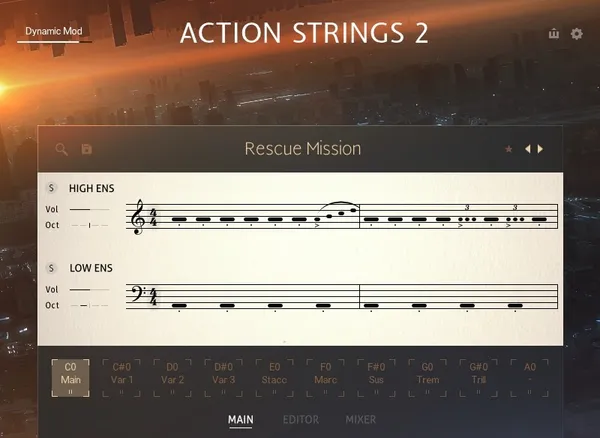
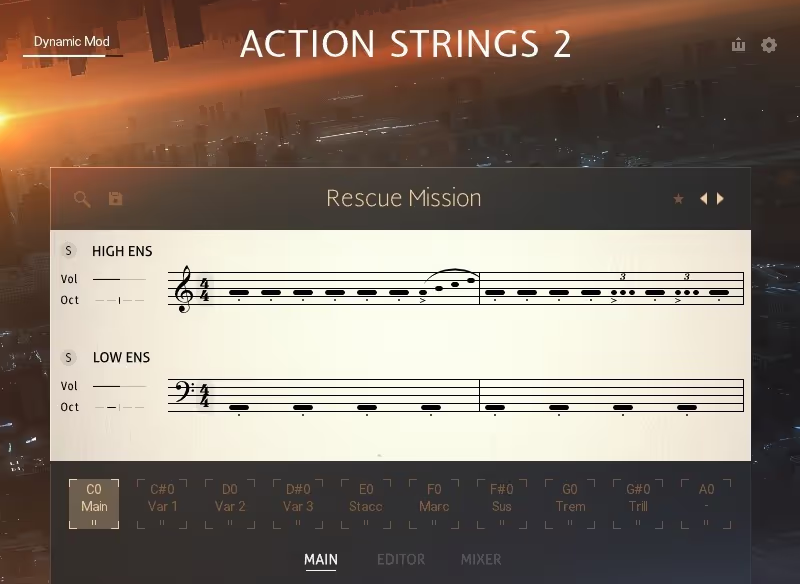
The most useful thing in these threads is how divided they are. Composers who get on with Action Strings 2 describe the Live Modules, mini-phrases recorded at different pitches and intensities that recombine, as delivering freedom a single-note library cannot, and several specifically value the MIDI drag and drop for keeping the result editable in the DAW.

Composers who do not get on with it are equally direct. More than one reports buying the discounted update and still failing to find a use for it, and the broader objection is structural rather than technical: pre-recorded phrases mean a lot of cues built from the same building blocks, however much individual users adjust them.

A counter-argument worth repeating appears in the same discussions. Runs, figures and arpeggios are not distinctive musical ideas the way a theme is, so borrowing them is closer to using a common vocabulary than to using somebody else's melody. Whether that satisfies you is a matter of taste, and it is the actual decision this purchase turns on rather than anything about the sound.

Playing connects you to YouTube, which may set cookies.
Lowest price we've recordedSince 20 Nov · 58 checks since 23 Aug Check price $149 (was $299)

FORZO Modern Brass

7.3 / 10 Community score

Best for Trailer Brass

Scored from 5 user reports, not tested by us

How this score was reached

What users agree on. Praised as punchy with articulations composers say they cannot get elsewhere, and the Hybrid Brass Designer is singled out repeatedly.

The recurring complaint. The absence of legato is a deliberate design choice that several composers describe as a real limitation, with one calling it a collection of huge samples that almost never fit a musical phrase.

Synthesised from 5 user reports (VI-Control threads from release onward, including direct comparisons). Nobody here ran this product.

Buy it for brass texture and impact, and keep a conventional brass library for anything that has to move.

How it scored

  • Sound out of the box 9.0

    The impact and character are almost never disputed.

  • Control and depth 8.0

    Hybrid Brass Designer is the most cited feature.

  • Fits a real cue Lowest in list 5.0

    No legato, and reports describe difficulty placing it in phrases.

  • CPU and load 7.0

    In line with the other Heavyocity libraries here.

Why we picked it

Trailer and hybrid composers who need brass impact and designed textures rather than playable lines.

Who should skip it

This is your only brass library, because reports are consistent that it cannot carry conventional writing.

The good

  • Articulations unavailable elsewhere
  • Hybrid Brass Designer widely praised
  • Named a go-to for horns by users
  • Very strong raw impact

The bad

  • No legato at all
  • Hard to fit into phrases
  • Not a first brass library
  • Expensive for a supplementary role
Engine
Kontakt
Type
Hybrid brass
Sound design tools
Extensive
Why it scored that way · 1 min read Brass as an event rather than a line. It hits enormously and it will not play you a melody.

Brass as an event rather than a line. It hits enormously and it will not play you a melody.

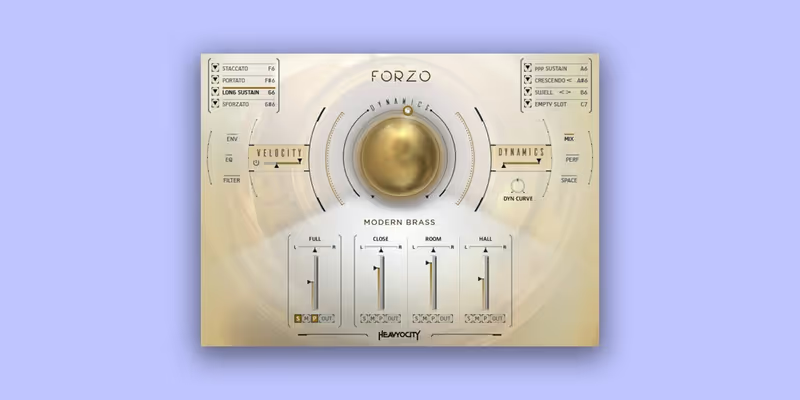
FORZO divides opinion along a clean line, and knowing which side you are on before buying is straightforward. Composers using it for trailer and hybrid work describe it as punchy with articulations unavailable in other libraries, and more than one calls it their go-to for horns, with the Hybrid Brass Designer and Loop Designer named as the reason.

Composers wanting conventional brass writing report the opposite experience. The library deliberately omits legato, a decision Heavyocity have explained as focusing on techniques other brass libraries do not cover, and the practical result described in threads is a set of impressive sounds that resist being placed inside a phrase. One frequently quoted line calls it a collection of wonderful, huge sounding samples that almost never fit a musical phrase, which is harsh and is also the clearest summary of the limitation.

That makes it a clear second brass library and a poor first one. Where it comes up against Audiobro's Modern Scoring Brass in direct comparison threads, the two are usually cast as answering different questions rather than competing, which is the most useful framing available. Score it on whether you need texture or lines, and the decision makes itself.

Playing connects you to YouTube, which may set cookies.
Lowest price we've recordedSince 5 Nov, the 2nd time this low · 58 checks since 23 Aug Check price $199 (was $549)

NOVO Modern Strings

7.1 / 10 Community score

Best for Hybrid Strings

Scored from 9 user reports, not tested by us

How this score was reached

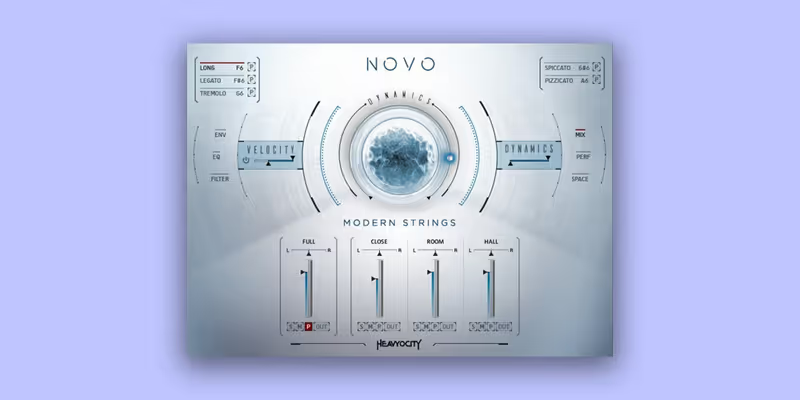
What users agree on. Regarded as excellent for hybrid, modern and science fiction scoring, and understood as a sound design instrument built around strings rather than a traditional section.

The recurring complaint. Consistent reports of limited articulations and no second violins section, plus high CPU load when several instruments run in one Kontakt instance, and poor value for anyone wanting conventional string writing.

Synthesised from 9 user reports (VI-Control and Gearspace threads from release through recent comparisons). Nobody here ran this product.

Excellent as a hybrid texture instrument, and the wrong purchase if you need it to be your string section.

How it scored

  • Sound out of the box 8.5

    Strongly praised for modern and science fiction material.

  • Control and depth 8.5

    Described repeatedly as a tweaker's library.

  • Fits a real cue 6.0

    Limited articulations and no second violins are recurring blockers.

  • CPU and load Lowest in list 5.5

    The heaviest here by report, especially with several instruments loaded.

Why we picked it

Composers writing hybrid, modern or science fiction cues who already own a traditional string library.

Who should skip it

You need one string library to do everything, where reports say the articulation set will stop you.

The good

  • Distinctive modern string character
  • Deep sound design engine
  • Strong for science fiction scoring
  • Blends well in hybrid textures

The bad

  • Limited articulation set
  • No second violins section
  • Heaviest CPU load here
  • Poor value for traditional writing
Engine
Kontakt
Type
Hybrid strings
Sound design tools
Extensive
Why it scored that way · 1 min read Strings routed through a sound designer's rack. Beautiful for texture, frustrating the moment you want a straight section.

Strings routed through a sound designer's rack. Beautiful for texture, frustrating the moment you want a straight section.

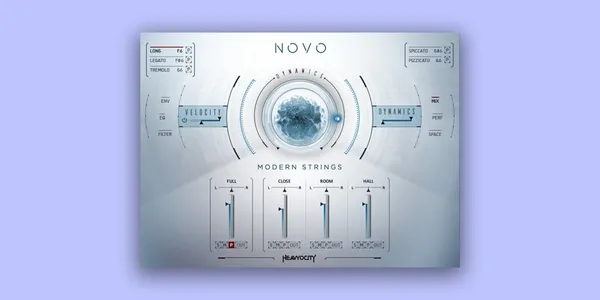
The most quoted thread about NOVO asks how good it is purely as a strings library, and the answers are unusually consistent for VI-Control. Composers report that it excels in hybrid and science fiction contexts and that the processed character is the appeal, while describing it as a sound design instrument that happens to be built from strings.

Where reports turn negative it is on scope rather than quality. The articulation set is repeatedly called limited, the absence of a second violins section comes up as a concrete blocker for anybody writing conventional divisi, and several composers state directly that it is not the best value if the sound design side does not interest you.

CPU is the other practical warning, and it is specific: running several NOVO instruments inside one Kontakt instance is reported to push load hard, which matters on the large templates this library is aimed at. Treated as a second or third string library for texture it is widely liked. Treated as a first one it produces exactly the complaints above.

Playing connects you to YouTube, which may set cookies.
Lowest price we've recordedSince 5 Nov · 58 checks since 23 Aug Check price $179 (was $549)
06 Cinesamples

Voxos Epic Choirs

6.9 / 10 Community score

Best for Choral Pads

Scored from 8 user reports, not tested by us

How this score was reached

What users agree on. Valued as a reliable source of lush choral pads that blend with orchestral libraries, with a phrase builder that covers most syllables and a word constructor rated more realistic than most.

The recurring complaint. Reports agree it struggles at fast passages, that the phrase builder is only really playable at loud dynamics because the dynamic response is too abrupt, and that it does not convince when exposed.

Synthesised from 8 user reports (VI-Control and Gearspace threads spanning the Voxos 2 era to recent buying questions). Nobody here ran this product.

A solid layering choir at sale prices, and not the one to buy if the choir has to be exposed.

How it scored

  • Sound out of the box Lowest in list 7.5

    Recording quality praised, vowel character described as noticeably American.

  • Control and depth 7.0

    Word constructor rated well, dynamics rated poorly.

  • Fits a real cue 5.5

    Struggles at speed and when exposed, by consistent report.

  • CPU and load 7.5

    Not a subject of frequent complaint.

Why we picked it

Composers needing choral pads and layers underneath an orchestra, buying in a sale rather than at full price.

Who should skip it

The choir has to carry a line on its own, where reports say it will not convince.

The good

  • Blends well under orchestral writing
  • Broad syllable coverage
  • Word constructor rated realistic
  • Holds up despite its age

The bad

  • Struggles at fast passages
  • Dynamics described as too abrupt
  • Unconvincing when exposed
  • Advice is to wait for a sale
Engine
Kontakt
Type
Choir
Sound design tools
None
Why it scored that way · 1 min read A choir for beds and layers rather than for solo exposure. Reports agree on where it works and where it stops.

A choir for beds and layers rather than for solo exposure. Reports agree on where it works and where it stops.

Voxos generates more buying-advice threads than review threads, which tells you something in itself. The agreed strength is layering: composers describe it as a dependable source of lush choral pads that sit under orchestral material, with a phrase builder covering most syllables and a word constructor several rate as more realistic than rivals.

The limits are stated just as consistently. Reports say the programming struggles at fast passages, and that the phrase builder is only comfortably playable at the loudest dynamic because the dynamic response is too abrupt between layers. Exposed writing is where composers say it stops convincing, while layered with other material it is described as still holding up.

On price the advice in these threads is close to unanimous, which is to buy it in a sale rather than at list. That is a reasonable position for a library of its age that is still being recommended, and it is the honest framing for anybody weighing this against a newer choir. Judge it as a layering tool and it earns its place, judge it as a soloist and it will not.

Playing connects you to YouTube, which may set cookies.

List price now · lowest recorded $324.35Low on 23 Aug · 58 checks since 23 Aug Check price $499

What didn’t make the list

3 cut
  • BBC Symphony Orchestra Spitfire Audio

    The obvious answer to this question for many composers, and it does not run in Kontakt. It uses Spitfire's own player, so it falls outside this list by definition rather than on merit.

  • Cinematic Studio Strings Cinematic Studio Series

    A Kontakt library and a genuine contender, sold direct rather than through the store we link to. Worth your attention if realistic legato is the priority.

  • Modern Scoring Brass Audiobro

    Comes up repeatedly in the same threads as FORZO, and is the one to compare against if you need brass that plays conventional lines rather than textures.

How to choose a Kontakt library

The mistake this category invites is buying the second and third sound design suite before noticing the template still has a hole in it.

Hybrid suites overlap heavily with each other, because they are all built from broadly similar source material processed in broadly similar ways. A missing percussion section, choir or brass library leaves a gap that nothing else covers, and filling those returns more per euro than a fourth texture library.

The second thing worth knowing is that Kontakt is no longer the whole market. Several of the libraries a composer would name first in this conversation moved to their own players years ago, which is why they appear in the also-considered list rather than in the picks.

Read more →

Methodology

Who is this for

Working composers and producers who need reliability, speed, and character for professional scoring tasks.

Our testing process

Where we have tested a product, we do it in actual production scenarios, ranging from rapid sketches to commercial pitches, and we evaluate it in a dense template rather than in isolation. Where we have not, the product card says so and the assessment is drawn from specifications and documented behaviour instead.

Why you should trust us

We buy most reviewed plugins ourselves. Occasionally we receive NFRs for evaluation, but this never guarantees a review or positive verdict. We may earn commissions from links, but our editorial choices are never for sale.

Also considered

For every category, we audition the top 8 to 15 standard options, discarding any that suffer from poor scripting, slow load times, or uninspiring sampling.

Frequently Asked Questions

Do I need the full version of Kontakt for these?

Only if the library says so. The free Kontakt Player runs libraries licensed by Native Instruments, which carry a Kontakt Player badge, and it runs anything else only in a 15-minute demo mode that cannot save. Libraries marked as needing full Kontakt require the paid version, so check the product page before buying, because that requirement is a hidden cost if you do not already own Kontakt.

Is Kontakt still worth building a template around?

For most composers, yes, and the reason is consolidation rather than sound. One multi holds libraries from a dozen developers with one set of outputs, one purge interface and one plugin to update. The counter-argument is that several major developers now ship their own players, so a modern template usually runs two or three engines regardless.

Why are there no Spitfire or Orchestral Tools libraries here?

Because neither runs in Kontakt any more. Spitfire moved to its own player and Orchestral Tools to SINE, so their libraries are excellent and outside the scope of this page. Judging them here would mean answering a different question from the one in the title.

Should I buy a sound design suite or a traditional orchestral library first?

A traditional library, in almost every case. Hybrid suites overlap heavily with each other and with trailer sample packs, whereas a missing percussion or choir section leaves a hole nothing else fills. Composers in these threads repeatedly describe buying their second and third sound design suite before noticing they still had no usable woodwinds.

How were these scores worked out if you did not test the libraries?

They are synthesised from threads on VI-Control and Gearspace, read for four recurring questions, and every product card lists the threads and the number of separate discussions behind its score. The card also states plainly that nobody here ran the product. It is a different kind of evidence from a studio test and it is labelled as one.

Written By

Louis Raveton

Louis works across immersive scores (Venice Biennale, LVMH) and animation (Canal+), while producing Downtempo and Electro-Dub as Monsieur Shwill and Flagada. He treats his sample drive like a record collection, constantly hunting for the perfect 'imperfect' texture

Related Guides

All Guides →

New reviews, no noise

Occasional email when we publish something worth your time. No daily digest, no vendor press releases.

We store only your address, never sell it, and delete it as soon as you unsubscribe. See our privacy policy.