

Best Zebra HZ Alternatives

Zebra HZ earned its reputation on a decade of blockbusters, and most people who buy it use the presets rather than the synth underneath. Which half you actually use changes the answer completely.

The ModWheel Team
By The ModWheel Team Editorial Staff

ModWheel is reader-supported. When you buy through links on this page we may earn an affiliate commission, at no extra cost to you. This never influences which products we recommend, read our testing methodology.

Prices come from the store's own feed and were last checked 17 October 2026. We don't issue discount codes — the price you see is the store's own.

Pick one in 10 seconds

Short version
  • You want the deep modular routing and will build your own sounds Four engines and the clearest modulation display in software, at 199 dollars. Pigments 7 Check price
  • You use it for evolving tension beds under picture Pulse-driven motion in seconds, which is the most common Zebra HZ job. Signal Check price
  • You want textures that never repeat across a long cue Granular scanning rather than looping, so it does not settle into a pattern. STRAYLIGHT Check price
  • You need drones and want them clean and efficient The most CPU-efficient drones here, in one narrow emotional range. Drone Check price
  • You want the finished trailer palette rather than a synth The tension toolkit most trailer work is actually built on. Gravity 2 Check price

Compare all 5

Type
Multi-engine synth
Best At
Building from scratch
Signal 7.8
Type
Pulse-driven hybrid
Best At
Tension beds
STRAYLIGHT
3. STRAYLIGHT Native Instruments
7.8
Type
Granular scanner
Best At
Long-form texture
Drone 7.6
Type
Drone instrument
Best At
Sustained tension
Gravity 2
5. Gravity 2 Heavyocity
7.3
Type
Cinematic sample instrument
Best At
Finished trailer material
$249 $449 View price

Zebra HZ is two products. Underneath is a modular synthesiser with an unusual amount of routing freedom, and on top is a preset library built by a film composer's team for film composing. Both are excellent and they suit very different buyers.

If you browse and tweak, you want breadth of finished sound. If you patch from scratch, you want routing depth. Paying for both when you use one is what makes this page worth reading, and the axes below score those separately.

Nothing here was tested in a studio and every card says so. The scores come from published specification and documented behaviour, and the verdicts agree with what this site has already published about these instruments elsewhere.

Best Cinematic Synths (2026): Hybrid Scoring & Sound Design covers the same field without the Zebra framing.

Top Picks

01 Arturia Best Overall

Pigments 7

Best for Deep Synthesis

Not tested by us, assessed from specs and documented behaviour

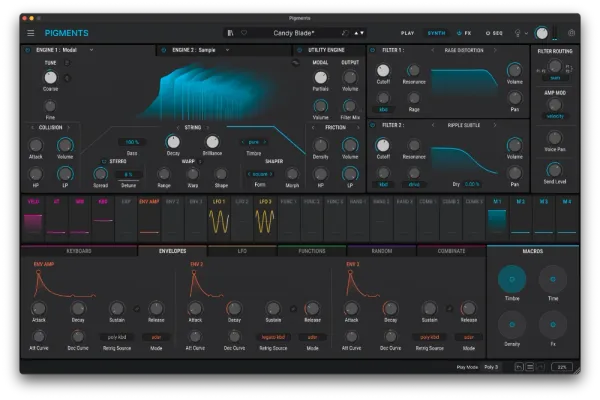
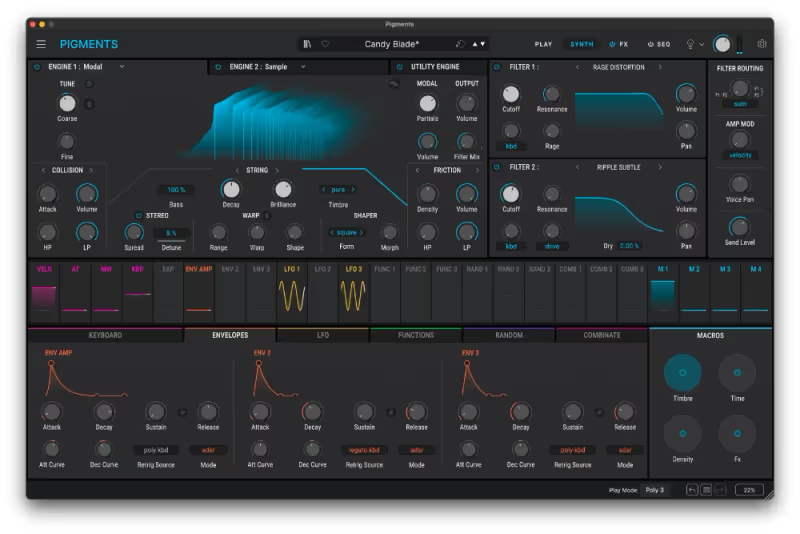
The right answer if you patch rather than browse. It has comparable modulation depth to Zebra with a far clearer interface, four synthesis engines instead of one architecture, and it costs 199 dollars.

Assessed score
8.4
out of 10

How it scored

  • Cinematic Character 8.2

    Its factory library leans cinematic, which is unusual and useful here.

  • Time to Finished 8.0

    Faster than Zebra because the routing is drawn rather than described.

  • Depth 9.0

    Comparable modulation ceiling across four engines rather than one.

  • Value 8.5

    199 dollars against a considerably higher figure for the Zimmer edition.

Why we picked it

Best for composers who build their own patches and want Zebra's depth behind a considerably clearer interface.

Who should skip it

Skip it if you open Zebra HZ to browse presets, because the famous library is what you would be losing.

The good

  • Comparable modulation depth
  • Routing drawn on screen
  • Cinematic factory library

The bad

  • No Zimmer preset library
  • Interface animation costs CPU
  • Four engines take learning
Type
Multi-engine synth
Best At
Building from scratch
Price
$199
Why it scored that way

The synth underneath Zebra, made legible.

Zebra's reputation among people who actually programme it rests on modulation depth and on how freely you can route things, and that is the half Pigments matches most directly. Four synthesis engines sit behind a modulation matrix that draws every connection on screen while it moves, which is a genuine advantage over Zebra rather than a compromise, because Zebra's own routing is powerful and famously opaque to newcomers.

The cinematic character carries over further than you might expect. Arturia's factory library leans deliberately toward scoring rather than dance production, so the starting points are closer to the Zebra HZ world than a general-purpose synth library would be, and getting from a preset to something that fits a cue is a short journey.

What it does not inherit is the specific preset library that made Zebra HZ famous. Those patches were built by people making blockbuster films for the purpose of making blockbuster films, and no third party library reproduces that. If browsing that collection is why you open Zebra, this page's second entry is closer to what you actually want than this one is.

Playing connects you to YouTube, which may set cookies.
Heard on
Hybrid Scoring Trailer Sound Design Game Audio
Check price $199
02 Output

Signal

Best for Motion Beds

Not tested by us, assessed from specs and documented behaviour

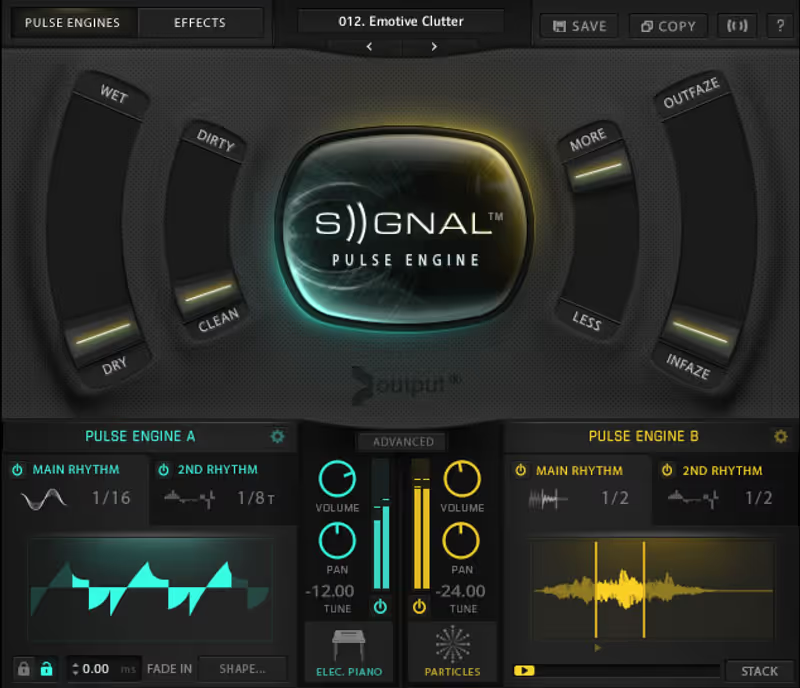
If your Zebra HZ habit is pulsing, evolving motion under a scene, this reaches the same destination faster and does nothing else. That narrowness is the entire recommendation and the entire limitation.

Assessed score
7.8
out of 10

How it scored

  • Cinematic Character 8.5

    Built specifically for picture, which shows in every preset.

  • Time to Finished 9.2

    The fastest route to a usable tension bed on this page.

  • Depth 6.0

    Two layers and a pulse engine. It is not a modular system.

  • Value 7.5

    Full price for something deliberately narrow.

Why we picked it

Best for scoring to picture, where pulsing evolving motion is the thing you reach for most often.

Who should skip it

Skip it as a general synth, because leads, basses and clean pads are outside what it was built for.

The good

  • Fastest route to motion
  • Macro moves everything together
  • Built for picture

The bad

  • Narrow outside its lane
  • Weak leads and basses
  • Not a modular system
Type
Pulse-driven hybrid
Best At
Tension beds
Price
$199
Why it scored that way

The job most people actually open Zebra HZ to do.

Watch what a composer actually does with Zebra HZ on a deadline and it is very often the same thing: find an evolving, pulsing bed, drop it under the scene, move the filter with the picture. Signal is built on the assumption that this is the job, and it removes every step that is not that, which turns a browsing exercise into two layers and a macro control.

The speed advantage is real rather than marginal. On Zebra the same result exists somewhere among a very large library, and the time cost is finding it, auditioning it against picture and deciding. Here the instrument assumes motion is what you want and the only remaining question is which kind, which is a much smaller decision to make at eleven at night.

Be clear about the ceiling before buying. Ask it for a lead line, a bass or a clean sustained pad and it will do a worse job than a general synth costing the same money, because none of those are what it was designed around. This belongs beside something broader rather than replacing one outright.

Playing connects you to YouTube, which may set cookies.
Heard on
Trailer Sound Design TV Underscore Game Audio
Check price $199
03 Native Instruments

STRAYLIGHT

Best for Evolving Textures

Not tested by us, assessed from specs and documented behaviour

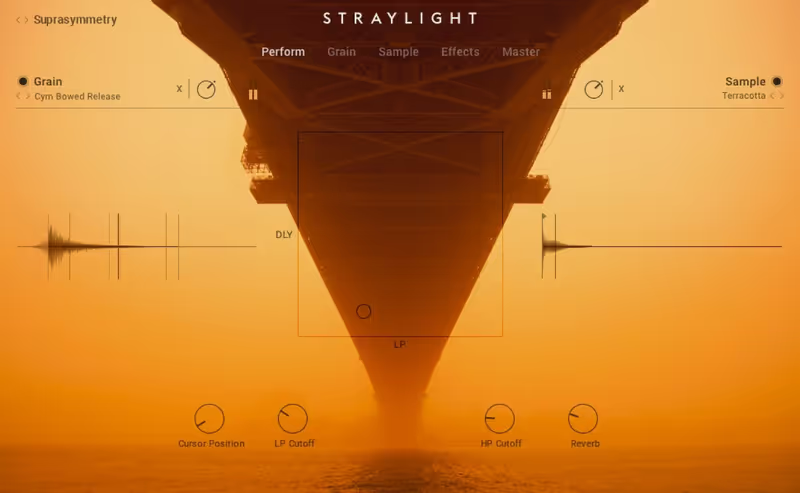
The pick for long cues, because it scans its sources rather than looping them and so avoids the repetition that gives most texture libraries away over four minutes of picture.

Assessed score
7.8
out of 10

How it scored

  • Cinematic Character 8.0

    Cold, modern and textural rather than orchestral or warm.

  • Time to Finished 8.5

    Few controls, and the interesting results arrive early.

  • Depth 6.5

    Deliberately shallow. The engine does the work, not you.

  • Value 8.0

    199 dollars for a genuinely distinct engine.

Why we picked it

Best for long cues and game audio, where a texture must sustain for minutes without revealing a loop.

Who should skip it

Skip it if you want to build sounds, because the engine leads and you steer rather than programme.

The good

  • Scans rather than loops
  • Holds up over long cues
  • Results arrive quickly

The bad

  • Little to adjust
  • Cold, narrow palette
  • Not a general synth
Type
Granular scanner
Best At
Long-form texture
Price
$199
Why it scored that way

Textures that do not settle into a pattern.

The specific problem this solves is one that only appears at length. A looped texture is convincing for thirty seconds and starts to give itself away across a four-minute cue, because the ear locates the loop point even when it cannot name it. STRAYLIGHT scans through its source material instead of looping it, so the texture keeps moving and never resolves into a repeat.

For anybody using Zebra HZ as an evolving-texture machine, which is a large portion of its actual use, that is a direct improvement rather than a substitution. Long-form scoring and game audio, where a bed may need to sustain for several minutes without attracting attention, are exactly where it earns its place. The limitation is that the engine is doing the interesting work and you are steering rather than building. There is far less to adjust than in Zebra and considerably less than in Pigments, and the tonal range is narrower and colder. It is a specialist bought for one behaviour, and the behaviour is genuinely rare.

Playing connects you to YouTube, which may set cookies.
Heard on
Game Audio Sci-Fi Scoring Ambient
Check price $199
04 UVI

Drone

Best for Sustained Drones

Not tested by us, assessed from specs and documented behaviour

A specialist that does one Zebra HZ job better than Zebra does it. Clean, efficient sustained drones in one emotional register, and nothing at all outside that register.

Assessed score
7.6
out of 10

How it scored

  • Cinematic Character 7.5

    Dark and sustained. One register, well covered.

  • Time to Finished 9.0

    Very little to set before something usable arrives.

  • Depth 5.5

    The narrowest instrument on this page by design.

  • Value 8.5

    149 dollars, and light enough to leave running.

Why we picked it

Best for sustained tension under dialogue, on templates where CPU headroom is already tight.

Who should skip it

Skip it as a general instrument, because it covers one narrow emotional register and nothing else.

The good

  • Very low CPU
  • Layers without muddying
  • Fast to a usable drone

The bad

  • One emotional register
  • No leads or bright material
  • Narrowest here
Type
Drone instrument
Best At
Sustained tension
Price
$149
Why it scored that way

The cleanest drones here, and the cheapest on CPU.

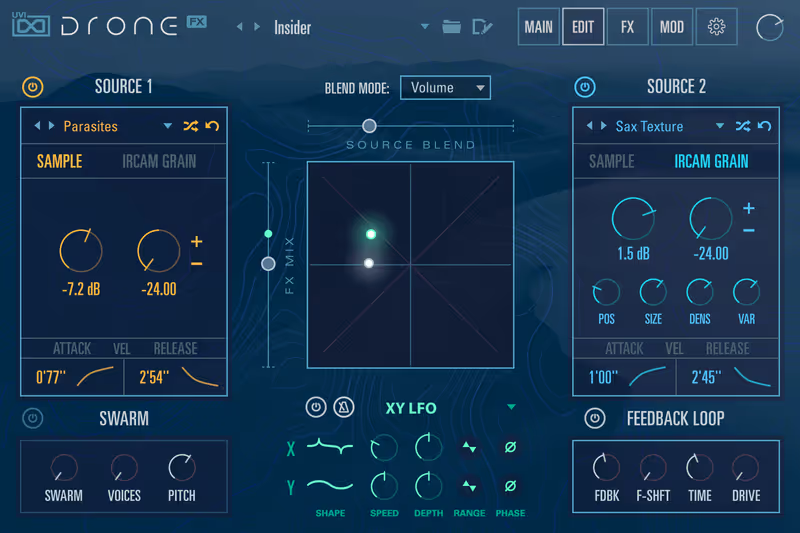
Drones are the least glamorous thing a hybrid synth gets asked for and among the most used, sitting under dialogue for minutes at a time doing nothing except making a scene uncomfortable. Zebra HZ does them well and asks for a lot of machine to do it, which on a template already carrying an orchestra is a real consideration rather than a benchmark curiosity.

What UVI's instrument offers is the same job at a fraction of the cost in both money and CPU. The drones are clean, they layer without turning to mud, and the thing will sit in a template running continuously without becoming the reason you freeze tracks. On a session that is already heavy that is worth more than another synthesis engine.

The narrowness is severe and worth stating plainly rather than discovering after purchase. It covers a single emotional register, broadly dark and tense, and it has no ambitions whatsoever beyond that register. Nobody should buy this expecting leads, pads or anything bright out of it, and it belongs in a template alongside a general instrument rather than in place of one.

Playing connects you to YouTube, which may set cookies.
Heard on
Horror Scoring TV Underscore Game Audio
Check price $149
05 Heavyocity

Gravity 2

Best for Trailer Palette

Not tested by us, assessed from specs and documented behaviour

The honest answer for composers who open Zebra HZ hunting a finished trailer sound rather than building one. It arrives closer to done than any synth here and costs the most by a distance.

Assessed score
7.3
out of 10

How it scored

  • Cinematic Character 9.2

    The most finished-sounding cinematic material on this page.

  • Time to Finished 9.5

    Frequently done at the preset, which is the whole proposition.

  • Depth 5.0

    A sample instrument with macros, not a synthesiser to programme.

  • Value 5.5

    By far the most expensive entry here.

Why we picked it

Best for trailer and campaign work, where arriving at a finished sound quickly matters more than shaping one.

Who should skip it

Skip it if you programme sounds, because there is no synthesis engine underneath to reach into.

The good

  • Arrives close to finished
  • Macro shaping without programming
  • Professional trailer standard

The bad

  • Most expensive here
  • No synthesis underneath
  • Limited when nearly right
Type
Cinematic sample instrument
Best At
Finished trailer material
Price
$249
Why it scored that way

The finished palette, rather than the synth that makes one.

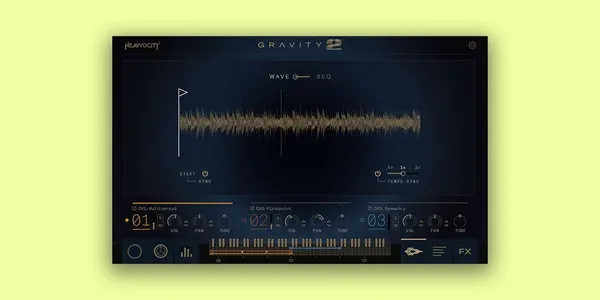
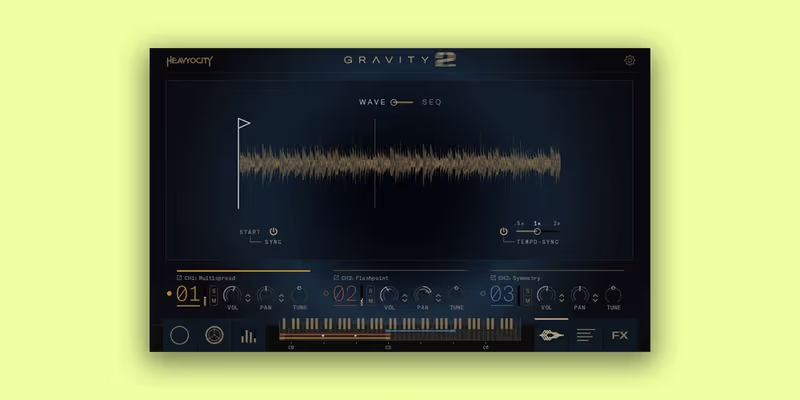
This entry is for the reader whose relationship with Zebra HZ is entirely through its preset browser, and who would be better served by admitting that and buying a finished palette instead of a synthesis engine they never open. Gravity is a collection of risers, hits, stings, pads and drones built for trailer and film work, and a great deal of professional trailer music is assembled from exactly this kind of material.

What you gain is arrival time. The sounds are mixed, processed and shaped for the job before you hear them, and the macro system lets you move them without understanding how they were made. On a campaign deadline that is worth more than any amount of routing flexibility, and it is why this library appears on so many professional templates.

What you lose is everything underneath. There is no synthesis to reach, no oscillator to change, and when a preset is nearly right your options are narrower than they would be on any synth on this page. It is also the most expensive thing here by a wide margin, which makes it a considered purchase rather than an impulse.

Playing connects you to YouTube, which may set cookies.
Heard on
Trailer Sound Design Film Scoring Game Audio
Check price $249 (was $449)
Read more →

Methodology

Who is this for

Working composers and producers who need reliability, speed, and character for professional scoring tasks.

Our testing process

Where we have tested a product, we do it in actual production scenarios, ranging from rapid sketches to commercial pitches, and we evaluate it in a dense template rather than in isolation. Where we have not, the product card says so and the assessment is drawn from specifications and documented behaviour instead.

Why you should trust us

We buy most reviewed plugins ourselves. Occasionally we receive NFRs for evaluation, but this never guarantees a review or positive verdict. We may earn commissions from links, but our editorial choices are never for sale.

Also considered

For every category, we audition the top 8 to 15 standard options, discarding any that suffer from poor scripting, slow load times, or uninspiring sampling.

Frequently Asked Questions

What is the closest alternative to Zebra HZ?

It depends which half you use. For the modular synthesis underneath, Pigments matches the modulation depth behind a clearer interface at 199 dollars. For the preset library on top, no synth reproduces it and a finished cinematic sample library like Gravity is closer to what you actually reach for.

Is Zebra HZ still worth buying?

Yes, for composers who use both halves of it. The synthesis engine remains genuinely deep and the Zimmer preset library is not reproduced anywhere else. This page exists because a large share of owners use one half and pay for two, which is a different question from whether the instrument is good.

Can I get the Zebra sound with regular Zebra?

Largely, yes. The HZ edition adds the Zimmer preset library and some engine additions on top of the standard instrument, so the underlying synthesis is available for less. Anyone drawn to the routing rather than the patches should compare those two before looking at other developers at all.

Do I need a hybrid synth if I already own an orchestra?

Usually yes, and it is the most common gap in an orchestral template. Sustained tension, drones and pulsing motion are what modern picture work asks for constantly and what a sampled orchestra covers worst, which is why these instruments sit alongside libraries rather than competing with them.

Written By

The ModWheel Team

The ModWheel editorial team is a collective of composers, producers, and sound designers. We collaborate to bring you comprehensive guides, industry news, and curated lists that represent our shared expertise and passion for music technology.

Related Guides

All Guides →

New reviews, no noise

Occasional email when we publish something worth your time. No daily digest, no vendor press releases.

We store only your address, never sell it, and delete it as soon as you unsubscribe. See our privacy policy.